Ford Kuga 2026 review | The underdog family SUV

Pros and cons
What we like
Good to drive, as you'd expect of a Ford
Roomy and practical cabin
The plug-in hybrid is a great choice for company car drivers
What to consider
The interior is a bit low-rent in places
Some rivals have bigger boots
It's hard to apply the plug-in hybrid's brakes smoothly
The CarGurus verdict
The Ford Kuga is a solid choice in a crowded SUV marketplace, being roomy, fuel-efficient and good to drive. The plug-in hybrid is the star of the range, partly thanks to its generous electric-only range. Running costs will be very affordable for the right kind of driver, but the rest of the Kuga range is also very capable.
Nonetheless, the Kuga still feels like something of an underdog or outsider. It’s the kind of car that, if you drive one or take the plunge to buy, you will almost certainly enjoy it. But it’s rarely at the top of anyone’s wish-list, nor is it usually front-and-centre in a conversation about family SUVs.
If you’re in the market for a SUV, whether it’s petrol, hybrid or PHEV, don’t dismiss the Ford Kuga until you’ve driven one.
out of 5 expert review
What is the Ford Kuga?
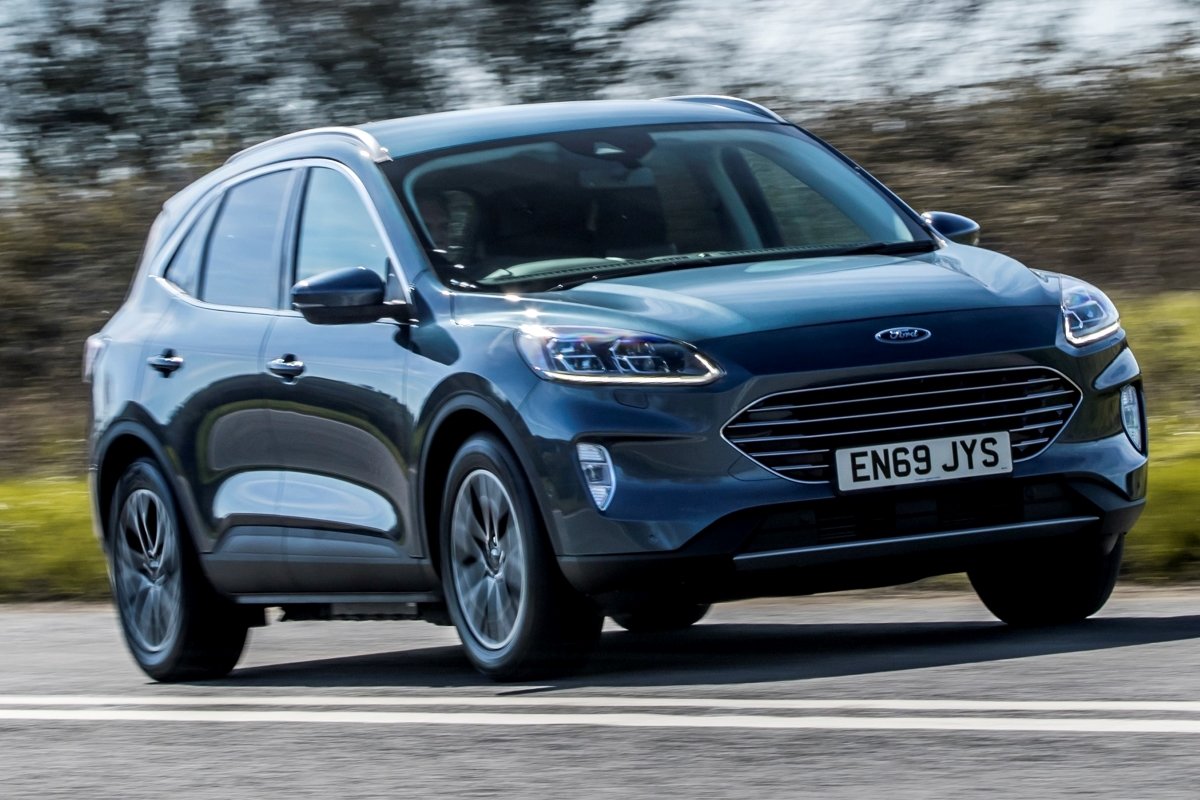
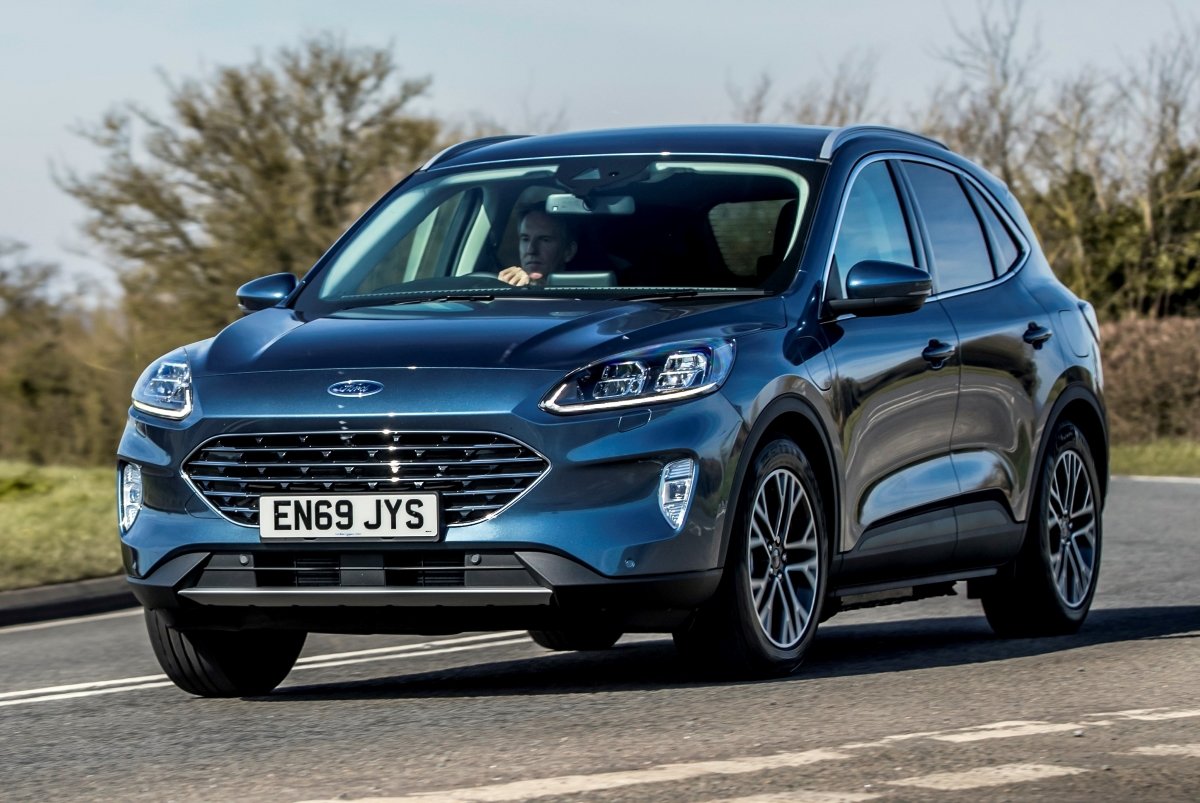
The Kuga is Ford’s answer to the likes of the Peugeot 3008, Kia Sportage, Vauxhall Grandland and Hyundai Tucson. It’s also the larger sibling to the Ford Puma, which has been the best-selling car in the UK since the Ford Fiesta was discontinued. As a result, the Kuga sits somewhat in the shadows, and perhaps doesn’t get the attention it deserves. However, it’s practical, drives well and is affordable to buy and own, just like the smaller Puma.
Fundamentally, the Kuga is a crossover that aims to deliver the style and practicality of an SUV with the lower running costs and ease of use of a traditional hatchback. The original Kuga made its debut in 2008 and was based on the same platform as the second-generation Ford Focus, meaning it was great to drive. In 2012, it was replaced by a slightly larger second-generation Kuga, which was closely related to the US-only Ford Escape.
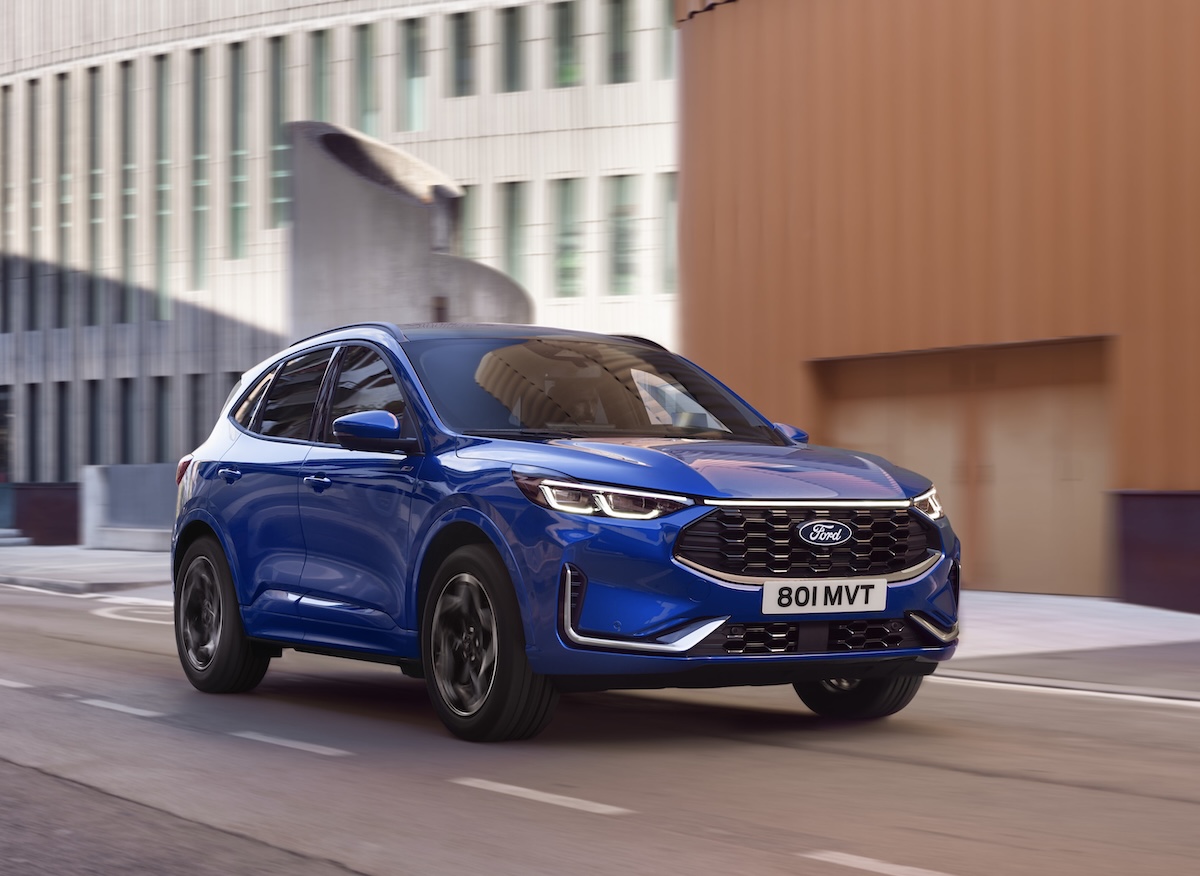
Neither car set the sales charts ablaze, with the Kuga getting lost in a sea of new SUVs from almost every car brand. It wasn’t until the current Kuga arrived in 2020 that the Blue Oval finally had a machine that finally took the fight to the class leaders. And the package got stronger still with the launch of a facelifted model in 2024.

Practicality
How practical is it?
The Ford Kuga offers all the space and practicality a family is likely to need. Aside from thick A-pillars that get in the way slightly at junctions, it combines that with a high and commanding driving position.
There's plenty of headroom and legroom for a tall driver, and enough adjustment in the seat and steering wheel for those of smaller stature to get comfortable. For the most part, Ford gets the basics like driving position spot on; there’s a sense that people who know how a car should feel have assisted in every aspect of the Kuga’s development.
The rear seats have a 60:40 split, with the two outer perches both having Isofix mounting points for child seats. The bench also slides forwards and backwards, so you can choose between more than a metre of rear legroom or an additional 141 litres of boot space. Speaking of which, boot capacity measures between 412 litres and 553 litres (slightly less in plug-in hybrid versions), depending on the position of those rear seats. Fold them flat, however, and you have up to 1,534 litres.
What’s a little frustrating is the lack of features to enhance practicality. Items such as luggage mats, or boot storage nets and their mounting points, are mostly optional extras. The costs aren’t huge in terms of a new car, but these are things that other manufacturers offer for free.
Furthermore, it's a shame the dashboard isn't better finished, as plusher plastics would have helped the Kuga to steal a few more customers from prestige SUVs. It's not badly put together, just a little too hard and shiny in places.

Driving
What's it like to drive?
Ford has forged a reputation for making cars that are great to drive, regardless of whether they’re superminis or SUVs. The Kuga is not as nimble as the smaller Puma, but its steering is direct and well-weighted, and it dives into corners with surprising enthusiasm. As you’d expect, there’s some roll, but body movements feel well controlled, allowing you to blast along your favourite country road with confidence.
The Kuga’s party trick is to combine this driver engagement with genuine comfort, its well-tuned suspension offering a supple ride over bumps and potholes. There’s a little firmness at low speed, but it’s never uncomfortable and occupants are unlikely to be shaken or stirred. Noise levels are low, too, with very little roar from the road or rustle from the wind. It all conspires to make the Kuga a soothing long-distance cruiser.
When it comes to engines, the mid-life refresh means there is no longer the option of a diesel. This will no doubt be a disappointment to some, but there is a choice of petrol, petrol hybrid and petrol plug-in hybrid. This distinguishes the Kuga from the Puma, as the smaller sibling is either petrol-powered or fully electric.
The Kuga plug-in hybrid looks a bit of an oddball on paper, due to a beefy 2.5-litre four-cylinder engine. It’s paired with an electric motor and a 14.4kWh lithium-ion battery, plus a Ford-developed CVT (Continuously Variable Transmission) and front-wheel drive. With 239bhp, 0-62mph takes 7.3 seconds and the official fuel economy figure is 235-313mpg (recorded as part of the WLTP test cycle). Its electric-only driving range is 37.2-42.8 miles.
The regular, non-plug-in hybrid also has a 2.5-litre engine, but a tiny 1.1kWh battery works with the electric motor for a total of 177bhp in the- front-wheel-drive Kuga, or 180bhp if you go for all-wheel drive. Ford claims 45.5-53.2mpg combined for the front-driven car and 44.1-49.5mpg for the 4WD version. Performance-wise, the former hits 62mph in 9.1 seconds and the latter in 8.3 seconds, despite an extra 76kg of weight.
Finally, there’s a conventional turbocharged 1.5-litre EcoBoost petrol engine, which serves up 148bhp and 177lb ft of torque. Zero to 62mph is over in 9.5 seconds, making it the slowest Kuga of the bunch, but it does come with a six-speed manual gearbox and weighs just 1,526kg, more than 160kg less than any other car in the range. The petrol car achieves 39.2-44.8mpg in the standard test.

Tech and equipment
Technology, equipment & infotainment
The Kuga spec ladder is made up of the entry-level Titanium, followed by ST-Line and ST-Line X. Whichever rung you opt for sets the parameters for which powertrain you can have. Unsurprisingly, you’ll need to go for a higher trim level if you want the plug-in hybrid.
The Kuga Titanium comes with the 1.5-litre engine only, but it’s decent enough in terms of the level of equipment on offer. You get 17-inch alloy wheels, full LED headlights and LED rear lights, front- and rear parking sensors, a reversing camera and a 12.3-inch digital instrument cluster that sits alongside a 13.0-inch central display (upgraded from an 8.0-inch display in the pre-facelift model).
The infotainment is of particular interest, as it now includes Ford’s latest-generation SYNC 4 software, with twice the computing power of the previous SYNC 3 system. It has 5G connectivity, cloud-connected navigation, wireless Apple CarPlay and Android Auto, a DAB radio and Amazon Alexa all built in. Also included as standard are keyless entry, a six-speaker audio system, a heated windscreen (a much-loved Ford feature) and various safety systems, like pre-collision assist with autonomous emergency braking, blind spot alert and lane-keep assist.
Jump up to the ST-Line and you get a number of upgrades, such as 360-degree cameras, 18-inch wheels, a powered boot lid, adaptive cruise control, a B&O sound system with 10 speakers and a subwoofer.
One useful trick: the adaptive cruise control doesn’t just look ahead at what other cars are doing, but it looks and thinks ahead about what the road is doing. So, if you’re on the motorway with the cruise control set at 65mph, you’ll just pootle along as normal. However. if there’s a bend in the road where you’d likely take a lift on the throttle, the car will do that for you. Smart stuff.
Having said all of that, a look at the options list for the Kuga shows you that a lot is only available when you pay extra. The Dynamic Matrix LED headlamps, with a 'Coast-to-Coast' light bar between the lamps, are something you’d expect to be included on the top-spec ST-Line X. But no, it’s an option costing more than £1,000. Similarly, a head-up display is a paid-for option, as is the 12-way electrically adjustable driver’s seat. All but two of the paint colours will cost extra, too, and there’s no choice at all when it comes to interior materials and colours, You’d better be a fan of black fabrics and black leather.
If the worst happens, the third-gen Kuga's safety standards are excellent. It has a five-star rating from the crash test experts at Euro NCAP. An autonomous emergency braking system is standard across the board, as is lane-departure warning and lane-keeping assist.

Running costs
Ford Kuga running costs
In the grand scheme of things, the Kuga isn’t wildly expensive. Yes, it’s annoying that there are some options you’d think would be included. But the range kicks off at around £33,000 for the Titanium, rising to around £38,000 for the ST-Line and £40,000 for the ST-Line X (and potentially more on top).
The ST-Line is probably the sweet spot, and while we’re certainly drawn to the front-wheel-drive 1.5-litre petrol, less than £1,000 more takes you to the hybrid. Given the hikes in economy and performance, that feels like a sensible decision, and to some extent it future-proofs the car in terms of value. A real win of this Kuga is that it fits beneath the £40,000 ‘luxury car’ threshold for VED road tax’. Opt for the same engine in the ST-Line X, or the regular hybrid with all-wheel drive, and you’ll be above the £40,000 threshold, meaning considerable extra expense (another £425 on top of the £195-per-year annual flat rate) between years two and six of the car's life.
Buy any new Ford and you get a three-year, 60,000-mile warranty, plus one year’s worth of Ford Assistance, covering you for breakdowns in the UK and Europe. The warranty can be extended for an additional cost, either to four years and 80,000 miles, or five years and 100,000 miles. Other costs may include a Ford Protect Service Plan, the Ford Protect Wear and Tear plan (this covers non-service items that are likely to wear out, such as brake discs and pads), or the Service Plan Plus, which is both of these plans combined.

Ford Kuga reliability
Although there are few horror stories about the previous-generation Kuga, the new car is much more complex than its predecessor. And the most recent What Car? Reliability Survey found the latest Kuga somewhat lacking as well. It came 11th out of 15 in the large SUV category, with a score of 89.6%, compared to the class-leading Mercedes GLC’s score of 97.9%. Ford didn’t score particularly well in the overall manufacturer standings, either, finishing in joint 24th place out of 30 brands (alongside Volkswagen) with a score of 90.5%.
Like all Ford passenger cars, the Ford comes with a three-year/60,000-mile warranty that can be extended at extra cost. That length of warranty is pretty much the minimum you'd expect of any new car, and it’s a little disappointing. It's considerably shorter than the seven-year/100,000-mile cover on a new Kia Sportage, or the potential ten-year/100,000-mile warranty on a Toyota RAV4 that you'll get if you you service the car within the main dealer network.


What owners say
"The Ford Kuga has garnered a positive reputation across various model years. Drivers consistently appreciate its spacious interior and comfort, noting it’s a practical choice for families with ample luggage space. The ease of driving is also a highlight for many, making it a favored option among owners. However, some drivers have pointed out drawbacks such as light steering feel and various paintwork issues, which can detract from the overall experience."
Great car, very lively, lots of room. Very well made. Whats not to like
10 February 2026Comfortable to drive good to have a well looked after car, fuel consumption is decent obviously the car is heavy so that factors in. I took a few hours to get the hang of the controls and sat nav as well as linking phone and will probably need a few more to get total abillity to navigate but I'm very happy with the car also it was very clean in and out the only down fall and not much of one is the wing mirrors are electric but don't fold in electricly which when parking is nice to have in certain areas so they don't get hit when you have to do them manualy sometimes you forget
21 August 2025For a 2013 SUV, the Titanium X trim is well-equipped, especially considering it’s now over a decade old Decent price especially with full service history.
8 August 2025What owners say
Great car, very lively, lots of room. Very well made. Whats not to like
10 February 2026Comfortable to drive good to have a well looked after car, fuel consumption is decent obviously the car is heavy so that factors in. I took a few hours to get the hang of the controls and sat nav as well as linking phone and will probably need a few more to get total abillity to navigate but I'm very happy with the car also it was very clean in and out the only down fall and not much of one is the wing mirrors are electric but don't fold in electricly which when parking is nice to have in certain areas so they don't get hit when you have to do them manualy sometimes you forget
21 August 2025For a 2013 SUV, the Titanium X trim is well-equipped, especially considering it’s now over a decade old Decent price especially with full service history.
8 August 2025the car has great features, However it has s wet cam belt, which needs replacing before 60000 miles, At a cost of approx £1500. Thats just 4500 miles left.
9 February 2025Great size and spacious interior with lots of features to make very comfortable drive . High up which gives better in front visibility. Large boot . Easy to handle with lots of extras
18 May 2025Very good value loads of tec very comfortable economical great family car
16 October 2026Paintwork issues on the bonnet not listed and damage to passenger rear wheel arch
8 January 2025Low mileage diesel engine top of the range model. Spacious all wheel drive Practical versatile car.
28 January 2026Brilliant car, spacious, economical, comfortable, and looks good.
8 January 2021High class finish and with all the extras.Good Value happy
6 March 2023Three things to know
- The plug-in hybrid’s battery takes 3.5 hours to charge from a 7kW home wallbox, or approximately six hours if you have to use a three-pin domestic plug. The Kuga PHEV also has an impressive top speed of 85mph using battery power alone, so even short motorway journeys can be completed without using any petrol.
- The Ford Pass app allows you to connect to your Kuga remotely using a smartphone. It's available for both Apple and Android phone users. Functions include locking and unlocking the car, checking the fuel level, and setting a time for the heating to switch on, so the cabin is at a comfortable temperature by the time you need to drive it. Some features, such as live traffic and hazard information, are available on a 12-month free trial, but thereafter require a subscription.
- The pre-facelift Kuga was the best-selling plug-in hybrid in Europe for 2021, 2022 and 2023. Perhaps more impressive, over a million Kugas have been sold since the original was introduced in 2008.
Which one to buy
- If you need to tow a caravan or trailer: Choose the PHEV. It’s the most powerful, the heaviest, and has the joint highest legal towing limit of 2,100kg, shared with the all-wheel-drive regular hybrid. Be sure to add the optional retractable tow bar.
- If you mostly drive around town: The entry-level 150bhp 1.5-litre petrol is all you really need. With the smallest wheels of the range it’ll be the most comfortable and kerb-resistant, and while it may not have a lot of top-end punch, it's a willing engine that can easily handle the ebb and flow of urban traffic. The fact that it's the cheapest version of the Kuga is a bonus.
- If you want to cover long distances: Go for the 177bhp front-wheel drive 1.5-litre hybrid. It’s good on fuel and uncomplicated. Pair it with ST-Line trim and you’re onto a winner.
- If you want the cleanest and greenest Kuga: Pick the PHEV again. Going by the official figures, it is by far the most fuel-efficient version of the Kuga. You could even beat the official figures if you have a short commute and can recharge the battery regularly. Zero tailpipe emissions (or petrol costs) in daily driving is a real possibility for the right owner.


Pricing trends
Starting RRP
£32,695
Current avg. market price
£18,472
Trending down by 5.7% this month
May 2026 - October 2026
More on the Ford Kuga (2020 - 2026)
Compare 2026 Ford Kuga Trims
The 2026 Ford Kuga offers a range of trims from budget-friendly options to fully loaded models, all featuring efficient hybrid engines.
- Starting at £25,976
- Most Popular: 2.5 Phev St-line X 5dr Cvt
Trim Overview
Prices updated weekly from CarGurus listings.
| 2.5 Fhev St-line 5dr Cvt | 2.5 Fhev Active 5dr Cvt | 1.5 Ecoboost St-line X 5dr | 2.5 Phev St-line 5dr Cvt | 2.5 Phev Active 5dr Cvt | 2.5 Fhev St-line X 5dr Cvt | 2.5 Phev St-line X 5dr Cvt | 2.5 Phev St-line X Black Package 5dr Cvt | |
|---|---|---|---|---|---|---|---|---|
| Starting MSRP | £38,190 | £38,590 | £38,995 | £39,125 | £39,170 | £40,090 | £41,025 | £41,775 |
| Avg. Market Price | £27,407 | £28,482 | £28,643 | £25,976 | £27,490 | £28,695 | £28,455 | £30,231 |
| Positioning | Best value | Standard | Standard | Standard | Standard | Standard | Standard | Fully loaded |
| Standout Features | Navigation, Parking Assist, Apple CarPlay | Navigation, Parking Assist, Adaptive Cruise Control | Privacy glass, Panoramic Roof, Android Auto | Navigation, Parking Assist, Parking Sensors | Navigation, Parking Assist, Adaptive Cruise Control | Navigation, Parking Assist, Adaptive Cruise Control | Parking Assist, Navigation, DAB Radio | Parking Assist, Heated Seats, Navigation |
| Drivetrain | FWD | FWD | FWD | FWD | FWD | FWD | FWD | FWD |
| Listings Available | 40 | 23 | 22 | 89 | 55 | 37 | 116 | 29 |
Quick Compare Table
Listing prices sourced from CarGurus — updated weekly. OEM specs from manufacturer data.
| 2.5 Fhev St-line 5dr Cvt | 2.5 Fhev Active 5dr Cvt | 1.5 Ecoboost St-line X 5dr | 2.5 Phev St-line 5dr Cvt | 2.5 Phev Active 5dr Cvt | 2.5 Fhev St-line X 5dr Cvt | 2.5 Phev St-line X 5dr Cvt | 2.5 Phev St-line X Black Package 5dr Cvt | |
|---|---|---|---|---|---|---|---|---|
| AI Summary | Best value hybrid option available | Solid features for a standard trim | Good tech with a sporty edge | Affordable plug-in hybrid choice | Well-equipped with hybrid efficiency | Standard features with hybrid efficiency | Popular choice with ample features | Fully loaded with luxury features |
| Avg. Market Price | £27,407 | £28,482 | £28,643 | £25,976 | £27,490 | £28,695 | £28,455 | £30,231 |
| MSRP | £38,190 | £38,590 | £38,995 | £39,125 | £39,170 | £40,090 | £41,025 | £41,775 |
| Engine | 2.5l I4 Petrol/electric Hybrid | 2.5l I4 Petrol/electric Hybrid | 1498.0cc 150 hp I3 | 2.5l I4 Petrol Parallel Phev | 2.5l I4 Petrol Parallel Phev | 2.5l I4 Petrol/electric Hybrid | 2.5l I4 Petrol Parallel Phev | 2.5l I4 Petrol Parallel Phev |
| Drivetrain | FWD | FWD | FWD | FWD | FWD | FWD | FWD | FWD |
| Navigation System | ✓ | ✓ | ✓ | ✓ | ✓ | ✓ | ✓ | ✓ |
| Parking Assist | ✓ | ✓ | ✓ | ✓ | ✓ | ✓ | ✓ | ✓ |
| Privacy glass/Tinted windows | ✓ | ✓ | ✓ | ✓ | ✓ | ✓ | ✓ | ✓ |
| Apple CarPlay | ✓ | ✓ | ✓ | ✓ | ✓ | ✓ | ✓ | ✓ |
| Keyless Entry/Start system | ✓ | ✓ | ✓ | ✓ | ✓ | ✓ | ✓ | ✓ |
| Cruise Control | ✓ | ✓ | ✓ | ✓ | ✓ | ✓ | ✓ | ✓ |
| Adaptive Cruise Control | ✓ | ✓ | ✓ | ✓ | ✓ | ✓ | ✓ | ✓ |
| DAB Radio | ✓ | ✓ | ✓ | ✓ | ✓ | — | ✓ | — |
| Alarm/Immobiliser | ✓ | ✓ | — | ✓ | ✓ | ✓ | ✓ | — |
| AUX/USB connectivity | ✓ | — | ✓ | — | — | — | — | — |
| Air Conditioning | ✓ | ✓ | — | ✓ | — | — | — | — |
| Lifted | — | ✓ | — | — | ✓ | — | — | — |
| Android Auto | — | — | ✓ | — | — | — | — | — |
| Parking Sensors | — | — | — | ✓ | ✓ | ✓ | — | ✓ |
| Heated Seats | — | — | — | — | — | — | — | ✓ |
| Active Listings | 40 | 23 | 22 | 89 | 55 | 37 | 116 | 29 |
Missing data displayed as "—".
Trim Deep Dives
2.5 Fhev St-line 5dr Cvt — "Who It's For"
The 2.5 Fhev St-line is the pick for shoppers who want a well-equipped hybrid without breaking the bank. It offers great value with essential features.
- Avg. market price: £27,407 (updated weekly)
- Inventory: 40 listings — lower availability; may limit negotiating room
- View 2.5 Fhev St-line listings
2.5 Fhev Active 5dr Cvt — "Who It's For"
The 2.5 Fhev Active is the pick for shoppers who want a standard hybrid with essential tech features without the premium price.
- Avg. market price: £28,482 (updated weekly)
- Inventory: 23 listings — lower availability; may limit negotiating room
- View 2.5 Fhev Active listings
1.5 Ecoboost St-line X 5dr — "Who It's For"
The 1.5 Ecoboost St-line X is the pick for shoppers who want sporty styling and tech features without the hybrid price tag.
- Avg. market price: £28,643 (updated weekly)
- Inventory: 22 listings — lower availability; may limit negotiating room
- View 1.5 Ecoboost St-line X listings
2.5 Phev St-line 5dr Cvt — "Who It's For"
The 2.5 Phev St-line is the pick for shoppers who want a plug-in hybrid with essential features at a competitive price.
- Avg. market price: £25,976 (updated weekly)
- Inventory: 89 listings — lower availability; may limit negotiating room
- View 2.5 Phev St-line listings
2.5 Phev Active 5dr Cvt — "Who It's For"
The 2.5 Phev Active is the pick for shoppers who want a well-rounded hybrid with added features without the top-tier price.
- Avg. market price: £27,490 (updated weekly)
- Inventory: 55 listings — lower availability; may limit negotiating room
- View 2.5 Phev Active listings
2.5 Fhev St-line X 5dr Cvt — "Who It's For"
The 2.5 Fhev St-line X is the pick for shoppers who want a hybrid with premium features without going fully loaded.
- Avg. market price: £28,695 (updated weekly)
- Inventory: 37 listings — lower availability; may limit negotiating room
- View 2.5 Fhev St-line X listings
2.5 Phev St-line X 5dr Cvt — "Who It's For"
The 2.5 Phev St-line X is the pick for shoppers who want a well-equipped plug-in hybrid with modern tech features.
- Avg. market price: £28,455 (updated weekly)
- Inventory: 116 listings — lower availability; may limit negotiating room
- View 2.5 Phev St-line X listings
2.5 Phev St-line X Black Package 5dr Cvt — "Who It's For"
The 2.5 Phev St-line X Black Package is the pick for shoppers who want a fully loaded hybrid with luxury features.
- Avg. market price: £30,231 (updated weekly)
- Inventory: 29 listings — lower availability; may limit negotiating room
- View 2.5 Phev St-line X Black Package listings
Trim Recommendations
Most Popular — 2.5 Phev St-line X 5dr Cvt
With 116 active listings, the 2.5 Phev St-line X is the clear volume leader in the lineup.
Browse 2.5 Phev St-line X listings
Best Budget Option — 2.5 Phev St-line 5dr Cvt
At £25,976 avg market price — below the lineup median of £28,468 — it's the most accessible entry point.
Browse 2.5 Phev St-line listings
These recommendations are based on CarGurus' proprietary market data from October 22, 2026, CarGurus experts' opinions, and generative AI.

