Mercedes-Benz CLA Shooting Brake 2026 review | Possibly the best premium family EV on sale
Mercedes-Benz CLA Shooting Brake cars for sale
4.0
Expert review
Pros
Brilliant real-world range
Comfortable ride
Spacious boot
Cons
Plasticky interior buttons
Dominating screens
Some divisive design details

The CarGurus verdict
You might well have some niggles with the CLA Shooting Brake’s interior: it’s far from Mercedes' best, with an overreliance on touchscreens and touch-sensitive icons, plus some plasticky surfaces and some tacky design touches. It’s not as roomy inside as most electric estate rivals, either.
However, that doesn’t stop it from being a brilliant EV. Pretty much all those electric estate rivals are considerably bigger, and a lot more expensive as a result, and we think that the Shooting Brake’s cabin and boot will easily have sufficient space for many drivers who are after a more compact and more affordable car. Add in the car’s impressive comfort and refinement, generous standard equipment, impressive range figures and potentially low running costs, and it’s arguably the best battery-powered option for families in need of a spacious car from a premium manufacturer.

What is the Mercedes CLA Electric Shooting Brake?
The fully electric version of Mercedes’s CLA Shooting Brake can be considered unique in the market. While it’s not the only battery-powered estate car on sale, with BMW, Audi and Volkswagen all fielding their own offerings (albeit considerably bigger ones with the i5 Touring, A6 Avant E-Tron and ID.7 Tourer, respectively), with a starting price of around £40,000, the battery-powered CLA Shooting Brake is a lot more affordable. Its price means it may actually be considered as a sleeker alternative to smaller electric SUVs and crossovers, such as the BMW iX1 and Volvo EX40.
It’s the bigger-boot version of the regular electric CLA rather than a standalone model. The Shooting Brake range shares batteries (from 58kWh to 85kWh) with the saloon line-up and comes with a similar near-500-mile maximum range. There are three powertrain variants currently on offer, including the 200, 250+, and 300, and a range of trim levels from entry-level Sport to top-spec AMG Line Premium Plus.
As usual with electric cars, the range that the Shooting Brake is capable of depends on the version you buy. The minimum official figure on offer is a no-great-shakes one of 299 miles, but the longest-legged of them has a super-impressive figure of 469 miles (that comes from the 250+ Sport, in case you’re interested).
And, with a peak DC rapid charging speed of up to 320kW, enabling a 10-80% top-up time of 22 mins, this is a family car capable of handling those long-distance driving holidays. Although as we’ll reveal in a bit, that rapid charge time will depend on a few factors, including one specific to the UK network.
There is a petrol-powered version of the CLA Shooting Brake as well, which uses a 1.5-litre mild-hybrid engine to give power outputs of either 134bhp, 161bhp or 188bhp. We haven’t tried any of these yet, though, and since these are very different ownership propositions to the electric versions, we’ll keep this review exclusively about the EV for now, and bring you coverage of the combustion-engined car once we’ve driven it.
It’s probably fair to say that the design of the CLA Shooting Brake will, like the regular CLA, split opinion. It looks largely identical to the petrol and hybrid CLA Shooting Brakes, with a soft-edged design, but some of the details - such as illuminated Mercedes stars in the electric model’s fake grille - might appear a little tacky to some. The interior is much the same; three large screens (the passenger’s one only comes on the highest-spec cars) feature rapid, slick digital tech, but they’re overly dominating and come accompanied by some plasticky touch-sensitive buttons. The chrome air vent surrounds might also give some folk the ick.

How practical is it?
Very. With a 455-litre boot and an additional 101-litre front boot under the bonnet, the Shooting Brake naturally offers more space than the regular CLA Electric. And when the rear seats are folded down, the total loadspace you get stands at 1,290 litres. However, since the CLA Shooting Brake is significantly smaller in size than those aforementioned EV estates from the other big German brands, this certainly isn’t the roomiest car of this type. Still, that’s to be expected, and the payoff is a more compact and wieldy footprint in urban use, plus that lower price we talked about earlier.
Rear space should still be adequate for a lot of buyers, though. Legroom is okay, but no more than that, so a six-footer will fit comfortably, but won’t have much room to stretch out. That same six footer will also sit without their head grazing the ceiling, despite the Shooting Brake’s sleek roofline, but again, there won’t be an awful lot of room to spare. Rivals offer more vertical space - especially the SUV-shaped premium alternatives - and if you regularly carry tall adults or gangly teenagers, this is certainly something to bear in mind. That said, the Shooting Brake does have an advantage over its SUV-shaped rivals in the lower loading height of its estate-car body: this could prove handy for owners of elderly dogs or buyers who often find themselves doing chock-full tip runs.
There are no complaints for space and comfort in the front seats, which with the AMG Line trim and above, have integrated headrests and a good blend of support and style. Somewhat confusingly given the name, lower-rank Sport trim cars get less ‘sporty’ seats, with a more conventional shape. No matter the trim, there’s no shortage of lower cabin storage space, with generous door bins and numerous cubbies.

What’s it like to drive?
There are three versions of the CLA Electric Shooting Brake. The entry-level one is the CLA 200, which has a 221bhp electric motor powering the rear wheels, fed by a 58kWh lithium-ion battery. Next up is the CLA 250+, which again has a rear-mounted motor, this time delivering 268bhp, and it’s fed by a larger 85kWh battery. At the top of the range sits the CLA 350 4Matic, which also uses the larger battery, but adds a second drive motor to the front axle for all-wheel drive and a total power output of 349bhp.
All three powertrains drive the wheels through a two-speed transmission, where the vast majority of EVs have a single-speed transmission. This rare (but not unheard of) arrangement is intended to give smooth acceleration at low speed and improved efficiency at high speed.
If you’re interested in performance figures, 0-62mph sprint times are given at 7.6 seconds for the CLA 200, 6.8 seconds for the CLA 250+ and 5.0 seconds for the CLA 350 4Matic. All three are pegged to a maximum speed of 130mph.
The only one we’ve tried so far is the mid-range CLA 250+. Compared to the explosive off-the-line acceleration you get from some electric cars, the mid-range Merc feels rather more measured. It picks up briskly, smoothly and easily, keeping life nice and relaxed, but it stops short of feeling properly quick. Importantly, though, it’ll feel plenty quick enough for the vast majority of buyers. Racing up to motorway speed on a slip road will be no bother whatsoever, and the instantaneous responses will allow you to exploit gaps in traffic.
In fact, that smooth and relaxed feel is characteristic of the whole driving experience in the CLA. The ride is supple, the standard passive suspension doing a great job of massaging out bumps in the road, and keeping life impressively comfortable in the process. That suspension also keeps the body pretty level and controlled, even during fast direction changes, while there’s plenty of grip and precise, well-weighted steering. It’s certainly not a car that encourages you to throw it around, but it’s responsive and sure-footed, and given the level of comfort it provides, it feels remarkably nimble.
Unconventionally for a Mercedes, you can’t spec the CLA with an adaptive suspension setup (yet, at least), but you don’t need to because the standard passive setup strikes such a good balance between comfort and control.
Another thing you’ll like about the CLA is its adjustable regenerative braking. Not only does it boost the car’s efficiency by recycling otherwise-wasted kinetic energy to top up the battery as you drive, but it’s also a useful tool for boosting comfort. You cycle through three modes by pushing or pulling the drive selector lever, which is located within easy reach behind the steering wheel. The strongest mode will bring the car to a complete stop, eliminating the need for you to use the friction brakes at all in many situations, giving that proper one-pedal experience. In the weakest regen’ mode, the car will sail on gently when you come off the accelerator.

Technology, equipment & infotainment
The first thing that strikes you about the interior of the CLA Shooting Brake is the vast area of digital screenage that faces you. Working right-to-left, there’s a 10.25inch digital driver’s display behind the steering wheel, and a large 14.0-inch infotainment touchscreen in the centre of the dashboard. Specify one of the top two trim levels of the five available - those two trim levels being known as AMG Line Premium and AMG Line Premium Plus - and you also get a third screen to the left of that for the front passenger to watch movies or play games on. That effectively covers almost the entire width of the dashboard in screens.
That means that there’s very little room left over for physical buttons and switches, and so - yes, you guessed it - most of the car’s myriad functions need to be controlled using the central screen, and that includes the ventilation controls. Want to tweak the cabin temp? You have to tap the corresponding arrows at the bottom of the touchscreen (at least they’re always on display). Want to change the fan speed? You have to open up the climate menu and then tap away further. All of this is inevitably more distraction and time consuming than physical controls would be.
There are a couple of nice rocker and roller switches on the steering wheel for setting cruise control speed and stereo volume, respectively, and these are nice and tactile to use. The steering wheel also has more touch-sensitive controls, though, and these are imprecise and too easy to brush accidentally. They also look and feel plasticky and not particularly premium. And continuing on that theme, if you go for a lower-spec version that doesn’t have the third screen, it’s replaced by a rather tacky-looking plastic panel speckled with more of those chintzy Mercedes star motifs that we talked about earlier.
Admittedly, the screens look impressive, with graphics that are pin-sharp, crystal-clear and super-rapid, but they’re just so overbearing and needlessly complicated to use. The interface isn’t as user-hostile as some we’ve encountered, and you get to know it better over time, but it could certainly be a lot more intuitive than it is.
The standard infotainment system supports, as you’d expect, Android Auto and Apple CarPlay, real-time navigation, DAB radio and an eight-speaker sound system with a 125W output. There’s also a selfie and video camera, for reasons we’re not quite clear on.
In terms of other equipment, entry-level Sport trim gives you 18-inch alloy wheels, LED headlights with adaptive high-beam assist, rain-sensing wipers, a panoramic roof, power folding and adjusting door mirrors, front-and rear parking sensors, a reversing camera, single-zone climate control, heated front seats, and fabric-and-man-made-leather upholstery.
Upgrading to Sport Executive trim brings automatically retracting flush-fitting door handles, rear privacy glass, keyless go, 64-colour ambient lighting, a rear armrest, full man-made-leather upholstery, and wireless phone charging.
Next comes AMG Line Executive trim, which gives you AMG body styling, extended exterior illumination, sports seats with leather-and-suede-effect upholstery, and a flat-bottomed steering wheel.
Then there’s the AMG Line Premium, which brings 19-inch alloys, dual-zone climate control, keyless entry and go, illuminated door sills, a powered tailgate, and power-adjusting front seats, as well as that additional passenger screen.
At the very top of the range sits the AMG Line Premium Plus, which looks a little different with its additional gloss black styling elements, LED Multibeam headlights, and an animated light strip between rear lights. There’s also a heated steering wheel, heated wiper blades, a head-up display, and a Burmester 16-speaker 3D surround sound stereo with an output of 850W.

Mercedes CLA Shooting Brake running costs
WIth prices that range from around £40,000 up to around £57,000, the electric CLA Shooting Brake certainly isn’t a cheap car. However, its most direct electric-estate-car rivals - including the Audi A6 Avant E-Tron, BMW i5 Touring and Volkswagen ID.7 Tourer - are significantly more expensive still, primarily due to the fact that they’re also considerably larger.
It’s actually closer in both size and price to SUV-shaped electric rivals such as the BMW iX1 and Volvo EX40, so despite their different body shapes, you could argue that these are actually closer rivals. And when compared with those, the CLA Shooting Brake is still very competitive.
We’ve already talked about range figures in our ‘Three things to know’ section, so we won’t repeat ourselves by talking about them again here. Just know that even the smallest-batteried versions are very competitive on that score, while those with the largest batteries are very impressive indeed.
So what will that range cost you in terms of charging? Well, if you were to charge the 85kWh battery pack in the CLA 250+ and CLA 350 4Matic from empty to full at home on electricity that’s priced at the UK’s national average rate, it’d cost you a little over £22. A full charge of the smaller 58kWh battery in the CLA 200, meanwhile, would cost around £15.
You’ll pay a lot less still if you get your home put on a variable tariff that allows you to charge your car overnight on massively discounted off-peak electricity. Doing so will easily cut your charging costs in half, or maybe even to as little as a third.
In terms of charging times, the CLA 200 will take a little over nine hours to fully replenish when plugged into a regular 7kW wallbox charger, while the bigger-batteried variants will take almost 14 hours on the same charger.
Obviously, using public DC rapid chargers, like the ones found at motorway service stations, will cost a lot more. Remember that national average domestic electricity cost we mentioned earlier? Well, that stands at around 26p/kWh, while it’s not uncommon for the power that comes out of DC rapid chargers to cost 80- or 90p/kWh, so you’re looking at trebling the figures we quoted earlier. That means they should only be used in emergencies, and not relied on regularly.
At least you shouldn’t be waiting too long when you do need to utilise them. The CLA 200 can accept DC rapid charging at a rate of up to 200kW, delivering a 105 to 80% top-up in 20 mins if conditions are perfect. The two bigger-batteried variants can accept DC charge at up to 320kW, meaning the same top-up takes 22 minutes despite the considerable extra battery capacity.
Insurance groupings stand at between 37 to 39 on the CLA 200, depending on the trim level you choose. The CLA 250+ has classifications of either 40 or 41, while all versions of the CLA 350 4Matic sit in group 45. No version will be cheap to insure, then, but that’s no surprise with an expensive premium-badged electric estate.
Electric cars are now liable for the same flat rate of VED tax as all other types of car, currently charged at £200 per year. Those that cost upwards of £50,000 when brand new also command an additional ‘luxury car surcharge’, which adds an additional £440 per year for a five-year period between years two and six of the car’s life. That applies to several higher-spec versions of the CLA Shooting Brake, but the best versions in our eyes - mid-spec CLA 250+ models - can be had for less than the threshold, meaning you can avoid higher-rate tax and still be the car you want. Just don’t add too many optional extras, as that can easily send the list price of your car over the threshold, saddling you with liability.

Mercedes CLA Shooting Brake reliability
The CLA Electric Shooting Brake is too new for us to be able to formulate a fair assessment of its reliability yet. Its platform and tech simply hasn’t yet had the time to prove how dependable it is, or otherwise.
Mercedes generally ranks quite poorly for reliability. In the latest What Car? Reliability Survey, the firm currently ranks joint 22nd out of 30 manufacturers, tied with bitter rivals Audi. The study does state, however, that the brand’s general performance on reliability is actually significantly stronger than that, and it’s just the very weak performance of a handful of models - including the GLE and C-Class, to which the CLA bears no resemblance whatsoever - that brings the brand’s average down.
Mercedes-Benz offers all of its new cars with a three-year, unlimited-mileage warranty. This is a match for what BMW gives you, and a little better than you get from Audi, who limits its three-year cover to 60,000 miles. However, there are plenty of other brands these days who do a great deal better than that, with seven-year cover now commonplace elsewhere in the market, and some brands even going as high as ten years if certain conditions are met.
- A useful optional extra for those who tow is a specific towing ESC system with trailer stabilisation, which adds peace of mind by automatically correcting any issues with trailer positioning as you drive should things get out of line.
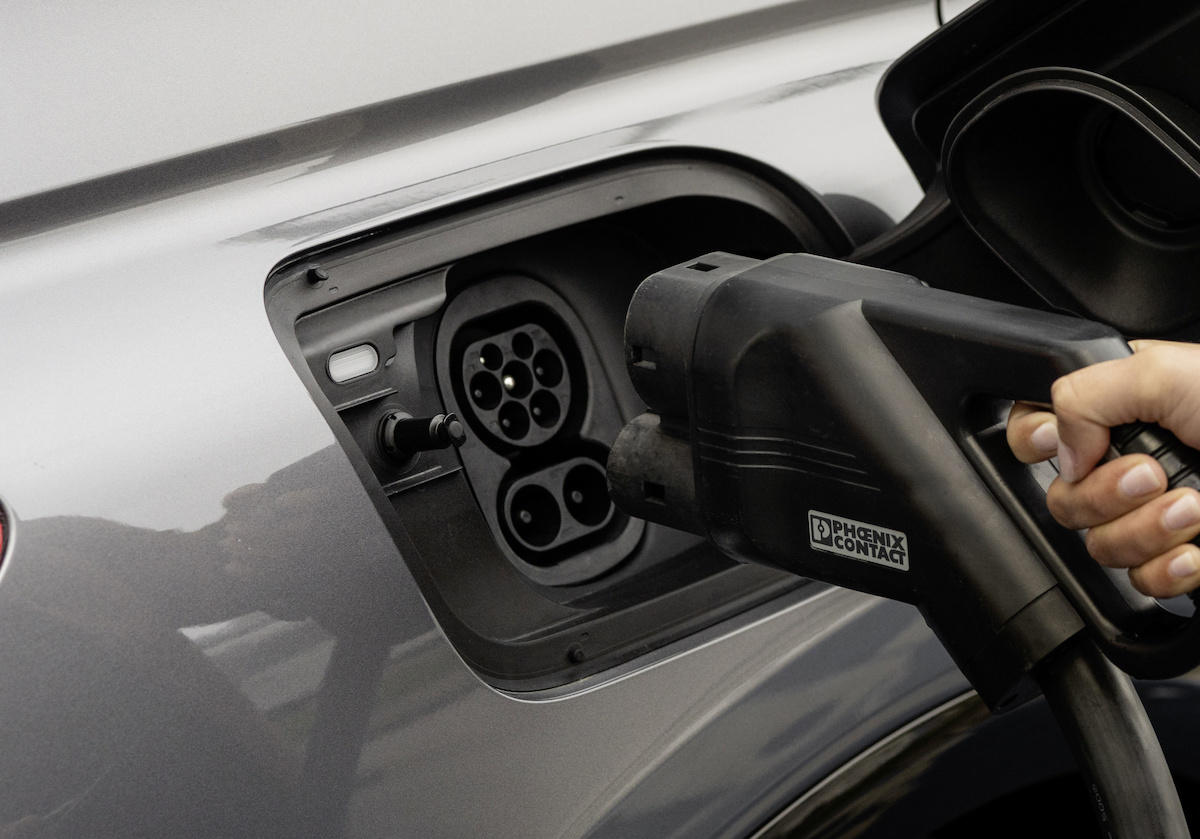
- Those who expect to regularly use older-style rapid chargers that are only compatible with 400-volt cars can add a different charging system as an optional extra that makes their car compatible with them. It’s an expensive extra, though, and it won’t be necessary for those who use the latest chargers more regularly found at service stations.
- The CLA gets all the active safety features you might expect, many with confusing acronym-heavy names, but some of the ones you might of heard of include adaptive cruise control with traffic function, automatic emergency braking, driver monitoring, blind spot assistance, lane keep assist, cross traffic alert, and speed limit assist, There are also two Isofix child seat mounting points and eight airbags, although none of those airbags give coverage those those in the rear. Regardless of that, the CLA - in both saloon and estate forms - has achieved a full five-star rating from Euro NCAP from a test done in 2025, complete with a Best-in-Class certification.
- If you don’t need a massive range: Buying the entry-level CLA 200 can save you an awful lot of money, and although the official figures say it’ll only do between 299- and 321 miles between charges, that’ll still be plenty for a lot of people. Why pay the extra for a higher-spec car if you don’t need the range? It offers much the same experience otherwise.
- If you want the longest range possible: That comes from the mid-range CLA 250+. Depending on trim level, the official figures say this version will do between 439- and 469 miles between charges thanks to having a larger 85kWh battery than the 58kWh unit fitted to the entry-level CLA 200.
- If you want the most power possible: that comes from the CLA 350 4Matic, which has 349bhp from its two electric motors. It has the same 85kWh battery as the CLA 250+, and while the extra power means that range takes a bit of a hit, the difference isn’t huge. Depending on spec, the official figures say you’ll get between 424- and 451 miles of range.
- If you want the best all-rounder: We’d say that the mid-range CLA 250+ in a reasonably modest trim - Sport Executive will probably do it - will have all the bases covered for most drivers.