Porsche Panamera Review 2025 | A joy to spend time in
Porsche Panamera cars for sale
4.0
Expert review
Pros
Gorgeous interior
PHEVs can be very affordable to fuel
Great balance of comfort and fun
Cons
Not cheap to buy or run
Others have more space in the back
Complex options

The CarGurus verdict
The Porsche Panamera is just a joy to spend time in, and to live with. It’s not cheap, but it feels like a top-notch luxury car, and the blend of refinement, comfort and handling poise is verging on wizardry. A Cayenne, a Range Rover Sport or even a BMW X5 are no doubt the more sensible options in terms of family practicality and even long-term ownership costs, but the Panamera has a luxury lustrousness to it that none of the SUV alternatives can rival. If that’s what you’re after, and you don’t mind paying for it, you won’t find a more enjoyable, nor a more comprehensively capable GT car.
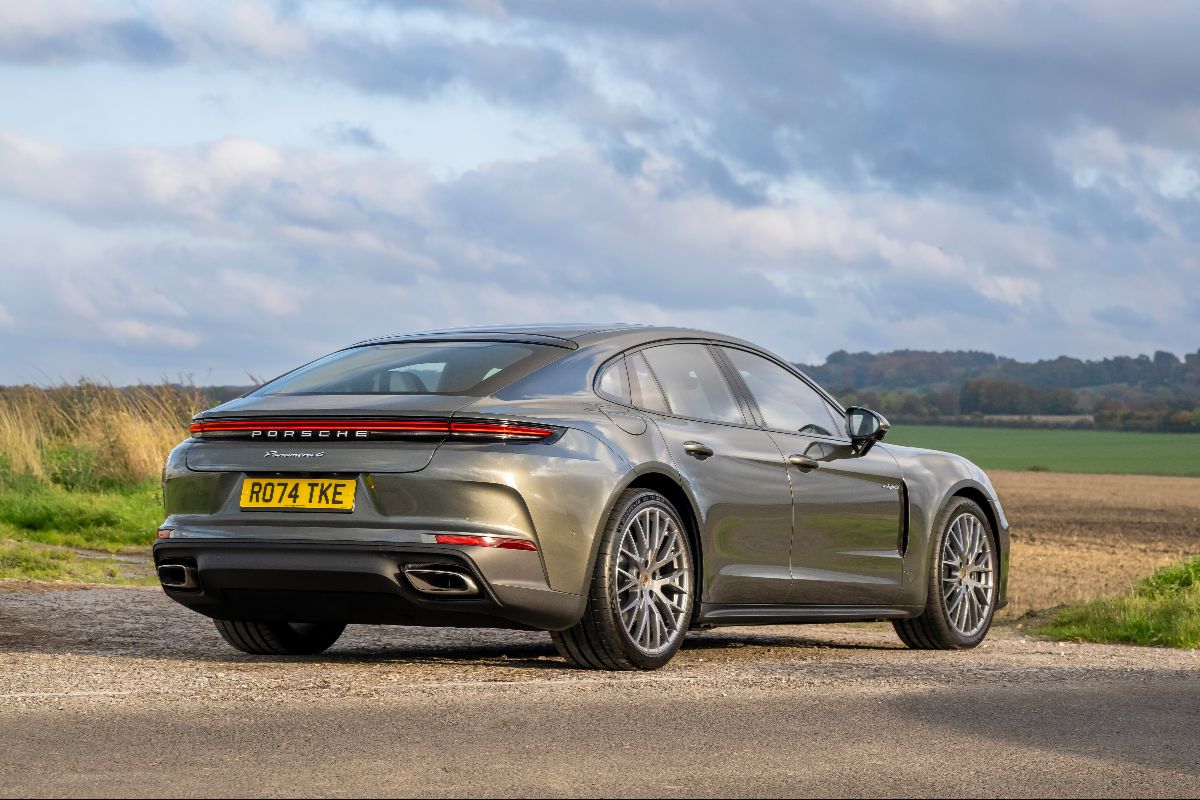
What is the Porsche Panamera?
The Porsche Panamera is the luxury saloon (even though it’s actually a hatchback) in the German brand’s lineup; an option for those drivers who want something that’s big enough for the family, comfortable enough for long hours behind the wheel, but that’s not an SUV. Having said that, while obvious rivals to the low-slung Panamera include traditional saloons like the Mercedes S-Class and E-Class, BMW 5- and 7 Series, and the Audi A6, there’s no doubt that the Panamera must also compete with SUV alternatives including the Porsche Cayenne and Range Rover Sport.
The Panamera has been around since 2011, and this third generation Porsche Panamera went on sale in 2024.
For this Panamera, the range starts with a 2.9-litre turbocharged V6, which can be had with rear- or four-wheel drive. Then there’s the 4.0-litre twin-turbo V8 Porsche Panamera GTS that is all-wheel-drive as standard, and is one of the sportiest options in the range. The plug-in hybrid (PHEV) Panamera E-Hybrid variants are all four-wheel drive, and add between 50- and 60 miles of pure electric range to those same engines, while also adding even more power. You can even get the Turbo or Turbo S E-Hybrid versions, which add electric propulsion to that V8, for 671bhp and 771bhp, respectively. Good enough for 0-62mph in around 3.0 seconds or less.
We may be talking about a 5.0-metre luxury saloon, here, but Porsche hasn’t forgotten that it needs to be fast and fun, too.
How practical is it?
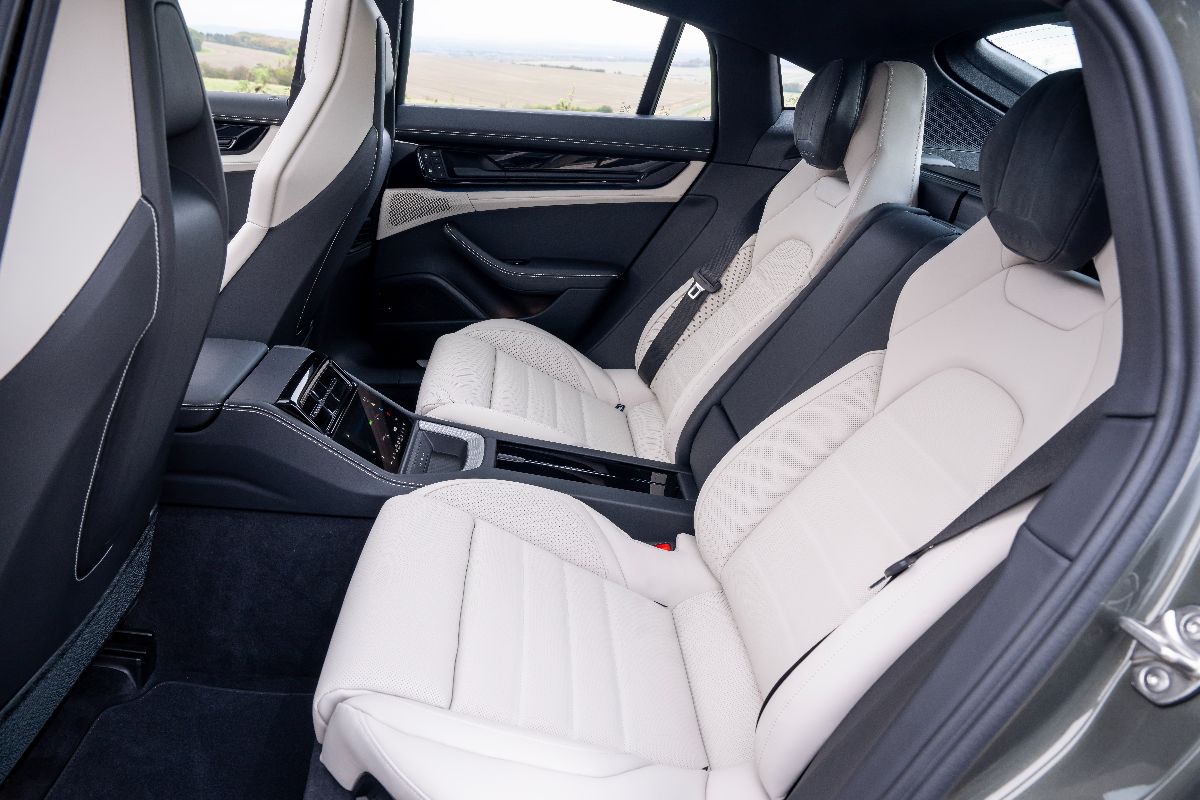
It’s practical enough for easy family motoring, the Panamera, but you do only get two seats in the back. They’re roomy and comfortable enough that even lanky teens or taller adults will feel pretty spoiled back there, especially if you’ve added the panoramic roof and four-zone climate control. Those in the back can even have heated- and ventilated seats, and a massage function if you’re willing to pay the extra to add it.
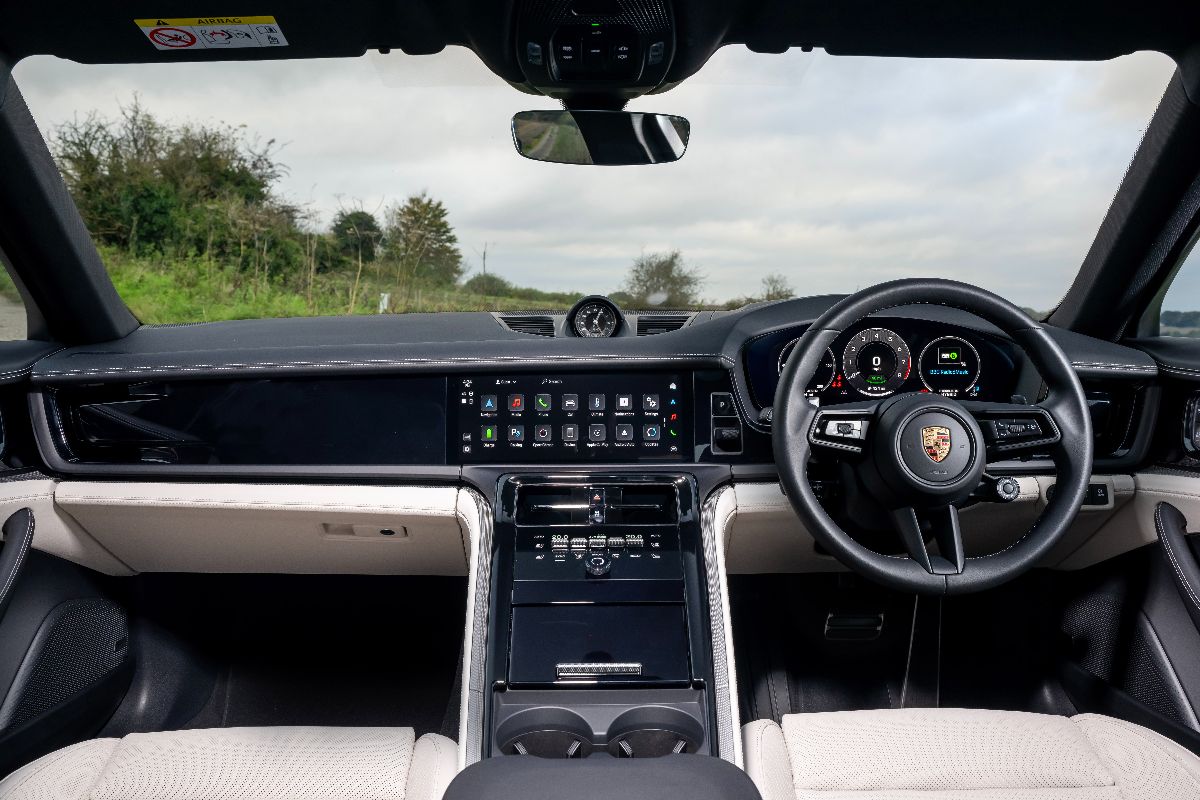
Up front, the dashboard is a typical of Porsche; understated yet beautifully finished. The infotainment screen is integrated neatly into the dashboard, and the materials feel dense and high quality (although – as with every aspect of the Panamera – there’s a bewildering array of options when it comes to interior colours and finishes). We had optional 14-way adjustable sports seats on our car, complete with possibly the best massage function we’ve ever encountered in any car. While we can’t speak for the standard seats, these upgraded versions are among the most comfortable seats we’ve ever experienced.
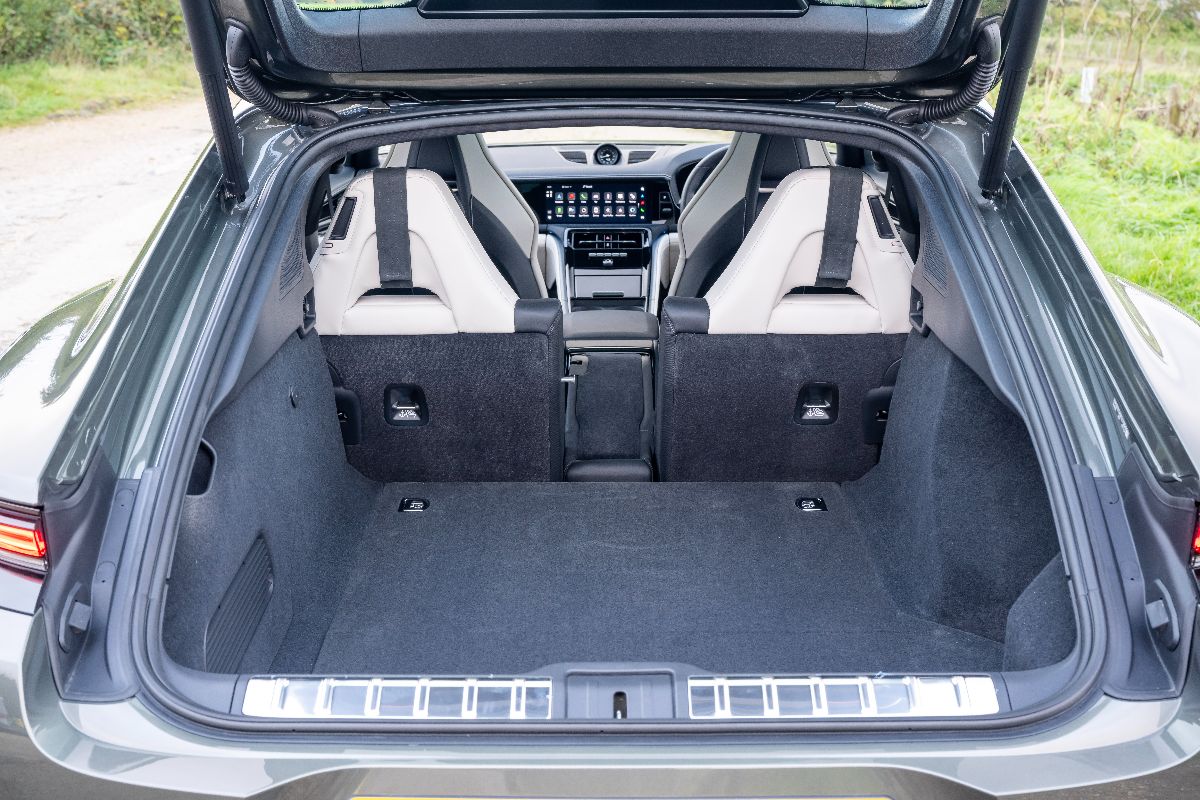
As for boot space, the Porsche Panamera doesn’t get the choice of saloon- or Sport Turismo fastback body variants that past generations did. Instead, it’s only offered in this sleek body shape, complete with a hatchback boot opening and a 500-litre boot space (or that drops to 430-litres in the Panamera PHEVs). It’s inevitable that the boot space is fairly shallow due to the shape of the sloping rear window, but it’s still a broad, useful boot floor that’ll take a set of golf clubs: or two, if you drop the 40/20/40 split rear seats.
What’s it like to drive?
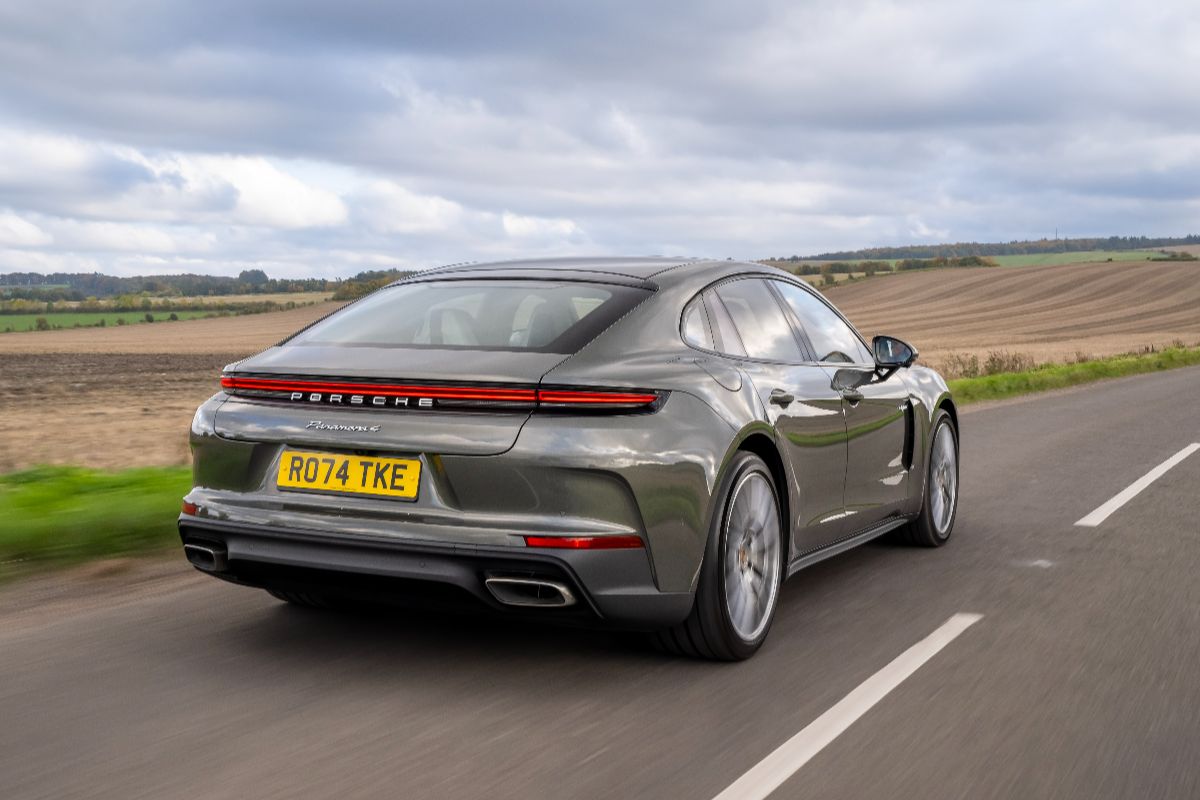
The Porsche Panamera is the best luxury four-door sports-GT you can buy. That does make it the best of a very niche bunch, of course, but it’s just a delight to drive. We spent time in the Panamera 4 E-Hybrid, which is the entry-level PHEV, and gets a mere 464bhp from the V6 petrol and electric power sources combined. Good for a 0-62mph time of 4.1 seconds, while the active all-wheel drive also gives it an edge of all-weather usability.
We also had a brief go in the V8 Panamera Turbo E-Hybrid, which has an even naughtier sense of being sports car and luxury electric tourer all rolled into one, thanks to the 671bhp and rumbling V8 soundtrack.
Having said that, we’d save the money and stick with the V6 Panamera. It doesn’t have the same muscle-car character, but it’s supremely slick in the way the powertrain shuffles between electric- and petrol power via the eight-speed automatic transmission, and it’s got more than enough power to make the big Porsche feel thrilling when you fancy it. Every Panamera gets air suspension as standard, too, but our test cars both also had the Porsche Active Ride, which is a clever system that reduces the pitch and roll that you get from the car’s body in direction changes. It helps to make the car both more comfortable in the everyday drive modes, and more taut-feeling through corners in Sport and Sport Plus mode.
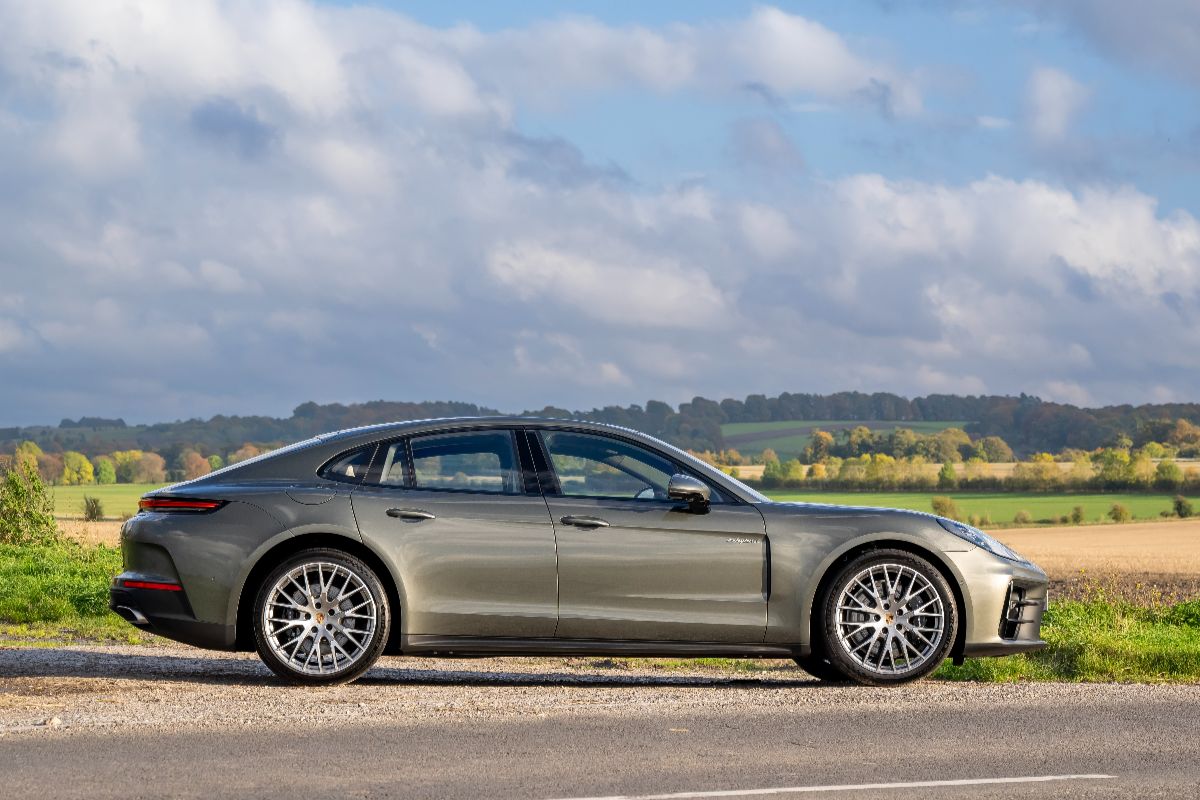
Our car did a brilliant job of sponging over the worst road surfaces despite the (also optional) 21-inch alloy wheels, while also keeping the Panamera’s body movement in check through tight corners.
In fact, the only annoying thing about the Porsche Panamera is how extensive the options list is, and many of them will have a big impact on how the car drives, too. We’d find the money for the Porsche Active Ride air suspension, and the rear-axle steering is also a useful addition that makes the big Panamera much more manoeuvrable in tight quarters. With those fitted, you won’t find a rival that balances comfort and sportiness better, and we include the Porsche Cayenne and Range Rover Sport in that.
Mind you, if you’ll consider an all-electric alternative, the Porsche Taycan and Audi e-tron GT will both give the Panamera a run for its money when it comes to long-legged cushiness and alert, tactile handling. Otherwise, the Panamera is rather in a league of its own.
Technology, equipment and infotainment
The Porsche Panamera has all of the latest technology, of course, including adaptive cruise control, lane-keep assist, keyless entry, LED Matrix headlights and more, all included as standard. As of 2025, there was also an upgraded version of the Porsche Management System (PMS) infotainment that included Amazon Alexa and Dolby Atmos audio as standard, and naturally you also get wireless Apple CarPlay, Android Auto, Bluetooth, DAB radio, sat-nav and more.
In fact, the standard equipment list doesn’t look bad, but as soon as you start looking at the bewildering array of options, it’s obvious that you can spend a stupefying amount of money on additional extras. Our Panamera 4 E Hybrid test car cost around £100,000 before options, but the car had over £40,000 of options. Which all a bit much, really, when you think that you could have a nearly-new Porsche Boxster for the same price as the optional extras on the Panamera. If you show a bit of restraint over the options, though, you can still have a very lovely Panamera without spending such an extravagant amount.
Porche Panamera running costs
The Porsche Panamera isn’t cheap to buy, and it won’t be cheap to run. It is, after all, a high performance, luxury car, and the associated costs will be just as eye-watering as you might expect. Having said that, the plug-in hybrids will be very cheap to fuel provided you charge often and don’t wake the petrol engines too often. If you do have the sort of lifestyle that allows regular charging and doesn’t demand routine long journeys, you could also consider the Porsche Taycan, which costs a similar amount to buy, and will bring far greater tax benefits if run as a company vehicle.
Depreciation won’t be pleasant, either, but then the big, luxury limo class has always suffered with steep depreciation, and in the context of that class, the Panamera isn’t too bad. It’ll lose value in a less dramatic way than the BMW 7 Series and Mercedes S Class, for sure, although the Porsche Cayenne and Range Rover Sport will both be a bit better for retaining their value.
Factor in plenty of cash to cover servicing, tyres and insurance. The Panamera won’t be cheap on any of these ownership fronts.
Porche Panamera reliability
Porsche offers a three-year, unlimited-mileage warranty on its new vehicles, while the high-voltage battery in the Panamera E-Hybrid is covered for eight years and 100,000 miles. Owners have reported some issues, with electrical glitches the more common issues. Porsche was ranked 19th out of 30 manufacturers included in the 2025 What Car? Used Car Reliability survey, which is a bit disappointing.
- The official electric range of the Panamera plug-in hybrids is in between 50- and 60 miles depending on model, but expect around 40 miles in the real world. When the pure electric range is used up, the Panamera saves enough of its battery capacity to still run on electric power occasionally, functioning like a full hybrid and continuing to top-up the battery with the brake regen’ system, rather relying solely on petrol power.
- The Porsche Panamera E-Hybrid models use a 21.8kWh (25.9kWh total capacity) lithium-ion battery. Standard 11kW on-board AC charging means that you can charge in under three hours from a fast enough charger, while a standard 7kW charger will take closer to four hours for a full charge. There’s no DC rapid charging, which is a shame.
- Every Panamera gets the Sport Chrono Pack as standard, which includes a Sport Plus drive mode, launch control, lap timer and a lovely clock in the centre of the dashboard.
- If you want the sportiest: Go for the Panamera GTS, rather than the Turbo variants that have more power but are also heavier and more designed for sheer pace than handling reward. The GTS is intended to be the more purist choice, and the V8 sounds fantastic, so if you want your Panamera to feel as close to a four-door 911 as it can, the GTS is the model for you.
- If you want the best company car: The lower CO2 emissions and decent electric range makes the plug-in hybrid Panamera models the best option for company car users, whether you’re paying via salary sacrifice, Benefit in Kind, or leasing through your company in return for tax benefits. We’d stick with the Panamera 4 E-Hybrid, given that it’s more than fast enough.
- If you want the best family car: We’d be very happy with the standard Panamera 4. It’s unlikely that it’s worth paying the many thousands extra that it costs for the plug-in hybrid, if you’re a retail buyer, and the Panamera 4 will still be a lustrous and lovely car to spend time in. You get Isofix fittings in the back seats, and you can add another on the front passenger seat. We’d go for the leather-finish interior, for wipe-clean usefulness, and add the panoramic roof and heated rear seats to keep the kids happy.
- If you want the best long-distance cruiser: The Panamera 4 will be a fantastic high mileage companion. No need to go for the PHEV models if you mostly do longer journeys, as you won’t see the benefits of the electric running if you can’t charge regularly and cover most of your mileage on pure electric power.


