I doubt that BYD needs much introduction. This Chinese brand started selling passenger cars in Europe in 2022, and the UK in 2023, but in that short time it’s become a poster child for the Chinese automotive industry: the tech, the value and also the speed at which brands can evolve and grow.
Let me give you some numbers… Since it arrived in the UK, BYD has launched eight new models and opened 125 dealerships. By the time you’ve finished that cup of coffee, the ninth new BYD model will be here (I’m only half joking, by the way: the BYD Sealion 5 DM-i plug-in hybrid SUV launches before the end of January).
It’s not just about the sheer volume of new models that BYD can launch, either. At the end of last year, BYD set a new production car speed record with the electric Yangwang U9 Extreme hypercar (pictured below), which achieved 308.4mph. That’s faster than a Bugatti Chiron.

In the same year, BYD also launched the Dolphin Surf, one of the most affordable five-door electric hatchbacks on sale in any market. I’ve driven it, and it’s really not bad at all. Say what you will of this company, but it’s certainly covering all the bases.

So, those sales figures? In 2025, BYD sold 51,422 cars in the UK, a jump of almost 500% from 2024. That figure’s a bit skewed because, of course, BYD had only just launched in 2023 so it was starting from zero a couple of years previously. Naturally, the percentages show a big jump in growth.
But those are still big sales figures. Perhaps the best way put it into context is to point out that that BYD sold more cars in the UK in 2025 than Cupra, Dacia, Mazda, Porsche, MINI, Jeep… Oh, and Tesla.
Speaking of which, BYD sold more electric cars than Tesla globally in 2025, too. It has already outsold Tesla by a factor of millions over the last few years if you include BYD’s plug-in hybrid and hybrid vehicles, but 2025 was the first year that BYD sold more pure electric cars than Tesla. It sold 2.25m EVs around in the world compared with Tesla’s 1.64m. Of course, that’s partly due to Tesla’s rocky year of political upheaval and replacing the Tesla Model Y, which remains its biggest-selling model. But even without those factors, BYD’s sales would almost certainly have outstripped Tesla’s.
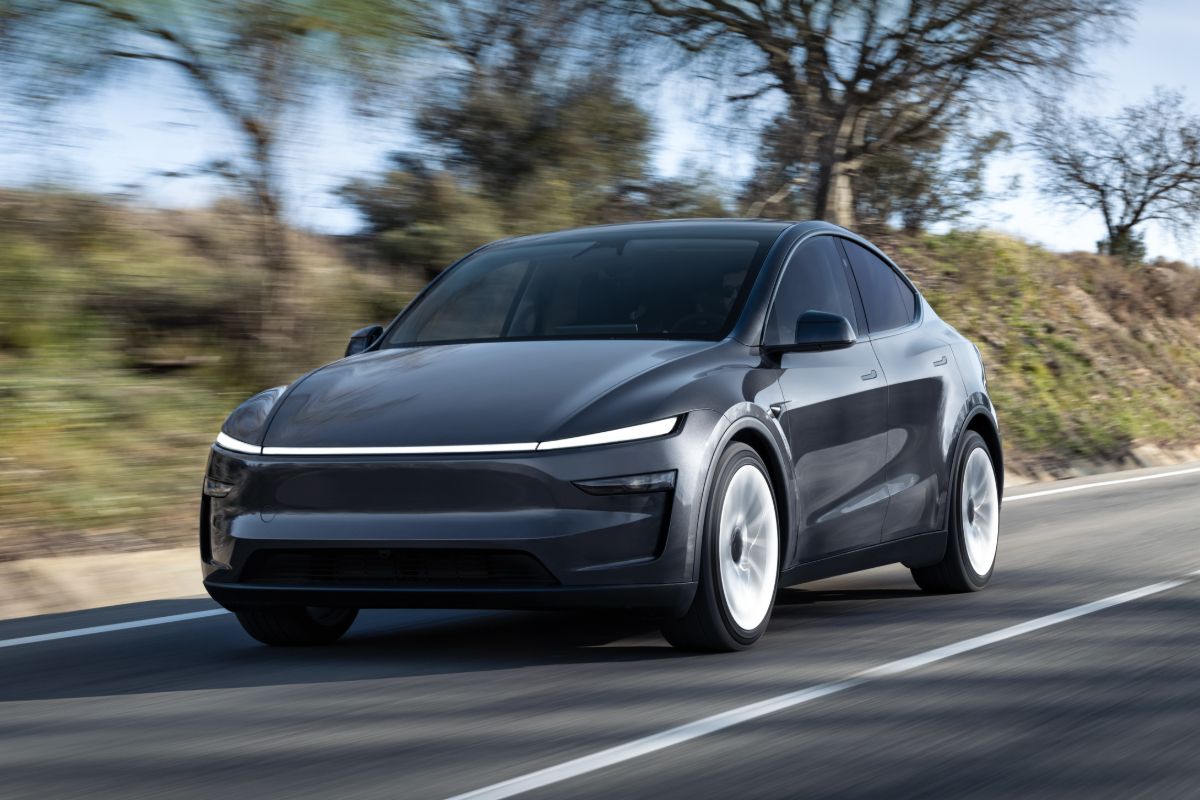
It hasn’t all been an easy ride for BYD this year, to be fair. Factor in its hybrid and petrol vehicles, and its total 2025 passenger car sales of 4.55m represent a growth of 7.7% since 2024, which is actually a huge reduction on the phenomenal global growth of 41% that BYD saw from 2023 to 2024. A fall in demand for PHEVs and increasing competition in the Chinese market (which remains the biggest in the world) are the chief reasons for the slowing rate of growth.
Despite all of that, BYD’s sales outside of the Chinese market rose to nearly 1.05 million vehicles, and it aims to increase that to 1.6m in 2026, aided by its new production facility in Hungary.
Let’s not forget that this is a company that produces all of its own batteries and semi-conductor chips (and sells them to plenty of other car makers and electronics companies around the world). Only the glass and tyres in a BYD vehicle are produced by third-party companies; everything else is produced in-house.
And I’ve not even mentioned the firm’s exploits in buses, trains and commercial vehicles.
It also employs over 1m staff across six continents (some 120,000 of those are engineers and technicians) and owns its own fleet of car transporter ships, meaning that it can have absolute control over its vehicle movements around the world.
Here’s the thing, then. We’ve been talking about the rise of China, and of Chinese cars specifically, for many years. While we’ve been doing that, BYD has actually been doing stuff. Building factories, employing staff, perfecting its battery technology, employing some more staff, rolling out dealerships, re-engineering that car, launching another brand, employing more staff, hammering a nail through that battery pack at a global press conference, breaking that record, delivering more buses, selling more batteries, employing more staff… And now, it’s here. In all its fully formed glory, while a bewildered Europe stands around and thinks: “Wow. That happened quickly.” There is no better example of what’s now a well-known phrase: ‘China speed.’
But BYD does still have work to do. For a start, every model that comes out of BYD feels like it’s come from a completely different manufacturer, which, given the number of engineers working on it, and the speed with which BYD’s vehicles progress from an idea in a boardroom to a car on a showroom floor, is perhaps no surprise.
For instance, the BYD Seal 6 DM-i saloon that I very recently drove feels almost Mondeo-ish in a bland, predictable way, while the Atto 3 has an interior that feels like it’s been designed by a soft play company. All of its models feel a bit unfinished in some ways, other than the BYD Seal – the Tesla Model 3 rival – which arrived fully formed. It’s a remarkably polished car that remains my favourite of all the BYD products.
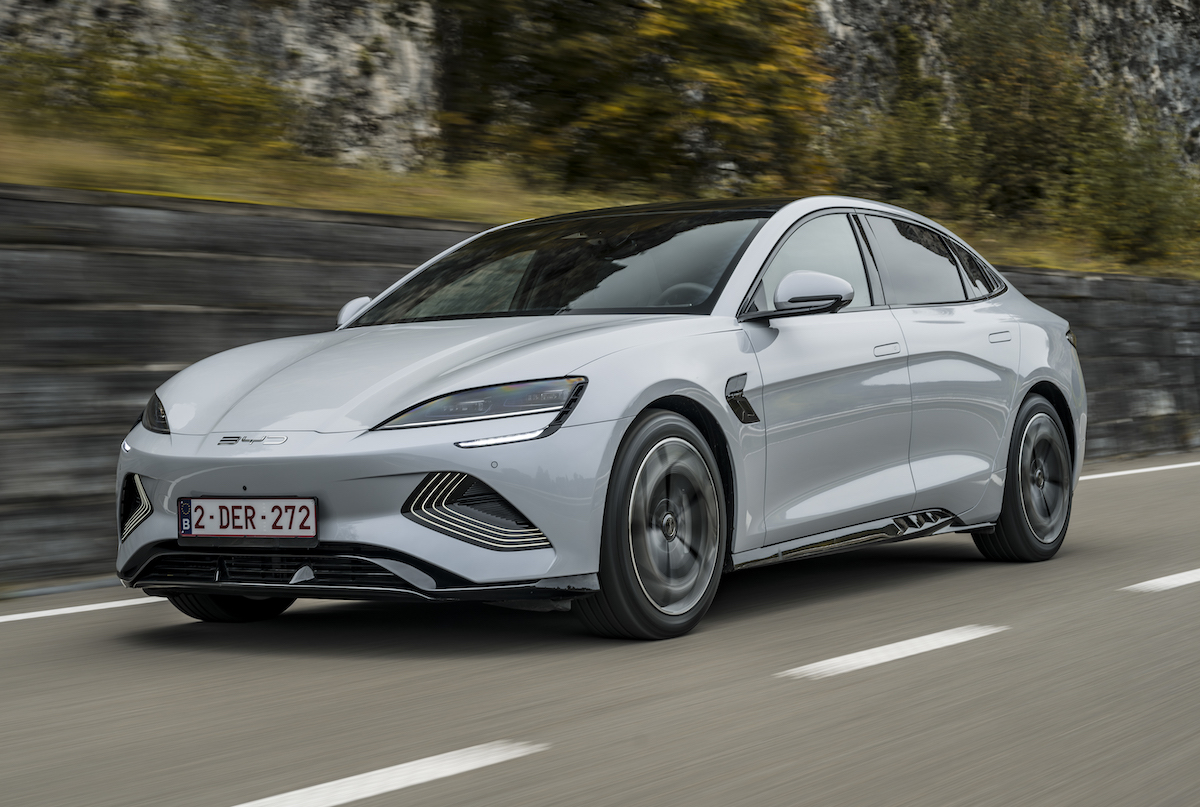
The question for BYD now is, how does it evolve from here? Does it keep churning out models as fast as possible? Or does it slow down a little now that it’s established itself, and start to work on remedying the details that often still make its cars feel a little bit less impressive than some of the obvious European rivals?
My money's on BYD continuing at its current dizzying pace. However, because it's a company that learns as quickly as it makes stuff, I think we’ll see big improvements in the details over the coming years. Improvements to the ride and handling, the infotainment usability, the ADAS settings and integration…
All of this stuff will come. But the numbers speak for themselves already when it comes to BYD. Get used to seeing them on the road, because this is a brand that’s here to stay.


