BYD Atto 3 2025 review | Compact electric SUV from China
Byd Atto 3 cars for sale
3.0
Expert review
Pros
Comfortable and quiet to drive
Absolutely loaded with standard kit
Roomy, high-quality interior
Cons
Interior design will be divisive
Could be (a lot) cheaper
Some rivals are more fun to drive

The CarGurus verdict
The BYD Atto 3 is a really competent pure electric family car that feels strong on quality and has some impressive tech. It’s also roomy, and is very well equipped as standard. However, it’s nice rather than anything special to drive, and the rather wacky interior won’t be to everyone’s tastes.
Starting at around £38,000 and up, it’s also not cheap by any standard, never mind the standards of a new brand that UK buyers are yet to build up much trust with. So, while the BYD Atto 3 is a genuinely decent family car, it is also a way off the class leaders in some key areas.
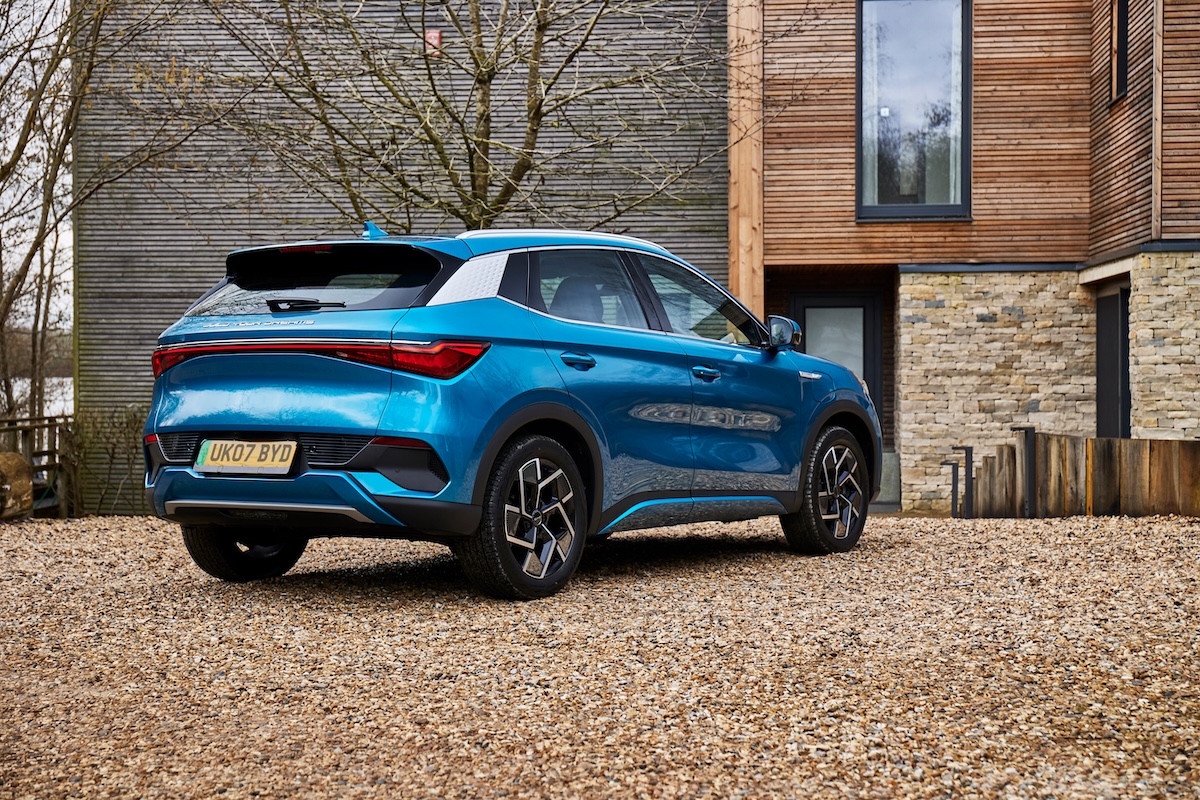
What is the BYD Atto 3?
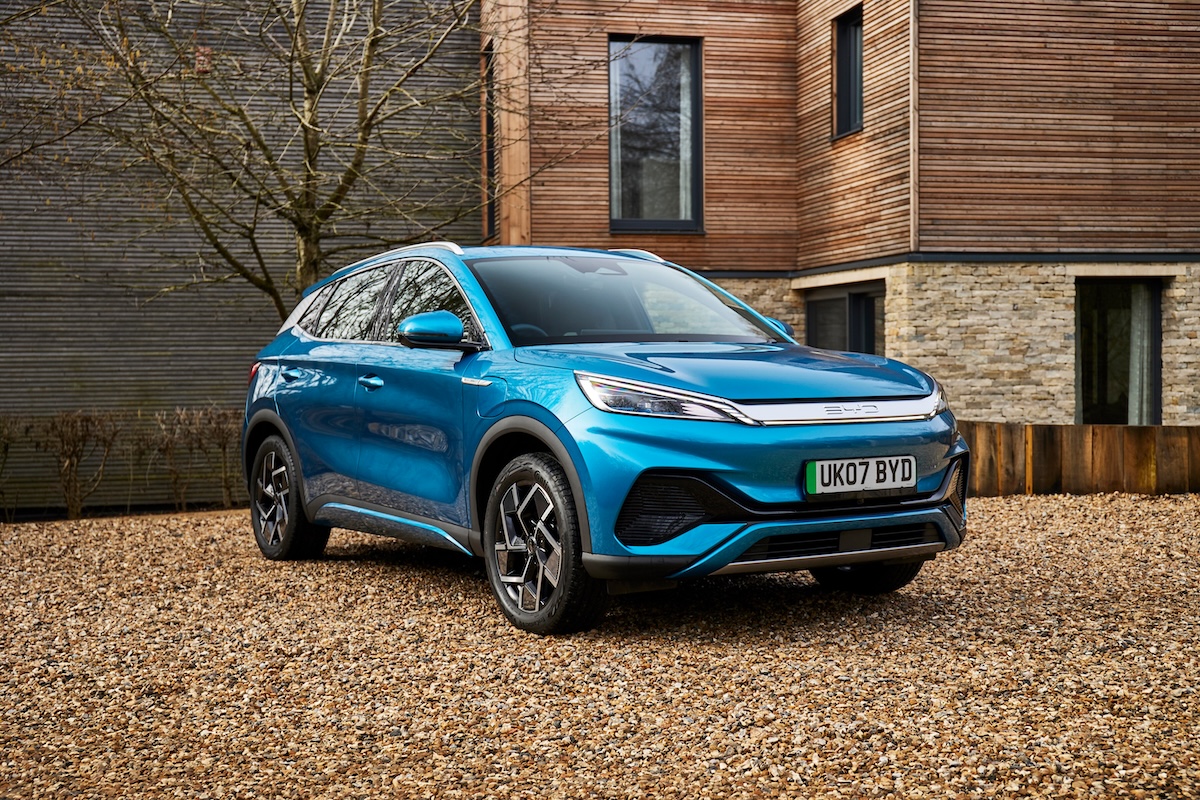
BYD hasn’t existed in the UK for all that long, but the chances are that you’ve probably heard of it by now. This huge Chinese manufacturing powerhouse has been making big waves in the UK market since launching here in 2023, and the Atto 3 was the company’s first offering on these shores.
The BYD Atto 3 is a mid-sized, pure electric hatchback SUV, that splits the difference in size between the Volkswagen ID.3 and ID.4. The car sits on the company’s e-platform 3.0, and gets front-wheel drive, a 201bhp electric motor and a 60.5kWh usable battery capacity, courtesy of the company’s ‘Blade’ lithium-iron phosphate (LFP) battery technology. That means that the BYD Blade battery is cobalt-free (great news environmentally), and the company also claims that it is safer and longer-lasting than the lithium-ion cell technology traditionally used in most electric cars today. Incidentally, the e-platform 3.0 is a scalable platform that’s capable of delivering four-wheel drive, rear-wheel drive, a variety of battery sizes and also 800V charging technology (albeit none of this is currently on the Atto 3, or at least, not yet).
According to official WLTP figures, it has a combined range of 261 miles, or we’d estimate real-world driving range to be some 220- to 250 miles in the summer, while winter will probably see that drop to more like 160- to 190 miles. A heat pump is standard to help with efficiency in cold weather. Prices currently start at around £38,000 for the entry-level Comfort version, which is still extremely well-equipped. The Atto 3 goes up against a wide variety of electric family cars and electric SUVs, such as the Kia Niro EV, Hyundai Kona Electric, Skoda Enyaq iV, MG S5 EV, Volkswagen ID.3, Nissan Leaf, Tesla Model 3, and more.
The BYD Atto 3 charges from Type 2 or CCS sockets, which are the European standard and are compatible with the majority of public charging stations. Early cars had a maximum rapid charge rate of up to 88kW, which means that you’ll get a battery top-up from 10-80% in around 40 minutes. The maximum rate was later upgraded to 110kW, trimming the top-up time to 35 minutes. A 7kW home charger will fully charge the battery in under ten hours.
How practical is it?
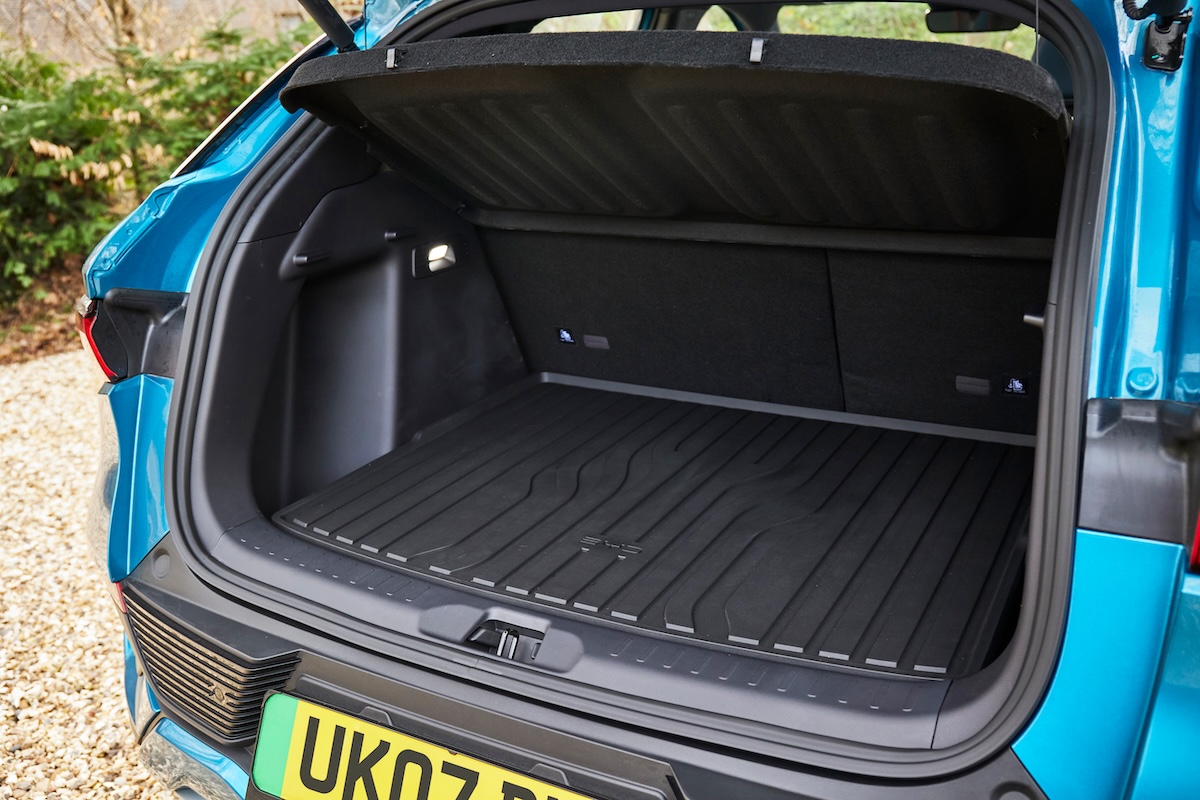
The BYD Atto 3 is fairly practical for a car of its size. At 440 litres, the boot is a good size and will take a chunky buggy beneath the tailgate with ease, even if rivals like the Skoda Enyaq iV offer usefully more boot space. Rear legroom in the BYD is as good as in the best alternatives, though; it really is properly spacious, with more room than in a VW ID.3 or Tesla Model 3, and rivalling the Skoda Enyaq iV on this front.
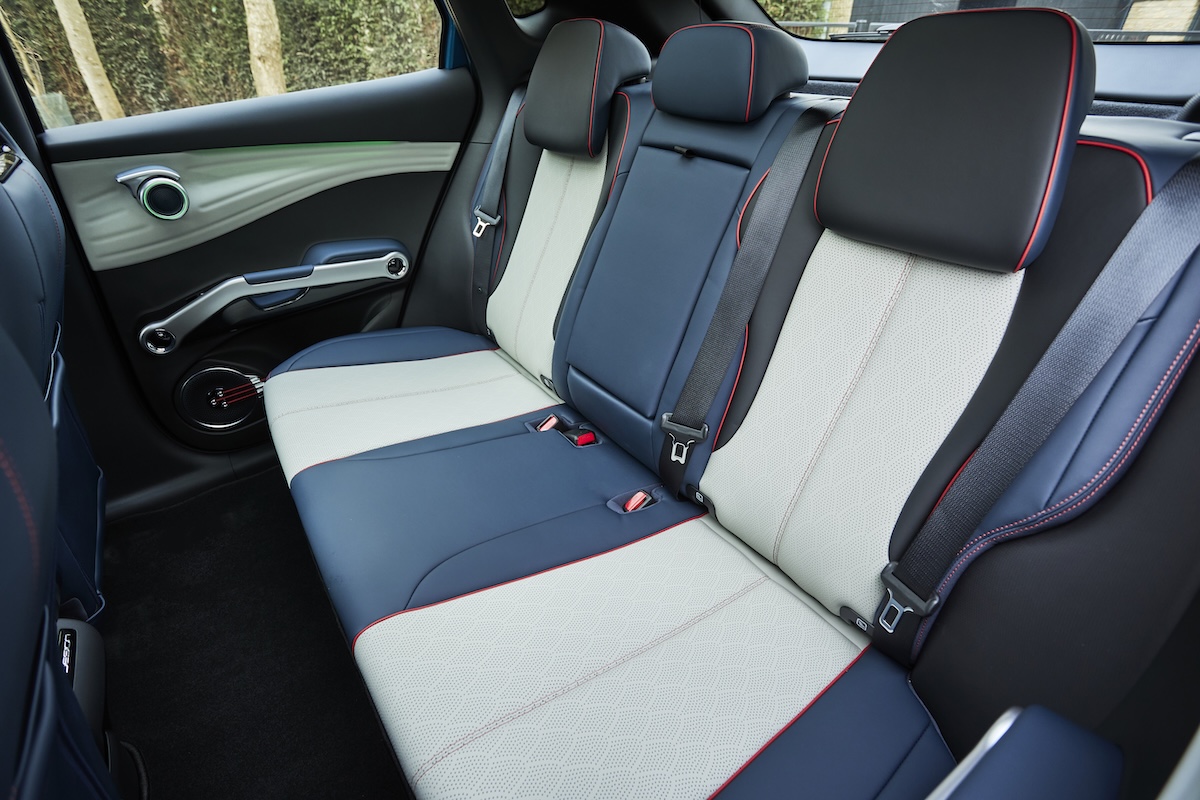
Headroom in the rear seats of the BYD Atto 3 will make a six-footers feel a touch hemmed in, but that’s partly due to the standard panoramic sunroof that eats into the available headroom. You get two USB charging ports in the back, a centre armrest and also some funky elastic styling features on the door bins, which look like guitar strings and can be twanged by the kids for maximum amusement. A fun trick for the first few miles, but probably tiresome for the parents who have to sit in the front and listen to it.
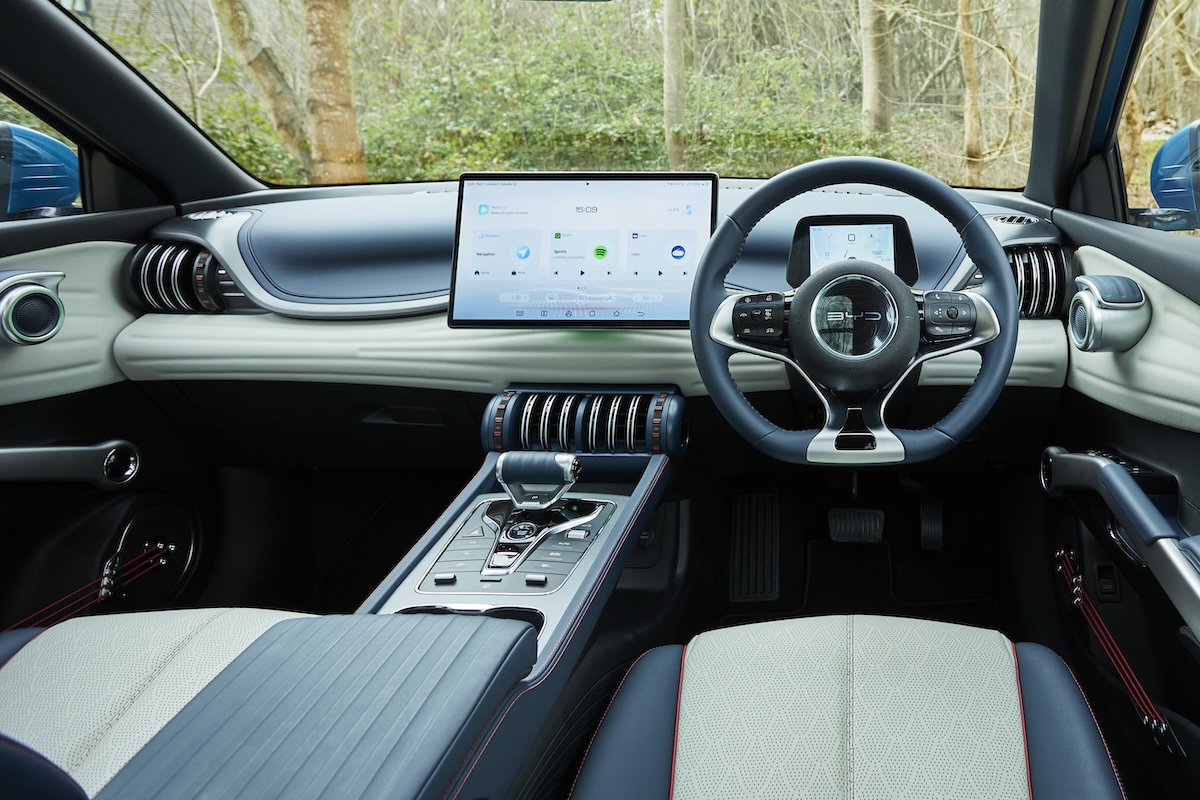
There are even more wacky design cues up front. The dashboard design has been inspired by a gym, apparently, but the scalloped finishes and colourful plastics seem to inspire more of a seaside theme to us. The driving position is good, making it easy to get comfortable behind the steering wheel, while the visibility is clear and the tech inside the Atto 3 is impressive.
The materials and switch damping feel pretty solid and tactile, reflecting some very decent perceived quality throughout the BYD. It might not trouble the likes of BMW, but it feels just as well screwed together as a VW ID.3, for instance, and usefully better than the MG S5 EV and MG4. But, that design is very unusual, and will be of the love-it-or-loathe-it variety. As a result, this is one area where BYD may have failed to tailor the Atto 3 to Western European tastes, which is odd, because the firm has done well with making the Atto 3 look and feel European in pretty much every other aspect.
What’s it like to drive?
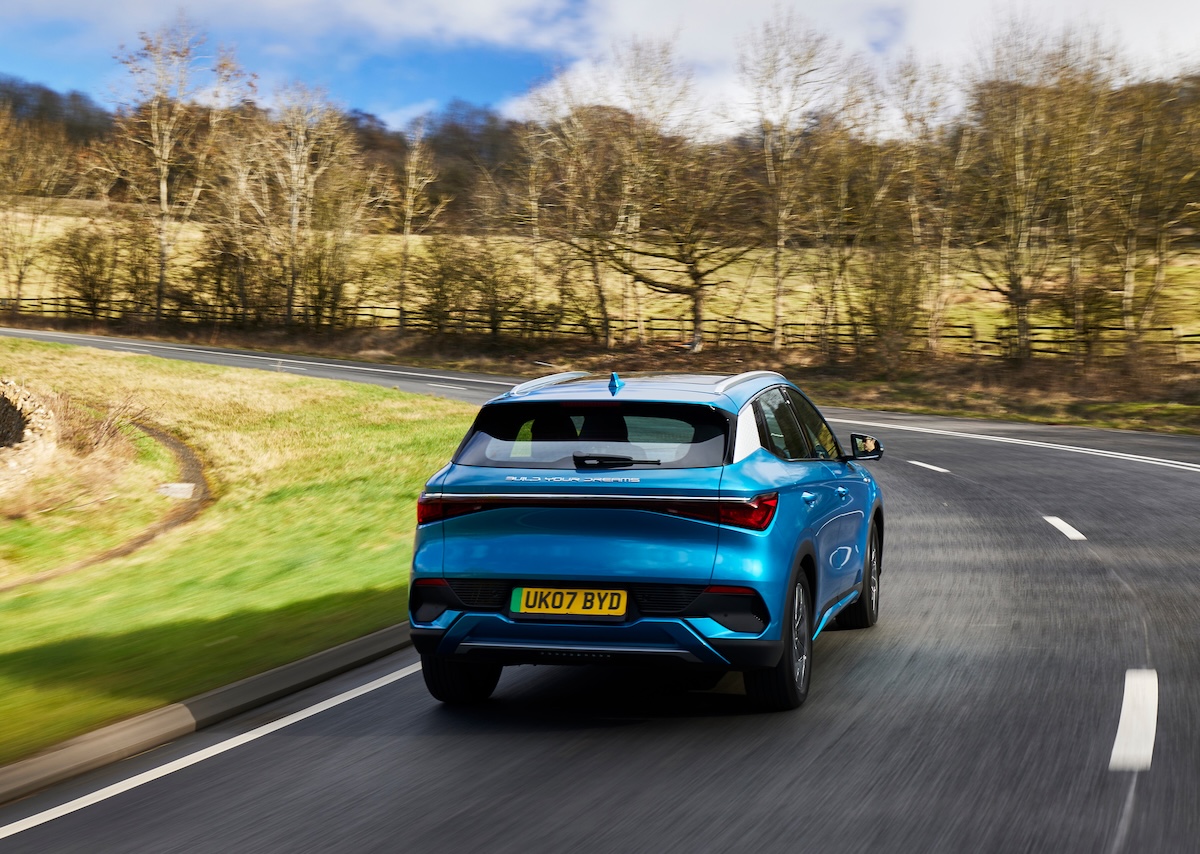
Cushy, and generally very pleasant. The soft suspension does a good job of mopping up lumps and bumps in the road, keeping life impressively comfortable.
All the while, the handling isn’t too bad, either. The steering is light but nicely weighted, so the car is easy to place precisely on the road, and it even feels confident in faster corners and through swift direction changes, despite a significant amount of body roll. Sure, it’s not as sharp and fun as a Cupra Born, or even an MG4, but it is very assured and refined.
There’s plenty of performance, too. A 0-62mph sprint time of 7.3sec is pretty sprightly even by EV standards, and you get plenty of response even if you ask for a burst of acceleration when you’re already doing a good speed. It’s no hot hatch, but a fast merge onto a motorway won’t be a problem, that’s for sure.
You switch between the two modes for brake regen’ in the touchscreen menus, rather than the more convenient steering-wheel-paddles you get in some rivals. Neither mode is heavy enough to be a proper one-pedal mode, but both are predictable and easy to get used to.
Technology, equipment and infotainment
When it first went on sale in the UK, the Atto 3 was offered in three different trim levels, Active, Comfort and Design. Even the entry-level Active car was incredibly generously equipped, with standard kit that included 18-inch alloy wheels, all-round LED lighting, metallic paint, a panoramic sunroof, power folding and heated door mirrors, high-beam assist headlights, vegan leather upholstery, heated front seats with powered adjustment, ambient lighting, V2L charging, front- and rear parking sensors, 360-degree cameras, keyless entry and start, a heat pump, adaptive cruise control, a mode 2 charging cable, and a 1-phase mode 3 charging cable.
In fairness, Comfort didn’t really add anything in the way of desirable kit to what you got with the Active. The only real differences were that you got an 11kW on-board charger instead of a 7kW one, and a 3-phase mode 3 charging cable. That’s probably why Active trim was later dropped, leaving just Comfort and Design trims.
The range-topping Design trim enhanced the already-generous spec by adding an electric tailgate, extended ambient lighting, and an air purifier.
All trim levels get a massive central touchscreen: it’s a 12.8-inch item in Active and Comfort cars, and a larger 15.6-inch item in the Design. Either way, you can even rotate the screen so that it’s portrait or landscape, but that’s a bit of a gimmick as it cuts into your forward visibility in portrait mode, yet doesn’t bring much to the usability of the system. Best just to leave it in landscape mode, to be honest.
The system’s graphics are a match for those of Volkswagen and Kia, while the screen’s menu layouts and responses are also good, even if the air-con controls aren’t all that easy to find and fathom out.
Both systems have Bluetooth, DAB radio, an eight-speaker audio system, wireless smartphone charging, and a 5.0-inch digital instrument panel behind the steering wheel. You also get ‘natural’ voice recognition, which is just as hit-and-miss as any of these systems. Apple CarPlay and Android Auto connectivity didn’t feature initially, but they do now, and older examples have since received this functionality via an over-the-air update.
BYD Atto 3 running costs
Prices currently start at around £38,000, so the BYD Atto 3 is far from being a cheap car, and some direct rivals can be had for considerably less. However, given the vast amount of standard it you’re given for your money, it still feels like a good-value proposition.
The cheapest way of keeping your battery topped up is to charge the car at home, and the quickest way of doing that will be to get yourself a home wallbox charger, which should administer a full juice-up in under ten hours. That charge will cost you around £17 if you pay the UK’s national average rate for your domestic electricity, but if you do the smart thing and get yourself on a variable home power tariff that allows you to charge your car overnight on heavily discounted off-peak power, then you’ll like pay around a third of that for the same charge. It’s a no-brainer, frankly.
By contrast, making regular use of public DC rapid chargers will likely have the opposite effect, because the electricity that comes out of these is often around three times more expensive than home power. As such, rapid chargers like these should only be used in emergencies.
The insurance groupings on your BYD Atto 3 will be either 37 or 38, depending on trim level, meaning that premiums shouldn’t be ruinous, but they won’t be cheap, either.
EVs are no longer exempt from VED road tax, so your Atto 3 will be liable for the same £195-per-year payment as petrol and diesel cars. At the time of writing, all versions of the car currently cost less than £40,000, meaning that you won’t be saddled with the steep ‘luxury car supplement’. The range-topping version is only a few hundred quid off, though, and cars - like everything - are getting more and more expensive all the time, so we don’t know how much longer this will be the case.
BYD Atto 3 reliability
BYD is a huge company in its native China and in other parts of the world, but while we have no doubt that it’ll also be huge on these shores one day, too, the brand simply hasn’t yet been around long enough for a meaningful amount of UK reliability data to become available.
It looks as though BYD has a fair amount of confidence in the longevity of its products, mind. The Atto 3 is being sold in the UK with a six-year, 93,750-mile warranty (seemingly a random number, but it equates to 150,000km), with cover of eight years and 155,350 miles (250,000km) for the high-voltage battery.
To date, all of BYD’s cars that have been tested by Euro NCAP have achieved the full five-star rating. The Atto 3 was the first of BYD’s models to achieve that feat. To achieve that feat, BYD has fitted the Atto 3 with safety measures including seven airbags, blind spot detection, door opening warning, traffic sign recognition, intelligent speed limit control, rear cross traffic alert, lane keep assist, lane change assist, emergency lane keep, and adaptive cruise control. The Atto 3 was merely the first of BYD’s models to hit these shores, and many more diverse models have come along since. These range from the Dolphin Surf, a cheap-and-cheerful little electric city car, right up to the Sealion 7 SUV at the top of the range. BYD is also likely to bring its luxury brand - known as Denza - to the UK in the fullness of time.
If your heart is set on the Atto 3: Then go right ahead. It’s not a class-leader in our eyes, but the Atto 3 does a very solid job in the vast majority of areas, and if you dig its unconventional interior design and heaving kit list, then there’s absolutely no reason not to buy one. If you fancy more fun: The MG 4 hatchback will give you a fairly similar amount of practicality and quality, plus plenty of equipment, but it’s a more enjoyable car to drive. It’s considerably cheaper than the BYD Atto 3, too. If you want a more recognisable badge on the nose: If you prefer to play it safe and are unnerved by the prospect of buying a car from a little-known brand, then there are plenty of alternatives from more recognisable brands. They don’t come much more recognisable than Volkswagen (currently the UK’s biggest-selling brand), and both the ID.3 and ID.4 EVs will do a very similar job.


