Big news! Ford is now going to use Renault’s small EV platform for two new electric cars in Europe.
That’s right – it’s already using Volkswagen’s MEB platform (which underpins the ID.3, ID.4 and co) for the Ford Explorer, and now the Renault 5’s platform will also form the basis for a couple of new small Ford EVs – the first of which is due in 2028. So, what we could well get is a new, all-electric Ford Fiesta that’s based on the Renault 5.
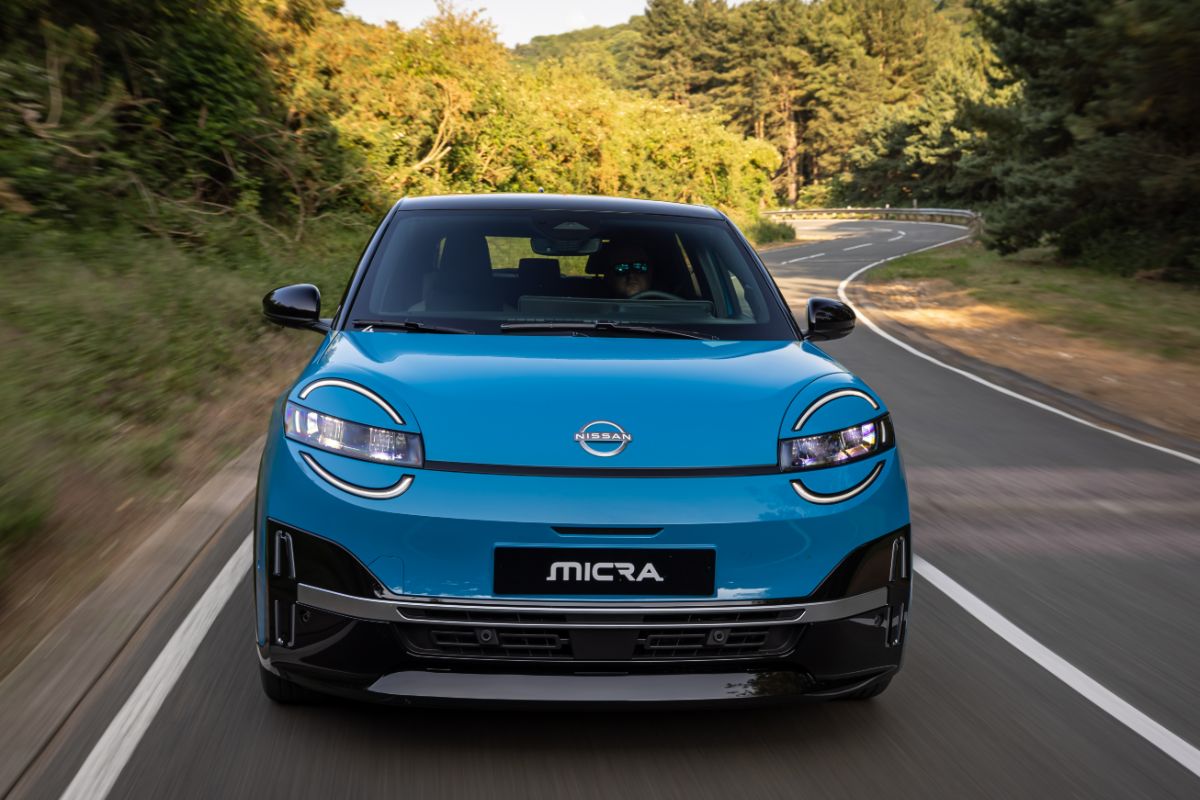
Meanwhile, Nissan has just released its rebadged version of the Renault 5 (the Micra, pictured above).
Not only that, but Renault and Ford have also signed a ‘letter of intent’ that they will jointly collaborate on light commercial vehicles in Europe. Oh, but don’t forget that Ford is also providing the parts and platform for some of Volkswagen’s commercial vehicles.
Which means that you’re going to have Ford and Nissan-branded EVs that will use the same Renault-manufactured platforms and parts. You will also have medium-sized VW and Ford vans and passenger cars running the same parts, while smaller Ford and Renault vans will (assuming nobody tears up the ‘letter of intent’ before it becomes a formal contract) also be non-identical twins.
Meanwhile, over in the Chinese-owned quarter, you’ve got Smart, Volvo, Polestar, Geely and – soon enough – Zeekr all sharing platforms, batteries and more.
Then there are all the VW Group brands, of course. And let’s not even try unpicking how many marques are recycling parts around the Stellantis universe while relying on marketing and design to establish and maintain a brand identity.
None of this is a huge surprise, of course. Parts-sharing has been the norm in the car industry for decades, and companies like VW have shown how it can be done across various brands with great success.
But I do wonder if the parts-sharing era is reaching a tipping point. Generally, it’s easy to argue that the buyer doesn’t really care about what platform a car sits on. That’s very often the case. But if the Fiesta, Micra and Renault 5 are all demonstrably the same, and if the Ford Transit and VW Transporter are the same, and so many of the cars from Stellantis are the same - is that really a good thing for consumers? And, come to that, is it even a good thing for the manufacturers?
Soon enough buying a car could be like going to the pick 'n' mix stand only to find there’s just one kind of sweet on offer. Sure, you can have it in a variety of colours, and maybe even some slightly different shapes, but whichever one you choose you'll be getting what is basically the same thing.
In an increasingly EV-led world, it’s not even like a lot of these cars will have engines that might differentiate the driving experience. Because for all the benefits that come with electric powertrains, perhaps the greatest loss is that of an engine's 'character'. On the one hand you could argue that this levelling of the playing field is a good thing, because being able to buy a budget car that has a powertrain every bit as good as a premium brand's model seems like amazing progress. But if that's the case, surely the premium brand will at some point conclude it might as well just parts share too and save some money in the process. I mean why not, when everybody else is doing it?
So we go full circle. Perhaps the cold, hard fact here is that without such tactics we likely wouldn't right now be speculating about the return of one of Britain's most revered small cars. And with that I pose a question: Is parts sharing saving cars, or ruining them? Honestly, right now it's hard to know.
Related Topics:


