MINI Cooper 2026 review | A convincing evolution of the modern MINI
MINI Mini cars for sale
4.0
Expert review
Pros
Strong image
Fun to drive
Pretty well equipped
Cons
Not cheap to buy
Comfort and practicality are both limited

The CarGurus verdict
The latest MINI has most of the same strengths as modern MINIs always have. It’s stylish and desirable in equal measure, it has bags of character, it’s fun to drive, and it comes with a wide choice of powertrain options that combine plentiful performance with affordable running costs. The all-electric options now come with a decent driving range, too, and most versions are even pretty well equipped these days.
Yes, it’s also true that the latest MINI has many of the same weaknesses as modern MINIs that have come before. It’s comparatively expensive to buy, practicality is limited by a small boot and tight rear space, and some will find the firm ride too uncomfortable. The latest MINI has also introduced a couple of new weaknesses of its own: the infotainment system is too user-hostile and interior quality is nothing to write home about. However, while these foibles mean that the MINI is something of a rough diamond, it’s still a car that many young-at-heart car buyers will find very appealing indeed.
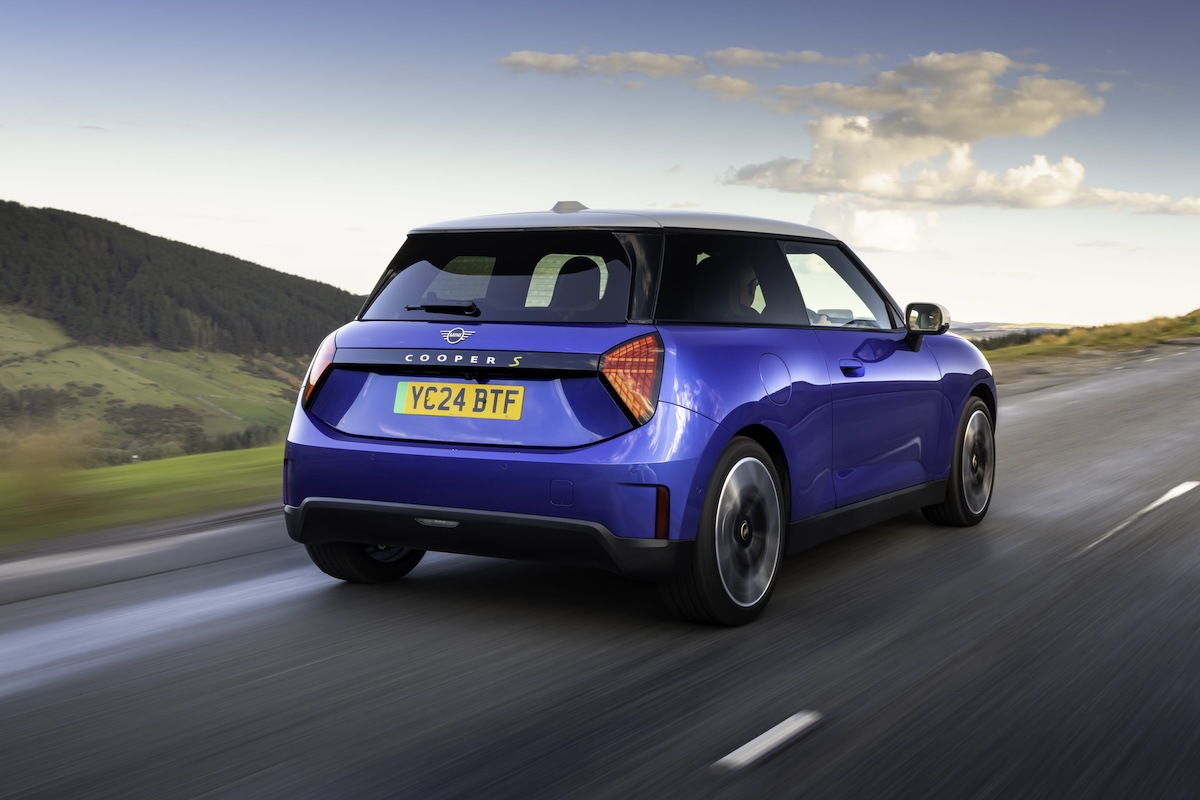
What is the MINI Cooper?
By now, it’s very unlikely that you’ll need us to explain the concept of the modern MINI to you. Inspired by the Issigonis-designed original of 1959 that enjoyed several decades of success and became a British motoring icon, the BMW Group has been offering modern reimaginings since 2001, with these offerings now into their fourth generation.
The latest version of this retro-styled prestige small car arrived with us in 2024, and is offered in a wide variety of different forms. Such a wide variety of forms, in fact, that it makes far more sense for us to use this section to explain all of those to you, rather than to explain the general concept of the car, with which you'll likely already be familiar.
We’ll start off by taking you through the various powertrains on offer, which include all-electric ones and petrol-powered ones. In both cases, performance levels range from sprightly to savage.
We’ll start with the all-electric offerings, of which there are three. All of these have a front-mounted electric motor connected to a single-speed transmission
The entry-level electric version is the Cooper E, with a still-healthy output of 181bhp for a 0-62mph sprint time of 7.2 seconds, while the 36.6kWh battery delivers an official WLTP range of up to 182 miles.
Next up is the Cooper SE, which ups the output of the electric motor to 215bhp, thus trimming the 0-62mph capability to 6.7 seconds. The bigger news, though, is the bigger 49.2kWh battery pack, which boosts the WLTP range figure up to 242 miles.
The range-topping EV version is the John Cooper Works Electric hot hatch, which has the same battery as the SE and a similar range figure, but the power output is elevated to 255bhp, which in turn trims the 0-62mph sprint time down to 5.9 seconds.
Then we come to the petrol-powered versions (in case you were wondering, diesel power is not an option in this generation of MINI), of which there are four, all of which have front-wheel drive with a seven-speed automatic gearbox.
The internal-combustion-engined (ICE) range kicks off with the Cooper ONE, which has a turbocharged 1.5-litre three-cylinder petrol engine with 120bhp. This is the MINI with the most modest performance of the lot, with the 0-62mph dash coming and going in 9.3 seconds.
The next rung up the ladder, the Cooper C, features the same 1.5-litre petrol engine, but this time with the wick turned up to 154bhp, trimming the 0-62mph dash down to 7.7 seconds.
Then comes the Cooper S, which has a turbocharged 2.0-litre four-cylinder petrol engine churning out 201bhp. This trims the 0-62mph sprint time still further to 6.6 seconds.
At the top of the petrol line-up sits another John Cooper Works hot hatch version. This has the same 2.0-litre turbo petrol engine as the Cooper S, but this time with 228bhp. This allows a 0-62mph dash of just 6.1 seconds.
Each and every one of these powertrain options is available in the MINI Three-Door bodystyle. This is the core bodystyle in the range and is by far the most popular, and it’s also the one to which all the quoted performance figures apply.
Other bodystyles are offered, though, albeit with a more limited range of powertrains. There’s a slightly longer and larger MINI Five-Door available, and this is offered in Cooper ONE, Cooper C and Cooper S variants. The Convertible version, a four-seater drop-top, meanwhile, is available in Cooper C, Cooper S and John Cooper Works guises. Performance figures for these versions vary slightly from those quoted for the equivalent Three-Door model, but there isn’t a whole heap in it in most cases.
And, you’ll probably have also noticed by now that the all-electric versions aren’t offered in Five-Door and Convertible forms, only in Three-Door format. There’s a good reason for this. That’s because the EVs are based on a bespoke electric-car platform that’s different to the one used in the petrol-powered versions. The combustion-engined MINIs are actually based on a revised version of the third-generation car’s platform, but with the exterior styling, interior and technology of the fourth-generation car applied.
How practical is it?
The Mini is available in a variety of bodystyles, and we’ll start with the most popular: the three-door.
Although some purists complain that the modern Mini is too big to be a ‘proper’ Mini, this is still a very small car by modern standards. And thus, practicality is predictably limited.
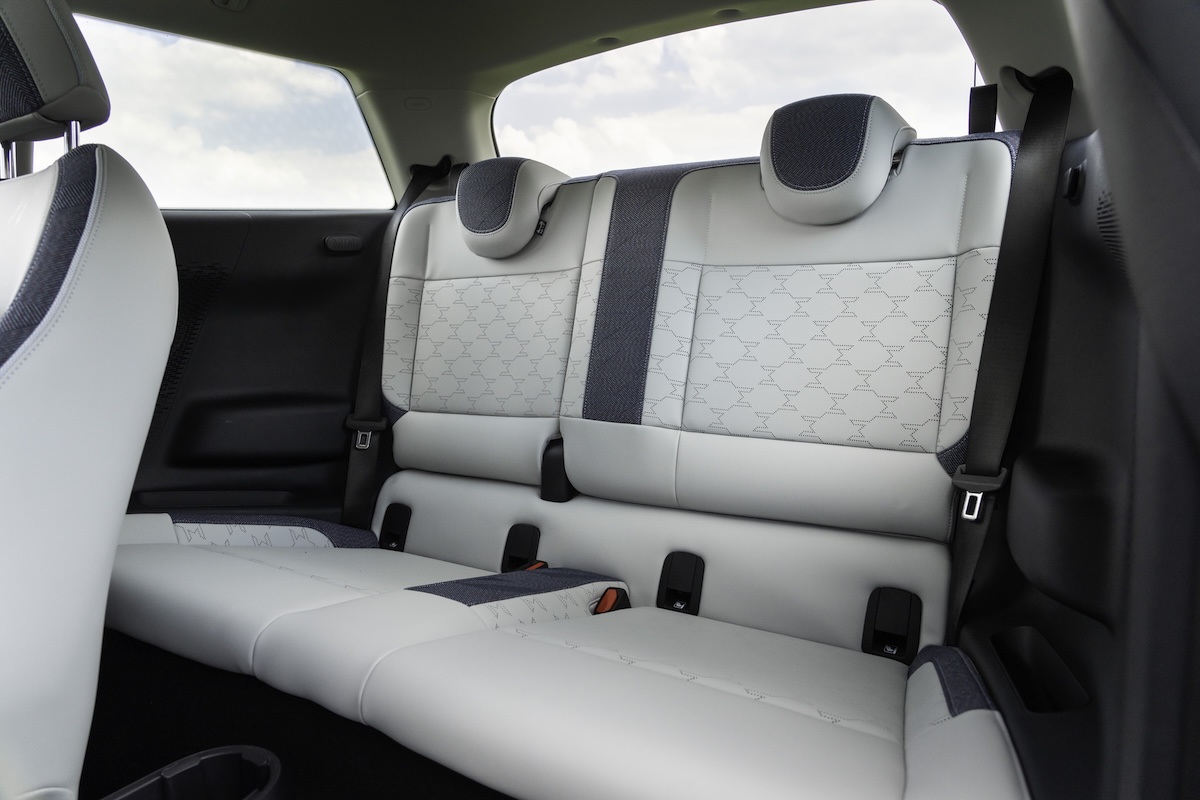
The front seats have plenty of space for a pair of tall adults, but those travelling behind will have to be a bit shorter, or - in an ideal world - children. The two rear seats (and there are only two) are tight on both headroom and legroom, and while a six-foot adult will just about fit, they’ll have bits of the car pressing against their heads and knees. Smaller folk will be considerably more comfortable.
Getting into the rear seats will be an issue for everyone, though. The front seats tip and slide forwards, but that still leaves you with a very small aperture to clamber through, and that’s not helped by the car’s low roof. You might also struggle to know where to put your feet as you climb in due to the tight floorspace. Even small, limber passengers will find it a challenge, and those with limited mobility will have absolutely no chance.
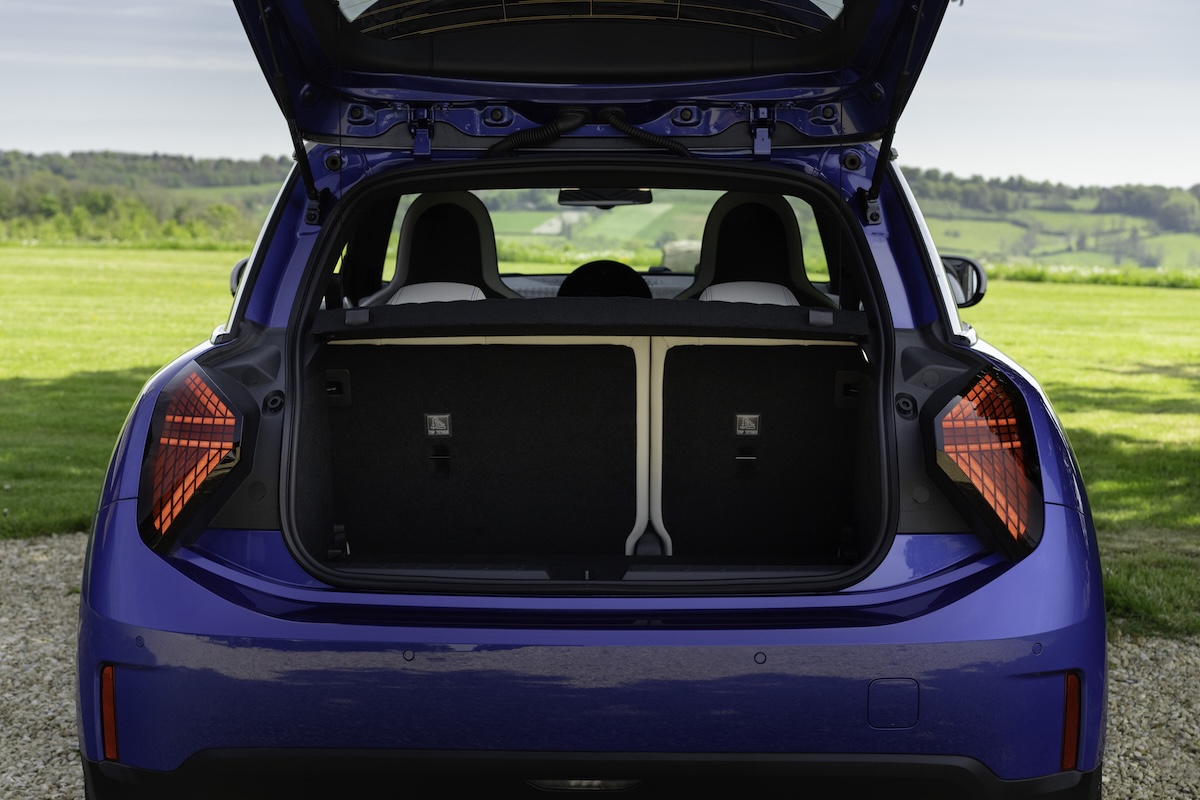
The boot is also predictably small at 210 litres, which is enough for a couple of shopping bags, but not much else. But while the loadspace certainly isn’t big, it is actually quite clever. There’s a moveable boot floor that can be set at a number of different levels, giving you either a deeper loadspace or a very decent amount of underfloor storage. And when you drop the rear seats to open up a maximum of 725 litres of cargo space, setting this boot floor to its highest setting levels off both the load lip and the entrance to the boot and the step up to the folded seatbacks, giving you an extended load area that’s perfectly flat and level.
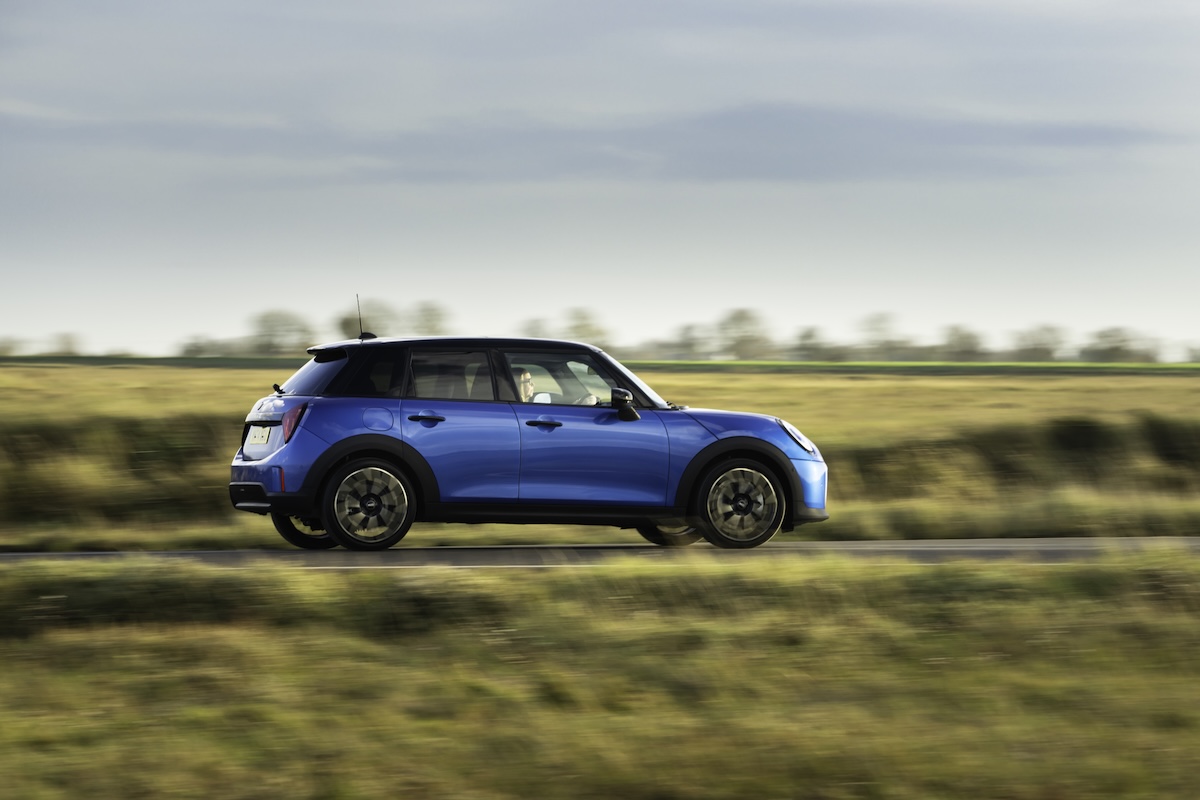
The Mini can also be had in five-door form, provided that you’re happy with one of the mid-range petrol engines. The five-door is a little longer than the three-door, which gives it a bit of extra space in both the rear seats and the boot, as well as an extra pair of doors. The rear seats are still tight on headroom, but they do have a little extra legroom for improved comfort, although most other small hatchback still provide more rear space. The five-door does have an extra third seat in that back, but it’s so narrow that using it will be all but impossible unless every member of the back-seat brigade is built like Kate Moss’ skinnier sister. The boot is a little bigger than the three-door’s at 275 litres, but that’s still some way short of what you get in other small premium hatchbacks.
The last bodystyle on offer is the Convertible. The rear seats are even tighter for space than the three-door, albeit marginally, and rear access is similarly tricky with the roof up, but at least getting in with the roof down is considerably easier.
The maximum boot space on offer is 215 litres, which is a fraction bigger than the three-door’s, but that drops to just 160 litres with the roof down because the hood folds down into the top of the loadspace, taking up a small portion of the space available. The bottom-hinged bootlid drops down to reveal a small opening (both narrow and shallow) that you’ll struggle to fit larger items through, but there are a pair of levers in the boot that’ll allow you to temporarily move the top edge of the opening upwards by a few inches (so long as the roof is up), allowing you to cram larger items in, although you will need to leave enough space to allow the levers to return to their locking position. If you need to carry longer items, then the 50/50 split rear seats can be folded down with catches in the boot.
Interior quality has always been a MINI strong suit, but how you feel about the current MINI’s cabin will depend on which you value more out of style and substance. There’s certainly plenty of flamboyance to the interior design, with cool mesh-finish cloth on many of the interior parts that would ordinarily be finished in plastic, which looks stylish and modern. That feeling of modernity is also contributed to in no small part by the theatrical circular OLED infotainment screen in the middle of the dashboard (more on that in a while). However, where interior plastics are exposed, you’ll find that they’re hard, grainy and unappealing to the touch, and they’re not particularly pleasant to look at, either. It’s a stylish environment, no doubt, but it’s not a particularly classy one.
What’s it like to drive?
We’ve already taken you through the MINI’s various powertrain offerings - and the sort of performance figures that each of them produces - in the ‘What is it?’ section of this review, so we won’t go through it all over again. What we’ll do instead is tell you what each of them feels like in practice: at least, we will for those that we’ve tried.
The first one we’ll talk about is the entry-level electric version, the 181bhp Cooper E. Despite being the lowliest electric option, there’s still plenty of power, and the acceleration feels lively and eager whatever the driving situation. We reckon that it’ll certainly be brisk enough for the vast majority of drivers.
We’ve also had a shot in the 215bhp Cooper SE. The uptick in performance is both appreciable and significant, feeling a decent slice quicker than the Cooper E. However, the question will be whether you really need that extra slice of speed, and whether you want it enough to pay the extra that the SE costs. And for most drivers, we reckon the answer to that question will probably be no. What you might very well want or need, however, is the extra range that the SE’s bigger battery gives you. If that’s the case, then the upgrade to the SE might well be worth the extra cash.
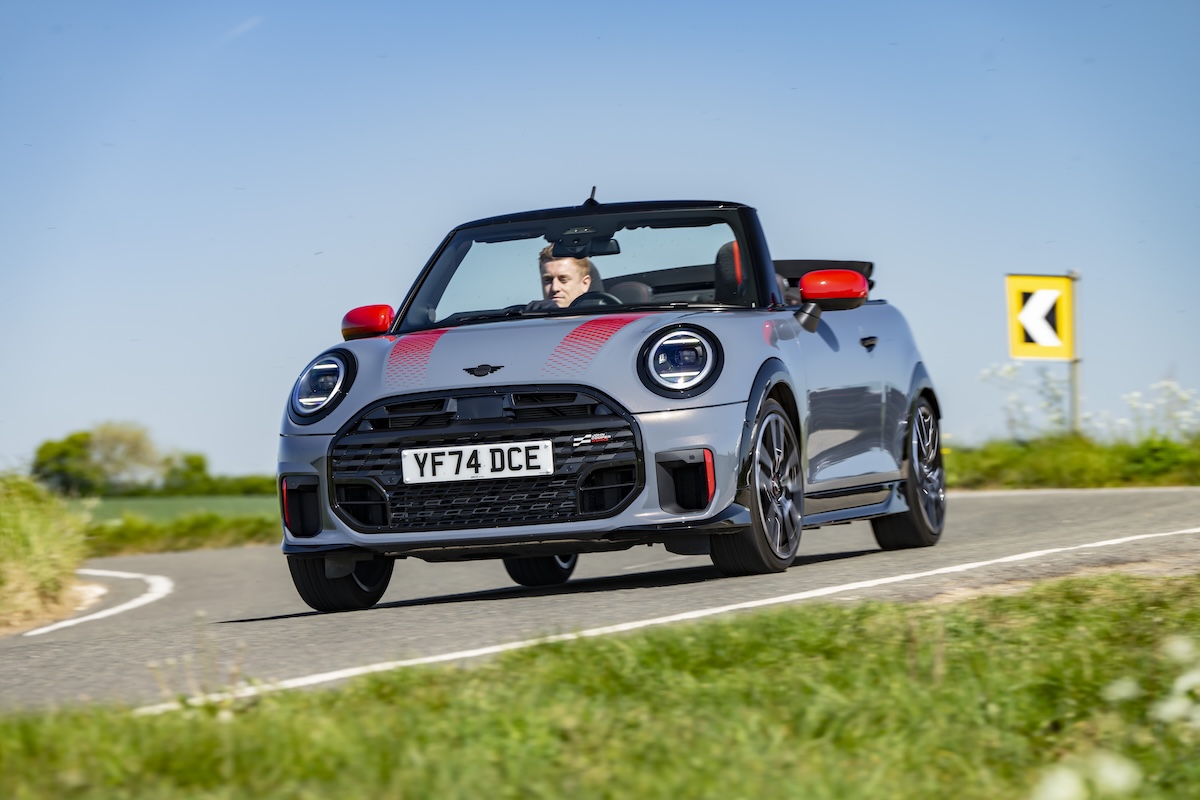
The only petrol-powered MINI we’ve driven so far is the John Cooper Works (or JCW for short) hot hatch version, and it’s a proper little firecracker. The engine pulls hard no matter how many revs you apply, and when you take the car by the scruff of the neck and drive it like it’s supposed to be driven, it properly fires you forwards in an entertainingly frenetic manner. And that’s before you’ve pulled the ‘Boost’ paddle behind the steering wheel that gives you ten seconds of extra oomph. The engine makes a good noise, too, especially when you select the naughtiest ‘John Cooper Works’ driving mode, where subtle pops and bangs start emanating from the exhaust.
It’s not perfect, mind. Given the immediacy of everything else that’s going on, it’s a little confounding that the JCW’s throttle response isn’t a wee bit sharper than it is. And for proper hot hatch fans, the availability of a manual gearbox would give an extra layer of interaction over the seven-speed automatic you get as standard. That’s especially true when you’re really getting a move-on, because the auto’ can fluff its lines and be a little slow to change, although it stays unobtrusive enough when you’re driving more gently. Otherwise, though, there’s very little to complain about with the JCW
What all the MINIs we’ve tried can struggle with, though, is getting their power down to the road through their front wheels, even when the road isn’t particularly wet. Floor the accelerator pedal, especially if you’ve got some angle on the wheels coming out of a corner, and the wheels have a tendency to spin up. Even if they don’t, the steering wheel can writhe around in your hands as the front wheels struggle with all the torque being applied, tugging the car from side to side. Some drivers might enjoy the scrappy and intense feel that gives, but most will simply just be annoyed as the car weaves around while they fight against the steering wheel.
In most other respects, the MINI’s handling is really good. The car is grippy and assured in corners, while the quick and responsive steering gives the front end a really eager, darty feel. The steering of the latest MINI doesn’t give its driver the detailed feedback that previous versions did - there’s hardly any, in fact - but it’s weighty and accurate. The firm suspension of all versions gives really solid control over body lean in bends, delivering the go-kart-like feel that MINIs are famed for pretty effectively.
The penalty to pay for that firm suspension, though, is a firm ride. This is of very little surprise, as all previous incarnations of the MINI have taken the same approach, but it’s still something that potential buyers need to be aware of so that they can make a call on whether they can live with it or not.
The ride is particularly raw at low urban speeds, where the car jitters and fidgets on an almost constant basis, and sharper bumps and ruts give occupants a proper whack in the backside. You might also find this shortage of compliance to be less-than-ideal when hammering along a bumpy backroad, because you’re jostled around to the point of distraction, and mid-corner bumps can knock you off-line a little too easily. Interestingly, the ride settles down a massive amount at motorway speeds, so this is actually a reasonably comfortable cruiser, but even then, many rival prestige hatchbacks will still do the job better.
If you specify the Sport trim, or go for the JCW, you get adaptive suspension, which allows you to stiffen-up or soften-off the suspension by switching modes. You won’t notice much difference between the various settings, though, and whatever you do, the ride is always unforgivingly firm.
Technology, equipment and infotainment
In years gone by, infotainment was one of the things that the BMW Group did better than pretty much anyone else, and previous MINIs have benefitted from that excellence with a wonderfully intuitive infotainment interface derived from the one found in BMW's other cars. Unfortunately, that’s no longer the case.
Where once you scrolled through on-screen menus with a simple twist-and-push rotary controller, the infotainment interface is now touchscreen-only. This in itself harms usability, because the depth-perception required to accurately hit on-screen icons takes so much more concentration than using physical controls that you can find and use without looking.
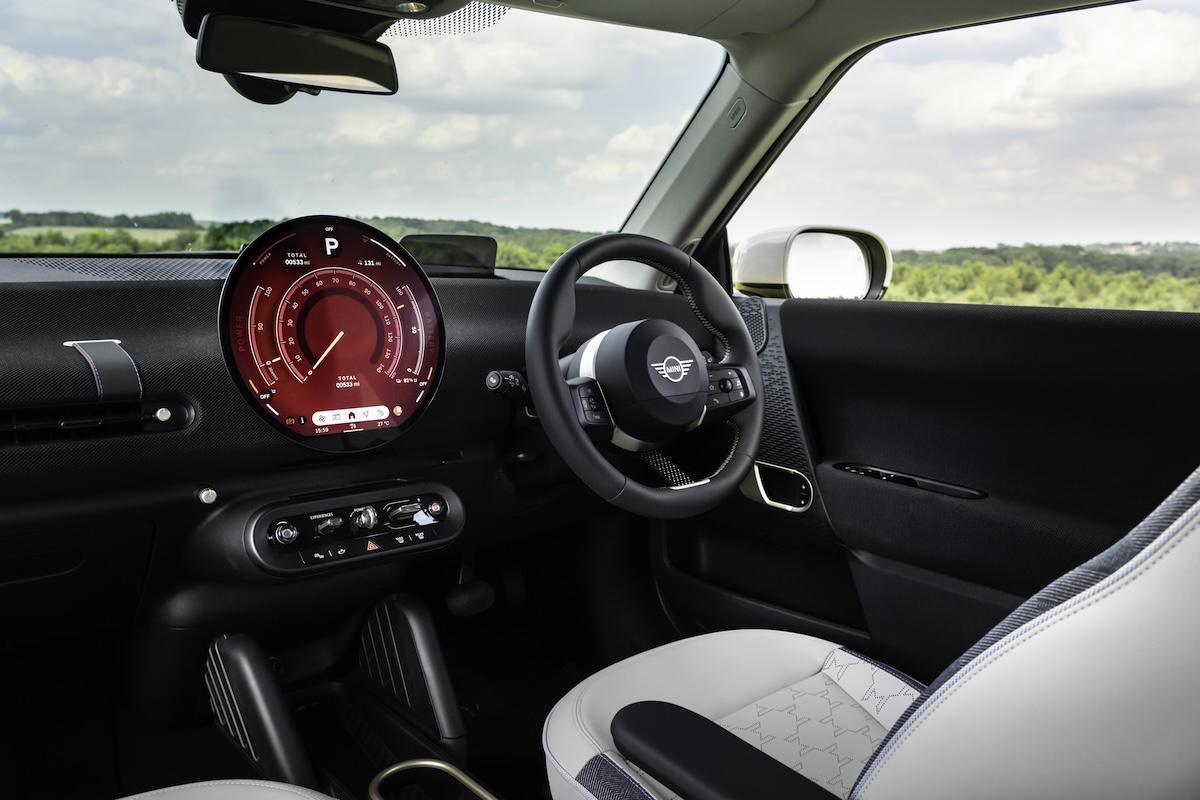
The system looks undeniably cool, with a unique-to-MINI circular OLED (organic LED) screen positioned bang in the middle of the dashboard - this is a design cue inspired by circular central speedo in the original Mini - and the graphics are colourful and pin-sharp. Some of the animations and screen transitions can take a frustratingly long time to run their course, but from an aesthetic point to view, the whole thing is pretty dazzling.
However, the usability of the system is harmed further by an ecosystem of menus and submenus that’s convoluted and confusing, so finding your way around the system is more difficult than it should be. What’s more, most of the various screen layouts - there are several on offer, and whether you actually need that much configurability is somewhat debatable - are very cluttered, which makes picking out the icon you want all the more difficult.
The top part of the central screen is taken up by your speedo readout: that’s because there’s no separate instrument readout behind the steering wheel, and it means you have to glance away from the road ahead to check your velocity. Some versions come with a head-up display as standard, and those that don’t can be specified with one as an optional extra, but either way, we’d say it’s a feature that definitely worth having.
Equipment provision is pretty good: all versions come with core features including alloy wheels, LED headlights, adaptive cruise control, parking sensors, a reversing camera, climate control air-conditioning, a heated steering wheel, ambient lighting, and a seven-speed automatic transmission, plus the infotainment system with circular screen and sat-nav.
Once you’ve chosen your powertrain, you then choose between three trim levels, which feature mainly aesthetic bits and pieces for differing appearances. Classic is the most restrained one, Exclusive cars look a little posher, and Sport gives an aesthetic that’s a little, well, sportier.
After that, you can choose whether or not to add one of three option packs. The Level 1 Pack (this is standard on some higher-end versions) brings high-beam-assist LED headlights, heated front seats, a head-up display, wireless phone charging, and an extended mirror package.
The Level 2 Pack provides all of that plus privacy glass, a two-part panoramic sunroof and an upgraded Harman Kardon stereo, while the Level 3 Pack provides all that plus electric front seat adjustment, an interior camera, a self-parking function, augmented-reality navigation, and more semi-autonomous driving features.
MINI Cooper running costs
With such variety running through the MINI range - seven electric-or-petrol powertrains, three bodystyles, three trim levels - there’s a correspondingly wide variety of situations when it comes to cost-of-ownership. One thing that applies to all MINIs is that they’re all relatively expensive to buy in the first place compared with other small cars, but history has told us that the car’s desirability means that buyers are prepared to pay the difference. What you’ll pay to run your MINI, however, will vary greatly on which version you choose. Let’s deal with the electric ones first.
The entry-level Cooper E’s 36.6kWh battery gives it an official combined range of 182 miles on a full charge according to WLTP figures. That charge will take around five hours to deliver on a regular 7kW home wallbox charger and, assuming that you pay for your domestic electricity at the UK’s national average price, that charge will cost you around £10.
Both the Cooper SE and JCW have a larger 49.2kWh battery, giving them an official WLTP range of around 245 miles. A full charge will be taken on in around seven hours using the same 7kW wallbox charger previously mentioned, and that charge will cost around £14 at the UK’s national average rate for domestic power.
In all cases, that equates to roughly five pence per mile, which is much less than you’ll pay to run a petrol-powered equivalent. However, you can trim costs a lot further by getting your home put on a variable power tariff that allows you to charge overnight on vastly discounted off-peak power. This move on its own will likely cut your charging costs by half, probably more.
Using public DC rapid chargers will cost a vast amount more than charging at home, so we wouldn’t recommend relying on these on a regular basis; only use them in emergencies. The electric MINIs don’t have great maximum DC charging speeds, either: It’s a maximum of 75kW for the smaller battery and 95kW for the larger one, although the relatively small sizes of both batteries means that they’ll be replenished from 10% to 80% in half an hour or less.
When it comes to fueling your petrol-powered MINI, all versions will return above 40mpg according to official WLTP figures, but the amount by which your car beats that figure will depend on what version it is. In the case of the Three-Door MINIs, the Cooper ONE returns 47.9mpg, the Cooper C returns 46.3mpg, the Cooper S returns 45.6mpg, and the John Cooper Works returns 43.5mpg.
The Five-Door MINIs are just behind their Three-Door equivalents for fuel economy, but only by a fraction: it’s 47.1mpg for both the Cooper ONE and the Cooper C, and 44.8mpg for the Cooper S.
The Convertibles are a bit further behind due the the weight of all the extra structural bracing needed to stop their roofless bodies from wobbling too much. The Cooper C and Cooper S versions both have figures of 42.8mpg, while the JCW’s figure stands at 40.9mpg.
No version of the MINI costs more than £40,000 in its standard form, and so all fall below the price threshold at which drivers become liable for the expensive car supplement for VED road tax (that threshold is £40,000 for combustion-engined cars, or £50,000 for EVs). However, the petrol-powered JCWs get pretty close to the threshold, and adding those option packs and other extras makes it possible to tip your car over the threshold, saddling you with liability for the supplement. That liability is an extra £440 per year between years two and six of the car’s life, only top of the regular flat rate of £200 per year. That’s a hefty extra chunk of change, so be careful when speccing your car, or if buying used, make sure the original owner did the same by performing a quick Google search of the car’s registration.
MINI Cooper reliability
The MINI brand has carved out an excellent reputation for reliability in recent years. It finished second out of 30 carmakers in the manufacturer standings of the latest What Car? Reliability Survey, and topped the chart outright the year before that. That’s an impressive showing.
It should be noted, though, that the MINI hatchback considered in the study is the previous 2014-2024 version, and not the current one. That’s still encouraging if you’re considering a combustion-engined version of that latest MINI, however, because that car is still built on the same platform as the previous incarnation, and uses the same engines.
And encouraging it should be, because that car was the brand’s strongest performer in the study, with an impressive score of 99.1%, placing it third in the Small Car category, which considered a total of 26 models.
MINI cars come with the same manufacturer warranty as parent company BMW, which stands at three years. That’s a bit below-par in terms of time period these days, but at least the cover has no mileage limit, which is more generous than some rival carmakers who limit their three-year cover to 60,000 miles.
- The MINI is too small to be used as a family’s only car, but owners might well carry their kids around in theirs every now and then. That being the case, it’s encouraging to know that the car earned the full five-star rating from Euro NCAP when it was tested in 2025.
- The charging port for the electric MINI is on the nose of the car, which can be annoying because it means you have to drive forwards into a charging bay. It uses CCS and Type 2 sockets, which are compatible with almost all public charging stations in the UK and western Europe.
- There are some real quirks to the MINI’s interior design. The drive selector takes the form of a toggle switch on the centre console, while another toggle switch nearby, labelled ‘Experiences’, changes the design of the touchscreen, the behaviour of the ambient lighting, and elements of the driving experience, too (things such as throttle response, steering weight, and adaptive suspension where fitted). Perhaps the most novel bit is the starter switch: this is a fixed twister control, located between the two toggle switches mentioned, that you turn like you would a physical ignition key.
- If you’re choosing a company car: Do yourself a favour and go for one of the electric versions, because Benefit-In-Kind company car tax bills are so much lower for EVs than they are for petrol cars. Performance-wise, you’ll probably be happy enough with the entry-level Cooper E, but you may want to upgrade to the Cooper SE for its larger battery and greater range.
- If you want the fastest one: It has to be the MINI John Cooper Works. The electric version has 255bhp, while the petrol makes do with 228bhp, but both will complete the 0-62mph dash in around six seconds. Which you pick will depend on your driving behaviour and preferences, but you’ll have lots of fun in both.
- If you need some practicality along with your MINI style: You’ll want the Five-Door. It’s still not what we’d call an enormously practical car, but it’s better than either the Three-Door or Convertible due to its extra rear space and bigger boot. Bear in mind, though, that you can’t have the Five-Door in electric form: it’s petrol-only.
- If you want some wind-in-the-hair fun: The Convertible is a really appealing choice for the extroverts among us. It arguably has even more style and theatre than other versions of the MINI, and when you drop the hood, everyone can see you at the wheel.


