Isuzu D-Max Review (2021-present)
Isuzu D-Max cars for sale
4.0
Expert review
Pros
A truly capable workhorse
Plenty of creature comforts for lifestyle customers
Excellent safety rating
Cons
Diesel engine feels a bit out of its depth
Not the most sophisticated, even for a pickup
EV version is bonkers expensive

The CarGurus verdict
Isuzu may not be a name on the lips of most passenger-car drivers, but it's a name that's both renowned and beloved among those in the pickup truck fraternity, and deservedly so. The D-Max provides rugged and reliable business transport that'll go pretty much anywhere, and it'll get there carrying a massive amount of stuff.
Sure, it's not the most comfortable or most sophistcated vehicle of its type, and the diesel engines - both the older 1.9 and the later 2.2 - can feel a little overwhelmed by the sheer bulk of the body. However, it's convincing enough in those areas that they're not problematic, and it compensates with keen pricing, reasonable running costs, decent equipment levels, bullet-proof mechanical dependability, and a generous warranty. And for many canny pickup buyers, that's plenty.
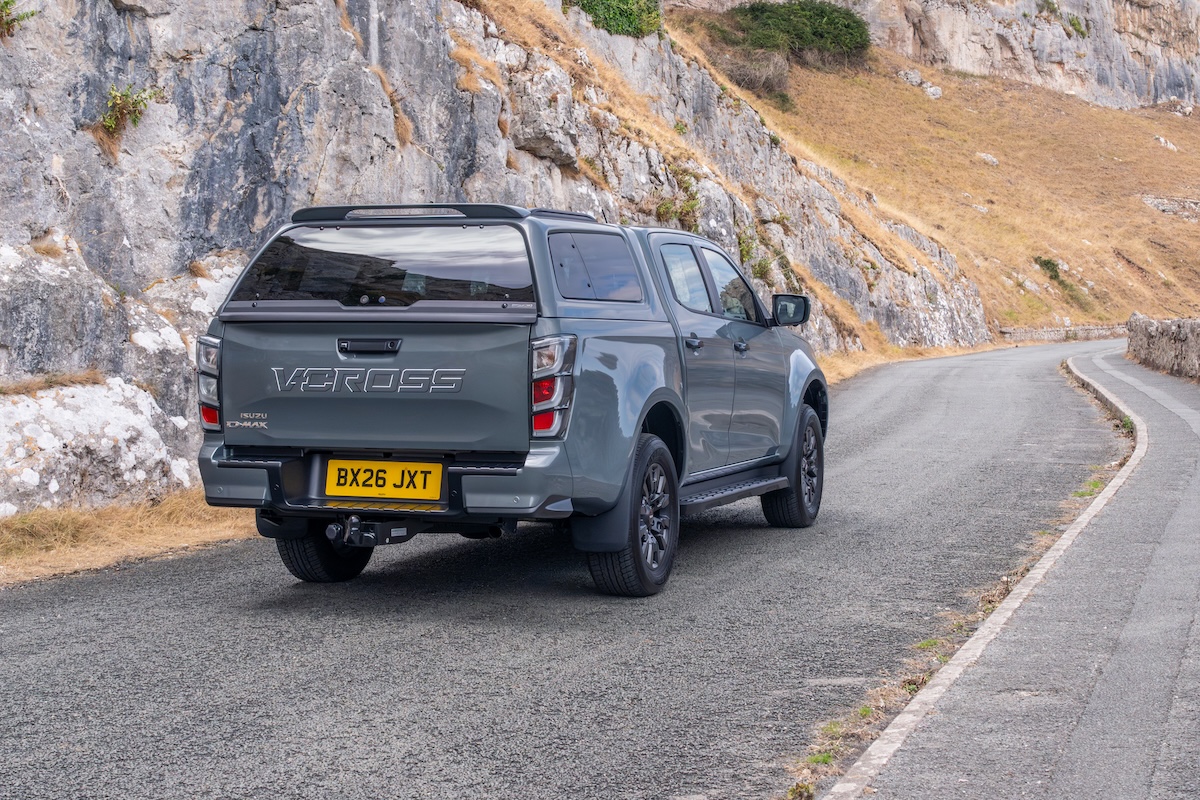
What is the Isuzu D-Max?
The UK's pickup truck market has undergone quite a lot of change in recent years. Go back to the days just before the Covid 19 pandemic, and there were lots of contenders vying for your cash in the form of the Ford Ranger, Volkswagen Amarok, Nissan Navara, Mitsubishi L200, Toyota Hilux, Mercedes X-Class, Ssangyong Musso, Fiat Fullback, Renault Alaskan, Great Wall Steed, and more. And yes, the Isuzu D-Max was among them.
Fast-forward a couple of years, and most of these models had disappeared. Nothing to do with the pandemic, you understand: you can mostly blame European emissions legislation for that. The D-Max - alongside the Ranger, Hilux and Musso - was one of the handful to stick around, and that shortage of competition, plus its competitive price and rugged, no-nonsense character, saw it do rather well during that period.
Fast-forward again to the present day, and the pickup market is experiencing something of a resurgence. Those models that stuck around are still sticking with it, while Volkswagen has launched a new Amarok (developed alongside a new generation of Ford Ranger), and the ever-popular Mitsubishi L200 has also made its triumphant return to the UK market. There are also some new and intriguing entrants to the market such as the Ineos Grenadier Quartermaster, the GWM Poer 300, the Maxus T90 and the BYD Shark. As a result, there's now much more competition in the market once again, and the D-Max has to work a bit harder to stand out.
So how does it go about that task? Well, in the same way it always did, to be honest. Keener pricing than most of its rivals is part of its appeal, but so is its impeccable reputation for reliability and its unashamedly rugged and workmanlike demeanour. Plenty of pickup buyers value that kind of honesty, it would appear.
There are a variety of flavours with the D-Max. At the bottom of the range sit the basic, no-nonsense workhorses, with limited kit, wipe-clean plastic floors and hardwearing black plastic bumpers, while at the top of the range, you have the tooled-up D-Max V-Cross versions, with lots of luxury toys and a much plusher look and feel, and there's a level in between, too. Whichever D-Max you choose, though, you know you're getting a hardy truck that's built for hard use, is borderline-unstoppable off-road, and that delivers excellent figures for payload and towing capacity.
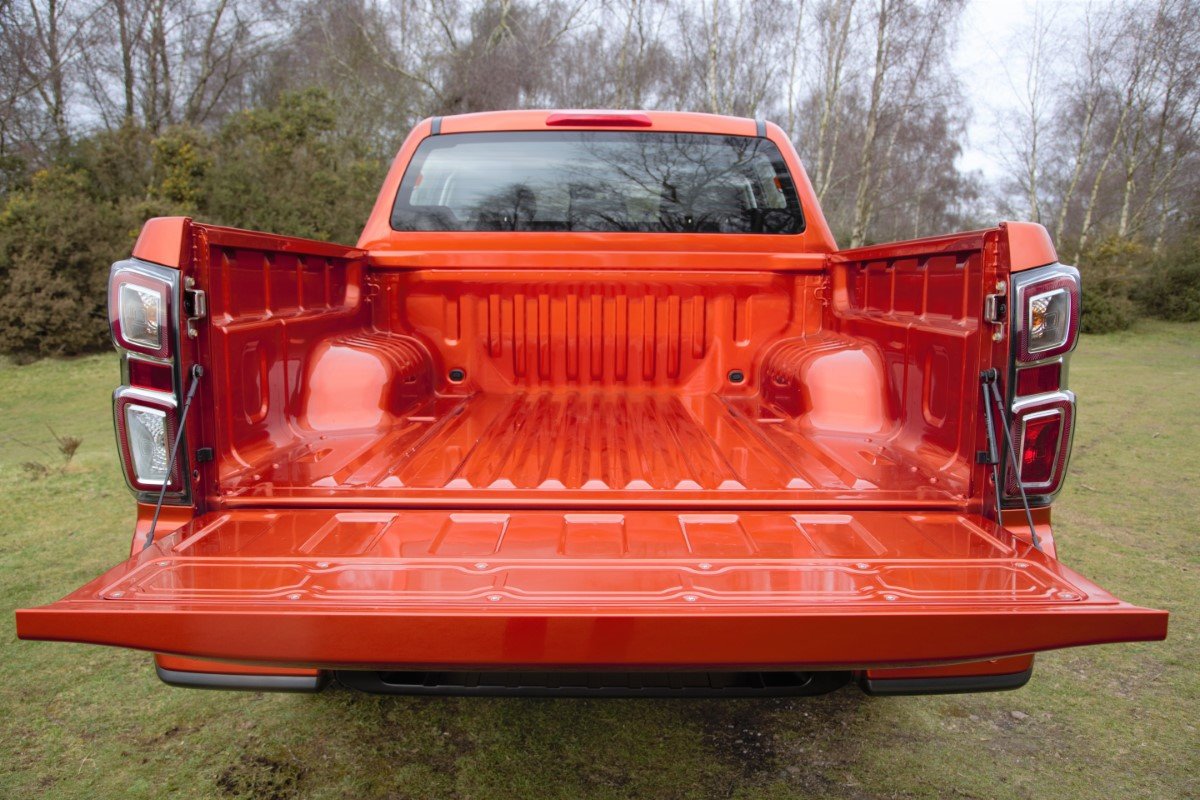
How practical is it?
Three body styles are available. There's a single-cab model that seats two and has the largest load bed, with a length of 2,445mm. Then there's the extended-cab model that has a slightly shorter bed at 1,940mm, but adds a pair of fold-down jump seats in the back, designed for occasional passengers during short journeys.
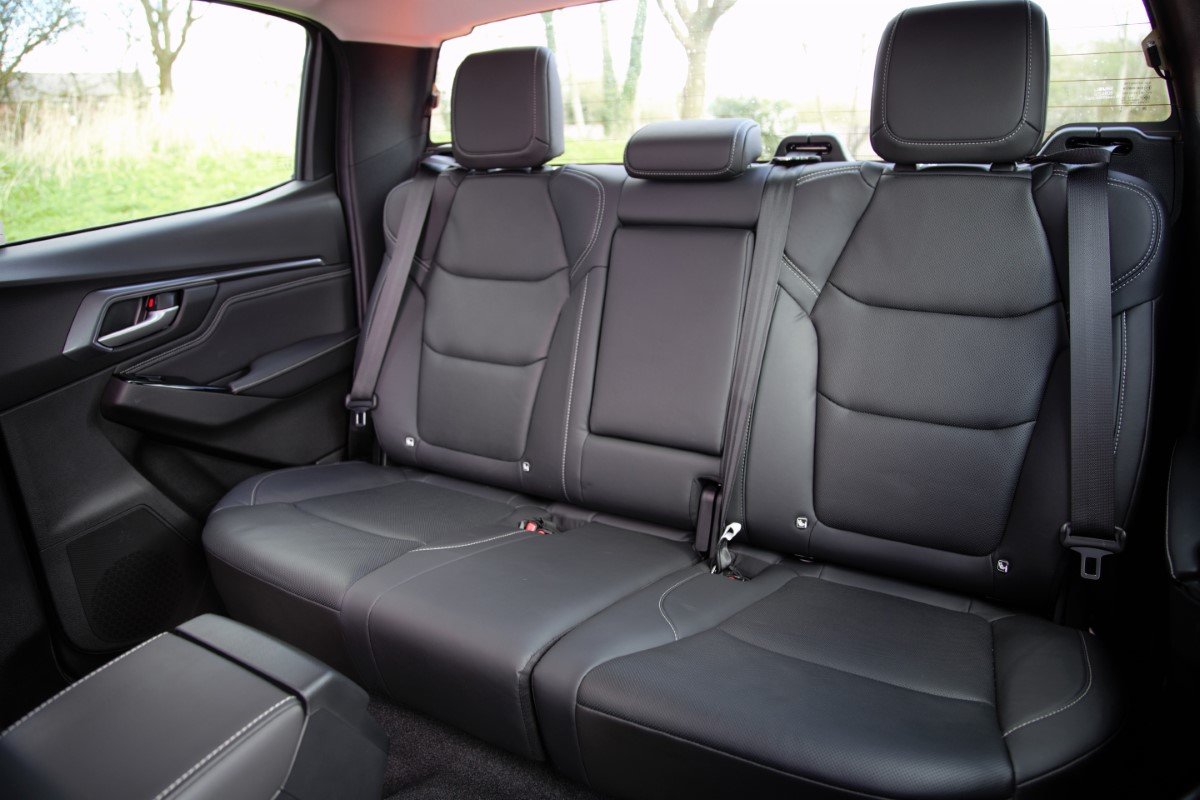
The double-cab version is a full five-seater, with a proper full-size rear bench seat for up to three passengers, and there are two Isofix child seat mounting points on the outer rear seats. The rear seats are properly roomy, too, with enough headroom for tall adults to travel long distances without feeling cramped, and enough width in the cabin that three burly workmates can sit side-by-side without feeling like they're getting too intimate. This more spacious cabin does mean that your load bed is a bit smaller, though, with the length of the space dropping to 1,675mm.
All versions have a payload of more than a tonne according to Isuzu. The firm doesn't put a precise figure on it for the electric versions for some reason, but with the diesels, the figure is anywhere between 1180kg and 1055kg. As a general rule of thumb, the lower the spec of your truck, the higher its payload figure, and vice versa.
All current versions have a braked towing figure of 3,500kg, which is about as high as any vehicle that's not a lorry can muster. And because all current versions have four-wheel drive with low-range gears, you'll be able to pull trailers across muddy fields with ease. Isuzu did previously offer a two-wheel-drive version of the entry-level Utility single-cab model, and that one had a reduced towing weight of 2,500kg.
We found it easy to get comfortable at the wheel of our test vehicles, but that might be because they were range-topping V-Cross models, which are the only ones that come with a steering wheel that adjusts for height and reach. As such, we can't say how easy it is to get comfy in the other versions. All have a height-adjustable driver's seat, though. As you'd expect, your driving position is high, so you look out over most other traffic on the road, giving you a great view, and it's easy to see where the extremities of the bonnet end. You rear view isn't bad, either, thanks to a decent-sized rear window and big door mirrors.

What's it like to drive?
Originally, all D-Maxes used a four-cylinder, 1.9-litre diesel engine with 162bhp, attached to either a six-speed manual gearbox or a six-speed automatic gearbox. In 2026, however, this was substituted for a new 2.2-litre engine, paired to either a six-speed manual transmission or a new eight-speed automatic. It actually has slightly less power than the engine it replaced, with 161bhp, but it has a good slice more torque, with 400Nm as opposed to 360Nm.
The new engine made the D-Max quicker against the stopwatch, with the 0-62mph dash happening in 12.0 seconds rather than 12.7 seconds. In practice, though, you'll detect very little difference in your accelerative performance. Both feel distinctly laboured when getting the vehicle up to speed, with plenty of revs needed to get you there in a timely fashion. That makes it rather noisy, especially if you're used to a regular passenger car and not the diesel clatter of your average pickup truck. The 2.2 is a tad less rowdy than the 1.9, but it still has plenty to say for itself. Having said all of that, most rival pickup trucks also have a clattery diesel engine under the bonnet, so while the D-Max's isn't the quietest engine of its type, noise levels certainly aren't unreasonable for the class.
The manual gearshift isn't awfully pleasant, mind, with a very long-throw action and a notchy, imprecise feel. We never got to try the six-speed automatic that came with the 1.9 engine, but the eight-speed auto' paired with the later 2.2 selects its ratios pretty smoothly, although it's rather slow to do so, and the engine's lack of oomph means that it still need to keep the revs high to get you around at a decent pace.
Otherwise, the D-Max's driving experience is pretty much what you expect from a pickup truck. The steering is very slow, so lots of arm-flailing is needed during manouvres, the brakes are effective but wooden-feeling, and the clutch on manual models is rather abrupt.
The ride has that jittery tremor that's characteristic of a pickup, more so than in rivals like the Ford Ranger, meaning its less comfortable overall. However, we only tried the Isuzu with an empty loadbay, and with most pickups, the ride settles a bit more when there's some weight on board (that's how they're designed to be used, after all), and we're sure that this will be the case here, too.
The handling isn't as neat as a Ford Ranger's, either, with considerable body roll and plenty of weight transfer to be felt as you change direction. But although it can't match the class-leading Ford in this regard, it's on a level with most other trucks in the class.
Where the D-Max's dynamic abilities begin to impress more is off the tarmac. With four-wheel drive and low-range gears, plus good ground clearance and short overhangs, you'll be scampering over rocks and through mud and sand without breaking a sweat. Hill descent control is also standard, and you can also wade through water up to 800mm deep.
Isuzu has now introduced an all-electric version of the D-Max, which has a 200bhp dual-motor four-wheel-drive powertrain, making it capable of seeing off the 0-62mph dash in 10.1 seconds. We haven't tried it yet, but we're aiming to shortly, and will update this review once we do. However, its 66.9kWh battery gives it an official range of just 163 miles, which might make it unsuitable for some users.
Neither have we tried the AT35 'Arctic Trucks' version. This is a hardcore souped-up version designed for tackling even tougher terrain, with suspension that's been elevated, reinforced and upgraded. It's currently only available - for the time being at least - with the old 1.9 diesel engine, though.
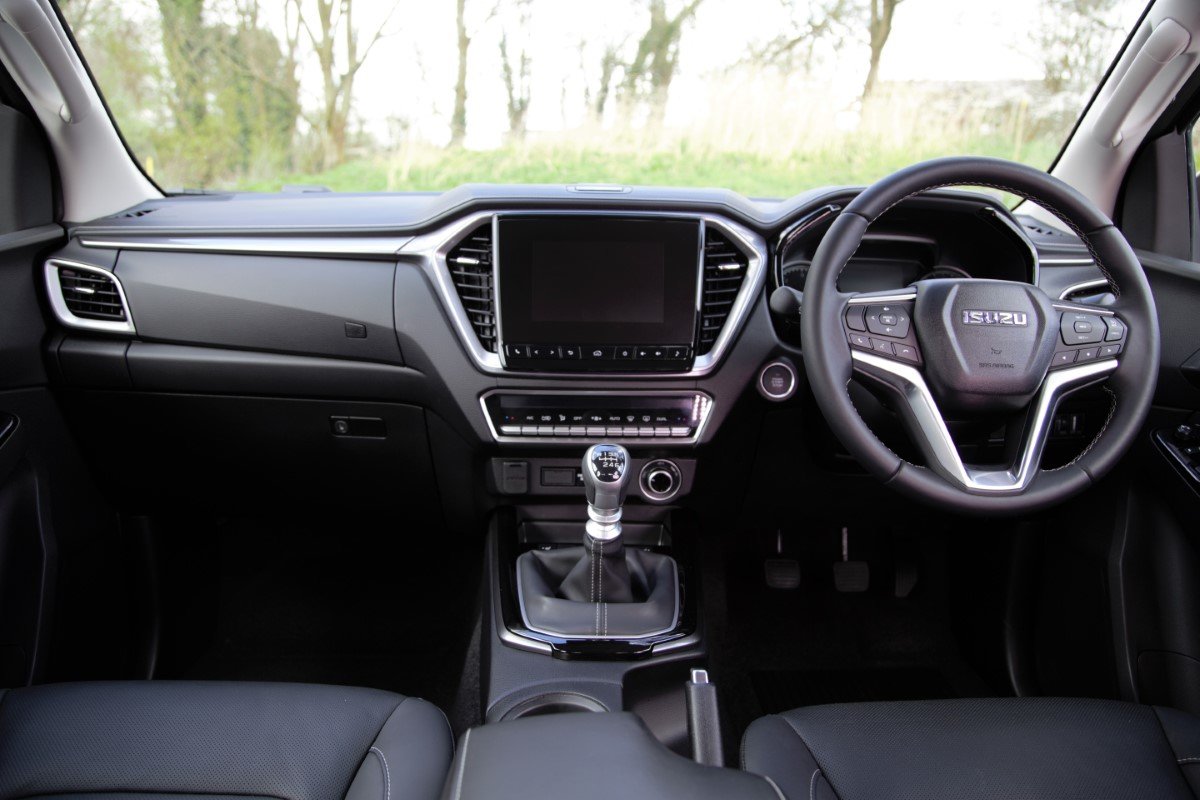
Technology, equipment and infotainment
Trim levels are split into three families. Base-level Utility trucks are intended as purely working machines and come on steel wheels with hard-wearing black plastic bumpers and vinyl flooring rather than carpet. You can get Utility models in single-, or extended-cab forms, and all have at least a smattering of features, including manual air-conditioning, automatic headlights and wipers, electric windows, remote central locking, a reversing camera, adaptive cruise control and an 8.0-inch infotainment screen with Bluetooth, DAB, wifi, and and Apple CarPlay Android Auto.
The middle tier is the all-purpose range, aimed at customers that want to use their truck for work in the week and as a family car at weekends. There are two models. The DL20 has smarter looks that the Utility versions, with alloy wheels and body-coloured bumpers at both ends, while you also get power folding door mirrors and rear parking sensors as well. The DL40, meanwhile, adds a lot more in the way of niceties. This includes various exterior styling elements, LED exterior lighting, front parking sensors, 360-degree cameras, keyless entry and start, leather upholstery, a leather steering wheel, heated front seats, powered driver's seat adjustment, a carpeted floor, and dual-zone climate control with rear vents.
At the top of the regular range sits the V-Cross. This adds yet more styling enhancements inside and out, a damped tailgate (so it doesn't slam down when you open it), rear ventilation controls, a height-and-reach-adjustable steering column, steering wheel audio controls, two extra USB ports in the front and a larger 9.0-inch touchscreen central display in place of the 8.0-inch item found in the others.
This larger item is the only one we've experienced so far, and it's fair to say that it's rather basic. The graphics look straight out of the 1990s, and the screen layouts look cluttered. That said, because the system isn't all that sophisticated, you're not faced with a bamboozling array of on-screen menus, and once you get used to their cluttered appearance, you can actually pick your way though them reasonably easily. You might also like the fact that you don't have to go anywhere near the touchscreen to play with the air-conditioning susytem, because there's a row of physical rocker switches below for making adjustments.
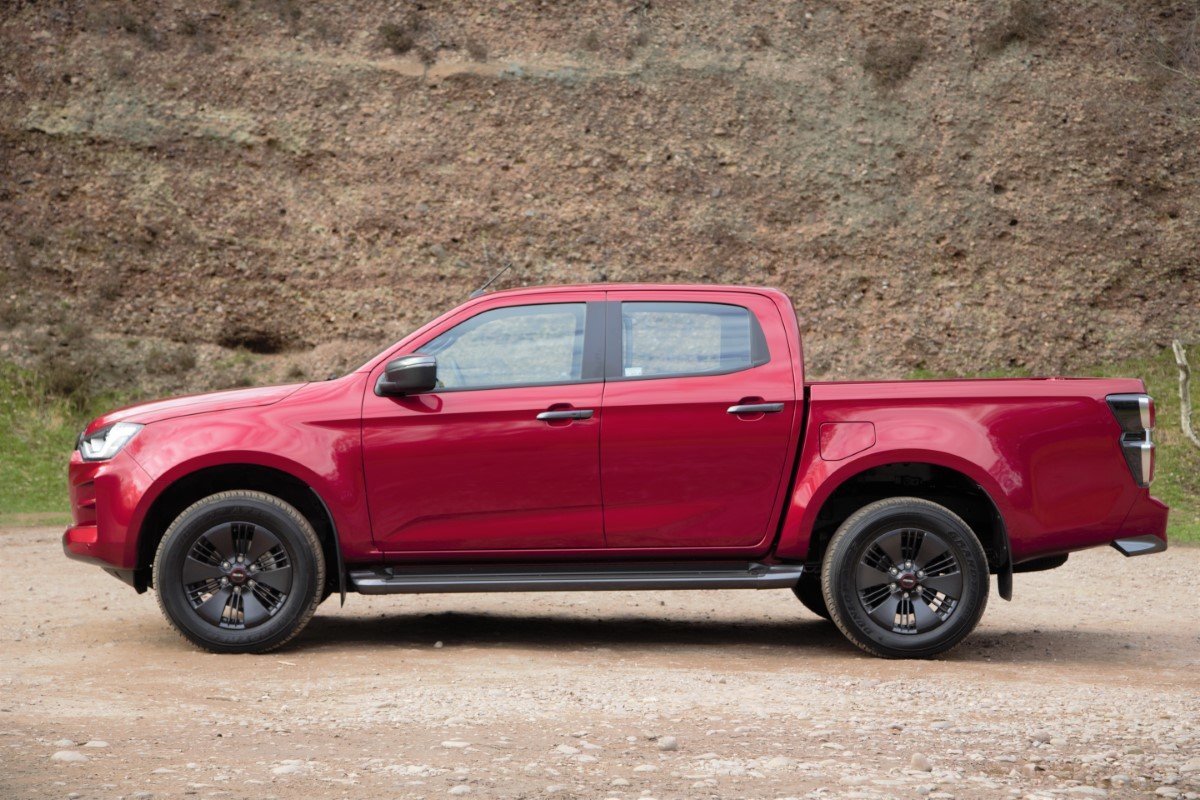
Isuzu D-Max running costs
When it comes to purchase price, the Isuzu is aggressive. It'll cost you a few thousand pounds less model-for-model than the Ford Ranger, but in fairness, that rival has a much larger V6 diesel engine with more power. It's also a better truck generally, but there will be many cost-conscious business owners that will be prepared to sacrifice a bit of power and dynamic polish in order to save a few quid. Pricing will be rather closer between the D-Max and most other rivals, but it costs a very competitive amount in comparison.
That said, the electric version looks extremely expensive. Even if you're not going to be paying VAT on your van, you're looking at upwards of £60,000, and if you can't dodge the tax, it'll be upwards of £70,000.
The introduction of the 2.2-litre diesel engine in 2026 to replace the old 1.9-litre unit brought marginal improvements in fuel economy, but we do mean marginal: a best figure of 32.8mpg means you'll still be spending a pretty penny on diesel, but to be fair, the figure is by no means unreasonable compared with those of other pickup trucks.
If you can stretch to the considerable cost of the EV, then it could save you plenty in terms of running costs. A full charge of its 66.9kWh battery will take around 12 hours on a 7kW wallbox charger, and will cost around £19 if billed at the UK's average rate, although if you use a tariff that allows you to charge overnight on discounted off-peak power, you can easily cut that sum in half. Charging on a DC public rapid charger will be way more expensive, and it won't even be that quick: a maximum charging speed of just 50kW means it takes a full hour to get the batter from 20% to 80%.
VED will be charged at the normal flat rate for light commercial vehicles, which is currently £360 per year. All diesel versions sit in group 40 out of 50 for insurance, but we don't know where the EV version sits on that score.
Isuzu D-Max reliability
Isuzu has a general reputation for very good reliability, with many customers citing it as one of the key attractions of the D-Max. After all, if you have a vehicle that's essential for your job or business, then you'll want to maxmise the downtime needed for repairs as much as you possibly can.
Service intervals aren't massive at up to one year or 10,000 miles, but that's not an abnormally small window, even in the pickup sector.
One real bonus with the D-Max is that Isuzu backs the vehicle with a very generous five-year, 125,000-mile warranty. That’s better than you get on most rivals, although it's possible that the cover on your Toyota Hilux could last up to ten years if you have it serviced annually within the dealer network. However, Toyota's arrangement is limited to 100,000 miles, so for high-mileage drivers, Isuzu's cover could actually be better.
– Many truck owners overlook the fact that they’re often legally speed-restricted on the road. If a truck weighs more than 2,040kg, then it counts as a commercial vehicle, and is subject to different speed limits, which is 10mph lower than cars on single- and dual carriageways. Both the Toyota Hilux and some Ford Rangers fall into this category. There was a time when all versions of the D-Max weighed in at less than 2,040kg, meaning that it avoided those restrictions. As of 2026, however, double-cab versions fitted with the diesel engine and the automatic gearbox now bust that barrier, and so you'll have to keep more of an eye on your speed with those. The electric versions also bust the weight threshold, unsurprisingly. – Historically, pickup trucks haven’t been subject to the same safety scrutiny as cars. But with companies increasingly under duty of care pressures when it comes to employee welfare, that’s meant more demand for safety equipment, and the D-Max has obliged. It was the first pickup to be awarded the maximum five stars in tests by independent safety organisation Euro NCAP, and every model comes with an extensive suite of safety systems, of the type more often found on cars. These include automatic emergency braking and lane departure warning and prevention systems. Higher-spec models also include blind-spot monitoring features. All D-Maxes feature front-, side-, curtain- and driver’s knee airbags, and the double-cab models have a centre front airbag, too.
- A quick word on interior quality. You wouldn't expect a hard-working vehicle like the D-Max to come trimmed with the finest soft-touch interior surfaces that the motoring industry has to offer. That being the case, the hard-and-robust finish of the interior plastics isn't just forgivable, it's entirely appropriate: after all, you'd much rather your interior has the ability withstand the impact of a muddy boot or dropped cordless drill than be a delight for the fingertips. Having said that, the highest-end versions have some stitched leather finishes on the dashboard, doors and steering wheel that makes them feel a good bit plusher.
- If you want the best all-rounder: The DL40 model treads the line between cost, function and comfort, with plenty of niceties for everyday use, but at a lower price than the top-spec V-Cross.
- If you’re on a budget: The entry-level Utility model is aimed firmly at farmers and tradies, it still has enough features to keep most people happy, with air-conditioning and Bluetooth included, and even adaptive cruise control.
- If you want all the toys: The top-spec D-Max is the V-Cross, and it provides plenty of luxury features and a bit of extra style, too, although we suspect most people will be happy enough with the cheaper DL40 model.
- If you only need to carry passengers every now and again: The extended cab models are useful for those that might need to carry colleagues only vary rarely. They offer that extra flexibility, but do bear in minds that the seats are very small and tight, and only suitable for the shortest of journeys. There are no Isofix points, either, so don’t expect to be able to carry the kids in there.
- There's now an all-electric version of the D-Max, which has a 67kWh lithium-ion battery and an official WLTP range of 163 miles. That might not suit many businesses, though, and it's extremely expensive to buy.


