Chery Tiggo 7 Review 2026 | Super-affordable midsize SUV from China
Chery Tiggo 7 cars for sale
4.0
Expert review
Pros
Incredible value for money
Impressive interior quality
Generous warranty
Cons
Boot is a little small
Quite a bit of road noise
Fiddly infotainment
The CarGurus verdict
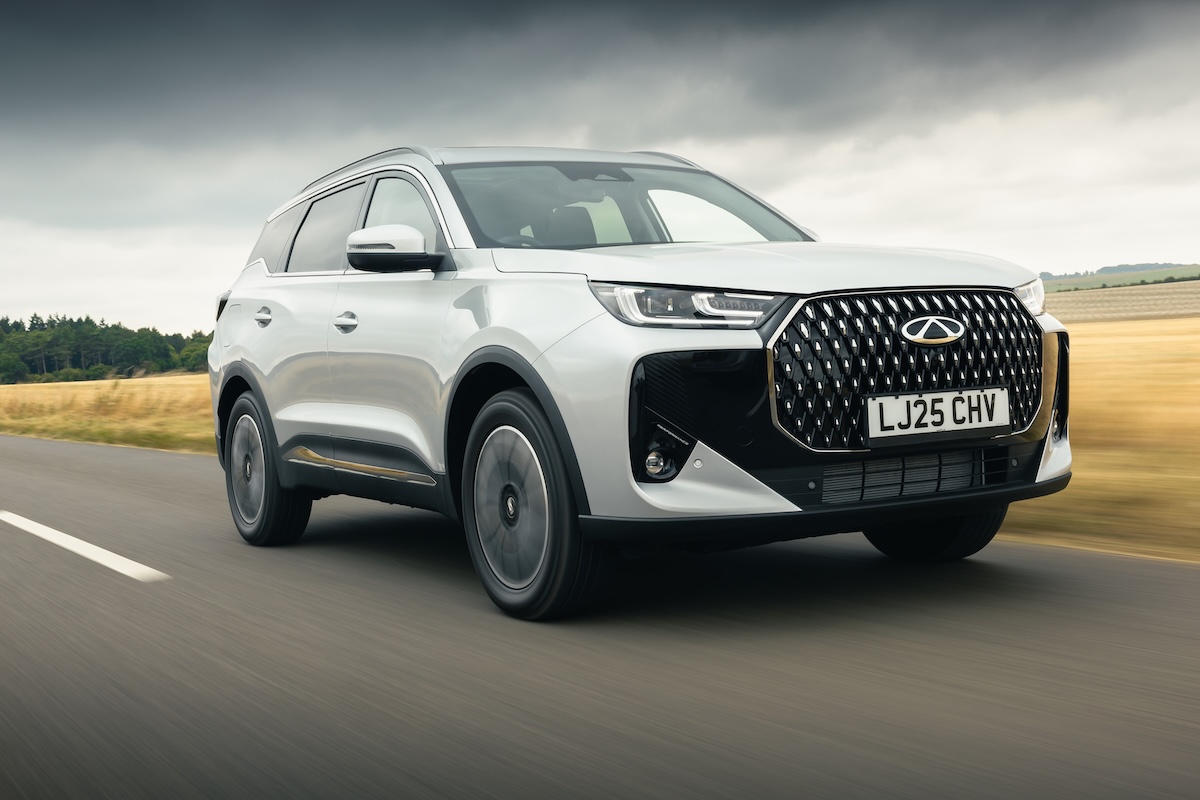
Is the Chery Tiggo 7 the best family SUV you can buy? Nope. Is it the best made? The most dynamically polished? The most fuel efficient? The most comfortable? The most practical? Again, no on all counts. But here’s the most important thing: it’s good enough in all these areas so that you don’t feel penalised for enjoying what it is very, very good at, and that’s something that we think will appeal to a great many buyers.
That something is sheer value for money. It’s priced at a level that undercuts the mainstream competition by several thousand pounds, and even has the beating of most of the budget competition on that score. And despite that, it comes with a heaving standard kit list and genuinely impressive interior quality that make it feel far removed from being a compromised bargain-basement offering. And now that Chery has sorted out the shortcomings of the seven-year, 100,000-mile warranty package, it now has that firmly in its favour, too.

What is the Chery Tiggo 7?
Perhaps the more pertinent question at this point is, ‘What is Chery?’ Many UK carbuyers may not have heard of it before now, and that’s completely excusable, but in other parts of the world, things are very different. Chery happens to be China’s second oldest car maker, having been established in 1997, and in that time, the brand has sold over 20 million cars.
The firm is not completely alien to the UK market, though. You may be a little more familiar with Omoda and Jaecoo, the Chinese quasi-prestige brands that have been quietly and effectively ingratiating themselves into the UK market for the last couple of years. Well, Chery is the core company that owns and operates both of those two, and now, the company has now set itself up in the UK as a brand in its own right, this time as a more affordable, more mainstream alternative.
The new Chery Tiggo 7 (pronounced ‘Teego 7’) is the firm’s second new car offering in the UK behind the seven-seater Tiggo 8, and it’s a mid-size family SUV designed to pilfer sales from established and enormously popular mainstream competitors such as the Nissan Qashqai, Kia Sportage, Ford Kuga, Volkswagen Tiguan and Hyundai Tucson among many, many others. However, as we’ll discover, it’s priced at a level that undercuts these rivals by many thousands, and it even has the edge over other budget offerings such as the MG HS.
The cheapest versions are offered with a pure petrol powertrain, or for a bit more cash, you can have it as a petrol-electric plug-in hybrid with an all-electric range of up to 56 miles. And despite low pricing, the two trim levels are offered with bags of standard equipment. Value-for-money is definitely front-and-centre of the Tiggo 7’s appeal, but unlike some other budget offerings, you don’t have to put up with awkward looks or ropey interior quality.

How practical is it?
At around 4.5 metres long, the Tiggo 7 is a close match size-wise for the Ford Kuga and Peugeot 3008, so you’d expect it to be a reasonably roomy family car. And it is, with very competitive passenger space for the class. Unsurprisingly, the front seats have all the space you could want, with lots of adjustment for the chairs, although taller drivers might wish that the steering wheel went a little higher than it does. The front of the cabin has lots of storage space, too, with cubbies, pockets and cupholders aplenty.
The rear seats also have plenty of space, easily enough for a six-foot adult to get comfortable. You’d actually have to be quite a lot taller than that before you start to struggle with the generous amount of legroom and headroom on offer. The cabin is just about wide enough that three sets of shoulders will fit across the rear bench, albeit snugly, and although the middle seat is narrower than those either side, there’s not a massive amount in it, and the floor in front of it is almost flat for greater comfort.
Boot space is a little less impressive, with the 426 litres you get being quite a lot less than some rivals give you, although that’ll still be enough for the needs of many people, and you don’t lose too much space to the rear wheel arches. You will, however, lose a bit of space to your charging cables in the plug-in hybrid version, because there’s no underfloor storage for them. There isn’t much of a lip to contend with at the boot entrance, while the 60/40 split-folding rear seats lie flat and level when you fold them down. Doing so frees up 1,672 litres of space.
Perhaps the most notable thing about the Tiggo 7’s interior, though, is its quality. With the car’s combination of bargain-basement price and heaving kit list, you might be forgiven for suspecting that Chery might try to make its money back by scrimping on quality. Not a bit of it. Okay, so you won’t be duped into thinking that you’re sat in an Audi or BMW, but neither will you have any complaint about the standard of materials that you’re faced with. The vast majority of them have a tactile cushioned finish, and even those that don’t are either glossy or glitzy, giving the impression of a genuinely high-end environment that makes the car feel like even better value than it already does.

What’s it like to drive?
There are two different flavours of Tiggo 7, one with pure petrol power and one with a plug-in hybrid powertrain. The former has a turbocharged 1.6-litre four-cylinder engine delivering 145bhp, and it has an official 0-62mph time of a middling 9.4 seconds. The latter - dubbed as the Tiggo 7 Super Hybrid, rather humbly - combines a 1.5-litre petrol engine with an electric motor to deliver a total of 201bhp, trimming the 0-62mph sprint time to 8.5 seconds. Both have a top speed of 112mph.
We’ve driven both, and predictably, there are some sizable differences in character. The petrol version will be brisk enough for the vast majority of drivers, with pace that’s unexceptional but entirely adequate. The refinement of the engine isn’t too bad, either: it doesn’t have to work too hard to keep pace with traffic, so noise levels are pretty low most of the time, although the slightly clumsy seven-speed dual clutch automatic gearbox will occasionally send the revs soaring for no good reason, resulting in a short burst of coarse noise. Sure, it’s not the most polished powertrain you’ll ever experience - the gearbox is clumsy like we said, and the throttle response is very leisurely, both when pressing the pedal and when lifting off it - but none of this is bad enough to ruin the experience.
The PHEV is faster against the stopwatch, as the figures tell you, but the key difference is that it feels a lot more eager to pick up its skirts and go, with the electric motor doing much of the heavy lifting when pulling away and getting up to speed. Its petrol engine stays quieter for more of the time for the same reason, and is kept to a similarly muted volume when required to work hard. With both powertrains, though, don’t bother using the car’s Sport mode (there are three driving modes, Normal, Sport and Eco), because all it really does is make the petrol engine hold onto its revs with little tangible benefit to performance. All versions of the car have double-glazed side windows, which helps to suppress wind noise very effectively, but you will hear quite a bit of tyre noise no matter which version you pick.
The PHEV shares the petrol’s lazy throttle response, and both versions also have slightly grabby brakes. The steering is responsive but a little rubbery-feeling.
There’s also a slight difference in the way the two versions ride and handle. We found the ride in the pure petrol version to have a firm, slightly brittle quality, giving a rather jiggly feel over lumps and bumps, especially at low-to-middling speeds. It doesn’t get to the point of being uncomfortable, but many rival SUVs will give you a more cosseting time. The suspension of the PHEV, meanwhile, has been given different spring rates to compensate for the extra weight of the battery, and the effect of this is that its suspension actually feels a little more forgiving, staying more comfortable for more of the time. It also has slightly looser body control as a result, and so leans over a bit more in corners, but to be fair, this isn’t a car you’re going to be hurling into corners at breakneck speed, and it changes direction in a controlled, stable and safe-feeling manner.
All in all, then, the Tiggo 7 generally doesn’t have as much engineering polish or finesse as most European or Japanese rivals, but it’s good enough to convince as a family SUV, especially given the value-for-money you’re getting.

Technology, equipment and infotainment
High value is arguably the main part of the Tiggo 7’s appeal, and as such, both trim levels come very well equipped. And, when you consider the minimal price you pay for it, the level of the kit you get becomes scarcely believable.
The entry-level car is called the Aspire, and this comes with luxury goods including 18-inch alloy wheels, a diamond-effect front grille, automatic high beam LED headlights, LED taillights, double glazed windows, powered driver’s seat adjustment, dual-zone climate control, keyless entry and go, a reversing camera, adaptive cruise control, front- and rear parking sensors and synthetic leather upholstery.
On top of that, the range-topping Summit model adds 19-inch alloys, heated- and ventilated front seats, a powered passenger seat, a powered panoramic sunroof, a heated steering wheel, puddle lights in the door mirrors, a hands-free powered tailgate, and 540-degree surround view cameras (these give you a view all around the car, plus underneath it as well).
Both versions of the car get pretty much the same infotainment system, the only difference being that the Summit gets an eight-speaker Sony audio system, while the Aspire makes do with six. The system is based around two side-by-side 12.3-inch screens, one touchscreen in the middle of the dashboard to deal with most of the car’s myriad functions, and the other set behind the steering wheel to act as your instrument panel. All the functionality you expect is present and correct, including Bluetooth, DAB radio, wireless Android Auto and Apple CarPlay, plus wireless smartphone charging as well.
In terms of ease-of use, the system isn’t the best you’ll encounter, but it’s certainly not the worst, either. Yes, many of the various menus and submenus are rather long and convoluted, meaning it can be tricky to find the function you want at a glance, but at least there’s logic to how most of the submenus are arranged, plus a menu mechanism that allows you to navigate between them reasonably easily. If you take the time to familiarise yourself with the system, then it does become possible to find your way around pretty effectively, and that’s certainly not a given in this day and age.
There are some useful little shortcuts, too: a swipe downwards from the top-left side of the screen brings up a menu that allows you to quickly and easily disable the more annoying of the driver assistance functions on board. And, while the touch-sensitive etchings on the dashboard below the central screen that control the air-con aren’t as easy to use on the move as traditional buttons and knobs, at least you don’t have to delve deep into countless on-screen menus to simply change the cabin temperature and fan speed.
Importantly, it also seems that many of the foibles and glitches we identified with the related systems in early Omoda and Jaecoo products (of which there were plenty, by the way) have been ironed out here, so pretty much everything works as it should.

Chery Tiggo 7 running costs
The big headline here is the price you pay for the thing in the first place. The cheapest version is the 1.6 turbo petrol in Aspire trim and at the time of the Tiggo 7’s launch, it costs - as near as makes no difference - £25,000. For context, that’s about the same as you’ll pay for a mid-range Vauxhall Corsa supermini.
Compare it to mainstream family SUV rivals of a similar size, and the differences become even more stark. A Ford Kuga and Hyundai Tucson will cost you roughly £8,000 more while also coming with less in the way of standard kit, while the cheapest Peugeot 3008 sets you back around £12,000 more.
Upgrading to the plug-in hybrid version of the Tiggo 7 costs another £5,000, taking the starting price up to £30,000 (and on both powertrain options, the upgrade to top-spec Summit trim costs you £3,000, by the way). For the equivalent PHEV versions of all three rivals mentioned, you'll be paying another £10,000 on top.
Okay, so it’s not like this hasn’t been done before. The MG HS, for example, is another flawed-but-fairly-convincing midsize family SUV rival from China that outperforms its mainstream rivals on equipment while also undercutting them hugely on price, and is available in either petrol- or plug-in hybrid forms. However, the Tiggo 7 even manages to undercut that rival by a very useful four-figure sum.
The PHEV version could also save you a few quid when it comes to running costs. That’s because it has an 18.4kWh battery that gives it an electric-only range of up to 56 miles. The fuel economy figures we’ve seen from Chery have been rather inconsistent, but from what we can gather, the average WLTP fuel economy figure looks to be 256.8mpg. Obviously, what you get in the real world will depend on how regularly you charge it and how many miles you can cover on electric-only power, but hopefully, the very decent EV range will maximise your chances of not having to call upon the petrol engine on a regular basis.
There’s been a similar inconsistency around the fuel economy figures we’ve seen for the pure petrol version, but from what we can deduce, expect an official figure of 32.7mpg, which isn’t great in truth.

Chery Tiggo 7 reliability
Chery might be a relatively new brand to the UK, but this is no new start-up in the automotive sector. The company is China’s second-oldest carmaker, having been established in 1997, and to date, more than 20 million cars have rolled off its production lines. And after all that, you’d hope that the firm would know what it’s doing by now.
That may sound glib, but the truth is that with the brand being so new to the UK, there simply isn’t the data available for us to comment on the car’s - or the brand’s - reliability one way or another.
Buying one might be a bit of a leap-of-faith, then, but your worries will hopefully be largely allayed by a very generous warranty package of seven years and 100,000 miles. This wasn't always everything it first appeared to be as several key - not to mention, expensive - components quietly disappeared from the cover after just three years and 40,000 miles. Following plenty of criticism for this - not least from us - Chery changed its cover in August of 2026 so that all the parts in question were covered for much longer, and most of them for the entirety of the published warranty period. Not only that, the improvement in cover also benefitted exisiting owners of Chery's cars, not just new ones. We take our hats off to Chery for taking action on this important issue, and the firm's cover is now everything it promises, making it one of the best warranty packages in the business.
- Chery has chucked all the driver assistance systems you expect at the Tiggo 7. There’s adaptive cruise control, lane departure warning and prevention, emergency lane keep assist, autonomous emergency braking, rear cross traffic alert, and driver attention alert all provided as standard. You also get eight airbags to help protect you if a smash becomes unavoidable.
- Despite Chery’s best efforts, though, this wasn’t enough to nail the safety tests conducted by Euro NCAP. The Tiggo 7 has only achieved a four-star rating, which is adequate but unremarkable.
- The plug-in hybrid version’s 18.4kWh battery gives electric-only running of up to 56 miles according to Chery, which isn’t bad in PHEV circles, if not as good as what you get from the MG HS PHEV. Chery hasn’t told us what the car’s maximum charging speed is, but we’re told it can be juiced up from 30% to 80% in 20 minutes.
- If you want to pay as little as possible: You’ll want the 1.6-litre turbo petrol in entry-level Aspire trim. Performance and refinement are acceptable, and equipment levels are still generous. Might be a bit thirsty, mind.
- If you want all the luxuries: Top-spec Summit trim has all the bells and whistles, yet it still comes at a bargain price, especially when compared with mainstream competitors. For ultimate luxury, choose the PHEV version, which is the superior powertrain.
- If you want a company car: The PHEV’s low emissions and fairly long EV range of up to 56 miles means it’ll be a lot cheaper that the other powertrain on Benefit-in-Kind company car tax bills.
- If you want the best all-rounder: We reckon the PHEV is worth paying the extra cash for thanks to its greater refinement, stronger performance, (potentially) superior fuel consumption and its more comfortable ride. However, base-level Aspire trim still has all the luxuries most buyers will really want, so we’d stick with that rather than paying the extra £3,000 to upgrade to Summit trim.


