Chery Tiggo 8 Review 2026 | Great-value seven-seater SUV from China
Chery Tiggo 8 cars for sale
4.0
Expert review
Pros
Phenomenal value for money
Fantastic standard equipment
Genuinely pleasant interior quality
Cons
Not brilliant on ergonomics
A little unpolished dynamically
But nothing that isn’t worth putting up with for the value you get

The CarGurus verdict
The Chery Tiggo 8 certainly isn’t without its flaws. The touchscreen interface is a bit user-hostile, the car can feel a teeny bit unpolished on the road, and many other seven-seat SUVs on the market ultimately offer more space and practicality. In our book, however, none of these shortcomings are severe enough to ruin a car that has many, many positives, and massive ones at that.
The sheer value for money you get with the Tiggo 8 is nothing short of phenomenal. You get proper everyday seven-seater practicality, impressive interior quality, smart looks, oodles of standard equipment, and all for a price that undercuts most competitors by five figures. And what’s more, you get a super-long warranty to sweeten the deal. Value like that simply can’t be ignored, and anyone who needs a family seven-seater on a budget would be bonkers not to give this thing serious consideration.
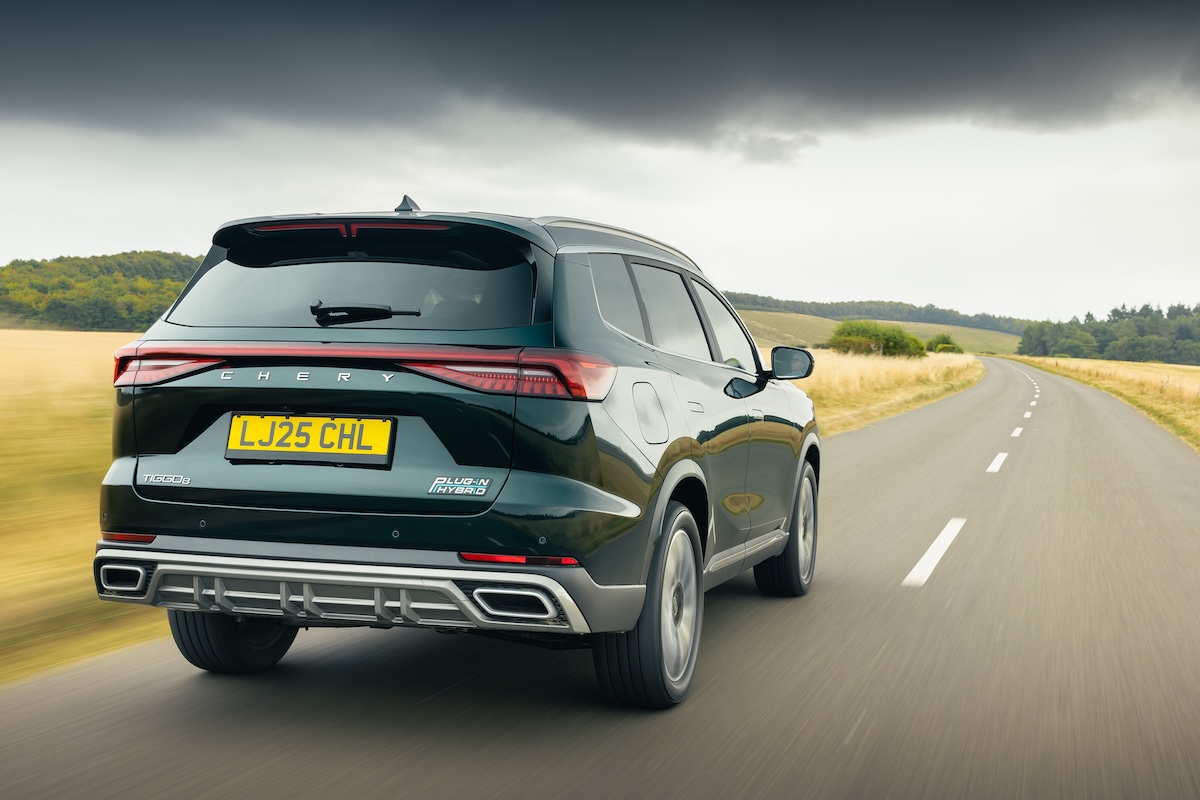
What is the Chery Tiggo 8?
Chery will be an unfamiliar name to most car buyers in the UK. In China, however, it is - to use the parlance of a fictional cinematic newsreader - ‘kind of a big deal’. Chery is China’s second oldest carmaker, and is currently the country’s number one exporter of passenger cars, so it’s safe to assume that it knows a thing or two about making motors.
While the Chery name might be brand new, the hardware it uses isn’t. You might well have heard of Jaecoo and Omoda, two Chinese brands that have been making plenty of waves in the UK since launching on these shores. Well, Chery International is the company that owns and operates both, and while those two brands take on slightly more premium marques, Chery is being introduced as a brand in its own right to tackle more mainstream, budget-friendly offerings.
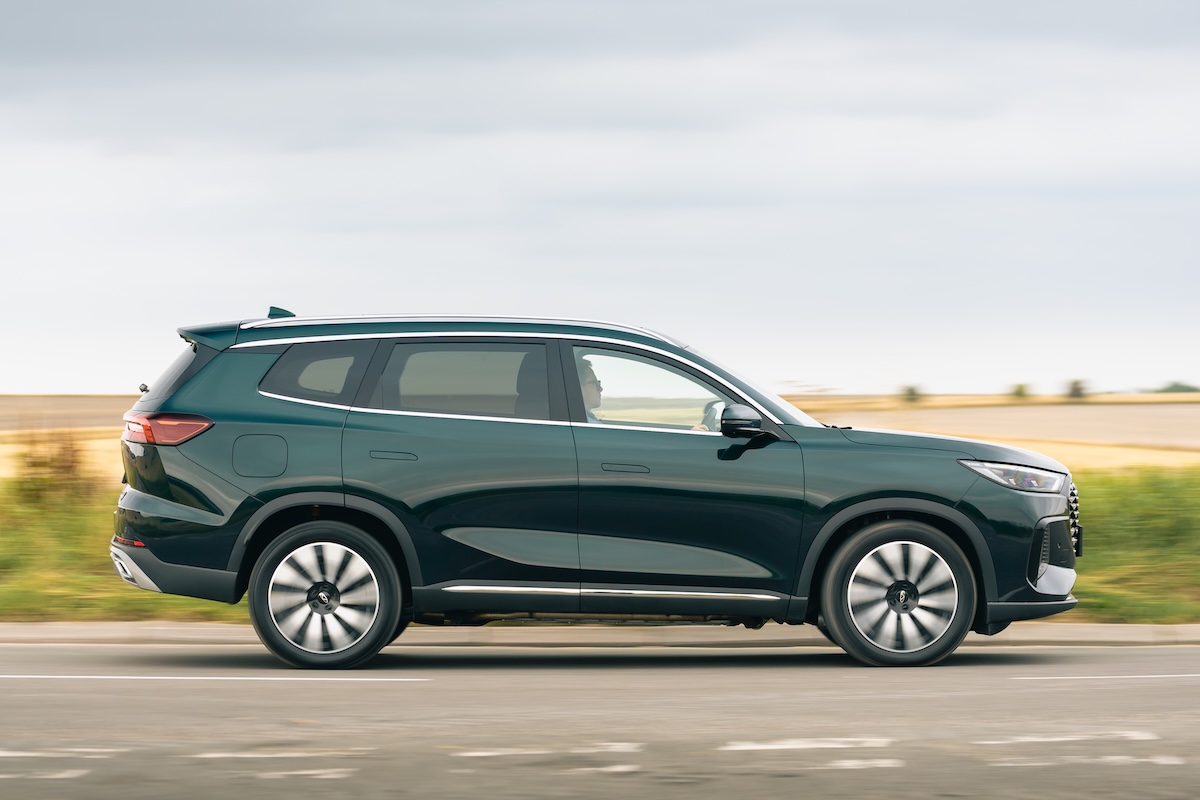
And the Tiggo 8? It’s a seven-seater family SUV - albeit quite a compact one at 4.7 metres long - that rivals cars like the Nissan X-Trail, Skoda Kodiaq and Volkswagen Tayron in terms of its practicality and family-friendliness. It has the smart looks and pleasant interior that demanding British SUV buyers insist on, plus it's stuffed with standard equipment and comes with a generous seven-year, 100,000-mile warranty.
But get this: the price you pay for the all-new Tiggo 8 (pronounced ‘Teego 8’, in case you were wondering) undercuts most of the competition by five figures. That’s right, five. Let’s just let that sink in for a moment.
Granted, the car isn’t without its flaws: the infotainment system is a little user-hostile, some of the cabin ergonomics could be better, and the car could be a little more polished to drive. But are these shortcomings so severe that they undermine and compromise your enjoyment of the car’s good bits? Not in our book, no.
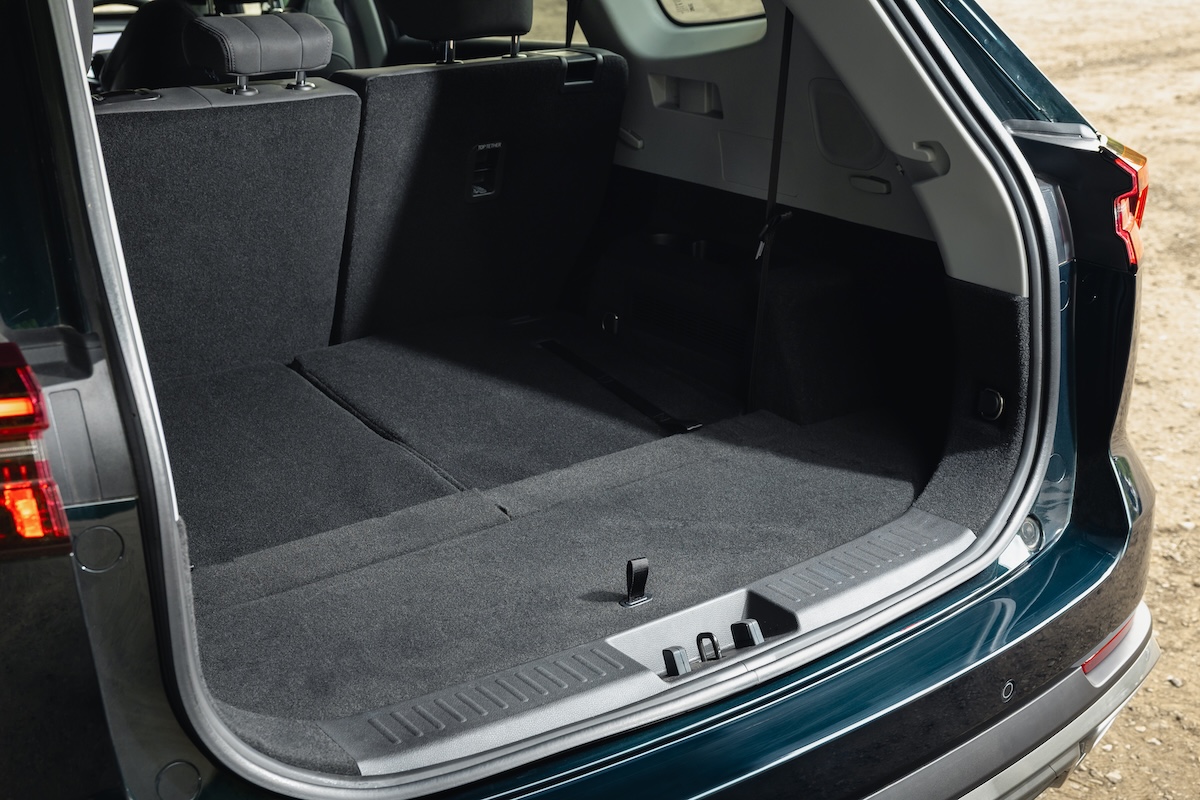
How practical is it?
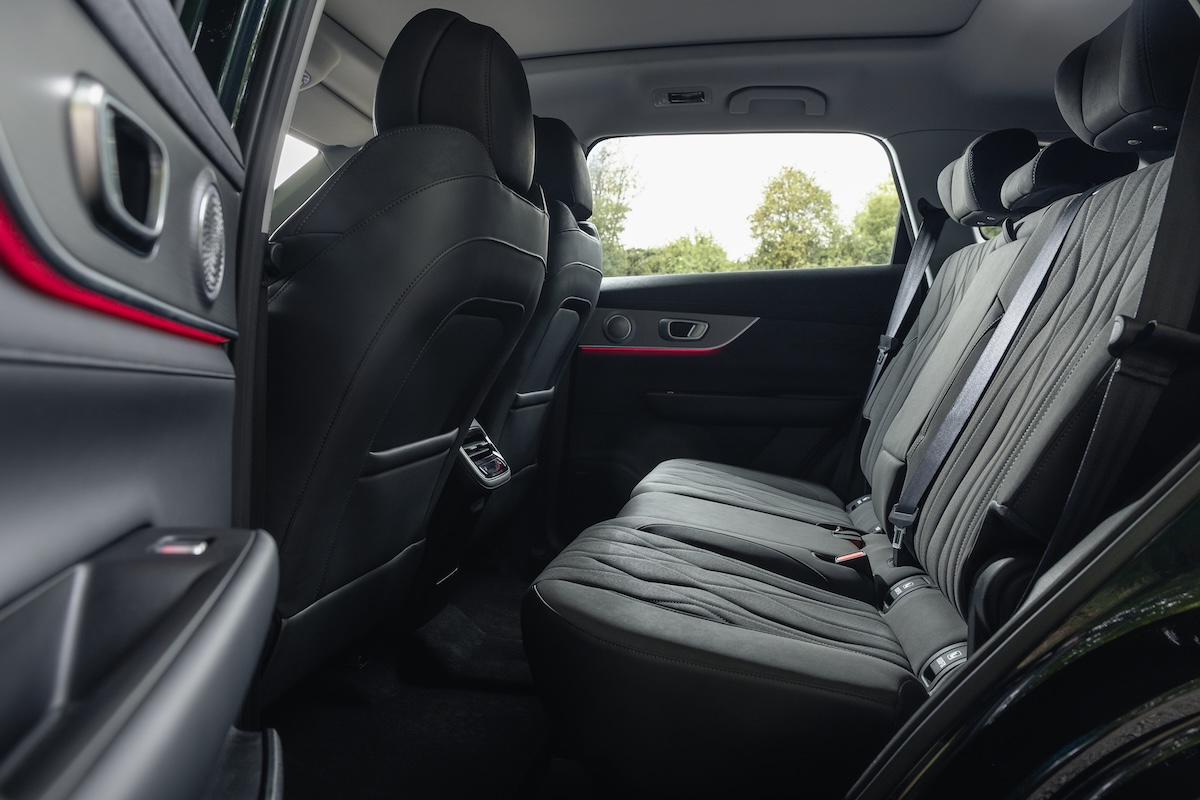
More practical than pretty much anything else you’ll get for the money. Yes, the Dacia Jogger is a seven-seater that you can buy for even less, quite a bit less, in fact. However, the Jogger is essentially an estate car where the two occasional pop-up seats have barely any room. The Tiggo 8, meanwhile, has seven proper seats with space for an actual person in each.
We proved this by stuffing our 6’1’’ road tester into one of the third-row seats. There was just about enough headroom to accommodate, and while legroom initially looked too tight, you then realise that the middle row of seats sits on runners, allowing it to slide backwards and forwards (in two portions, split 60/40). Slide these seats to the forwardmost point of their travel, and kneeroom in the middle row dwindles from ‘very generous’ to 'too tight for comfort’. However, find the halfway point on the runners, or thereabouts, and there’s enough legroom for everyone to fit reasonably comfortably, regardless of which row they're sat in. The 2nd row also has more headroom than you’ll ever need, too, and the cabin is wide enough that three adults will just about fit across the bench. The middle seat of the three-person bench is a little narrower than the outer ones, but the floor in front of it is almost flat, giving decent foot space.
True, getting into the third row takes some dexterity. Pulling a catch on the middle row slides a portion of the seat base forward, while the backrest also tips forward to give you more space to clamber through to the rearmost chairs, but the space is still very small. It’s also true that you only get this mechanism on one side of the car, and if you attempt to get in the other side, it’s even more difficult. To be fair, though, tight access to the third row is true of most seven-seater SUVs.
Predictably, the front seats have all the space you need, along with plentiful seat adjustment. The front of the cabin also has lots of cubbies and pockets for storing odds and ends. Obviously, the size of the boot depends on how many seats are in use at any given time. With all of them in place, the loadspace you get is a very modest 117 litres, enough for a couple of carrier bags of shopping, but not much else. Again, though, it’s a similar situation in most seven-seat SUVs. When travelling in five-seat mode, bootspace is given at 494 litres, which isn’t as generous as the figures of some seven-seater rivals, but is still not half bad, and enough for the needs of most older families. Folding all the rear seats frees up 1,930 litres of space - enough to carry bikes without having to remove wheels - and all the seats go flat and flush to leave you with a level load area.
Granted, some seven-seater SUVs - such as the Skoda Kodiaq and Hyundai Santa Fe - are roomier and more practical still than the Tiggo 8 overall, but these are far, far more expensive. Another key rival, the Nissan X-Trail, is closer on practicality to the Chery, and also closer on price, but the Chinese car still holds an advantage of several thousand pounds.
And when a car is this big, this cheap, and this well equipped (more on that in a bit), you might think that its maker could have scrimped on interior quality in order to scrape back some of its profit margin. The good news is that you’ll have no such worries with the Tiggo 8. The cabin is a very pleasant place in which to spend time thanks to smart design and impressive materials. Chery says - with a slightly bizarre level of accuracy - that precisely 78.9% of the interior surfaces are soft to the touch. We can believe it, and all those we encountered looked and felt very nice. And, those surfaces that aren’t soft to the touch are still classy and tasteful, so there’s absolutely no hint of this feeling like a bargain-basement interior. Okay, it’s no Audi, but given the price you pay, it’s mightily impressive.
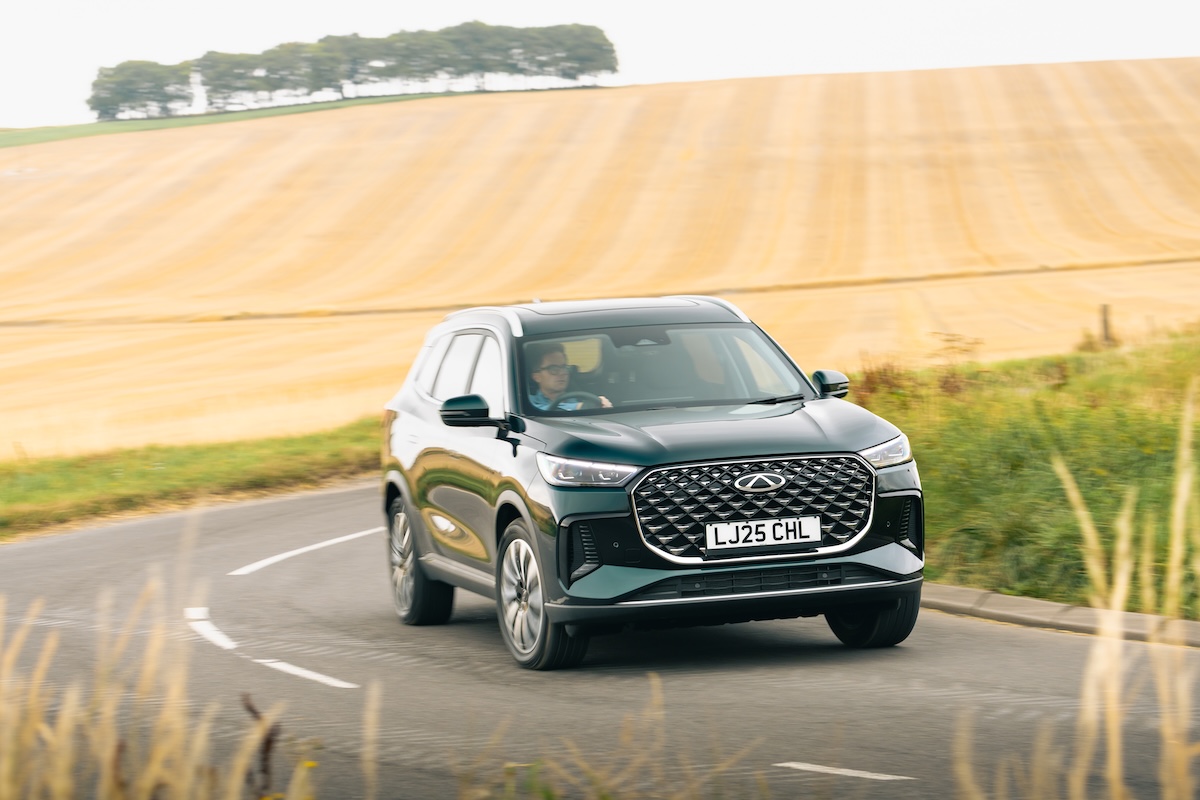
What’s it like to drive?
There are two powertrains on offer in the new Chery Tiggo 8. The first is a turbocharged 1.6-litre petrol engine that delivers 145bhp, which according to official figures, is enough to propel the Tiggo 8 from 0-62mph in 9.8 seconds, and onto a top speed of 118mph.
The second is a plug-in hybrid setup that Chery rather modestly calls the ‘Chery Super Hybrid’, or CSH. It pairs a 1.5-litre petrol engine with an electric motor to deliver a combined 201bhp, and that extra power trims the 0-62mph time to 8.5 seconds, although the top speed drops to 112mph. The electric motor is fed by a 18.4kWh battery, which official figures say can give an all-electric range of up to 56 miles on a full charge.
So far, we’ve only had the opportunity to drive the Tiggo 8 with the plug-in hybrid engine, and it’s not half bad. The initial pickup is brisk and easy, with the electric motor doing most - or where battery level and throttle input allows, all - of the heavy lifting. Granted, the throttle response is a little lazy, but in the vast majority of driving situations, the level of performance on offer will be more than adequate for most drivers.
When the petrol engine does chime in and out, it does so smoothly and largely imperceptibly. Even when working relatively hard, the engine noise stays fairly muted and distant: really burying the throttle will result in a moo of objection from under the bonnet, but in a car like the Tiggo 8, you’ll hardly ever do that. Standard double-glazed side windows also help towards impressive isolation of wind noise, but road noise is pretty prevalent in the cabin. You won’t be screaming at your front passenger to be heard, but you might have to raise your voice a smidge when conversing with those in the second- and third rows.
Perhaps the most defining characteristic of the Tiggo 8’s driving experience, however, is its spongey ride. The soft, long-travel suspension does a good job of soaking up most lumps and bumps, keeping comfort levels very decent indeed. You will find the body bobbing up and down a bit on an undulating road, but it’s nothing that’ll have the kids feeling queasy.
Yes, this softness does make for rather roly-poly cornering - which is made even more noticeable by steering that’s very responsive right off the straight-ahead, resulting in a slightly lurchy and untidy feel as you turn in - but the car changes direction in a stable and secure way. Besides, in a family carry-all like this, we’d take a comfy ride over neat handling any day.
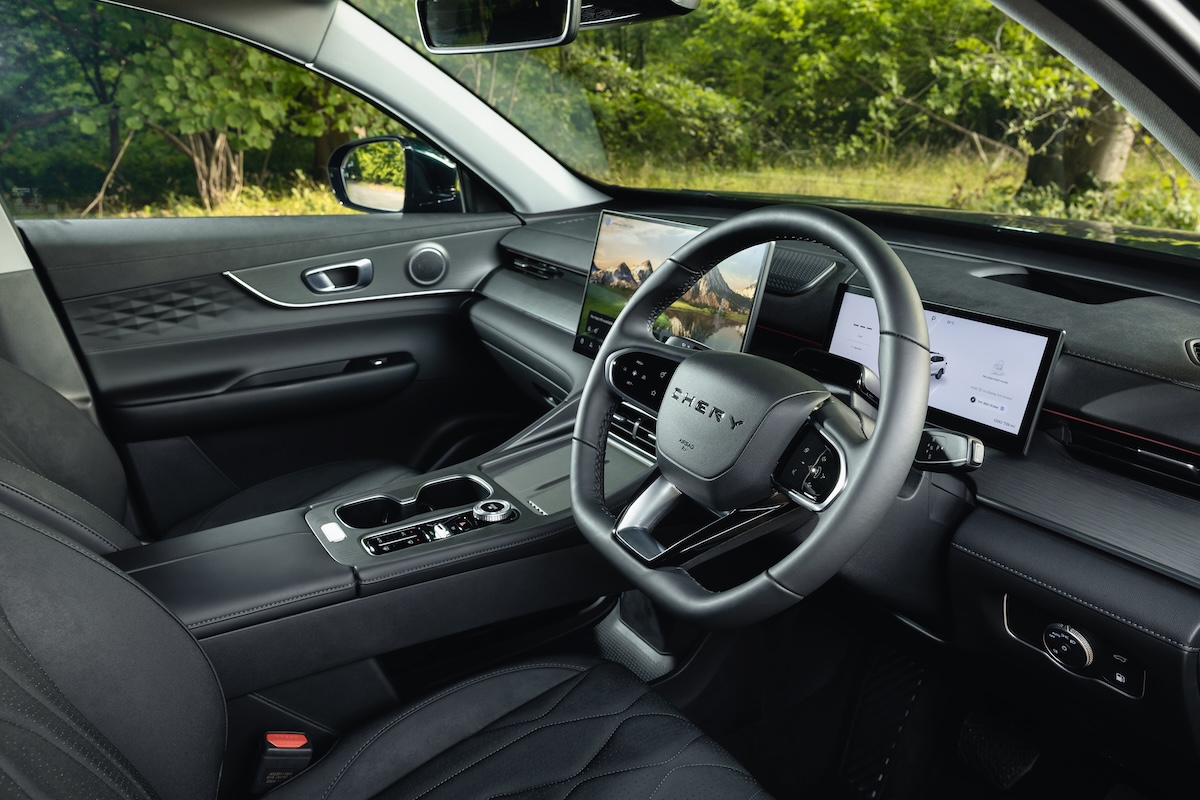
Technology, equipment and infotainment
The Tiggo 8 - and Chery as a whole, for that matter - is about providing sensational value for money, and so despite incredibly low prices compared with the competition, equipment levels are incredibly high, even on the most basic versions.
There are two trim levels available, the cheaper of which is called Aspire. Even this comes with niceties such as 19-inch alloy wheels, LED headlight and rear lights, keyless entry and start, an electrically adjusting driver seat, synthetic leather upholstery, a synthetic leather multi-function steering wheel, dual-zone climate control, electrically adjusting side mirrors with heating and power folding, automatic high beam headlights, adaptive cruise control, front- and rear parking sensors, and 540-degree surround view camera (this shows you a view underneath the car as well as all around it).
Upgrading to the higher level trim, called Summit, costs you £3,000, and earns you extra kit including a head-up display (HUD), heated steering wheel, heated first- and second-row seats, ventilated first-row seats, power adjustment and a massage function for the front passenger seat, a hands-free power tailgate, puddle lights on the door mirrors, and third-row air vents for the climate control.
All versions of the Tiggo 8 get the same basic infotainment system: the only real difference is that the Aspire has an eight-speaker Sony Audio system, while the Summit ups the speaker count to 12.
The system centres around a huge 15.6-inch touchscreen in the centre of the dashboard, accompanied by a smaller 10.25-inch driver information display behind the steering wheel. All the infotainment functionality you expect is provided, including DAB, Bluetooth, wireless Apple CarPlay and Android Auto, and wireless charging for your phone, too.
It’s not the worst such system you’ll ever come across, with neat graphics and at least some semblance of logic to how the ecosystem of menus and submenus works, but there is still significant margin for improvement. Minimalistic interior design is the fashion these days, which usually results in manufacturers trying to purge as much switchgear as possible for their cabins. That’s the approach taken here, and it means that simply too many functions have to be operated through the touchscreen, making things overly complicated and confusing to navigate. There are no physical air-con switches, meaning that a simple tweak of the temperature or fan speed involves diving into the menus. Even though that’s irritating, it’s fairly common these days. What’s less common is the fact that there are no physical controls for adjusting the door mirrors, so you even have to do that with the central screen. What a colossal faff.
It’s interesting to note that when we drove the smaller Chery Tiggo 7 on the same day as we drove the Tiggo 8, we clocked several significant infotainment improvements compared to the early Omoda and Jaecoo cars that we’d criticised previously in this area. This car has not benefitted from all of those improvements, though, and its user interface simply isn’t as good.
Chery Tiggo 8 running costs
It’s a point we’ve laboured throughout this Chery Tiggo 8 review, but this car really is all about maximum value for money. Prices start - as near as dammit - at £28,600 for the 1.6 petrol in Aspire trim, which is staggeringly affordable for a car of this size and type, especially when it’s so well equipped as standard.
For comparison, the equivalent version of the similarly sized Nissan X-Trail will cost you around £8,000 more, while for the equivalent Peugeot 5008 or seven-seater Skoda Kodiaq, the difference is upwards of £10,000.
The upgrade to the plug-in hybrid powertrain costs you a cool £5,000, but at £33,600 for a seven-seat PHEV, the value is still bonkers. Nissan doesn’t do a plug-in X-Trail and the plug-in Kodiaq can’t be had as a seven-seater, either, so the next comparable vehicle is the plug-in hybrid Peugeot 5008, which is again, at least £10,000 more than the Chery Tiggo 8 Super Hybrid. Compare it with the cheapest Kia Sorento PHEV, and the advantage stretches to around £14,000, and compared with the cheapest plug-in Hyundai Santa Fe…. well, seriously, you don’t want to know. Anyway, we think you probably get the picture by now.
Go for the entry-level petrol car, and it could cost you quite a bit to run, mind. An official WLTP fuel consumption figure of 36mpg isn’t great, and remember that that’s very much a best-case-scenario.
On paper, the PHEV version does a lot better, with an official figure of 235mpg. As ever with plug-in hybrids, though, treat this figure with a very healthy dose of scepticism. The official tests are always stupidly over-flattering to PHEVs, and real-world return will depend entirely on usage. For best effect, always keep your battery topped up and do only short journeys that can be completed on battery power alone. And, with a very respectable 56-mile electric-only range possible thanks to the 18.4kWh battery, you should often have a fighting chance of doing so. As soon as the petrol engine fires up, however, your car will quickly develop quite the thirst.
Most owners will keep their batteries topped up at home, but if public charging is needed, the car can accept a fast-charging rate of up to 40kW, giving you a 30% to 80% top-up in 20 minutes.
Chery Tiggo 8 reliability
Many people on these shores will never have heard of Chery before, so it’ll come as no surprise whatsoever that UK-sourced reliability data on the brand simply doesn’t exist. As we’ve said, though, Chery is China’s second oldest car company, so it’s not like this is the firm’s first rodeo when it comes to building vehicles.
To give peace of mind and confidence when buying, Chery provides all UK customers with a generous seven-year, 100,000-mile warranty package, with no mileage limit for the first three years. When the brand first started operating in the UK, though, that warranty wasn't quite all that it seemed.
Certain parts quietly slipped off the cover much earlier than that, after three years or 40,000 miles. This in itself isn't uncommon, and similar happens with many other manufacturers' schemes. However, the list of parts in Chery's case was uncommonly long, and contained several key systems that cost a lot to repair or replace if they go wrong, meaning buyers would be liable for that cost when they probably thought the were covered. That list includes all rubber bushes and ball joints, shock absorbers, brake calipers, timing belt, water pump, oil pump, fuel pump, fuel injectors, alternator, starter motor, air-con compressor, catalytic converter, the entire exhaust system, and the infotainment unit.
Chery took quite a bit of criticism for this - not least from us here at CarGurus - and in August 2026, the company upgraded its warranty to cover all these parts for considerably longer, with the vast majority of them being covered for the entire seven-year-100,000-mile duration of the warranty. Furthermore, the warranty improvement were applied retrospectively, so pre-existing Chery customers also benefitted, rather than just new ones.
We have to give Chery immense credit for taking action on this issue, and we can say with confidence that the firm's cover is now everything it should be, and is a genuinely compelling reason to buy.
- Most of the latest driver assistance features are present and correct on the Tiggo 8. Your standard roster includes autonomous emergency braking, adaptive cruise control, lane departure warning and prevention, emergency lane keeping, rear cross traffic alert, a driver monitor system, and blind spot detection. The more annoying of these systems can be turned off quickly and easily by swiping downwards from the top-right of the central screen and selecting features to disable one by one.
- If that little lot isn’t enough to prevent you from having a crash in the first place, the Tiggo 8 also comes with ten airbags to help keep you from harm, plus E-Call automatic emergency assistance.
- All that sounds like a lot, but it wasn’t enough to earn the car the full five-star rating in Euro NCAP crash tests. It scored a four-star rating, which is presentable, but no great shakes.
- If you want to spend as little as possible: The entry-level 1.6 petrol in Aspire trim gives you impressive space, practicality and equipment for a frankly staggeringly low price. We haven’t tried this engine in the Tiggo 8 yet - we’ve tried it in the smaller Tiggo 7 and it’s fine, although it might struggle more with the 8’s extra size and weight - but it looks okay on paper and you can’t argue with such unbelievable value.
- If you want all the toys: The upgrade to Summit trim costs £3,000, and adds several desirable features such as a powered tailgate. To be honest, though, the base Aspire car is so well equipped that we’d save ourselves the cash.
- If you’re a company car driver: The plug-in hybrid is a no-brainer for you, because it’ll cost you way less in Benefit in Kind company car tax bills thanks to its much lower emissions and decent electric-only range.
- If you want the best all-rounder: Like we said, we don’t really think that the upgrade from Aspire trim to Summit trim is necessarily worth bothering with, so well kitted is the standard car. However, we do think paying the extra for the plug-in hybrid probably will be worth it due to its superior performance and refinement, and its (potentially) lower running costs.


