Cupra Leon Review (2020-present)
Cupra Leon NF cars for sale
4.0
Expert review
Pros
As much fun as a VW Golf GTI, only cheaper
Adjustable suspension lends the Cupra broad abilities
The estate version is very practical
Cons
The plug-in hybrid is heavy and less rewarding to drive
Entry-level VZ1 cars miss out on adjustable suspension
Irritating infotainment system
The CarGurus verdict
Just how good the Cupra Leon is is quite heavily dependent on which version you choose. In its most powerful petrol form, it’s easily one of the best hot hatches on the market today, with a winning blend of thrills, practicality, equipment and value. As an estate, you trade some of those thrills for more practicality, although it’s still a terrifically quick car.
In plug-in hybrid form, though, the Leon is less convincing, but still worth considering if you’re after a company car with a sporty feel and you intend to plug it in regularly. Similarly, the entry-level petrols will likely feel like a tarted-up family hatchback rather than a proper hot hatch.
Whichever Leon you choose, you’ll have to live with the tricky infotainment system and the annoying lack of buttons. But these flaws are not enough to detract from the fact that, in almost every other way, the Cupra Leon is a class act.

What is the Cupra Leon
If the Cupra Leon looks familiar, that’s probably because it is. In times past, it’d have been known as the Seat Leon Cupra, the hot hatchback version of the Leon with power aplenty and handling to match.
These days, however, the Spanish manufacturer has spun Cupra off as a brand all of its own, and the hot Leon sits under its tree, rather than that of Seat. But for you, the buyer, the only major difference is the badge on the car’s nose; in almost every other way, this is simply a hot version of Seat’s family hatchback.
It's changed a wee bit over the years. To begin with it was offered exclusively with powerful engines for a proper hot hatch experience. Those powerful engines are still there, loud and proud, but today, they've been joined by more modest ones, allowing buyers on a tighter budget to enjoy the style, sportiness and quality of the Cupra, but in a package that's cheaper to buy and insure. For us, though, it's still the punchier versions that best demonstrate the Cupra way.
Rivals? Well, a few years back, there would've been quite a few, such as the Renaultsport Megane RS300, the Ford Focus ST and the Honda Civic Type R. However, due probably to changes in consumer behaviour and more stringent emissions laws, hot hatches have been disappearing from new-car forecourts in recent years: of the lot mentioned, only the Honda remains, and that's due to be binned off in 2026. Otherwise, most rivals come from elsewhere inside the Volkswagen Group. There's the Golf R/GTI with which the Cupra shares so much mechanically, along with the more sensible Skoda Octavia vRS and the classier (and more expensive) Audi S3.
If you're looking for a rival to the estate version of the Cupra Leon, which we love, then you'll be looking even harder. There's the Skoda, but that's about it.

How practical is it?
This is a critically important area, of course, because hot hatches need to perform a dual role: composed, easy-going, cost-effective transport the majority of the time, but with the ability to deliver a welcome dose of excitement when the mood takes you. The Cupra doesn’t just do the latter incredibly well; it’s brilliant at the former, too.
For one thing, there’s a huge amount of space on offer, especially in the back, where legroom and headroom are just about on a par with the best in the class. The same can’t quite be said of the boot, but it’s still plenty big enough for most people’s needs at 380 litres, which is about average for the class. Do bear in mind, though, that the capacity drops to 270 litres in PHEV models.
If you need more space for luggage, then why not consider the Cupra Leon Estate? Capacity is boosted all the way up to 620 litres, which isn't all that far off what you get in the massive Skoda Superb Estate, and with the right engine, your Cupra will go a lot quicker. If you have a vast amount of stuff that you want to take somewhere extremely quickly, or a dog that you want to scare the wits out of, then this is the car for you. Again, though, bear in mind that capacity drops significantly in the PHEV: down to 470 litres.
The rest of the interior is good, too; the Leon’s dash normally feels a bit dour, but it’s lifted here by the addition of some unusual copper-tinted accents and a sprinkling of more upmarket materials.
In fact, the only real downer is the almost complete lack of any buttons: everything’s controlled through the central touchscreen, which is a fiddly and distracting way of doing things. This problem is magnified because it’s not the easiest of these systems to use, far from it, in fact. We'll go into that in more depth in the technology, equipment & infotainment section.
One thing we will mention here, though, are the touch-sensitive sliders beneath the main screen for adjusting the cabin temperature and stereo volume. Not only are these more fiddly and less accurate that good old-fashioned buttons or dials would be, but in pre-facelift cars, they're also not backlit, meaning that you can't even see them at night, let alone actually use them. This lighting issue was remedied during the 2024 facelift, but they're no less fiddly than they were.

What's it like to drive?
As with previous Leon Cupras, this is a VW Golf GTI beneath the skin. And that’s a good thing, because the latest GTI benefits from some quite serious engineering upgrades over the last one, all of which have made it quite a delight to drive. Happily, the Leon benefits from all of these upgrades, which means it’s just as electrifying on the road.
All but the entry-level version, for example, come as standard with dynamic chassis control (or adjustable suspension), which means they offer you the choice between a comfortable, soft-edged ride or a super-firm track-friendly setup at the other extreme. You can adjust the firmness on a slider, too, so you don’t have to choose between just a few defined settings.
As a result, the Leon can transform from a smooth, supple grand tourer into a hunkered-down hot hatch at a moment’s notice. That means it’s remarkably comfortable on the daily grind, but taut and poised when you want to up the pace a little, and it's super effective.
And when you do get your clog down, the Leon is terrific fun. The front end is unshakeable, putting all that power down effortlessly thanks to a very effective electronic limited-slip differential. Its response to the steering wheel is precise and predictable, too, the throttle response is sharp and there are huge reserves of grip, so you get a sense that you’ll run out of talent long before the car will.
As effective as that adaptive suspension is, though, it should be noted that we've never driven an entry-level car that has passive suspension instead, so we don't know what sort of character that version delivers.
The engines on offer depend on what era of Cupra Leon you're talking about, and what bodystyle. Early on, hatchback buyers could choose between two four-cylinder petrol turbos with either 242bhp or 296bhp. Both are quick, but you need the more powerful unit for the proper hot-hatch experience, because it feels a good bit more savage in its power delivery. There was also a plug-in hybrid version with a combined 242bhp from its turbocharged 1.4-litre petrol engine and electric motor. This version isn't quite as impressive as the rest: the powertrain is rather ponderous, the brakes feel more wooden, and the car generally feels heavier and less eager to change direction. It's still a good car, but it doesn't nail the hot-hatch brief.
Very briefly, the car was also offered with a 187bhp version of the 2.0-litre, but it was on sale so briefly that we never got to try it.
Go for an estate of the same era, and the range-topping engine no longer gets 296bhp like it does in the hatchback, but 306bhp and four-wheel drive. You won't feel much difference in outright pace - it's still searingly quick, obviously - but you probably will notice the extra traction, both away from the mark and when exiting corners.
During the 2024 facelift, the engine range was overhauled. The PHEV was given a 1.5-litre petrol engine rather than a 1.4, and was offered in two states of tune, with either 201bhp or 268bhp. These were joined by a new entry-level 148bhp 1.5-litre petrol engine, offered with or without mild hybrid tech. We haven't experienced any of these in the Cupra Leon yet, though.
The range-topping engine remains as a 296bhp unit for the hatchback, but in the estate, it's uprated further to 328bhp. And guess what? Yup, it's still scintillatingly fast.

Technology, equipment & infotainment
Early on in the Cupra Leon's life, there were three trim levels to choose from. VZ1 came only with the less powerful of the two petrol engines on offer, but still got plenty of toys, including three-zone climate control, alloy wheels and LED headlights. VZ2 added those all-important adjustable dampers for the suspension, as well as adaptive cruise control, while VZ3 gave you heated front seats and leather upholstery.
Later on, as of the 2024 facelift, the trim structure took on a two-tier approach. The less powerful powertrains (the 1.5s and the weaker of the two PHEVs) were offered in V1, V2 and V3 specs, while the VZ1, VZ2 and VZ3 trims were reserved for the more powerful powertrain options (the punchier PHEV and the 2.0 litres).
Only the cheapest V1 models miss out on those all-important adaptive dampers (that means the VZ1 now has them as standard), but otherwise, the V1 comes quite well equipped, with sporty styling, alloy wheels, LED lights, rain-sensing wipers, front-and rear parking sensors, keyless go, adaptive cruise control, and the same basic infotainment system as the rest of the range, bringing together a 12.9-inch touchscreen, digital dials, DAB, Bluetooth, Apple CarPlay, Android Auto, and wireless phone charging.
It's a shame, then, that the infotainment system is such a disappointment. It looks quite smart, with lots of bright colours, but many of the icons don’t have labels, so you have to spend time working out (and then you have to remember) which icon means what. And, because pretty much everything has to be done with the touchscreen due to the absence of buttons, there are too many menus, and they're confusingly laid out.
Aside from the trick suspension, V2 trim adds a reversing camera, suede-effect upholstery, heated front seats and a power-adjusting driver's seat to the roster, while the V3 adds leather upholstery, a powered front passenger seat, intelligent park assist and some extra safety aids on top.
VZ1 trim has a very similar spec to that of the V2 trim (except with a more powerful engine, obviously), while VZ2 trim is very similar to V3. The VZ3, meanwhile, adds extra lairy styling touches, carbon-fibre-backed bucket seats, an upgraded 10-speaker Sennheiser audio system, plus more airbags.

Cupra Leon running costs
Don’t take the fuel economy figures of the plug-in hybrid versions as gospel; these stand at 217.3 mpg for the pre-facelift PHEV, and 706.2 mpg for the post-facelift ones (the sizeable difference is because the former could cover up to 34 miles on electric-only power, while the revised powertrains allow around 80 electric-only miles). The official test tends to flatter PHEV technology in an extreme way, which explains why they sound so outlandish. In the real world, you can expect to see anywhere from 60mpg to 90mpg, depending on how often you plug in and charge up. If you don’t bother, though, that figure will drop to around 35mpg.
From the petrol models, you should see a similar figure; perhaps slightly more from the 242bhp version, and slightly less from the 296bhp model. The estate version is heavier and more powerful, though, so don’t be surprised if you can’t get it to record more than 30 mpg on the daily grind.
The post-facelift 1.5 has an official figure of around 48 mpg or 51 mpg, depending on whether you have it with or without the mild hybrid tech.
Happily, no matter which variant of the Leon you go for, it’s fairly competitively priced. You’ll pay a lot less than you will for each Golf equivalent, despite the Leon being largely identical under the skin. And while there are cheaper alternatives in the pantheon of modern hot hatches, none has quite the same blend of talent as the petrol Cupra Leon hatchback. All of which makes it feel like very good value.
Expect to pay fairly reasonable prices for servicing. You can also pay up-front for your first three years’ (or 30,000 miles’) services for a discount, and get three years’ breakdown cover thrown in.
Both of the 2.0-litre petrol engines in the Leon have metal timing chains, which are intended to last the lifetime of the car and therefore don’t need to be changed. The 1.4-litre petrol engine in the e-Hybrid model uses a rubber belt, which you would normally expect to need changing, but Seat says that this too should last the lifetime of the car, although you might consider changing it later on in the car’s life out of an abundance of caution.

Cupra Leon reliability
When the Cupra Leon first went on sale, it came with the same bog-standard three-year, 60,000-mile warranty as pretty much all Volkswagen Group products. Since then, Cupra has broken rank and decided to offer much more competitive five-year, 90,000-mile cover. The brand should be applauded for that.
If you look at the latest What Car? Reliability Survey, though, you might deduce that you may well need to call upon that warranty at some point. Cupra itself didn't fare too badly in the survey, coming 17th out of the 31 brands in the manufacturer standings. However, while the Cupra Leon itself wasn't included in the study, the Seat version was, and that car placed a very lowly 24th out of 25 cars in the family car class.
You may think it unfair to judge a Cupra on the performance of a Seat, no matter how closely related. However, the bottom four places in that same class of the survey were occupied by Golfs and Octavias - alongside the Leon - of the same vintage, all of which use the same platform and tech, so it really looks like there's a pattern emerging with the underlying hardware. What's more, the Leon and Golf were named on the list of the ten least reliable models in the entire study. Most of the faults were with the infotainment system, a well-documented area of weakness, but electrical, suspension and powertrain issues were also reported.
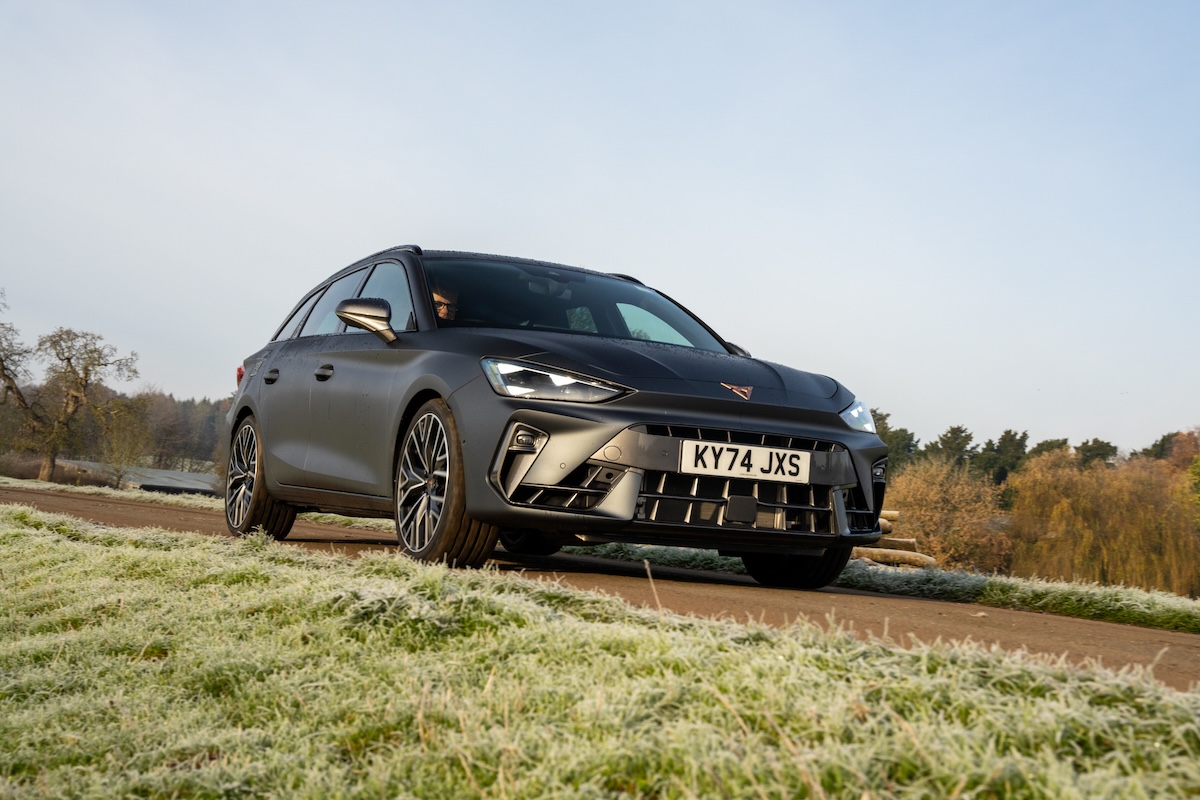
- You'll notice from our pictures that there's quite a variation in the look of the Cupra Leon, and that's because the car received an extensive facelift in 2024. The car's previously rather conservative looks were traded in for sharper angles, more bulbous bulges, and bigger air intakes, all contributing to a much more aggressive look, and it's all finished off by a cool triangular motif in the new headlights. Extensive changes were also made to the engine offering, trim structure and equipment levels.
- The Cupra Leon was tested by Euro NCAP when it was first released in 2020, and was awarded the full five stars. All versions come with automatic emergency braking, adaptive cruise control, driver attention alert and a variety of lane-keeping aids, but higher-spec versions have additional driver-assistance tech, such as blind spot monitoring.
- The standard colour is a non-metallic blue shade, but if you're prepared to pay extra, you can choose from eight more colours. Most are metallic and premium metallic shades, but there are also some really cool matte finishes on offer, although these are properly expensive at more than £2,000.
- If you're a young driver on a budget: If you like the sporty attitude of the Cupra Leon, but can't afford what it takes to buy, fuel and insure a 300-horsepower hot hatch, then you can get the same looks and quality from the entry-level 150PS petrol versions. It's not as fun, but it'll save you a lot of money, especially in insurance premiums.
- If you're choosing a company car: Go for one of the plug-in hybrids. The PHEV powertrain, with its vastly improved post-facelift electric range, will make it much more affordable than any of the other versions in monthly Benefit-in-Kind company car tax bills. An electric car will be cheaper still, and although there's no electric Leon, Cupra makes some pretty good EVs.
- If you've got lots of stuff to carry: We have a massive soft spot for the Cupra Leon Estate, especially in its range-topping form. The boot is massive, and it's also ballistically fast, so it's a car that satisfies both heart and head.
- If you want the best version: If you're going for one of the lower-powered V models, the upgrading from V1 to V2 trim is worth it for the brilliant adaptive suspension alone. If going for one of the faster VZs, you might as well go the whole hog and have the most powerful engine, but we don't see the need to upgrade to top-spec VZ3 trim: VZ1 or VZ2 will probably do you.


