Honda Civic 2026 review | The best family hatchback in its class?

Pros and cons
What we like
Smooth and efficient hybrid system
Comfortable and refined to drive
Pleasant interior and lots of standard equipment
What to consider
Rear headroom and boot space tighter than on previous Civic
Performance only so-so
Purchase prices are rather high
The CarGurus verdict
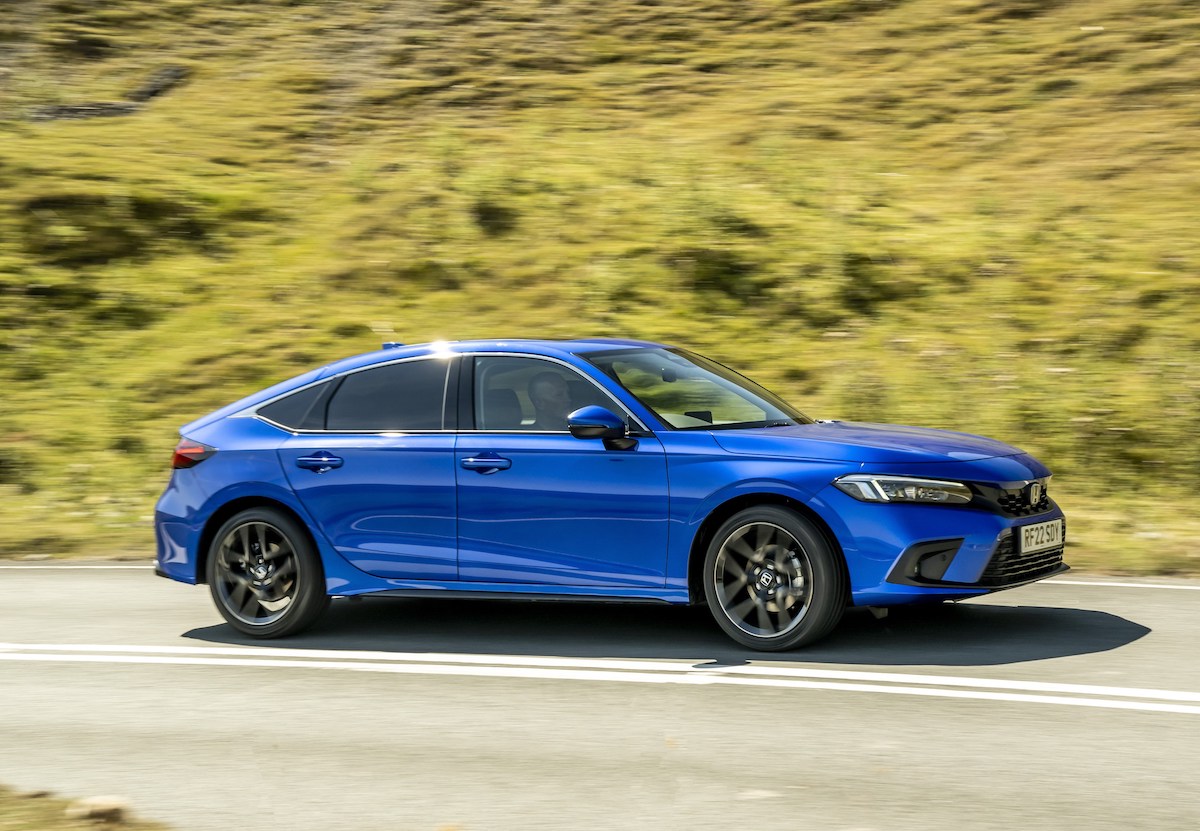
With over 30 million examples sold during its 50-plus years in existence, the Honda Civic has earned a place in the hearts of the world’s car buyers, aided by its appealing blend of sensible pragmatism and quality craftsmanship. The latest Civic – the 11th in the lineage – offers more of the same, with decent (if slightly reduced) practicality, solid build quality, a classy interior and plenty of standard equipment. It’s also a pleasant car to drive: comfortable, agile and with a effective hybrid system.
All in all, this latest Civic makes for a worthy competitor to rivals such as the Mazda 3, Kia K4, Vauxhall Astra, Audi A3, Skoda Octavia, Hyundai i30, Peugeot 308 and Volkswagen Golf. More than that, in fact: it's actually one of the very best cars of its type.
out of 5 expert review
What is the Honda Civic?
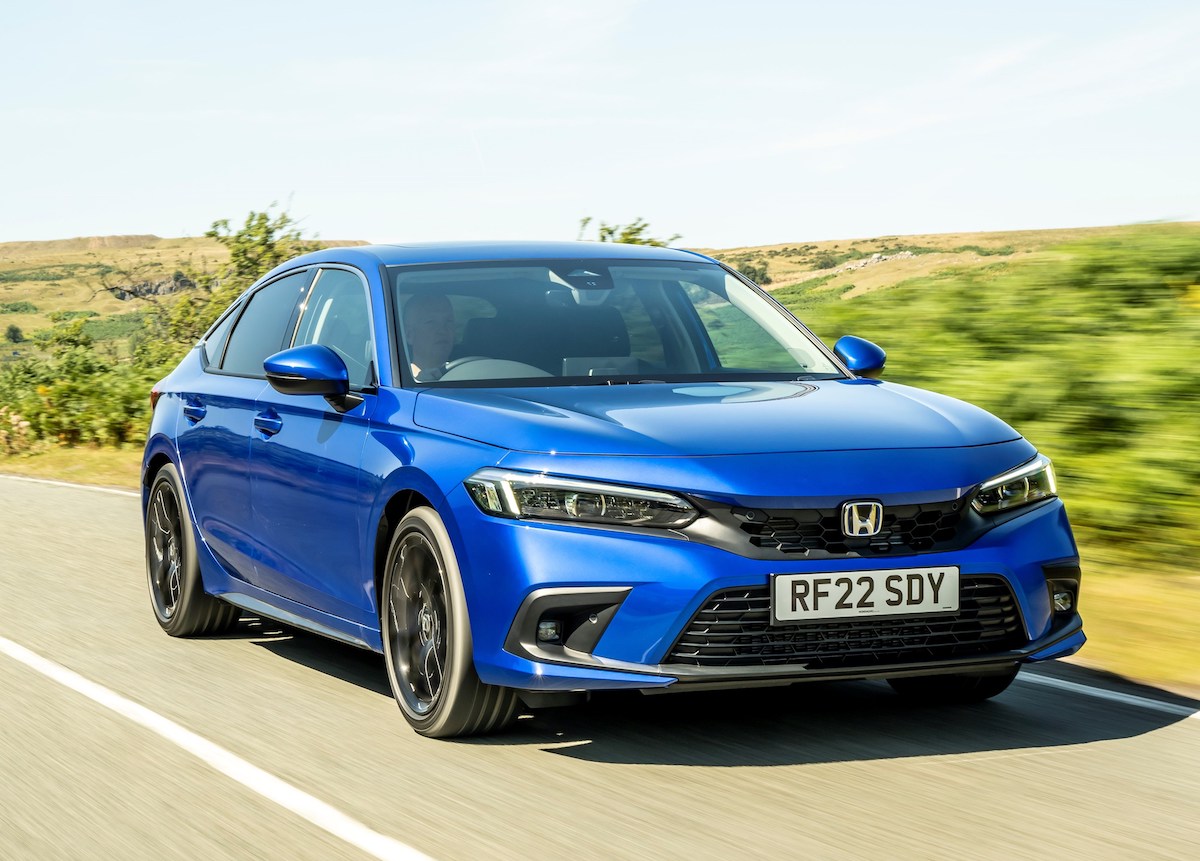
Now into its 11th generation, the Honda Civic has one of the best-known automotive nameplates anywhere in the world. While the Civic’s design has changed a lot since the first iteration was launched in 1972, at its core this remains a practical and affordable family hatchback.
It’s a tried-and-tested formula, then, but how does this Civic differ from versions that have gone before? Well, in line with Honda’s previous pledge to electrify its entire product lineup by 2022 – the year this version of the Civic was launched – the car you see here is only available as a petrol-electric hybrid. Its powertrain marries a naturally aspirated 2.0-litre direct-injection petrol engine with two electric motors to deliver a combined output of 180bhp. Officially, the car is called the Civic e:HEV.
It’s what you might call a self-charging hybrid or a full hybrid, as there is no need (and indeed no socket) to plug the car in. Instead, it recharges its tiny 1.05kWh battery using energy regenerated through deceleration and braking. It can’t run for very long on electric power alone as a result, but an official fuel economy figure of 60.1mpg is impressive. We managed an easy 45mpg in mixed driving in our tests, and closer to 50mpg on urban roads.
Although the Civic received a facelift for 2025, its engine remained exactly the same, with Honda instead focusing its energy on the exterior design and a number of interior upgrades.
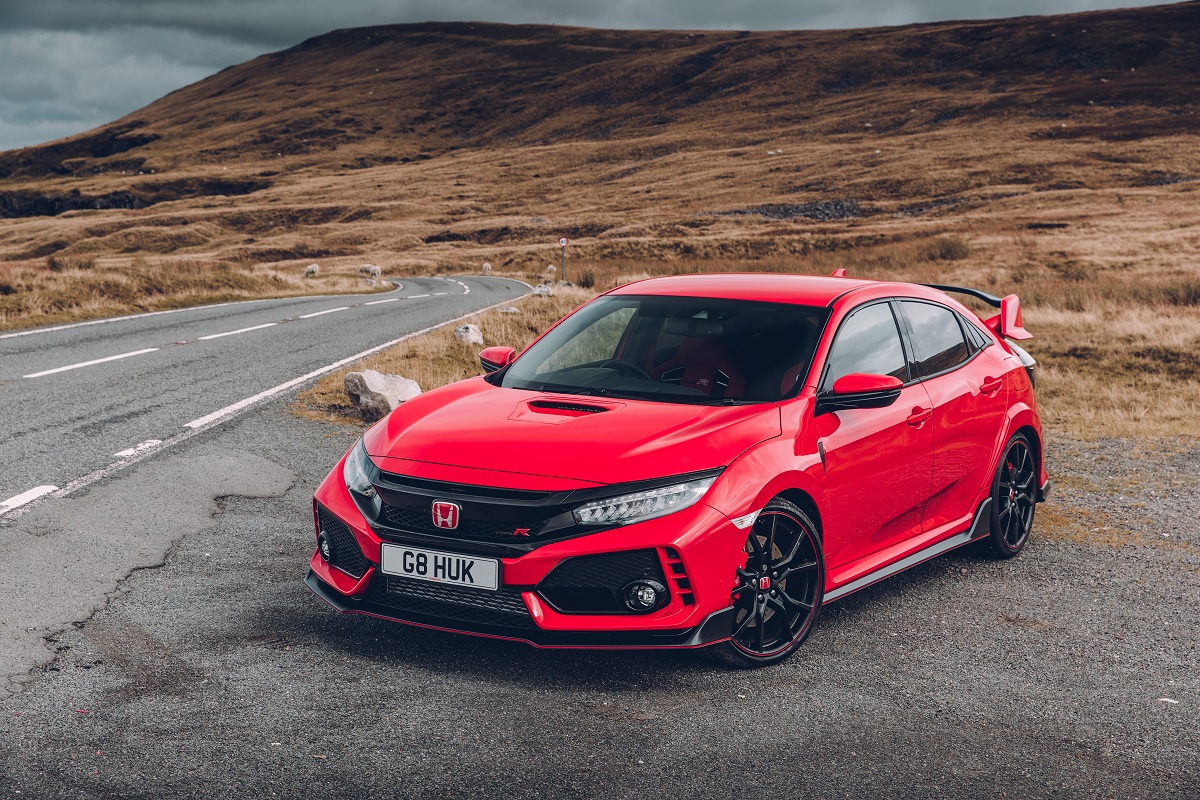
For serious petrolheads, there is the (now used-only) Honda Civic Type R. One of the most dynamic hot hatchbacks of recent years, we've covered it separately in our Honda Civic Type R review.
For a full breakdown of the Honda Civic’s history, be sure to read our guide to Honda Civic models over the years.

Practicality
How practical is it?
This is the area in which the 11th-generation Civic takes a slight backwards step. Look inside the boot and you’ll find a loadspace that measures up to 410 litres in capacity, which is around 60 litres less than a 10th generation Honda Civic. It’s the hybrid drivetrain that accounts for this deficit, because all of the extra components have to live somewhere. In fact, there’s even an odd ridge in the boot floor as a result. Still, the Civic’s boot is still very useful; the Volkswagen Golf hatchback, for example, offers just 381 litres with the rear seats in place. Fold the rear seats down and you get up to 1,220 litres in the Civic, a fraction less than the 1,237 litres in the Golf.
Inside the passenger compartment, the big news is that the wheelbase – the distance between the front wheels and rear wheels – has grown compared with the previous car. In the old Civic, it measured 2,697mm, but this 11th generation Civic stretches out for 2,734mm. OK, it doesn’t sound like much, but rear legroom is certainly more generous than before; even tall passengers can stretch out in the back.
Rear headroom isn’t nearly so generous, however. The new Civic has a slightly lower roofline in an effort to improve its aerodynamics and reduce fuel consumption. Passengers up to six feet tall will be absolutely fine, but anyone above that may emerge from the rear seats with a new hairstyle at the end of each journey.
Up front, you’ll find plenty of space and lots of adjustment, so finding a comfortable driving position is very easy. The same cannot be said of the rival Peugeot 308 hatchback, for instance, where a small steering wheel means you are forever compromised in terms of how you sit. The physical knobs and buttons (hallelujah!) that operate the Honda’s climate control couldn’t be simpler to use, while the infotainment system is a big step up from that found in the previous Civic, with sharper graphics, faster responses and a simpler menu system.
Interior quality is another area that has improved significantly. The majority of the materials look and feel appealing to the eyes and fingertips, and the standard of construction is very solid. As a result, the Civic feels like a classy place in which to spend time. Stylistically, the metallic honeycomb trim for the air vents is a simple yet very effective touch, as are the little joystick controls used to direct the airflow.
A 2025 facelift, although minor, added a matte chrome finish to the air vent surrounds, plus a black roof lining and pillar trim. Small changes, but they make the Honda’s interior look smarter.
For those interested in towing, the 11th generation Civic doesn’t offer the strongest numbers. Its maximum unbraked towing capacity is 600kg, with a braked capacity of up to 750kg. Compare that to a Volkswagen Golf, which can tow between 1,300kg and 1,700kg braked, depending on the model chosen.
Honda offers a number of accessories to broaden the Civic’s appeal, including packs and individual options. The most practical of these is the Comfort Pack, which adds a fold-out boot mat to protect the load lip and mud flaps. All the other packs are mostly cosmetic modifications, but individual options you may find useful include a tow bar, roof rails, a boot-mounted Thule bicycle carrier, a Thule roof box and some rear-seat sun shades – perfect for keeping younger passengers cool in the back.

Driving
What’s it like to drive?
The 11th-generation Honda Civic’s hybrid system has various modes, and it switches between them automatically without any inputs from the driver. In low-speed urban driving, the car defaults to electric-only running (where the battery level allows), but when stronger acceleration is needed, Hybrid mode will kick in. Here, the wheels are propelled by the electric motor, while the petrol engine generates the necessary power. When driving at constant high speeds, such as on the motorway, the system switches to Engine Drive mode, where the wheels are directly powered by the engine. If maximum acceleration is required, the Civic can also unleash the full force of both power sources at its wheels in tandem.
The performance delivered is entirely adequate, if not quite as plentiful as a healthy power figure of 180bhp might suggest. The 0-62mph dash takes an unremarkable 7.8 seconds in the Elegance model, 7.9 seconds in the Sport and 8.1 seconds in the Advance. The only reason for the variance between these three trim levels is that each version comes with more technology and in turn more weight, the trio weighing 1,446kg, 1,462kg and 1,503kg respectively. More importantly than the numbers, however, engine response is eager from just about anywhere in the rev range, so the drivetrain doesn’t feel in any way strained when getting you up to speed. It makes progress easy and relaxed.
The Civic’s transmission is what Honda calls an eCVT, and if that moniker makes you worry that any press of the accelerator pedal will be met with soaring engine revs and deafening sound levels, you can rest easy. We’ll spare you the technicalities, but the Civic’s transmission doesn’t work in the same way as a traditional CVT (Continuously Variable Transmission). In reality, it behaves more like a conventional automatic gearbox. Granted, the petrol engine can get a bit raucous when worked hard, but the way the transmission behaves means that very rarely happens.
Meanwhile, the switches between the Honda’s various hybrid modes are perceptible, but they’re always smooth and unobtrusive, which contributes to an impressive level of overall refinement.
In fact, if you didn’t already know the Civic is a hybrid, you might not clock the fact at all, because it doesn’t seem to suffer from the dynamic pitfalls that other hybrids often do. You don’t have to wait long for the drivetrain to respond, the brakes don’t feel too overloaded and it doesn’t feel too heavy. The Civic just goes about its business in a polished and sophisticated way. If there’s one thing Honda usually gets right, it's driving dynamics.
As well as the hybrid modes, you can also toggle between four driving modes: Eco, Normal, Sport and Individual. These only vary the throttle and steering response, though, and the effects are very marginal, so most folk will barely notice the difference.
Regardless of the mode selected, the Civic is a very sweet car to drive. Its ride is impressively smooth, with good bump absorption and very solid body control, making for a nicely comfortable car. That control helps it feel relatively agile, too – not to the extent of a Ford Focus (rest in peace), but still grippy and sharp when changing direction. The steering is quick and nicely weighted, too. You do hear a bit of road noise from the tyres, but this is an easy car in which to cover the miles.

Tech and equipment
Technology, equipment and infotainment
The Civic range consists of three trim levels, beginning with Elegance grade. This comes with 17-inch alloy wheels, dual-zone climate control, front and rear parking sensors, a reversing camera, a seven-inch touchscreen infotainment system with Apple CarPlay, Android Auto and navigation, and a comprehensive suite of advanced driver aids. The latter include automatic emergency braking, adaptive cruise control, lane-keep assist and a traffic jam assistant. Following the 2025 facelift, Elegance spec also has wireless phone charging as standard (previously unavailable on the entry-level car), as well as an auto-dimming rear-view mirror.
Sport trim is next on the ladder. This replaces the Elegance’s fabric seats with part-leatherette, and provides sports pedals, LED fog lights, some gloss black exterior trim and black 18-inch alloys. You also get a rear-seat air vent, which isn’t much to shout about, but will help to keep passengers happy and cool. Added in the 2025 refresh, Sport models now benefit from a heated steering wheel and the larger 10.2-inch central touchscreen, previously only offered on the top-level Civic Advance. Keep this in mind if you’re buying used, as you will find the smaller 7.0-inch screen on most Sport models.
The jump up to Advance grade costs quite a bit more, but adds goodies such as an upgraded Bose sound system, panoramic roof, adaptive high-beam headlights and full leather upholstery. The only improvement for the 2025 facelift was some extra interior lighting and footwell illumination.
A change across the board for post-2025 cars is the removal of front fog lights. The reason was that the Civic’s LED headlights were improved to the point where separate fog lights were no longer needed.

Running costs
Honda Civic running costs
At first glance, list prices for the latest Civic look rather high compared with those of rivals that have less powerful non-hybrid alternatives on offer. You can have a low-spec Volkswagen Golf for thousands less, for example. However, prices tend to even out when you look at more comparable versions of rival cars. For example, put it up against perhaps its closest competitor – the Toyota Corolla hybrid – and there is barely anything in it.
We see very little between the two for resale values, either, so there’s likely to be little difference in monthly finance or leasing payments – or indeed the prices asked for used examples. Expect very similar bills for servicing, maintenance and insurance, too.
Speaking of servicing, Honda currently offers a ‘Honda Three Service Plan’, which covers the first three services required in the first three years or 37,500 miles of ownership. For electric models, this will set you back £699, but for the hybrid Civic it’ll be £999. That’s a lot of money up front, but it effectively secures the cost of your future services, rather than you paying year by year and cumulatively spending more.
Fuel efficiency is competitive as well. The entry-level Toyota Corolla 1.8 hybrid is a bit cleaner according to official WLTP figures, but it’s also down on power by a fair bit, while the Civic has a small economy advantage over the brawnier 2.0-litre Corolla, which has a very similar power output.

Honda Civic reliability
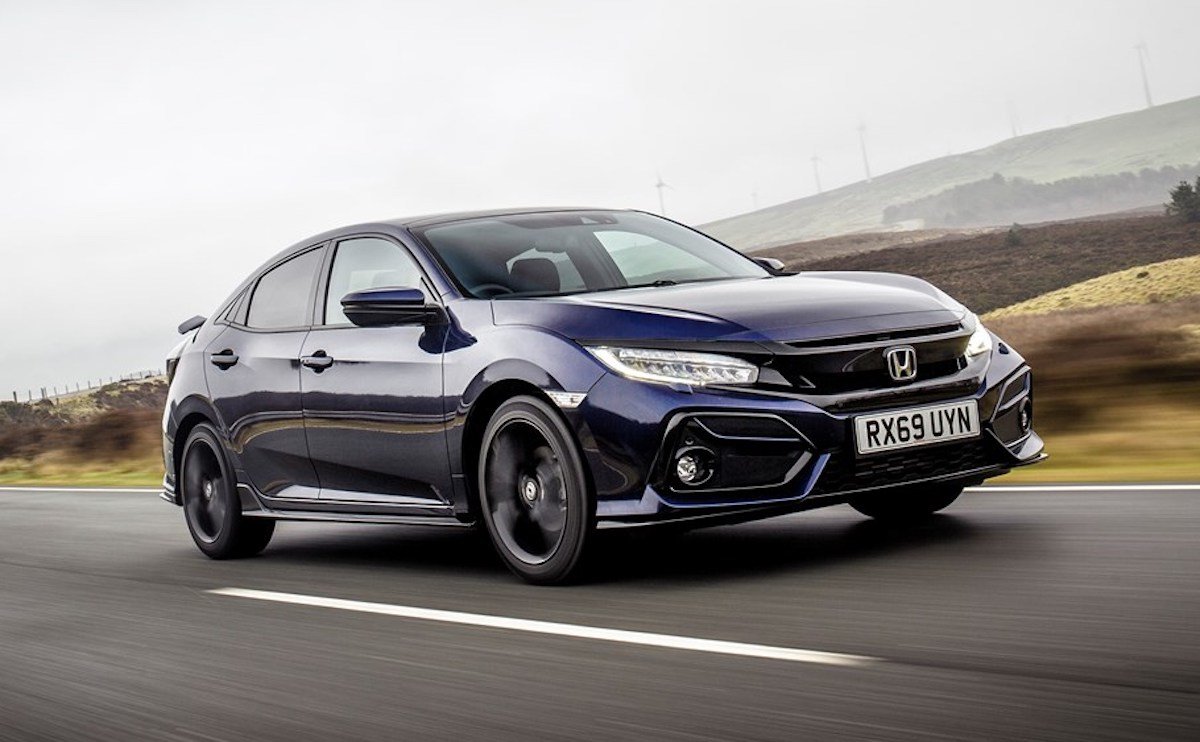
There was a time when it wouldn’t matter which of the various reliability surveys you looked at, you’d still find Honda at – or very near – the very top of the standings. This was a company whose record for mechanical dependability was the very envy of the entire motor industry. That reputation has wobbled somewhat in recent years, coinciding with the time period that the previous generation of the Civic was on sale.
Thankfully, it now seems like the Japanese firm is back on track in this regard. The most recent What Car? Reliability Survey places this generation of Civic in third place in the Family Car category, out of 30 models included. The 10th generation Honda Civic, meanwhile, placed 19th, and the current Volkswagen Golf secured 28th place. Honda as an overall manufacturer, meanwhile, has risen from fourth place a year ago to first place out of 30. To quote an old James Bond theme tune, ‘nobody does it better’.
The Honda Civic comes with a three-year, 90,000-mile warranty as standard. There is also the option to increase this to 100,000 miles or eight years, whichever comes first. If you’re planning on keeping your Honda Civic for a long time and plan to have it serviced at a Honda dealer, it’s a no-brainer, as it doesn’t cost you anything extra.


What owners say
"The Honda Civic has earned a strong reputation for its performance, reliability, and fuel economy across various model years. Owners frequently praise the comfortable ride and solid build quality, alongside its impressive safety features and user-friendly infotainment systems. Some drivers, however, have expressed a desire for more power in certain models and have noted a few shortcomings in interior material quality. Despite these critiques, many owners find the Civic to be a highly dependable and economical choice."
fantastic car, delivered clean and professionally. very happy with the seller and car :)
29 November 2025The car was good value and performs well. Seat position is tight for a short person. Also, to read the displays means lifting the seat position which means thighs gets closer to the steering wheel. Rear spoiler splits rear windscreen, which takes a bit of getting used to. Overall, I am pleased to have purchased it.
12 April 2026A bit slow in 1st and 2nd gear Pulling away
1 February 2025What owners say
fantastic car, delivered clean and professionally. very happy with the seller and car :)
29 November 2025The car was good value and performs well. Seat position is tight for a short person. Also, to read the displays means lifting the seat position which means thighs gets closer to the steering wheel. Rear spoiler splits rear windscreen, which takes a bit of getting used to. Overall, I am pleased to have purchased it.
12 April 2026A bit slow in 1st and 2nd gear Pulling away
1 February 2025The mk10 1.5 sport is a great car, has loads of extras . This is my second one and my son has also bought one.
28 February 2025Having owned a Honda Civic for the last 10 years, we do know how good they are, so we decided to stick with the same model type, our new car is a dream car, it has every thing you need for safety and comfort, and ease to drive
29 March 2021So far I love the car. Economy seems good 45mpg mainly town. Very well equipped ( not quite as good as the Kia Sportage K5. ) very quiet and comfortable. Infotainment system takes some working out but performs well. Oh and it has a manual handbrake which is a big plus as far as I’m concerned. The fit and finish is superb. The 19” alloys really set it off. I tend to change cars quite often but I think I might keep this one longer than usual
19 June 2023I have had a 2008 civic se 1.4 from new for thirteen years, I have done 90,OOO faultless miles in it. The car still pulls away like a dream drives like a dream, Its like a bottle of vintage wine, it gets better with age and distance. I have just bought a new civic, fancied an upgrade but reluctant to get rid of the old one, Its just such a straight forward car car.
29 March 2021I liked the car so much I bought it. Very smooth drive and the tax is only £10 per year.
19 May 2021I actual purchased this car after making it a favourite. It’s an amazing car…. I’m shocked at the performance for a 3 cylinder 1 litre turbo car. Strongly advise purchasing 1 for first time drivers or ppl than want to keep car cost down but have something with a little bit of sportiness out of a car
26 February 2024Fantastic car all modern gadgets and equipment. Solid and powerful economical car of good build quality. Fair priced. For us its missing Sun roof and hight adjustment on front passenger seat as quite low. I review Toyota corolla and advised a3 and found styling suited us best and reliableity build and design suited us over others
7 July 2023Three things to know
- The original Honda Civic was released way back in 1972 and – rather grandly – Honda says it has always been defined as ‘a car for the people of the world’. That might not be far off, mind, as more than 30 million Civics have now been sold worldwide. More than half-a-million of these found homes in the UK, too.
- If you specify your Civic from new and you decide not to spend extra on paint, the car you receive will be finished in Crystal Black Pearl (the standard paint for pre-facelift cars was Sonic Grey). Grey, white and blue metallic finishes are all available for £700 more, while the top-tier Premium Crystal Red Metallic is £1,025.
- All Civics come with a very impressive suite of driver aids, along with no fewer than 11 airbags to protect occupants from harm should the worst happen. That’s not bad when most cars come with around six airbags. No surprise, then, that this latest Civic was awarded a full five stars in Euro NCAP crash tests.
Which one to buy
- If you want the best value Civic: The entry-level Elegance grade comes with pretty much all equipment most buyers will demand. It’s also as well stocked as any other Civic in terms of safety kit.
- If you want a sportier Civic: Without buying a Honda Civic Type R you can’t have a sportier version, as there is only one engine available in the standard 11th generation car. But you can get sportier styling with the mid-range Sport model, which comes with a few aesthetic upgrades and doesn’t charge much for them.
- If you want the poshest Civic: Advance trim is packed with pretty much everything the Civic has to offer. Do bear in mind that the price jump is more of a leap, though.
- If you want a fast Civic: We haven't covered it here because we've written a separate Civic Type R review, but the recently discontinued Type R is one of the finest, most dynamically polished hot hatches of all time. It's blinkin' expensive, though...


Pricing trends
Starting RRP
£32,960
Current avg. market price
£29,575
Trending up by 8.9% this month
April 2026 - October 2026
More on the Honda Civic (2022 - 2026)
Compare 2025 Honda Civic Trims
The 2025 Honda Civic offers a blend of value and features, with the Sport trim being the most accessible option for shoppers.
- Starting at £28,984
- Most Popular: 2.0 Ehev Sport 5dr Cvt
Trim Overview
Prices updated weekly from CarGurus listings.
| 2.0 Ehev Sport 5dr Cvt | 2.0 Ehev Advance 5dr Cvt | |
|---|---|---|
| Starting MSRP | £34,530 | £37,880 |
| Avg. Market Price | £28,984 | £32,096 |
| Positioning | Best value | Fully loaded |
| Standout Features | Adaptive Cruise Control, Backup Camera, Apple CarPlay | Alarm/Immobiliser, Navigation System, Parking Assist |
| Drivetrain | FWD | FWD |
| Listings Available | 23 | 19 |
Quick Compare Table
Listing prices sourced from CarGurus — updated weekly. OEM specs from manufacturer data.
| 2.0 Ehev Sport 5dr Cvt | 2.0 Ehev Advance 5dr Cvt | |
|---|---|---|
| AI Summary | Best value option with essential features | Fully equipped for tech-savvy drivers |
| Avg. Market Price | £28,984 | £32,096 |
| MSRP | £34,530 | £37,880 |
| Engine | 1993.0cc 143.0 hp I4 | 1993.0cc 143.0 hp I4 |
| Drivetrain | FWD | FWD |
| Privacy glass/Tinted windows | ✓ | ✓ |
| Parking Assist | ✓ | ✓ |
| Adaptive Cruise Control | ✓ | ✓ |
| AUX/USB connectivity | ✓ | ✓ |
| Cruise Control | ✓ | ✓ |
| isofix | ✓ | ✓ |
| Backup Camera | ✓ | ✓ |
| Air Conditioning | ✓ | ✓ |
| Apple CarPlay | ✓ | ✓ |
| Bluetooth | ✓ | ✓ |
| Navigation System | ✓ | ✓ |
| DAB Radio | ✓ | — |
| Alarm/Immobiliser | — | ✓ |
| Active Listings | 23 | 19 |
Missing data displayed as "—".
Trim Deep Dives
2.0 Ehev Sport 5dr Cvt — "Who It's For"
The 2.0 Ehev Sport is the pick for shoppers who want essential features and value without stepping up to a higher price point. It's also the most popular trim in the lineup.
- Avg. market price: £28,984 (updated weekly)
- Inventory: 23 listings — lower availability; may limit negotiating room
- View 2.0 Ehev Sport listings
2.0 Ehev Advance 5dr Cvt — "Who It's For"
The 2.0 Ehev Advance is the choice for those who desire a fully loaded experience with advanced tech features without compromising on comfort.
- Avg. market price: £32,096 (updated weekly)
- Inventory: 19 listings — lower availability; may limit negotiating room
- View 2.0 Ehev Advance listings
Trim Recommendations
Most Popular — 2.0 Ehev Sport 5dr Cvt
With 23 active listings, the 2.0 Ehev Sport is the clear volume leader in the lineup.
Browse 2.0 Ehev Sport listings
Best Budget Option — 2.0 Ehev Sport 5dr Cvt
At £28,984 avg market price — below the lineup median of £30,540 — it's the most accessible entry point.
Browse 2.0 Ehev Sport listings
These recommendations are based on CarGurus' proprietary market data from October 22, 2026, CarGurus experts' opinions, and generative AI.

