Skoda Fabia Mk4 2026 review | Simple, good-value motoring
Skoda Fabia cars for sale
4.0
Expert review
Pros
Very roomy interior
Comfortable and easy to drive
Good value for money
Cons
Some weedy engine choices
So-so warranty offering
Monte Carlo feels no more exciting than any other Fabia
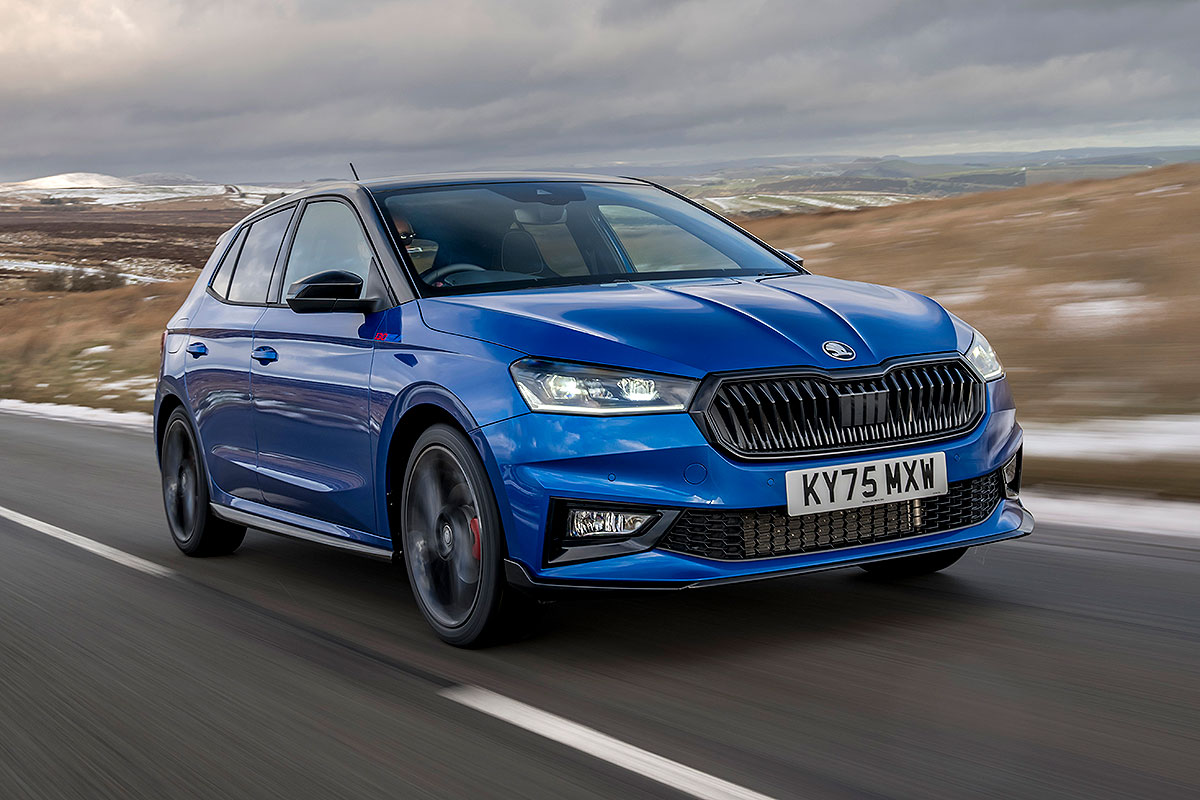
The CarGurus verdict
For many years, Skoda's ethos has been to provide its customers with a bigger-than-average car for a smaller-than-average price. Its cars also don’t compromise on quality, technology, safety or dynamic ability. The Fabia has always been a cornerstone of this philosophy, and the latest version embodies it brilliantly.
It's one of the roomiest and most practical cars of its type, with a boot big enough to shame many cars from the class above. That makes it a good budget option for growing families. The quality and solidity in the cabin is a match for pretty much any rival, and you'll want for very little in terms of comfort, safety or infotainment equipment.
The driving experience is a very grown-up one, with impressive refinement allied to decent performance and competitive fuel economy. And all for a price that undercuts many of the Fabia’s competitors.

What is the Skoda Fabia?
The year 2000 marked the arrival of the original Skoda Fabia in the UK. This was a critical point in the Czech company’s history, because it was around this time that Skoda stopped being a figure of fun and began to be recognised as a maker of very capable cars. The Fabia was a big part of this transformation.
Up against perennial small car favourites such as the Ford Fiesta, Volkswagen Polo, Vauxhall Corsa, Renault Clio and Peugeot 206 (whose modern descendent is the Peugeot 208), the Fabia offered something a little different to its very popular rivals. It gave buyers a car that was bigger and roomier inside than its competitors, but for a substantially lower price. Better still, this was achieved with little or no sacrifice in terms of quality, technology, safety and dynamic ability. Sound familiar? This would go on to become Skoda's modus operandi over the following years.
To this day, it’s this same high-value appeal that makes Skoda models popular with UK car buyers. There isn’t only the Fabia now, but family favourites like the Octavia and Superb, SUVs such as the Kodiaq and Karoq, plus EVs like the Enyaq, Elroq and Peaq.
A couple of decades after the Fabia arrived, the world is a very different place, but this fourth-generation car has a pleasing air of familiarity about it. Its big-car-feel-for-small-car-money ethos is still present, while its design has the same smart-but-understated vibe. Nonetheless, plenty has changed beneath the skin compared to the outgoing Mk3 Fabia.

How practical is it?
The Fabia sits on the ‘MQB-A0’ platform, which is the same architecture underpinning all of the Volkswagen Group’s latest supermini-sized cars. These include the VW Polo and T-Cross, Audi A1, Seat Ibiza and Arona, and the Skoda Kamiq and Scala. The sharing of components has a variety of benefits.
The first is that the Fabia is even bigger and more spacious than ever before. The previous car was already one of the largest in the supermini class, but the latest Fabia is 110mm longer – 90mm of which is found between the axles. This results in exceptionally generous legroom for occupants of both the front and rear seats. Headroom is generous all-round as well, and because the Fabia has grown in terms of width, carrying three people in the back isn’t out of the question.
Open up the tailgate and you’ll find a boot of 380 litres in capacity. That’s an identical figure to the Volkswagen Golf and Seat Leon, both of which are cars from the class above. It’s actually considerably larger than you get in a Ford Focus, too, let alone the now-departed Fiesta that the Skoda competed against until recently. Think of the Fabia as a miniature Skoda Octavia and you're not far off.
Folding down the rear seats frees up even more cargo-carrying space: a total of 1,190 litres. However, doing so does leave a step in the floor, and the backrests also lie at a slight angle. Nevertheless, the Fabia is still about as good as it gets in the supermini class for practicality.
Factor in a cabin that’s a match for pretty much anything else in the class for quality and sophistication (especially where plastics and interior finishes are concerned), and you'll find very little to complain about inside a Fabia.
On top of that, Skoda offers a comprehensive range of accessories to boost practicality still further. You can purchase snow chains for the Fabia, for example, should you find yourself crossing the border from France to Switzerland in January. There are rubber floor mats and boot liners, not to mention a rubber cover for the transmission tunnel ahead of the rear seats. There are front seat-mounted phone holders, jacket hangers and bag hooks, there are boot nets and storage dividers, and of course there are roof rails, roof boxes and bicycle racks. On top of all of that, there’s a list of dog-related accessories that is probably longer than some cars’ entire option lists.

What’s it like to drive?
The Fabia is a car focussed very much on comfort, and it’s all the better for that. Whatever your speed and whatever the state of the surface beneath you, it does a really impressive job of soaking up lumps and bumps. Aside from a bit of road noise, it’s also an impressively quiet car, which helps to make life even more relaxed.
Granted, you do feel more body-roll in corners than in a lot of other superminis, but it’s nothing unreasonable and the car still feels tidy, secure and light. ‘Light’ is also a word that applies to the steering, and you don’t get a vast amount of feedback. You will be impressed by how quick and responsive it is, though.
The car is powered by a range of petrol engines that deliver a very decent balance of performance and economy. None of them will blow you away with their speed, with power outputs ranging from 79bhp to 148bhp in ‘standard’ Fabia models (more on that in a moment), but they should be adequate enough for the majority of drivers. From what we've experienced so far, refinement is impressive too.
While the sporty-looking Fabia Monte Carlo might whet your appetite for a more exciting experience, you could be disappointed when you drive it. Beneath the skin, it’s all but identical to the rest of the range, with the same peppy, top-level 1.5-litre engine you can find in all but the entry-level cars. Its suspension setup is also the same as the standard Fabia, so it’s smooth and crisp to drive, but lacks the eagerness or excitement of a Suzuki Swift Sport or Ford Fiesta ST.
Instead, keener drivers should look to the new Fabia 130. There hasn’t been a Fabia vRS hot hatchback since the second-generation car more than a decade ago, and while this version still isn’t badged ‘vRS’, it’s the closest thing we’ve got to one now. Depending on sales, it may also lead to a sportier Fabia in the future.
Unveiled at the end of 2025, the 130 has a 174bhp 1.5-litre turbocharged engine, which is mated to a seven-speed DSG automatic gearbox. It’s a shame there is no manual transmission offered, as that would suit the little Fabia down to the ground. However, unlike the Monte Carlo, the suspension is stiffer and 15mm lower, the steering has been recalibrated, and you can partially or fully turn off the stability and traction systems for what Skoda describes as ‘controlled slip in appropriate surroundings’.
The gearbox has been tuned as well, and the engine modified – not merely remapped – to deliver the extra punch, with a revised intake plenum, vibration damper and rocker arms. The Fabia 130 will accelerate to 62mph in 7.4 seconds, 0.6 seconds faster than the regular 1.5-litre Fabia, and will go on to 142mph. It isn’t quite as fast as Skoda UK’s special, unexpected and one-off Superb Sleeper Edition that rocked up from nowhere in 2024 with almost 500bhp. Nonetheless, it’s a surprising little pocket rocket we’re very happy to welcome to the UK.

Technology, equipment and infotainment
The Fabia supports much of the latest technology that the Volkswagen Group has to offer, improving the car’s performance in the areas of safety, infotainment and driver assistance.
Following a few updates in 2024 and 2025, the trim levels had a bit of a shake-up. In 2024, where once there were S, SE Comfort, SE L, Colour Edition and Monte Carlo trims, the S model was dropped and a number of tweaks were made across the board. All cars featured traffic sign recognition, plus Wireless Smartlink and the Care Connect package (with a three-year subscription) as standard. SE Comfort versions gained a new 8.0-inch driver display, replacing the old analogue dials, along with a larger 8.25 inch infotainment screen, two new rear speakers and a few other upgrades. Colour Edition models added the larger infotainment screen, along with cruise control, a speed limiter, rear electric windows and LED tail lights. SE L cars were treated to the larger 10.25-inch ‘virtual cockpit’ digital display, while the Monte Carlo got the 8.25-inch screen, as well as the cruise control, a speed limiter, LED rear lights and some cosmetic tweaks (in tech terms, it sat between the SE Comfort and SE L).
It was at this juncture that Skoda also introduced ‘Design Selections’, previously seen on the Enyaq, which allow buyers to opt for Studio, Lodge, Loft or Monte Carlo themes. Each of these effectively gives a different pre-packaged look and feel to the interior, rather than having to wade through a (sometimes overwhelming) number of options.
In 2025, there was yet another update for the Fabia, with the trim levels changed to the SE Edition, Design Edition, SE L Edition and Monte Carlo Edition. This lineup, along with the Fabia 130, is what remains available now.
The SE Edition has keyless entry, cruise control, dual-zone climate control and electric rear windows over the old SE Comfort. The Design Edition, meanwhile, features metallic paint, corner front fog lights, electric folding door mirrors, dual-zone climate control, automatic wipers and an auto-dimming rear-view mirror. The Fabia SE L Edition replaces the SE L and adds a rear-view camera, as well as the aforementioned corner fog lights, auto wipers and electric mirrors. The Monte Carlo Edition had the biggest spec boost, though, gaining a 9.2-inch central display, voice control, full LED headlights, front parking sensors and a rear-view camera. The Fabia 130 sits at the top of the range, with LED headlights, keyless entry, a reversing camera, voice control, tinted rear windows and 18-inch Libra alloys, plus a 10-inch virtual cockpit and 9.2-inch infotainment display.
Pre-2024, the Fabia range was a tad more basic. The S trim, for example, featured steel wheels and wind-up rear windows, but there were electric front windows, manual air conditioning and LED headlights. S and SE cars came with the ‘Swing’ interior, too, which featured a dinky 6.5-inch touchscreen via which you operate functions such as the Bluetooth phone connection, DAB radio and wireless Apple Carplay/Android Auto. SE L trim featured the range-topping ‘Amundsen’ system, plus the bigger 9.2-inch screen along with 3D navigation, gesture control and a wi-fi hotspot. The Colour Edition got the mid-range ‘Bolero’ media system, which reverted back to the more basic functionality of the Swing setup, but came with a bigger 8.0-inch screen. The operating system was pretty much the same on all cars, and it was reasonably easy to find your way around. An older Fabia is far from a bad purchase in terms of technology, but obviously the newer the car, the more up-to-date its tech.

Skoda Fabia running costs
In terms of purchase prices, Skodas are no longer the super-cheap choices they once were. They are, however, still more affordable than most alternatives. Plus, because Skoda has never forgotten its high-value appeal, the firm’s cars tend to be physically bigger than most of their competitors – and more generously equipped, too.
Your choice of engine won’t have a huge impact on fuel economy, according to the official figures. Excluding the Fabia 130, which manages 50.7mpg, they are all exceedingly close, with the best economy a claimed 56.8mpg for the 1.0-litre TSI with a five-speed manual in the Design Edition trim. The least economical is the Monte Carlo Edition with the 148bhp 1.0-litre TSI engine and automatic gearbox, at 52.3mpg.
CO2 emissions are intrinsically linked to fuel consumption, and as a result are just as impressive. If you buy brand new, the low emissions will only add £180 in VED (road tax) to the overall cost of your car. After that, your VED cost will be at the flat rate for petrol and diesel cars.

Skoda Fabia reliability
Skoda ranked 16th out of 30 brands in the 2025 What Car? Reliability Survey, down from 13th out of 31 in 2024. Losing places isn’t great, but a few spots over one year is not too concerning.
The Fabia, meanwhile, finished joint 12th with the Suzuki Swift and Mazda 2 out of 26 vehicles in its class – a net improvement as it finished 12th out of 15 vehicles assessed the previous year.
There’s nothing special about Skoda’s warranty offering. You get unlimited-mileage cover for two years, then cover for the third year up to 60,000 miles. That’s about par for the course among most new cars, but looks very average compared with the five- and seven-year warranties offered by some South Korean and Chinese manufacturers.
If you’re looking for further cover, Skoda offers an extended warranty. There are three levels, called Essentials, Standard and Plus, which are priced at around £118, £141 and £149 respectively per year. These prices are based on a few different factors though, such as your excess, annual mileage and car’s power output, so you may pay a little more. Items such as the gearbox and engine are covered in the Essentials package, for example. The electrics, exhaust and air conditioning system are included with Standard, along with consequential failure – e.g. if your exhaust system breaks and melts a wiring loom. The top tier Plus covers you for pretty much anything, even water damage.
- It may be the smallest Skoda, but the Fabia still provides all those ingenious little touches designed to make family life a little easier, details the firm calls ‘Simply Clever’. Old favourites in the Fabia include the ice scraper under the fuel flap and the umbrella concealed in the driver’s door. There’s also a parking ticket holder inside the windscreen, plus easy-open cupholders, where the textured bottom of the cupholder will effectively grab onto the bottom of a bottle, allowing you to push down and twist off a lid with one hand. There are also phone pockets in the back of the front seats, as well as storage hooks and nets in the boot. Those of you with children will be grateful for a few Simply Clever features Skoda highlighted in a UK project called ‘Messy Cars’ as well. These included waste bins that fit perfectly into the door pockets, and a small screen spray and textured cleaning block that you can use to wipe away fingerprints from the touchscreen.
- The family-friendly focus of the Fabia continues with some big advances in the area of safety. The new platform supports many of the very latest active safety systems, and depending on the trim level selected and the options fitted, it’s possible that your Fabia could come with automatic emergency braking, adaptive cruise control, lane-keep assistance, blind-spot alert, traffic sign recognition, a self-parking function and up to nine airbags. The latest Fabia has been tested by Euro NCAP, and like all the other Volkswagen Group products that use the same platform, it achieved the full five-star score.
- You can now find your new Skoda via Amazon. That’s right, Skoda UK teamed up with the online retail giant to create the first Amazon car showroom. You can browse the entire Skoda range, check local retailer availability, see finance details and even book a test drive. Still, you just can’t simply buy a car as you might a new book, which is probably very sensible. Can you imagine the size of the cardboard box?
- If you want to keep the purchase price down: The most affordable engine option in the Fabia lineup will be the entry-level SE Edition. Although you can have the turbocharged 1.0-litre three-cylinder engine, the 1.0-litre ‘MPI’ motor (not ‘TSI’, as all the other engines are badged) is the very cheapest of the bunch – with a £500 saving. It’s also the least powerful and the slowest, with 79bhp and a 0-62mph time of 15.9 seconds.
- If you want the best fuel economy: That’ll be the 94bhp, 1.0-litre TSI engine. You’ll get around 56.4mpg, depending on the trim level. However, we say that with a big caveat. Yes, it is more economical on paper, but like the aforementioned 1.0-litre MPI engine, it comes with a five-speed manual gearbox. If you go for the 1.0-litre TSI engine with 114bhp, you get a six-speed manual. If you regularly tackle longer journeys at higher speeds this feels like the better option for economy in the real world.
- If you want the most powerful Fabia possible: That will be the Fabia 130. Where the Monte Carlo was once the quickest and most dynamic of the bunch, the 130 is ahead in every respect, being able to hit 62mph in 7.4 seconds on its way to 142mph. The only downside is you can’t have it with a manual gearbox, which is a real shame and a missed opportunity.
- If you want an automatic gearbox: While all Fabias except the sporty Fabia 130 come with a manual gearbox as standard, you can only have the seven-speed dual-clutch auto ’box with 114bhp and 148bhp versions of the 1.0-litre engine. We’ve tried this gearbox and, to be honest, it’s not perfect. It can make the performance feel a tad strangled at times, and it can be a little reluctant to kick down when it needs to. Still, it’s perky enough for most drivers and gearchanges are reasonably smooth.


