Toyota C-HR+ 2026 review | Toyota’s best electric car yet
Toyota C-hr+ cars for sale
4.0
Expert review
Pros
Well equipped and keenly priced
Competitive range and outstanding battery warranty
Smooth and refined to drive
Cons
Suspension and steering feel a bit soft in corners
Brakes are a bit grabby
Rear seat space could be better
The CarGurus verdict
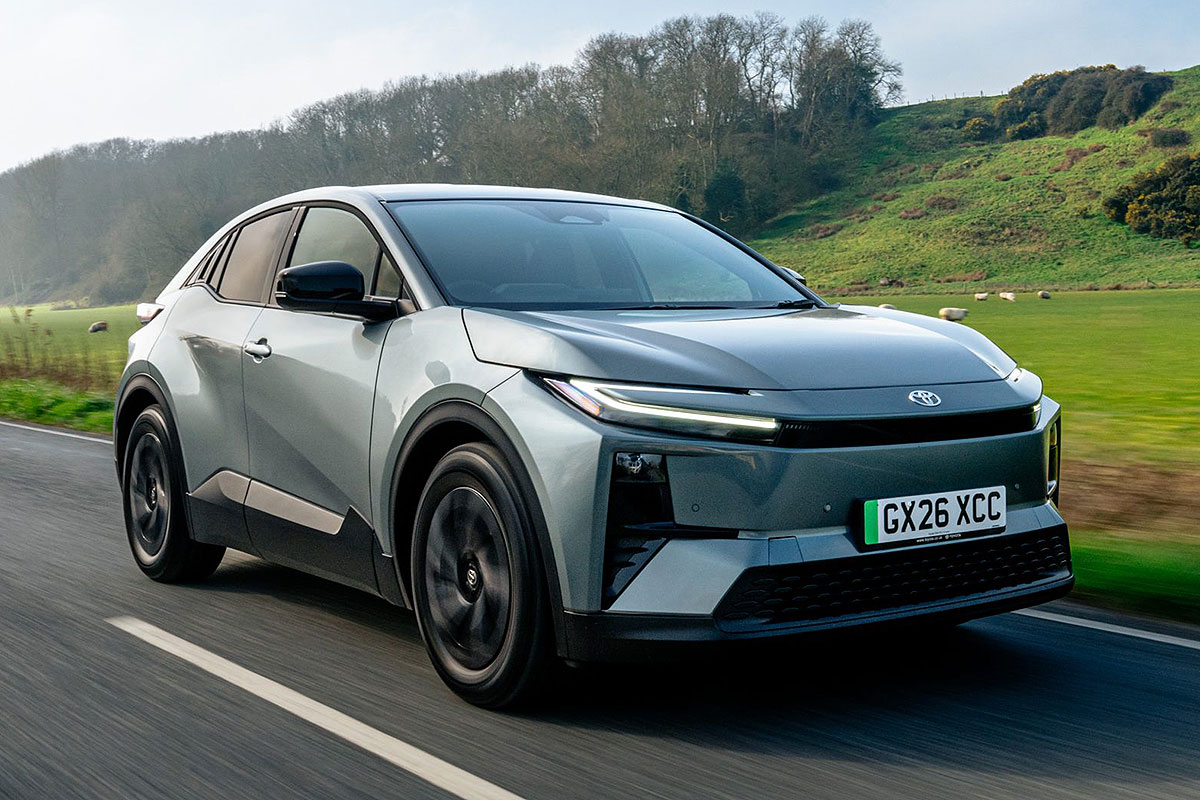
The Toyota C-HR+ is a sensible and well-rounded electric family SUV. It is easily Toyota’s best electric car to date, now offering a decent range, refined driving dynamics, lots of equipment and excellent value for money.
A bit more rear-seat space would be nice, and the comfort-oriented setup might not be for everyone, but it’s still a compelling overall package that is a safe, solid and very ‘Toyota’ alternative to rivals such as the Skoda Elroq and Kia EV3. It’s a compelling electric alternative to the established Toyota C-HR hybrid and plug-in hybrid range, too.
What is the Toyota C-HR+?
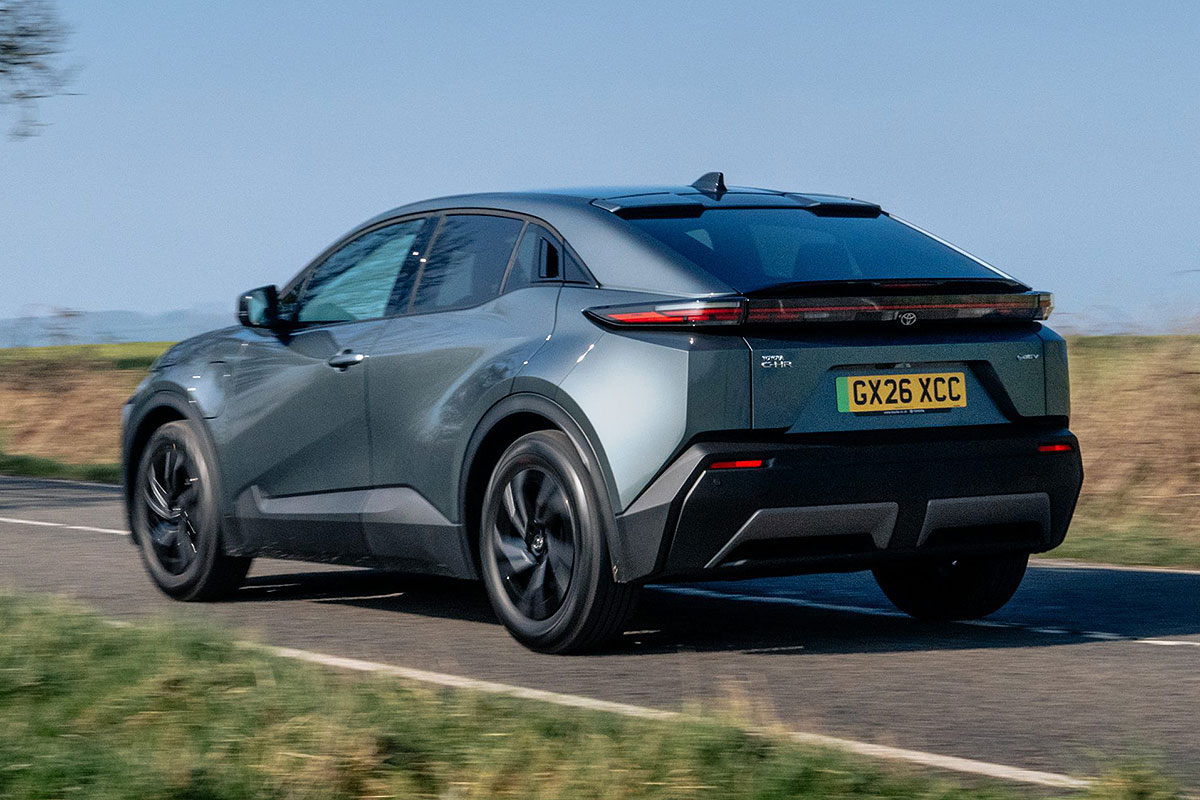
The Toyota C-HR+ is the electric alternative to the popular Toyota C-HR hybrid and plug-in hybrid models. Despite sharing the same name, it is actually a completely different car – derived from the existing Toyota bZ4X and around 160mm longer than its C-HR siblings. Notably though, it is still 170mm shorter than a bZ4X, positioning it perfectly between the two and right into the heartland of the electric family SUV sector.
The line-up is straightforward. There are two battery choices, 57.7kWh or 77kWh, and a simple three-model line-up of Icon (which comes with the 57.7kWh battery), Design and Excel (both of whcih have the 77kWh battery).
Toyota has stuck with the C-HR+ branding to help with familiarity, rather than creating a new model name from scratch. The design has many of the same C-HR styling cues too, including a sleek front end, rakish profile and distinct bodyside creases. The family link is obvious, even if the C-HR+ is larger and that bit more practical.
The electric family SUV sector is expanding all the time. This means the Toyota C-HR+ has a plethora of rivals, including the Skoda Elroq, Kia EV3, Renault Scenic E-Tech, Vauxhall Grandland, Volkswagen ID.4 and Volvo EX30. There are many new Chinese competitors too, such as the Geely EX5, BYD Atto 3, Omoda 5 and Leapmotor B10.
How will it compete with them? Primarily through the two headliners of generous range and great-value prices. The larger of the two battery options offers a driving range of up to 377 miles, while prices start from £34,495. Crucially, that long-range version, which is expected to be the core model, costs just £36,995 in preferred Design grade. All versions of the Toyota C-HR+ are also eligible for the Electric Car Grant, taking a further £1,500 off the sticker price.
All of this means that, after a stuttering start, Toyota is confident its electric car sales are set to accelerate. So how does the Toyota C-HR+ stack up as an overall package?
How practical is it?
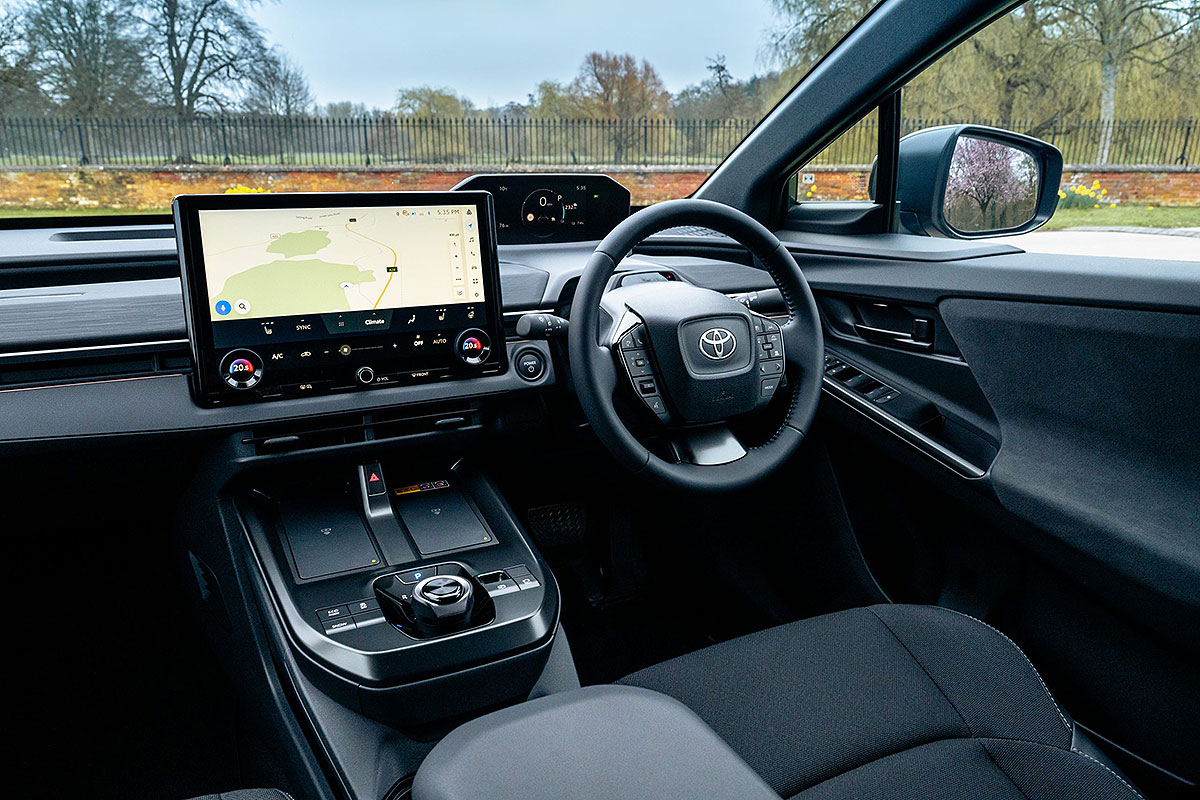
The Toyota C-HR+ puts its SUV proportions to good use. It’s an easy car to step in and out of, with slim sills and wide-opening doors. The seating position provides good visibility without feeling too lofty and perched. Relatively thin windscreen pillars and a low dashboard also help here, with only the standalone instrument binnacle popping up into your view through the windscreen.
The dashboard layout is similar to Peugeot’s i-Cockpit setup, where you view the instruments above the steering wheel rather than through it. However, it doesn’t have the slightly claustrophobic feel of some Peugeots, and the steering wheel isn’t downsized to create space. It therefore feels more natural and conventional to sit in, with plenty of foot room and a sense of spaciousness. Having lots of steering wheel adjustment helps with finding the right driving position, too. All models share the same comfortable seats, with standard heating and electric lumbar adjustment, although only the C-HR+ Excel has a power-adjustable driver’s seat.
Many modern cars eschew buttons, but Toyota has kept a good array of them, making it straightforward to use. Sure, there are almost too many on the steering wheel itself – you do get more familiar with them over time – but at least they are ‘proper’ buttons, rather than touch-sensitive haptic pads. The C-HR+ gets extra marks for retaining physical climate control dials too, although the ‘clicks’ between settings aren’t very well-defined, so setting the temperature is still a bit hit-and-miss. The column stalks have a nice, quality action as well. Toyota hasn’t tried to reinvent anything here.
As you’d expect, there’s a reassuring feeling of quality inside the C-HR+. Sure, some of the plastics aren’t quite premium-grade, but it’s all really well-built and feels made to last. The suede-style panels on the doors are nice to the touch; you can spot the influence of sister premium brand Lexus in places.
A tall, wide centre console is a practical feature, complemented by a large armrest that can flip open from either the driver’s or passenger’s side. The stowage space beneath this is a touch shallow (the door bins are small too), but there’s extra space under the centre console itself (although it’s a bit hard to spot items once you’ve dropped them in there – and the felt lining is a bit cheap). All models get dual wireless smartphone chargers, and they leave your phone at a convenient angle to use it hands-free. Again, Toyota has clearly thought carefully about this.
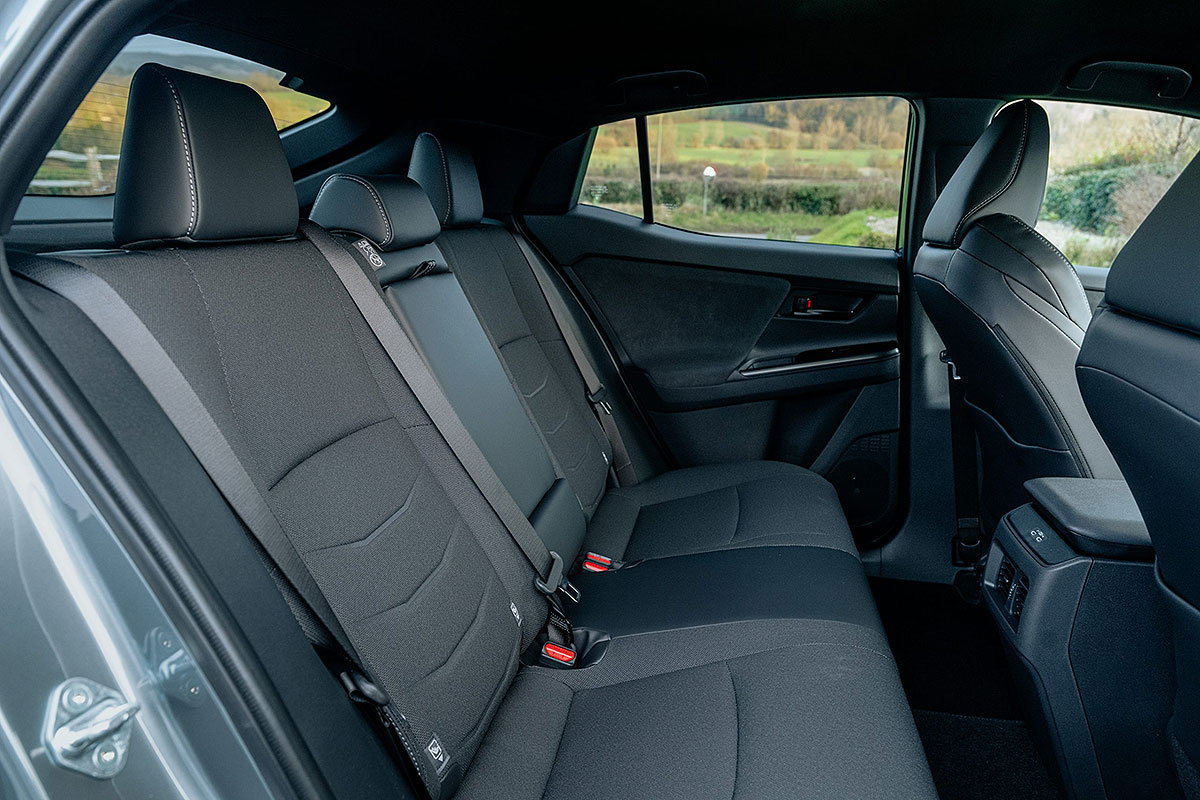
Space in the rear could be better. The floor is a little high, leaving passengers feeling a bit perched on the too-flat rear seat – they’ll be relying on the centre arm rest to stop them leaning sideways in corners. Foot space underneath the front seats is also lacking. More notably, headroom is tight for taller adults, whose heads will be touching the roof. It’s roomier than the regular Toyota C-HR, but less so than rivals such as the Leapmotor C10.
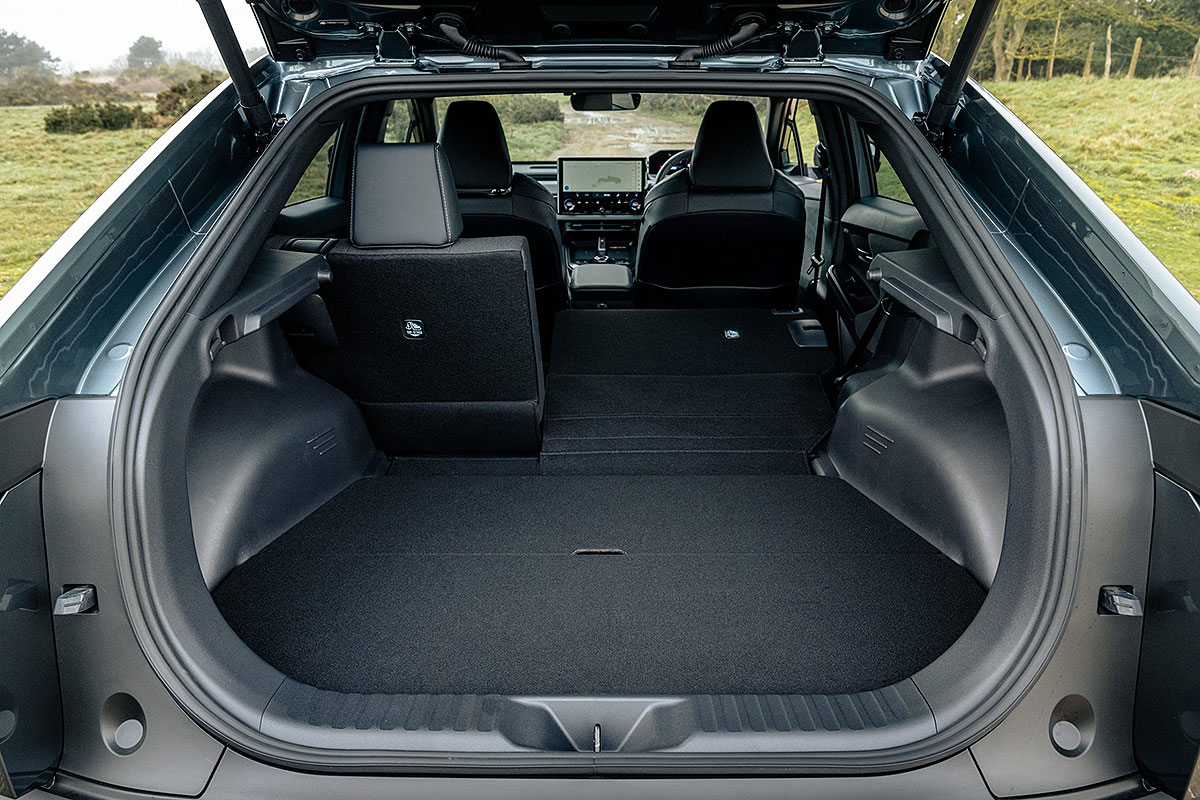
The Toyota C-HR+ has a 416-litre boot, which is an improvement on the 360 litres of the C-HR hybrid (the plug-in hybrid is even smaller at 310 litres). It’s a very wide and practical space, with a convenient two-step floor that lets you hide away charging cables. The lack of a load lip makes it very easy to lean in and load heavy items. Design and Excel grades have a powered tailgate; it’s manual on the entry-level Icon.
Because of the Toyota’s aerodynamic body, you don’t get a rear windscreen wiper. The shape of the car theoretically ‘self-cleans’ the rear screen, although this doesn’t help when reversing out of your driveway on a rainy morning. At least all models get a standard reversing camera. The rear window is a bit shallow, and you’ll notice the shape of the spoiler at the top, although the view out is still clear enough.
What's it like to drive?
All versions of the Toyota C-HR+ are front-wheel drive, with a 165bhp electric motor in the base 57.7kWh battery version, and a 221bhp motor in the 77kWh long-range variant. We’ve only tried the more powerful 77kWh car, which Toyota expects to take the vast majority of sales, but the base version shouldn’t be hugely different – just slower (literally so, in fact, with its 86mph top speed, intended to help the battery last longer).
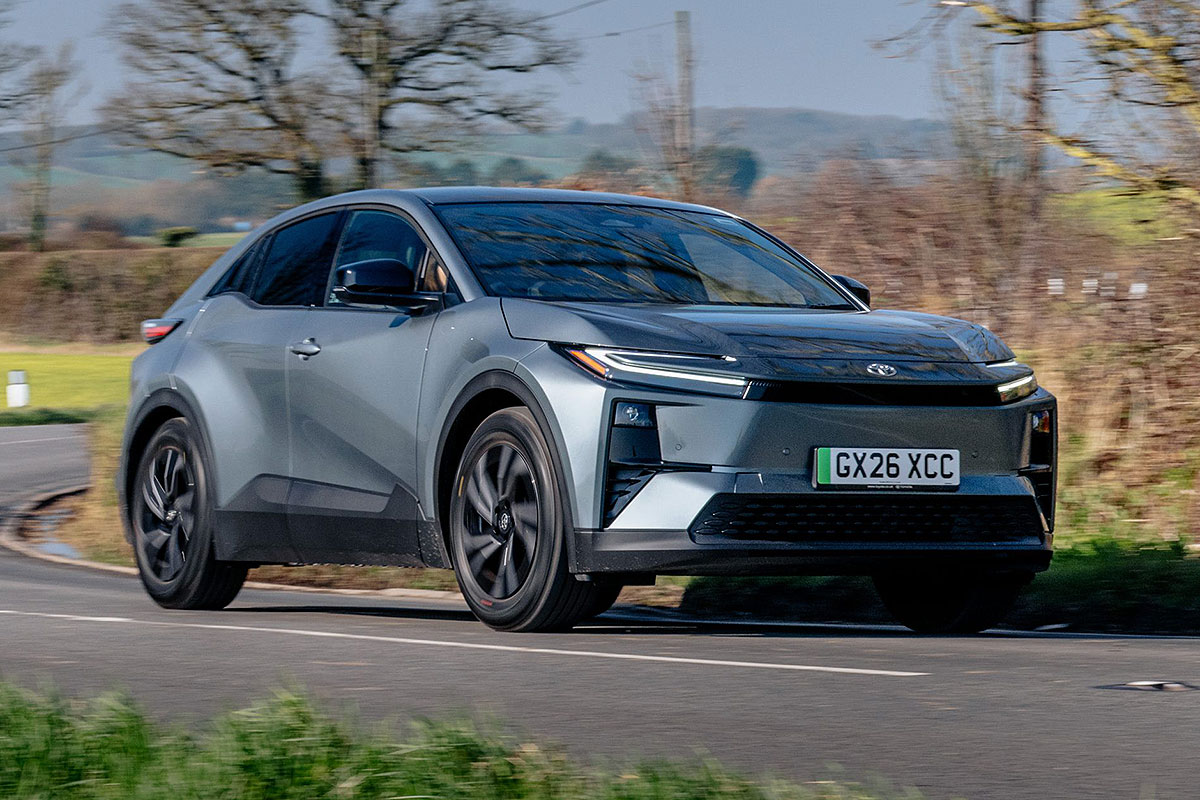
The 221bhp motor gives a sprightly sense of acceleration, with 62mph reached in 7.3 seconds and a higher capped top speed of 99mph. Power delivery is nice and smooth, meaning it doesn’t surge forward in response to the accelerator like some EVs. It feels refined and measured, but still has enough power in reserve if you press harder on the accelerator.
The brakes, by contrast, can be grabby and snatchy until you get used to them. Extra marks for the steering wheel paddles to control brake recuperation, though – clicking up and down changes the amount of energy harvested, meaning you can precisely tailor how much you slow down into corners without pressing the brake pedal. With a bit of practice, they’re really satisfying to use.
Suspension is on the softer side of cars in this class, smoothing out road surfaces pretty well. It has a cushioned feel, coping well with potholes at slower speeds. We tried both 18-inch and 20-inch wheels, with ride quality on the bigger wheels holding up surprisingly well. They can pick up a few more road surface irritations at higher speed, but it’s not a night-and-day difference.
The Toyota C-HR+ handles in a safe and secure manner. It’s not particularly dynamic, and you’ll notice the body-roll and soft suspension if you start to chuck it about. Nonetheless, it’s fine in everyday driving. The steering is a bit rubbery and artificial, too – although we felt the model on 20-inch wheels was a bit crisper and more precise here. Overall, the natural, well-weighted feel of the steering is reassuring, and better than in the older Toyota bZ4X.
Overall refinement impresses. The Toyota C-HR+ is generally hushed, with wind noise kept at bay and other sources of sound well-isolated. You won’t notice too much difference in the amount of tyre roar between the 18-inch and 20-inch wheels, either. Sometimes, larger wheels are notably noisier, but not in this case.
Technology, equipment & infotainment
All versions of the C-HR+ have a 14.0-inch infotainment display, called the Toyota Smart Connect+ multimedia system. This is a very rich, high-resolution screen, with a Lexus-like appearance and logical navigation structure. There’s an icon-based menu bar in a strip on the right – permanently displayed even when you’re using Apple CarPlay or Android Auto – and virtual climate control settings on the bottom, along with a physical volume knob.
Because most of the icons are nice and large, it’s easy to use on the move. Adjusting the ADAS driver assist settings is straightforward, too – press the ‘car’ icon and deselect the bits you don’t want. You can do this through the 7.0-inch driver display using the steering wheel buttons, but that’s more fiddly.
You’ll certainly want to turn off the driver attention monitor, as it was very over-eager and persistent. It seemed to take offence even when using the central touchscreen. Lane-keep assist was less irritating though, and the speed limit warning wasn’t too annoying either.
Toyota gave me a drive route via Google Maps, so I didn’t get a chance to try the built-in cloud-based navigation. This is EV-specific however, so will factor in charging stops during a route. It also allows owners to set the navigation from home via their Toyota smartphone app. Using Google Maps, I did note that guidance instructions were mirrored through the head-up-style driver display, so I didn’t have to look away at the central screen.
The Toyota C-HR+ has a standard six-speaker stereo with DAB radio and Bluetooth connectivity. You can only get the nine-speaker JBL premium sound system as an option with Excel trim.
Running through other key spec differences, even entry-grade Icon is well equipped, with 18-inch alloy wheels and a heated steering wheel, plus fabric and synthetic leather upholstery. The key extras on Design grade include the larger 77kWh battery, a powered tailgate, rear privacy glass and the option of larger 20-inch alloys.
Excel is the fully loaded version. Features include a lovely synthetic leather and suede interior (you can have it in grey instead of the standard black), a panoramic-view parking camera, a powered driver’s seat, headlamp washers, puddle lights and a two-tone paint finish.
Toyota C-HR+ running costs
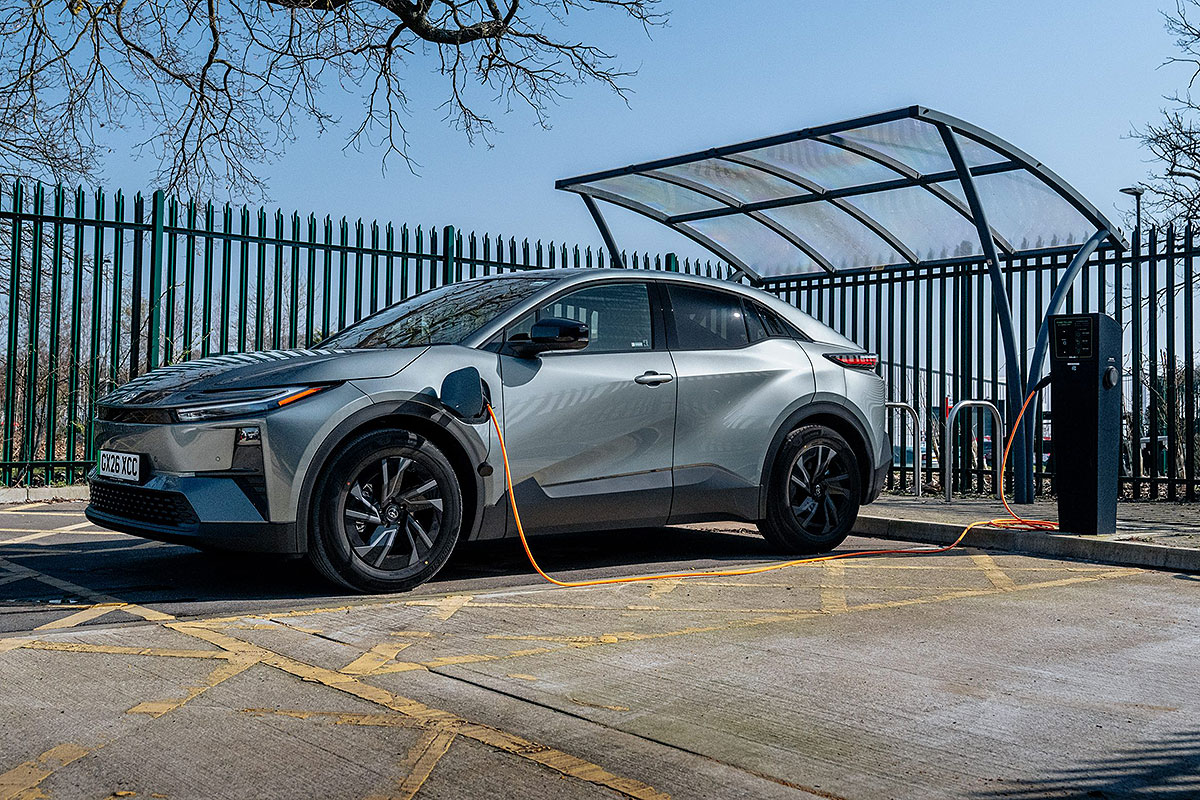
For those able to charge at home, electric cars naturally have lower running costs, because domestic electricity is cheaper than petrol. Toyota is leaning into this with the C-HR+, particularly the 77kWh model. Its 376-mile range should lessen the need for expensive public charging while out and about.
To help cut the cost of public charging, the Toyota Charging Network is now built into the car’s smartphone app. It’s claimed to be one of the largest pan-European EV networks, with a subscription bringing cut-price rapid charging so costs aren’t quite so punitive. The built-in sat nav includes EV routing for long-distance trips.
And what about electric car efficiency? The bZ4X wasn’t so impressive here, but the C-HR+ marks a big improvement. The stats say models on 18-inch wheels will cover more than 4.6 miles per kWh of charge, dropping slightly to 4.2 miles for a C-HR+ with 20-inch wheels. This means you’ll stand a better chance of getting close to the official range for the three versions: 284 miles, 377 miles and 347 miles respectively.
Toyota has priced the C-HR+ extremely competitively, particularly the long-range Design model that is likely to become the best-seller. This will help keep monthly PCP finance payments competitive – indeed, bosses claim a ‘best in class’ retail offer. This is helped by the forecast of excellent retained values, too.
The Toyota C-HR+ also benefits from the government’s Electric Car Grant, cutting a further £1,500 from its list price. Toyota dealers handle all the paperwork for this, meaning owners simply get to enjoy a handy saving off the transaction cost of a new car.
Toyota C-HR+ reliability
Toyota has a peerless reputation for reliability and the C-HR+ is expected to easily live up to it. For starters, its core technology has already been proven in the bZ4X, a global car that is sold in major markets including Europe, Japan and North America. All this experience will have been used to iron out any niggles that could have afflicted the C-HR+.
Toyota offers a three-year, 60,000-mile new car warranty, which is par for the course. However, it will extend this up to 10 years or 100,000 miles – whichever comes first – for owners who have their C-HR+ serviced each year at a Toyota dealer. This makes it one of the very best warranties in the business. These dealers, adds Toyota, have now been rated top in the UKCSI customer service index for the third time running.
Then there is the battery warranty, which protects against failure, or charge capacity dropping below 70 percent, for 10 years (instead of the usual eight years) or, staggeringly, a million miles. Yes, Toyota is so confident its battery will last at least a decade, it’s prepared to back it even for those who cover 100,000 miles a year. How about that for confidence in your product?
- Toyota still likes to highlight the difference in range between having the climate control switched on or off. There’s a ‘fan’ icon permanently shown in the dashboard when it’s turned on – and the range immediately drops when you do so. Depending on weather conditions, the difference between having the air-con on or off is around 30-40 miles of range. This is similar for all EVs, of course, it’s just that Toyota likes to highlight it. At least the drop in range when you turn climate control on isn’t as huge as it was in the older bZ4X – and the overall range is now long enough for you to not really notice.
- The electric Toyota C-HR+ still has ‘C-HR’ badges (minus the ‘+’ on the rear and on the floor mats), despite being a completely different car to the C-HR hybrid and plug-in hybrid. To the uninitiated, that means only the green stripe on the number plates will identify the electric C-HR+ from its HEV and PHEV siblings.
- Toyota has worked hard to make the C-HR+ as refined as possible. Because electric motors are so quiet, the rest of the car has to become more hushed as well. So it gets acoustic glass in the front doors, thicker glass elsewhere, extra noise insulation, more sound proofing material on the rear body and even special anti-vibration elements in the rear suspension.
- If you want the longest-range Toyota C-HR+: Choose the Design spec. Its combination of a 77kWh battery and 18-inch wheels gives the best overall range of 376 miles. It’s why Toyota expects this to be easily the best-selling version. You can order 20-inch wheels on the Design – they’re a £1,250 option – but the car’s range drops to 347 miles.
- If you want the cheapest Toyota C-HR+: Pick the Icon, which has a £34,495 price tag, courtesy of its smaller 57.7kWh battery. But think carefully, as you’ll be giving up more than 90 miles of range by doing so.
- If you want the poshest Toyota C-HR+: The range-topping Excel has all the bells and whistles. Do note, though, it only comes with 20-inch alloys, so has that 347-mile range instead of the Design’s 376 miles.
- If you want the Toyota C-HR+ with the best stereo: Again, you’ll need to pick Excel – only this version lets you choose a premium JBL audio system as an option. It’s part of the Premium Pack, which also bundles in the Skyview panoramic sunroof and costs a reasonable £905.

