Toyota Prius Review 2025 | One of the most surprising cars you can buy
Toyota Prius cars for sale
4.0
Expert review
Pros
Excellent driving dynamics with responsive steering and composed handling
Strong 220bhp plug-in hybrid powertrain with 6.8-second 0-62mph time
10-year warranty when serviced with Toyota, and legendary brand reliability
Cons
Limited 284-litre boot capacity, roughly half the size of the Corolla Touring Sports
Shorter electric range than some rivals affects company car tax competitiveness
Sloped roofline compromises rear headroom despite decent legroom
The CarGurus verdict
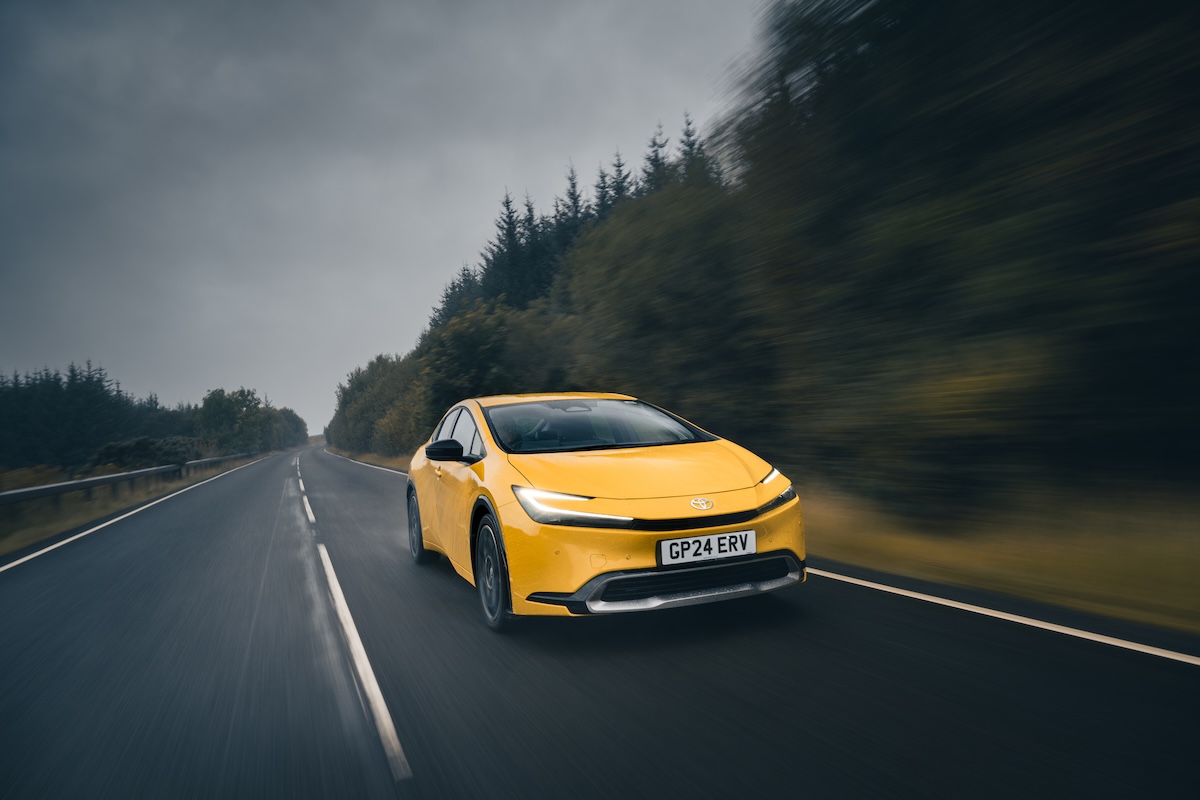
The Toyota Prius has, against all expectations, been transformed from an efficient but dull choice into a genuinely enjoyable driver's car. The sharp styling may prove polarising, but there's no denying this generation looks dramatically better than its predecessors.
The 220bhp plug-in hybrid powertrain delivers strong performance alongside impressive efficiency when charged regularly. Boot space isn’t fantastic, and headroom for passengers in the rear seats could be better, but if you can live with those two things, the Prius represents an interesting choice.
For buyers seeking an efficient, well-built car that's actually fun to drive and stands out from the SUV crowd, the Prius makes a compelling case. For the first time in its history, the Prius has become a car you buy because you want to, not just because it makes rational sense.

What is the 2025 Toyota Prius?
This new Toyota Prius represents the fifth generation of Toyota’s now-legendary hybrid family hatchback. In the UK it’s offered exclusively as a plug-in hybrid, so buyers wanting a self-charging hybrid Toyota to replace an older Prius will need to switch to the more practical Corolla Hybrid instead, and probably the roomier Touring Sports estate model at that (as indeed a great many already have).
The new model of Prius competes directly against plug-in hybrid hatchbacks and saloons such as the Volkswagen Golf GTE, Cupra Leon e-Hybrid, Audi A3 TFSIe, Peugeot 308 PHEV, and various PHEV compact SUVs and crossovers at similar price points. That being the case, Toyota’s own PHEV SUVs in the form of the Toyota C-HR and Toyota RAV4 could also be considered competition.
Power comes from a 2.0-litre four-cylinder petrol engine paired with an electric motor, producing a combined 220bhp through Toyota's e-CVT automatic gearbox. This powertrain delivers 0-62mph in 6.8 seconds. The 13.6kWh battery provides up to 53 miles of electric-only range according to official figures. Front-wheel drive is standard across the range, which itself consists of only two trim levels.
Pricing starts at around £38,000 for the entry-level Design trim, rising to around £40,000 for the range-topping Excel specification. This positions the Prius several thousand pounds above the Corolla Touring Sports, but within reach of numerous full electric cars.

How practical is it?
Boot capacity for the new car stands at 284 litres, which represents a 30-litre improvement over the previous plug-in hybrid Prius, but remains significantly smaller than rival family cars. It is also roughly half the capacity of the Corolla Touring Sports estate, partly explaining why taxi and private-hire drivers from firms such as Uber have gravitated towards that model instead (the other part being that a plug-in hybrid is less arguably useful for long-distance professional drivers than a self-charging one). The battery pack is positioned beneath the rear seats rather than intruding into the boot floor.
Rear passenger space benefits from this Prius having a longer wheelbase than its predecessor, delivering a good amount of legroom for adults. However, the sloping coupe-like roofline (one of the Prius’s aerodynamic design features) inevitably compromises rear headroom, making the rear seats feel more confined than the generous legroom suggests. The seats themselves are comfortable enough, but taller passengers aren’t going to be thrilled at being in the back for long journeys.
Storage solutions throughout the interior are well-considered and easily accessible, reflecting Toyota's focus on user-centric design. Visibility through the rear windscreen is generally good from the front seats despite the low-slung roofline.
Overall then, it’s hard to ignore that the Prius does sacrifice significant load-carrying ability and rear passenger comfort compared with the Corolla Touring Sports. It’s much closer to plug-in hybrid rivals such as the Volkswagen Golf GTE, but this still is not a car you’ll buy for its outright practicality.

What's it like to drive?
The 220bhp plug-in hybrid powertrain delivers a 0-62mph time of 6.8 seconds, providing brisk acceleration that feels particularly strong in the low to mid-range thanks to the electric motor's instant torque delivery. Whether operating in pure EV mode or hybrid mode, the Prius responds eagerly to throttle inputs without the sluggishness that characterised earlier generations.
The 2.0-litre four-cylinder petrol engine proves generally refined during normal driving, only becoming slightly uncouth when pushed hard as the e-CVT gearbox holds revs high. However, the strong low- and mid-range power delivery means aggressive acceleration is rarely necessary for swift progress.
Around town, the Prius wafts along with the quiet efficiency and instant response of a full EV, making urban driving effortless. Where this generation truly surprises, though, is beyond city limits. The chassis delivers remarkable composure and solidity on faster roads, with a comfortable ride quality that doesn't sacrifice handling precision. Through its compact steering wheel, the Prius offers steering response and weighting that makes it genuinely enjoyable to drive. Talk about unexpected.
Similarly, the front-wheel-drive chassis strikes an impressive balance between comfort and incisive handling, transforming motorway runs and country roads from something to be tolerated into genuinely enjoyable driving experiences. The regenerative braking system offers three selectable stages via a lever control, though adjustment requires navigating through fiddly on-screen menus rather than using dedicated paddles as found on some rivals.

Technology, equipment & infotainment The entry-level Design trim is hardly poorly equipped, with wireless Apple CarPlay and wired Android Auto, dual-zone climate control, a wireless smartphone charger, keyless entry and start, Toyota’s active safety systems suite (including adaptive cruise control and lane departure warning), and 17-inch alloy wheels coming as standard. It’s a shame, however, that it misses out on heated seats.
To get these, you’ll need to upgrade to Excel trim, which also adds seat ventilation, a powered tailgate, powered driver’s seat height adjustment, 19-inch alloys, and a digital rear view mirror.
Both trims come with a 12.3-inch touchscreen that is a significant improvement over Toyota's older infotainment systems. Whilst the graphics don't quite match the best-in-class, they're good enough and the system proves straightforward to operate. Wireless Apple CarPlay comes standard, though Android Auto requires a wired connection. Built in sat nav is also standard.
The digital driver display is less impressive, with unnecessarily complicated menus for interacting with active safety systems. Text and icons appear too small, and adjusting brake regeneration levels requires navigating through multiple menus rather than using dedicated physical controls. A welcome shortcut on the touchscreen allows quick disabling of the speed limit warning for when the system misreads limits.
Build quality impresses throughout the cabin, feeling not just durable but genuinely pleasant to the touch (another area where this Prius is unrecognisable from its predecessors). The interior demonstrates Toyota's focus on ergonomics, with its logical layout of physical heating controls, easily accessible storage, excellent driving position, and comfortable seats. Simple, effective touches like keyless entry that works without unnecessary beeps or pop-out door handles showcase typical Toyota user-centric efficiency.

Toyota Prius running costs
Official WLTP figures claim up to 53 miles of electric-only range from the 13.6kWh battery, although in our real-world testing, we saw more like 40-45 miles of electric driving. Charging from a home wallbox takes approximately four hours.
It’s a similar story with the quoted combined fuel economy figure of up to 565 mpg. To achieve that kind of fuel efficiency would require plugging in for almost every journey, which given the 40-mile EV range, isn’t terribly realistic. In reality, you’ll have some journeys where you simply drive on electric power until the EV-only range has gone, and then switch to normal hybrid mode. At this point you’ll see around 50-60mpg. And when you do something between these two extremes - perhaps plugging in a couple of times per week - you’ll get anywhere between those two numbers. In our tests, we easily averaged more than 80mpg, so the Prius can still be incredibly efficient (much like almost any other plug-in hybrid). All of which is to say that the frequency of your charging routine will dramatically affect real-world running costs. The same goes for your real-world CO2 emissions.
At around £38,000 as a starting price, the Prius costs several thousand pounds more than a Corolla Touring Sports, though the plug-in system justifies some of that premium. However, this price point places it against numerous full EVs that will prove significantly cheaper as company cars due to lower benefit-in-kind tax rates.
Some rivals also offer plug-in hybrid systems with larger batteries, providing longer electric ranges that reduce charging frequency and lower company car tax bills. So the Prius will be affordable to run, just not the most affordable.

Toyota Prius reliability
This generation of Prius is too new and frankly too rare for specific reliability survey data. But we’d be shocked if it doesn’t prove to be extremely reliable. Toyota consistently ranks amongst the most reliable manufacturers in industry surveys, and the brand's reputation for dependability remains one of its strongest selling points.
Every Prius comes with Toyota's comprehensive 10-year warranty when serviced through the manufacturer's network, which stands amongst the longest coverage periods in the industry. This provides exceptional peace of mind for long-term ownership.
Build quality throughout the cabin feels robust and durable, suggesting the Prius will withstand years of use without developing rattles or squeaks (not always a strong point in previous generations).
Compared to many rivals offering three- or five-year warranties, Toyota's 10-year coverage represents a significant advantage and demonstrates the manufacturer's confidence in the Prius's mechanical durability.
- It's the first genuinely driver-focused Prius: Previous generations prioritised efficiency above all else, but this Prius delivers handling and steering response that will put a smile on your face. The combination of a low centre of gravity, well-sorted suspension, and precise steering makes it genuinely enjoyable on challenging roads rather than merely competent around town.
- UK buyers can only have it as a plug-in hybrid: Unlike many markets where the Prius is available as a standard self-charging hybrid, UK customers are only offered the PHEV system. This decision positions the Prius away from taxi and fleet use, targeting retail buyers who want plug-in capability alongside the distinctive styling.
- Toyota's legendary simplicity shines through: From keyless entry that simply works without fuss, to a start button that gets you driving immediately without waiting for various systems to boot up, the Prius demonstrates years of refinement for professional drivers. These thoughtful touches might not have showroom wow-factor, but you’ll appreciate them on every single journey.
- Best value: Design trim offers all the essential equipment including the 12.3-inch touchscreen, keyless entry, and comprehensive safety systems. At around £38,000, it represents the most sensible entry point for retail buyers wanting the Prius experience without unnecessary extras.
- Company car drivers: The Toyota Prius plug-in struggles to compete with full EVs on benefit-in-kind tax, and rivals with larger batteries offer lower tax bills. Company car users would be better served looking at full electric alternatives or plug-in hybrids with longer electric ranges.
- Maximum practicality: If practicality is the priority, the Corolla Touring Sports makes far more sense, with roughly double the boot capacity and better rear headroom. The Prius prioritises style and driving dynamics over load-carrying ability.
- Performance buyers: The Design trim delivers the full 220bhp powertrain and engaging chassis dynamics, so there's no need to upgrade to Excel purely for performance. The entry-level model provides all the driving enjoyment this generation of Prius offers.
- For all the toys: It has to be the Excel, which adds to the Design’s already impressive standard equipment with the inclusion of 19-inch alloy wheels, a powered tailgate, heated- and ventilated seats, powered driver’s seat height adjustment, and a digital rear-view mirror.


