Toyota Yaris Cross 2026 review | A thoroughly sensible small crossover
Toyota Yaris Cross cars for sale
3.0
Expert review
Pros
The hybrid sips fuel, especially around town
Promises the first-rate reliability you'd expect of Toyota
Lots of boot space for a small car
Cons
Quite cramped in the back
The 4x4 version has less luggage room
Not as much fun to drive as a Ford Puma

The CarGurus verdict
If the idea of a compact SUV appeals to you, and low running costs, hybrid efficiency and Toyota reliability are key priorities, then the Yaris Cross has plenty going for it. If, however, driving involvement, versatility or ride comfort are more important, it doesn’t fare as well as some of the other options in this crowded part of the car market.
Having said that, the Yaris Cross is good enough in all of these areas that it doesn’t embarrass itself. While it isn’t particularly cheap to buy, it’s very cost-effective to run, and Toyota’s warranty provides a welcome dose of reassurance. Not an outstanding all-rounder, then, but a good one. If you’re after a lofty small car, we reckon the Yaris Cross should be on your shortlist.
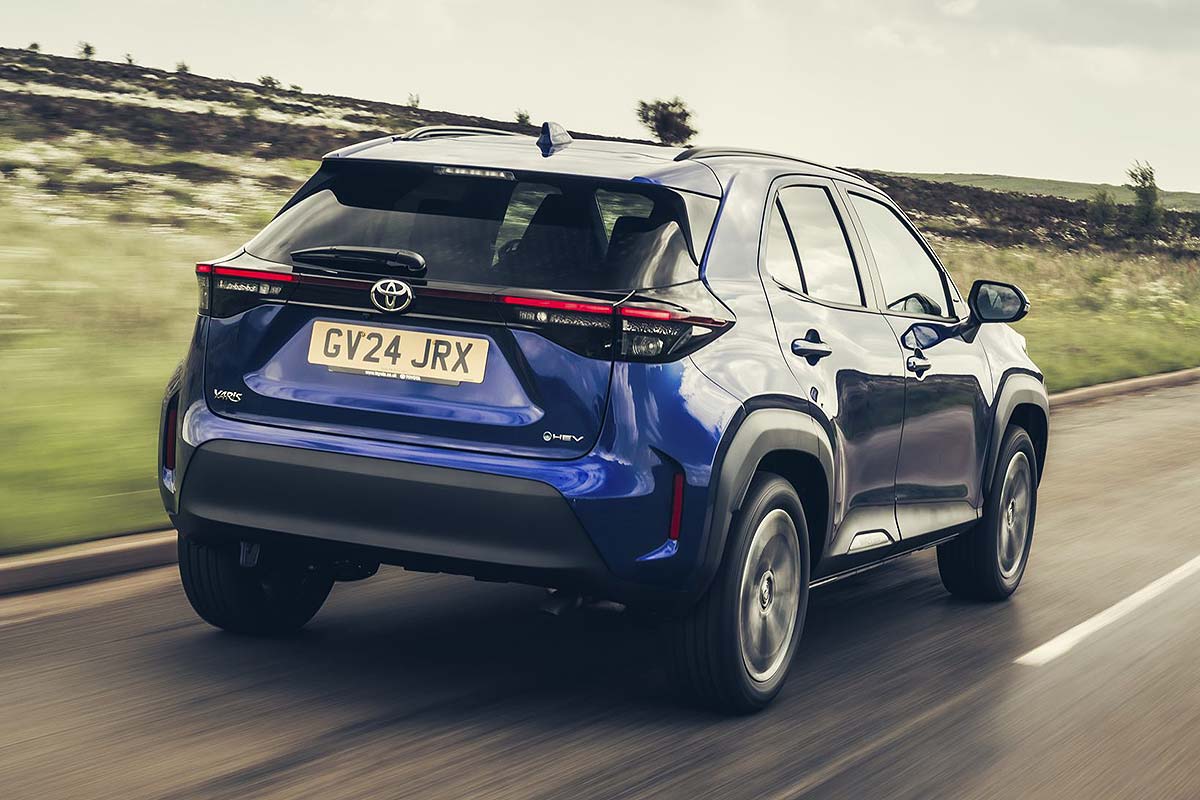
What is the Toyota Yaris Cross?
They’re everywhere, these small SUVs. Barely a week goes by when another one doesn’t arrive on the market, and it’s no wonder. They combine the city-friendly footprint of a small hatchback with enough interior space for a young family, as well as a high driving position that makes it easy to climb in and see out. It’s also easier when you’re strapping little ones into child car seats.
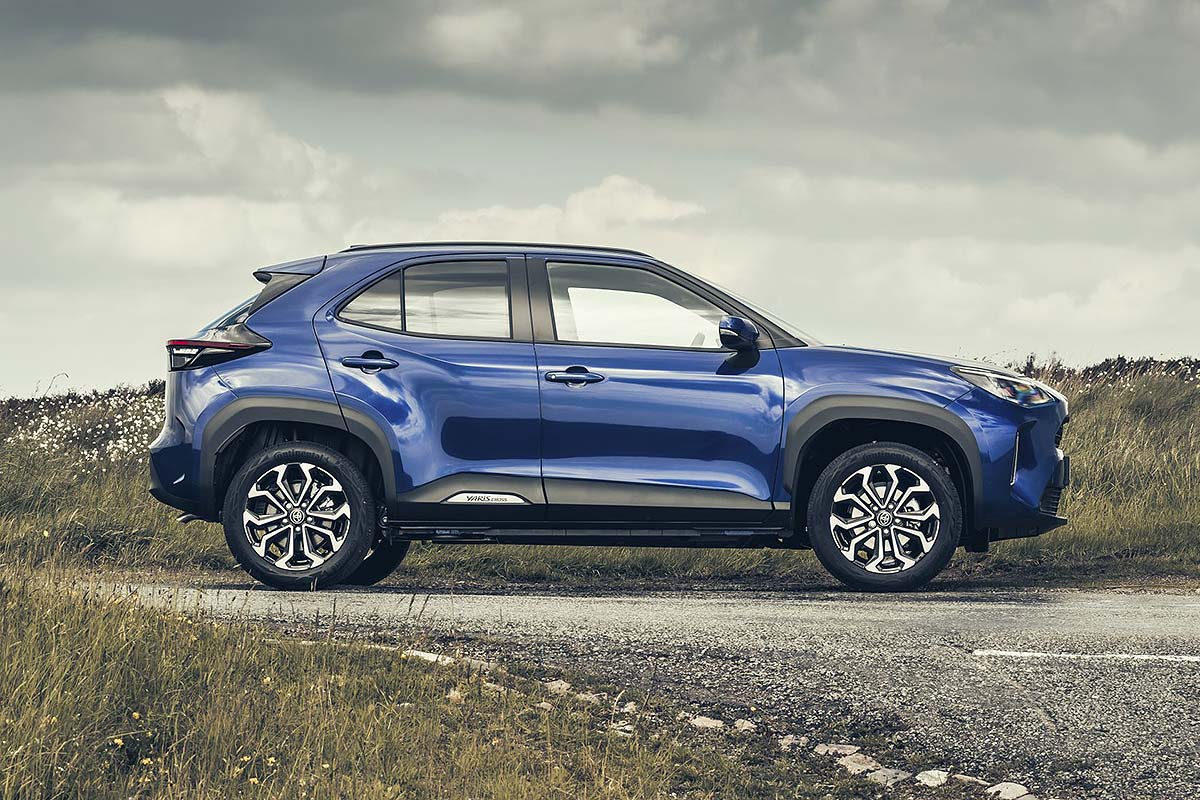
The Toyota Yaris Cross is very much in that mould. As its name suggests – Cross signifies not that it’s particularly angry, but that it’s a crossover – this is, broadly speaking, a jacked-up SUV-style take on the popular Toyota Yaris hatchback. It sits in one of the most hotly contested parts of the market, going up against cars such as the Ford Puma, Peugeot 2008, Nissan Juke and Renault Captur.
Next to the competition, the Yaris Cross certainly looks the part, with chunky, fresh styling and suitably rugged SUV cues. The interior is very similar to the Yaris hatchback’s, and that makes it logically laid-out and well screwed together, if a little dour in places. The infotainment system, meanwhile, has improved over time and works well enough, but still isn’t quite as slick as the best.
Unlike many rivals, the Yaris Cross is sold only with petrol-electric hybrid power, with buyers now able to choose between two different outputs depending on trim. That gives it a clear efficiency-focused selling point, helped by Toyota’s long-standing hybrid expertise.
How practical is it?
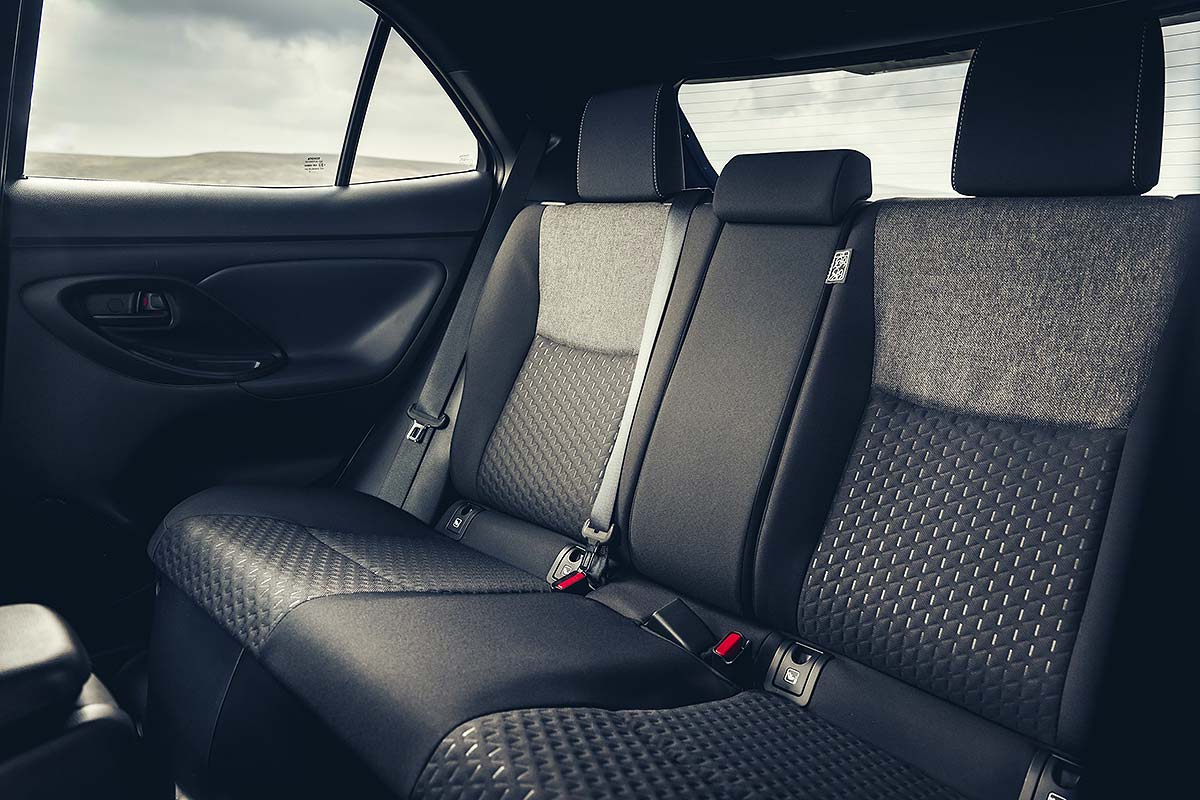
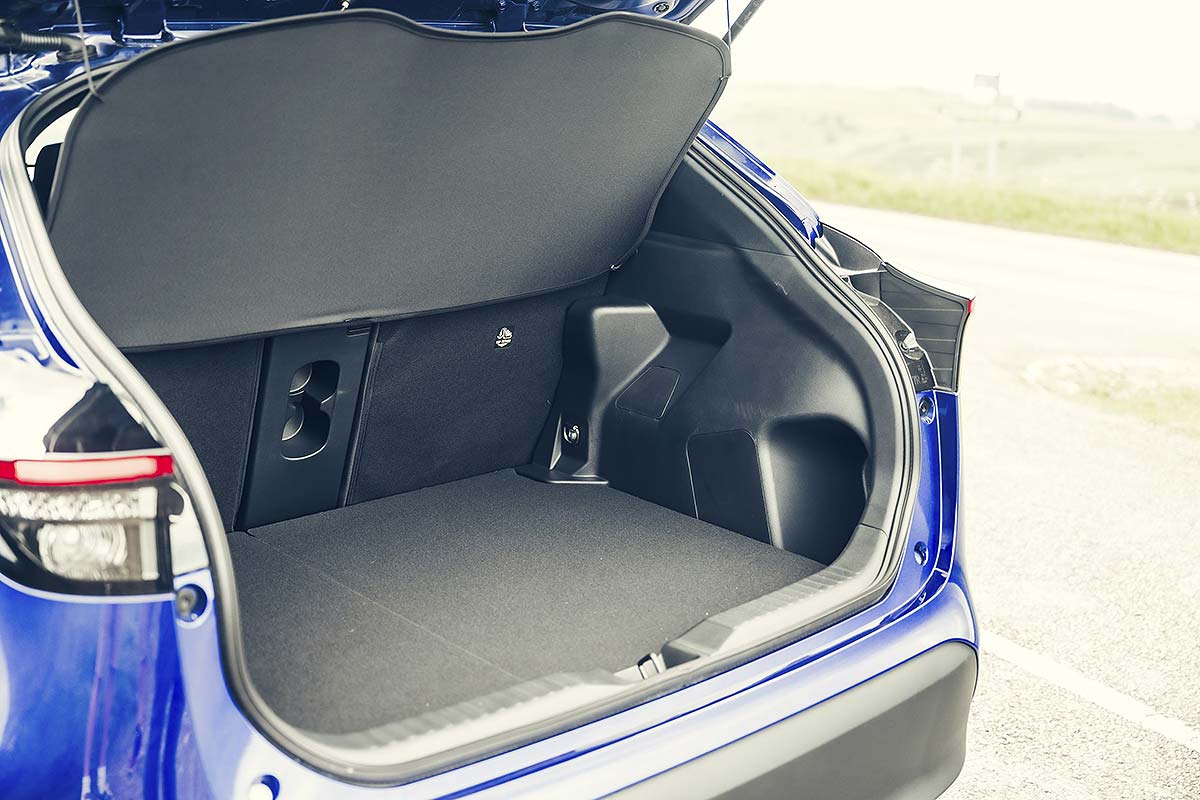
Rear-seat space could be more generous, but there is more room than you’ll find in the back of a Peugeot 2008. As for the boot, there’s 350 litres of luggage capacity measured to the parcel shelf, or 460 litres if you load to the roof. That’s not enough to trouble the very best small SUVs, but it’s still a respectable amount of space for such a compact car.
There are no sliding rear seats in the Yaris Cross, but practicality is helped by a split-folding bench. Entry-level Icon models get a conventional 60:40 split, while Design, Excel and GR Sport versions get a more useful 40:20:40 arrangement. All current models also feature a rather smart false floor in the boot, which can be set at the height of the boot lip to make things easier when loading heavy items. In this position, it sits flush with the rear seat-backs when they’re folded down.
Unusually, this boot floor is actually split in two along the same line as the rear seats, which means you can choose to have one side in the higher position and one in the lower position. That’s useful if you want to carry one or two taller items as well as some longer ones. Fold the rear seats down and there’s a maximum load capacity of 1,097 litres when the car is loaded to the roof.
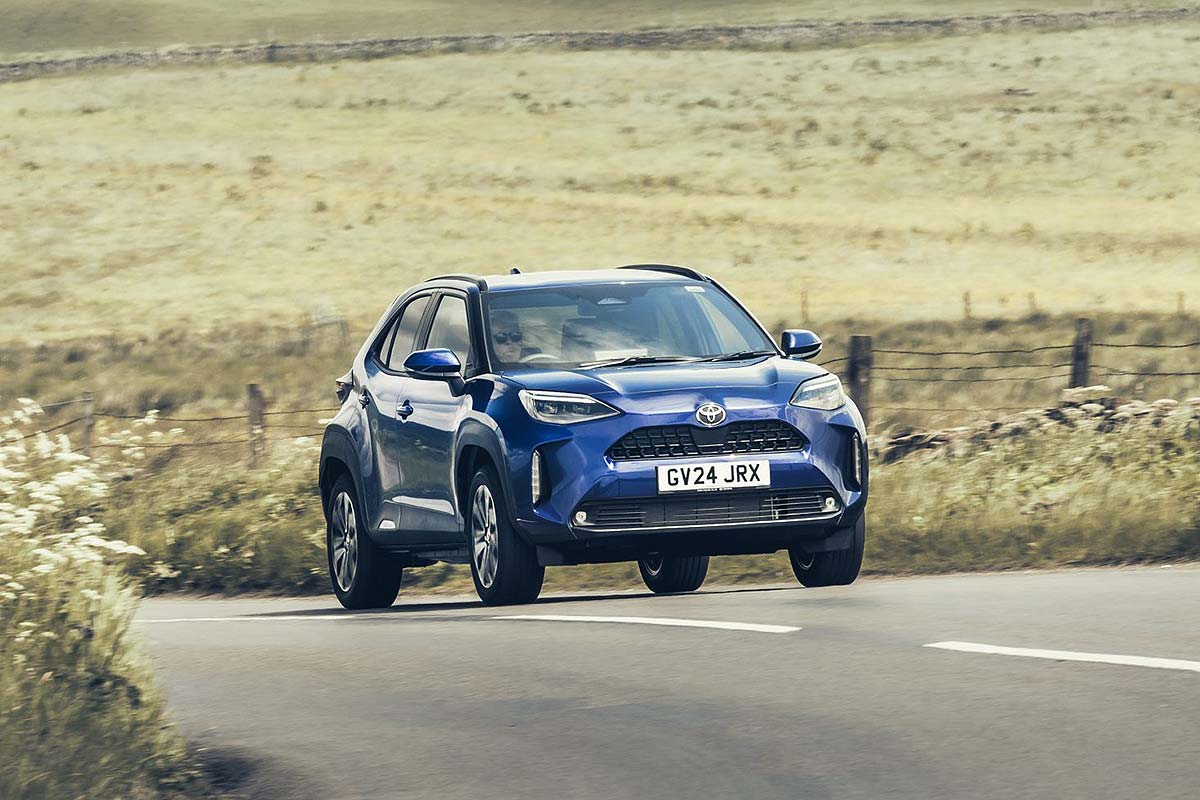
What's it like to drive?
Where many rivals come with a choice of petrol, hybrid or electric powertrains, the Yaris Cross keeps things simple by being available only as a traditional, ‘self-charging’ petrol-electric hybrid. As you might expect, it uses the same basic setup as the Yaris hatchback on which it’s based. That means a 1.5-litre three-cylinder petrol engine allied to an electric motor and small battery.
This pairing drives the front wheels through an e-CVT automatic transmission, although some versions are also available with Toyota’s AWD-i all-wheel-drive system, which adds a small electric motor to the rear axle for extra traction. It’s not designed to turn the Yaris Cross into a proper off-roader, but it could be useful if you live somewhere rural or regularly deal with slippery roads.
For the first few years of the car’s life, the Yaris Cross was offered with a 114bhp hybrid system. It’s not exactly a powerhouse, but it’s enough for the job, with 0-62mph taking a leisurely 11.2 seconds in front-wheel-drive form. It can get a bit loud if you push it hard, but for the most part, the Yaris Cross is tranquil enough, and when it’s running on electric power alone – usually if you’re trickling along in traffic or coasting down a hill – the petrol engine falls silent.
A later range update added a more powerful 129bhp version of the same 1.5-litre hybrid system. This is standard on Excel and GR Sport models, and optional on Design trim. It cuts the front-wheel-drive car’s 0-62mph time to 10.7 seconds, while the electric motor’s extra torque should also make it feel more responsive at low speeds. Don’t expect a transformation, though: it’s still a sensible, efficiency-focused small SUV rather than a particularly brisk one.
Engine aside, the Yaris Cross feels much like the standard Yaris supermini to drive. You get the same slightly firm ride quality; it’s comfortable enough, but you might wince occasionally as the wheels crash into deeper potholes. Toyota has made improvements to noise and vibration suppression over time, including thicker glass and extra sound insulation, but the Yaris Cross still feels at its best when driven gently.
You also get the same precise and direct – if slightly remote – steering as the regular Yaris. That said, there is a bit more body-roll to contend with, which should come as no surprise, given the Yaris Cross’s extra height. So while it’s pleasant enough to tool around in, don’t expect it to be as engaging as a Ford Puma.
Technology, equipment & infotainment
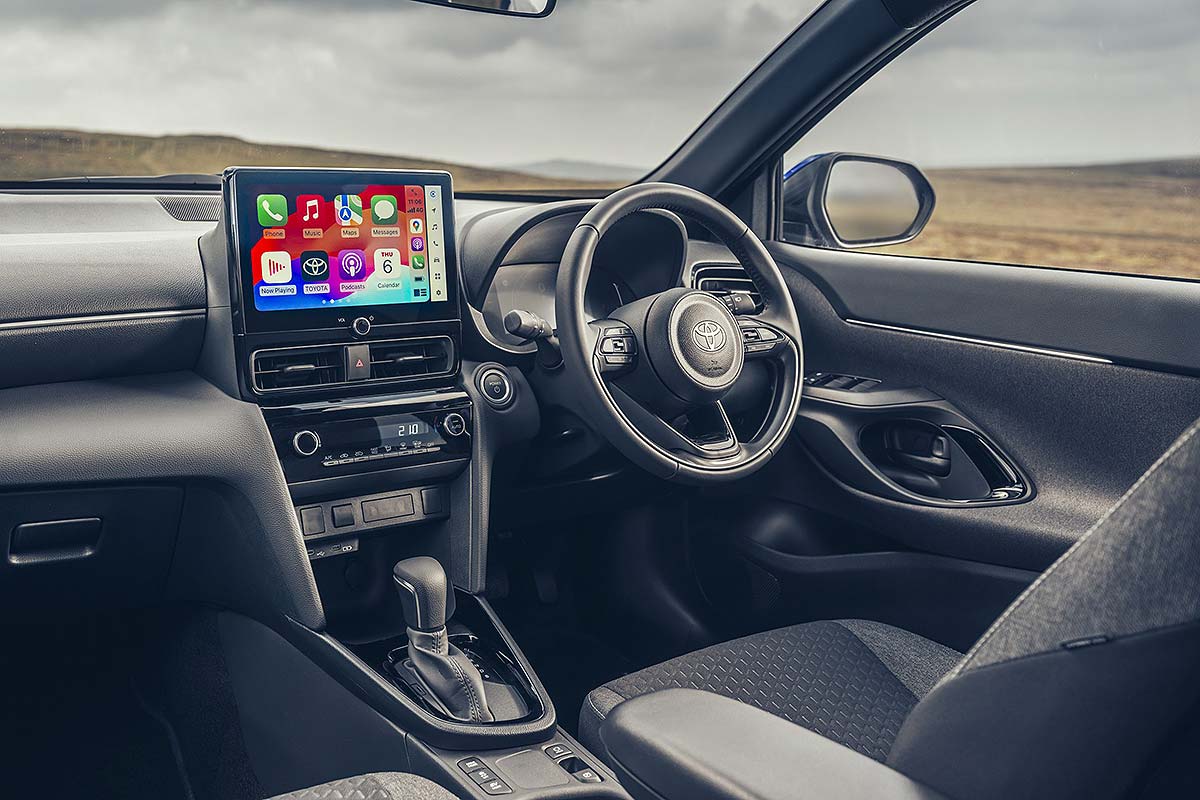
There are four different models to choose from in the Yaris Cross range: Icon, Design, Excel and GR Sport. Even the entry-level Icon is well equipped, with adaptive cruise control, a reversing camera, smart entry and push-button start, automatic climate control, a 7.0-inch digital instrument panel and a 9.0-inch touchscreen infotainment system with Apple CarPlay and Android Auto connectivity as standard.
Upgrade to Design, and you get bigger alloy wheels, 40:20:40 split-folding rear seats, LED projector headlights, rear privacy glass, roof rails, ambient lighting and a larger 10.5-inch touchscreen with Toyota Smart Connect and cloud-based navigation.
Excel adds a more comfort-focused specification, including heated front seats, a heated steering wheel, dual-zone climate control, front and rear parking sensors, an electric tailgate, blind-spot monitoring, safe exit assist, a panoramic view monitor, a 12.3-inch digital instrument cluster and Toyota Smart Connect+ with built-in navigation and voice control.
GR Sport adds a sportier look and feel, with its own styling details, synthetic suede upholstery with GR Sport badging, sports seats, stiffer suspension and the more powerful 129bhp hybrid system as standard. It also gets the 12.3-inch and 10.5-inch displays, although some of the more advanced safety and parking features are optional rather than standard.
The infotainment system is much better than it was in the earliest Yaris Cross models. The screens are clear, the menus are fairly easy to follow, and wireless smartphone integration is standard across the range. It still isn’t quite as slick or visually appealing as the best systems in the class, but it works well enough and is helped by the fact Toyota hasn’t buried every major function in the touchscreen.
Toyota Yaris Cross running costs
Depending on your driving style, you should see somewhere between 55mpg and 60mpg in everyday use from the Yaris Cross. Toyota’s official WLTP test figures range from the mid-50s to low-60s, depending on the version. Your final figure will depend on whether you drive mostly in town or on the motorway, because urban driving benefits hybrid systems like this. It allows for lots of regenerative braking, which in turn means the battery is charged regularly and the electric motor can help out more.
The all-wheel-drive model will be a touch less efficient, as the system has to power an extra electric motor on the rear axle, but there’s less of a weight penalty than with conventional four-wheel-drive systems. Official figures sit in the mid-50s, so fuel economy shouldn’t drop too much.
Servicing costs are reasonable at Toyota dealers, too, being slightly pricier than those of Ford or Vauxhall dealers, but lower than you’ll find at upmarket brands such as BMW and Mercedes-Benz. One word of caution, though: if you’re planning to have your Yaris Cross serviced at an independent garage, some might be less well versed in its hybrid technology than others, so you might want to shop around. Toyota’s official service schedule is every 10,000 miles or annually.
One thing you won’t have to factor in, however, is the cost of a timing belt change. That’s because the Yaris Cross’s engine uses a metal timing chain that should last the lifetime of the car, instead of a rubber belt that requires changing at great cost every few years. Insurance groups range from 11 to 14, so cover should be reasonable for most drivers.
Toyota Yaris Cross reliability
Anyone who buys a Yaris Cross should be able to take some confidence from Toyota’s excellent reputation for reliability. The brand remains one of the strongest performers in this area, finishing fourth overall in the latest What Car? Reliability Survey.
However, the Yaris Cross itself didn’t perform quite as strongly as you might expect. In What Car?’s hybrid reliability table, it finished 20th, with a reliability rating of 91.4%. The most common issue related to the 12-volt battery, which accounted for a significant proportion of reported faults. That’s worth knowing, although Toyota covered the cost of most remedial work, and more than half of affected cars were back on the road within a day.
Toyota’s warranty is a major plus point. The standard new vehicle warranty lasts for three years or 60,000 miles, but Toyota’s service-activated warranty can extend cover up to 10 years or 100,000 miles, provided the car receives qualifying services at an approved Toyota dealer. Hybrid battery cover can also be extended up to 15 years, which should provide extra reassurance for buyers planning to keep their car long-term.
There’s one other thing to keep in mind, although it’s more of a security issue than a reliability one. Hybrids have historically been targeted for catalytic converter theft, so it’s worth checking what protection is fitted and whether Toyota offers any additional security measures, especially if the car will regularly be parked on the street.
- If you like the idea of a Yaris Cross but would prefer a more upmarket badge and a plusher interior, try the Lexus LBX instead. It uses a variation of the same GA-B small car platform, but with a more premium interior and a more polished, Lexus-like feel.
- Most compact SUVs of this size are strictly front-wheel drive. Unusually, the Yaris Cross is available with Toyota’s AWD-i all-wheel-drive system on selected versions. This has been achieved by adding an extra electric motor to the rear axle, which means there’s no conventional mechanical propshaft. The advantage of this setup is that it’s light and compact, so the AWD-i version isn’t much less efficient than the standard car. There are disadvantages, though: it isn’t the most rugged four-wheel-drive system, so while it’ll help you out on a slippery road or a muddy track, it won’t be able to tackle serious off-roading. For that, you’ll need something more rugged.
- It's widely known that Euro NCAP tests get tougher over time, and the Yaris Cross is a good example of how standards move on. It achieved the full five-star rating when it was tested in 2021, but when it was retested under newer protocols in 2025, it received four stars. That doesn’t suddenly make it unsafe, especially given the amount of standard safety kit Toyota includes, but it does show how quickly the independent safety body’s requirements evolve.
- The most sensible Yaris Cross to choose is no longer quite as clear-cut as simply picking the cheapest version. The entry-level Icon is well equipped, and if you want the lowest possible price, it still makes a lot of sense. However, the step up to Design adds useful extras such as a larger touchscreen, 40:20:40 split-folding rear seats, LED projector headlights, rear privacy glass and roof rails. We think it’s worth considering.
- Better still, Design is available with the more powerful 129bhp hybrid system, and that looks like the sweet spot in the range. It gives you a useful equipment upgrade over Icon and a small but worthwhile performance boost, without pushing the price up to Excel or GR Sport levels.
- If you want to push the boat out and spec your Yaris Cross up a bit, we’d suggest going for the Excel. It costs quite a bit more than the Design, but you do get an awful lot more equipment, including heated front seats, a heated steering wheel, dual-zone climate control, an electric tailgate, blind-spot monitoring, safe exit assist and a panoramic view monitor.