Toyota bZ4X 2026 review | A sensible, well-equipped electric SUV

Pros and cons
What we like
Roomy rear seats
Comfortable ride
Incredible warranty packages and reliability
What to consider
Boot is small by class standards
Questions over real-world range in cold weather
Not a cheap option
The CarGurus verdict
The Toyota bZ4X is a thoroughly competent family car; quiet, comfortable, spacious and well equipped. The extensive updates introduced at the end of 2025 address many of the criticisms levelled at earlier versions, bringing improved range, faster charging and a more convincing all-round driving experience. A market-leading battery and vehicle warranty also delivers welcome peace of mind, reinforcing Toyota’s long-established reputation for reliability.
Even so, it isn’t flawless. The boot is smaller than in some key rivals, and while efficiency and range have improved, some alternatives still go further on a charge or provide better value for money. Ultimately, the bZ4X is a sensible, easy-to-live-with electric SUV that prioritises comfort and usability over excitement. But it falls just short of the best in class
out of 5 expert review
What is the Toyota bZ4X?
First things first: what’s with that overly clumsy name? Well, bZ stands for ‘beyond zero’, the 4 refers to its size positioning and the X denotes its crossover body style. More importantly, the bZ4X is a mid-sized, fully electric family SUV that is similar in size to the Toyota RAV4 (and sits above the more recent Toyota C-HR+). It’s offered with either front- or all-wheel drive, and has a host of rivals ranging from the Skoda Enyaq, Hyundai Ioniq 5 and Kia EV6, through to the Tesla Model Y and Volkswagen ID.4.
This is Toyota’s first dedicated ground-up battery-electric vehicle built on its ‘e-TNGA’ platform (although its premium brand, Lexus, launched the related UX300e in 2020). It shares this architecture with its sister car, the Subaru Solterra. Toyota is relatively late to the EV party, having focused heavily on hybrids until recently.
Earlier versions of the bZ4X were criticised for slow charging speeds, modest efficiency, an underwhelming interior and several quality issues, all of which Toyota has attempted to address.
Toyota significantly updated the bZ4X towards the end of 2025, righting a few wrongs of the original car launched in 2022. The update was so comprehensive that it almost feels like a new car, with revised battery options, a longer range, faster charging, improved dynamics, a nicer interior and more advanced technology. The bZ4X now comes with a choice of two batteries: a 57.7kWh pack for 274 miles of range, and a 73.1kWh battery for up to 352 miles (both according to the official figures).
As for the styling? Well, to our eyes the bZ4X manages to be peculiarly forgettable, despite its very angular design.

Practicality
How practical is it?
The Toyota bZ4X scores well for practicality, even by the high standards of this class, but it is overshadowed by the Skoda Enyaq, Volkswagen ID.4 and Tesla Model Y, all of which have usefully bigger boots.
Even so, the Toyota’s boot is a roomy 452 litres, so you’ll get a couple of big dogs in there quite comfortably, or there’s plenty of space for a chunky double buggy. The rear seats also fold flat in a 60:40 split, leaving a smooth if slightly sloped extended loadbay. There’s no storage up front in the nose of the car, as you get in the Tesla Model Y and some other EV rivals, but there is underfloor storage in the boot for the cables, and for your fabric load cover.
The Toyota has generous rear passenger space for the class, with plenty of legroom and headroom. You also get a central rear armrest with cupholders, a couple of USB charging ports and two sets of Isofix child car seat mounting points. The floor feels a little high – a common trait in many EVs due to the underfloor battery – so those with long legs may feel like their knees are bent upwards. However, that’s our only quibble. There’s no seven-seat version planned for the bZ4X; you’ll have to look at the Mercedes-Benz EQB if you want to carry seven at this price.
Up front, there’s an intriguing cabin with hints of a fighter plane thanks to the pronounced instrument binnacle that sits a long way back from the steering wheel. A high centre console reinforces the cockpit-like ambience when you sit up front in the Toyota.
The materials feel durable, and there’s some aesthetic interest in the textiles that line the dashboard, but it does feel rather dark and drab next to some rivals. It’s also a bit short on stowage space. There’s no glovebox, which is very odd, but there is a space below the ‘floating’ centre console for the handbook, plus a deep cubby between the seats.
A touch-sensitive panel offers air-con controls, but the fact that they’re separate from the touchscreen and straightforward to use is a bonus. Many rival EVs house their climate controls within the main touchscreen.

Driving
What's it like to drive?
The Toyota bZ4X is one of the most relaxing and cohesive cars in the class to drive. We’ve only tried the front-wheel-drive model on the standard 18-inch alloys, which offered a really pleasing blend of smooth ride comfort and light, confident handling. Toyota revised the bZ4X’s suspension setup as part of the 2025 update, and it shows.
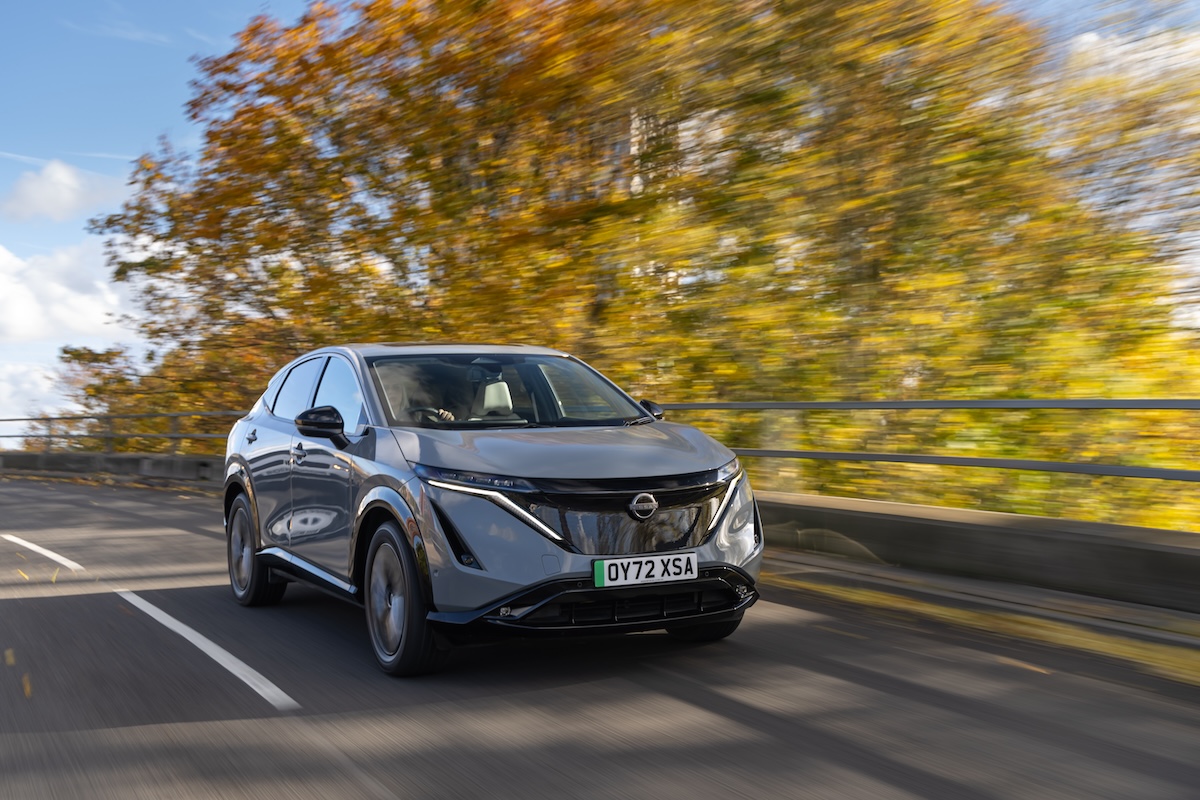
The steering is very short on any real sense of connection, but it responds predictably and is weighted well, whether you’re on a fast country road or winding through town. It actually feels quite light-footed and responsive next to rivals like the Nissan Ariya, and is one of the most comfortable and balanced electric SUVs in the segment, despite not being offered with adaptive dampers. Few alternatives, including the Skoda Enyaq, can match its blend of ride comfort and composure.
In entry-level form, the bZ4X uses a 57.7kWh battery paired with a 166bhp electric motor for a 0-62mph time of 8.6 seconds. The larger 73.1kWh battery version with front-wheel drive increases output to 221bhp and cuts the benchmark sprint to 7.4 seconds. The all-wheel-drive model uses the same larger battery, but boosts power to 338bhp, slashing the 0-62mph time to just 5.1 seconds and offering impressive all-weather traction.
We had no traction issues with the single-motor front-wheel drive car, though, even in wet conditions. It also delivers the longest official driving range, so it remains our pick of the bZ4X lineup.
Regenerative braking is fairly mild in the Toyota. If you hop behind the wheel without any prior experience of an electric car, you’ll likely find that it feels like normal engine braking when you lift off the throttle. You can increase the level of regeneration via a button, but it’s still a long way from the true ‘one-pedal driving’ offered by cars like the Nissan Ariya. Rivals such as the Kia EV6 and Hyundai Ioniq 5 offer more adjustable regenerative braking through steering-wheel paddles, giving keen drivers more control over energy recovery.

Tech and equipment
Technology, equipment & infotainment
Toyota has suffered with below-par infotainment in the past, but the bZ4X finally introduces a much more convincing setup. All versions now come with a 14-inch touchscreen, which has clear graphics, logical menus and quick responses. Like most modern systems, it takes a little time to learn where everything lives, but overall it’s easy to get along with and feels competitive with the best in this class. Built-in navigation, wireless Apple CarPlay and Android Auto, Bluetooth connectivity, DAB radio and over-the-air software updates are all included.
As of the facelift towards the end of 2025, there are currently three trim levels for the bZ4X: Icon, Design and Excel. Earlier versions used a similar three-tier structure, but with Pure, Motion and Vision grades instead.
Even entry-level Icon is well equipped. Standard kit includes LED headlights, 18-inch alloy wheels, adaptive cruise control, heated front seats, a heated steering wheel, an electric tailgate, ambient interior lighting, Toyota’s Safety Sense driver assistance package with autonomous emergency braking, plus a reversing camera and a heat pump, which helps improve efficiency and preserve driving range in colder weather.
Stepping up to Design trim introduces the larger 73.1kWh battery, along with a 360-degree panoramic camera to help when parking. You also get puddle lights and a windscreen de-icer to clear ice and snow from the area where the wipers park.
Excel trim moves the bZ4X further into premium territory with features such as 20-inch alloy wheels; heated, ventilated and electric front seats; heated rear seats, a digital rear-view mirror and synthetic leather upholstery. A 22kW on-board charger enables faster charging, too.

Running costs
Toyota bZ4X running costs
The bZ4X isn’t the cheapest mid-sized electric family SUV you can buy. Rivals such as the Volkswagen ID.4 undercut it on list price in comparable specifications, while the smaller MG S5 EV offers exceptional value for money even if it isn’t a direct size match. Having said that, the Tesla Model Y and even the Subaru Solterra – which is effectively a badge-engineered version of the bZ4X – are notably more expensive.
With that underwhelming cold weather real-world range to consider, it’s fair to say that other EVs will be more efficient and a bit cheaper to ‘refuel’. For instance, if the Toyota bZ4X is only doing 2.6 miles per kWh in winter, it’ll be costing 15p per mile assuming electricity costs around 40p per kWh. If you’re in an EV that’s doing 3.0 miles per kWh, that drops to just over 13p per mile. It’s a small difference, but it adds up over time, especially if you charge at public rapid chargers, which are more expensive – so the difference in cost will be greater. For some context, a petrol car doing 40mpg will cost around 14p per mile to fuel, while a diesel doing 55mpg will be 16p per mile.
At least the Toyota bZ4X has respectable warm weather efficiency, and it’s also well equipped as standard. The excellent warranty is also likely to keep used prices buoyant over the years.

Toyota bZ4X reliability
Toyota has a great reputation for reliability, which has been well established for many decades now. Whether analysed as an overall brand or when looking at individual models, it is routinely rated as one of the most reliable car manufacturers by owners of both new and used vehicles.
Having said that, due to it being Toyota’s first ground-up EV, the bZ4X initially suffered several quality issues – including a widely publicised recall at its launch – so you should approach earlier cars with caution. The updates introduced towards the end of 2025 should have improved matters.
You can also take comfort in the fact that Toyota finished an excellent fourth out of 30 manufacturers in the 2025 What Car? Reliability Survey, ahead of many premium brands.
As with every Toyota, the bZ4X comes with a three-year warranty that can be extended annually through Toyota’s Relax warranty scheme when the vehicle is serviced at a Toyota dealership. Provided those conditions are met, cover can continue for up to 10 years or 100,000 miles, making it the most generous new-car warranty currently available.
Not only that, the battery pack is covered by an eight-year manufacturer warranty, with additional battery health checks allowing coverage to extend to up to 10 years or 600,000 miles, provided the battery retains at least 70 percent of its original capacity.


What owners say
Three things to know
- The Toyota bZ4X charges via the CCS and Type 2 sockets located at the back of the car, where you’d expect the fuel filler cap to be on a petrol or diesel vehicle. These are the European standard connectors, meaning compatibility with the vast majority of public chargers and all home wallboxes. Ultra-rapid DC charging of up to 150kW is supported, allowing a 10-80 percent charge in 28 minutes under ideal conditions, or roughly 100 miles of range in about 15 minutes. Toyota has also improved battery thermal management as part of the latest update, helping maintain more consistent charging speeds in colder weather. Charging at home on a typical 7kW wallbox takes around 10 hours, depending on the battery size.
- As with any electric car, real-world range will vary depending on temperature and driving style. Earlier versions of the bZ4X were criticised for relatively large drops in cold-weather efficiency, and while updates have aimed to improve this, winter driving still reduces range noticeably compared with official WLTP figures. Expect somewhere in the region of 200 miles in mixed real-world driving for most versions, rising significantly in warmer weather and urban use. It’s also worth noting that the 20-inch alloy wheels – standard on the Excel trim – put a serious dent in the electric range, reducing the official front-wheel-drive WLTP figure from up to 352 miles to 319 miles.
- Towing isn’t a strong suit with the front-wheel-drive bZ4X, which is limited to 750kg with a braked trailer. However, the all-wheel-drive version is able to tow braked trailers up to 1,500kg, making it a more viable option if you need to tow a trailer or small caravan.
Which one to buy
- If you want the best value: The entry-level bZ4X Icon with the smaller battery makes the most sense if a low price is your priority. Performance is still perfectly adequate for everyday driving, and you get all the equipment and safety features that matter. For short journeys and urban use, the Icon is the model to go for.
- If you’re a company car driver: Benefit-in-Kind (BiK) rates remain extremely favourable across the range, so the mid-range bZ4X Design makes the most sense. It has the larger battery, the longest range and a few desirable upgrades, while maintaining low monthly tax bills.
- If you want the best family car: This all comes down to what you want from the bZ4X. For mainly urban family use, Icon spec offers the best balance of price, equipment and efficiency. If long journeys are a regular thing, pick the Design trim for its larger battery.
- If you want the quickest or most capable version: It has to be the Excel trim, as this is where all-wheel drive is offered alongside the larger battery. What you lose in electric range, you gain in enhanced all-weather traction and performance, along with more equipment (including a 22kW on-board charger).


Pricing trends
Starting RRP
£36,104
Current avg. market price
£23,463
Trending up by 4.6% this month
May 2026 - October 2026
More on the Toyota bZ4X (2022 - 2026)
Compare 2026 Toyota bZ4X Trims
The 2026 Toyota bZ4X offers a blend of value and features, with a starting price of £32,355 for the entry-level trim.
- Starting at £32,355
- Most Popular: 165kw Design 73kwh 5dr Auto
Trim Overview
Prices updated weekly from CarGurus listings.
| 150kw Motion 71.4kwh 5dr Auto [11kw] | 165kw Design 73kwh 5dr Auto (Most Popular) | |
|---|---|---|
| Starting MSRP | £44,454 | £44,904 |
| Avg. Market Price | £32,355 | £32,355 |
| Positioning | Best value | Fully loaded |
| Standout Features | Apple CarPlay, Adaptive Cruise Control | Privacy glass, Heated Steering Wheel |
| Drivetrain | FWD | FWD |
| Listings Available | 12 | 14 |
Quick Compare Table
Listing prices sourced from CarGurus — updated weekly. OEM specs from manufacturer data.
| 150kw Motion 71.4kwh 5dr Auto [11kw] | 165kw Design 73kwh 5dr Auto | |
|---|---|---|
| AI Summary | Best value option for budget-conscious buyers | Fully equipped with premium features |
| Avg. Market Price | £32,355 | £32,355 |
| MSRP | £44,454 | £44,904 |
| Engine | 0.0cc 204.0 hp | Electric |
| Drivetrain | FWD | FWD |
| MPG/MPGe (City/Hwy) | 0.0/0.0 | 0.0/0.0 |
| Apple CarPlay | ✓ | ✓ |
| Adaptive Cruise Control | ✓ | ✓ |
| Cruise Control | ✓ | ✓ |
| Bluetooth | ✓ | ✓ |
| Navigation System | ✓ | ✓ |
| Privacy glass/Tinted windows | ✓ | ✓ |
| Android Auto | ✓ | — |
| Backup Camera | ✓ | ✓ |
| Parking Assist | ✓ | — |
| Air Conditioning | ✓ | — |
| AUX/USB connectivity | ✓ | ✓ |
| Alarm/Immobiliser | — | ✓ |
| DAB Radio | — | ✓ |
| Heated Steering Wheel | — | ✓ |
| Active Listings | 12 | 14 |
Missing data displayed as "—".
Trim Deep Dives
150kw Motion 71.4kwh 5dr Auto [11kw] — "Who It's For"
The 150kw Motion is the pick for shoppers who want essential features without paying for extras. It's a solid choice for budget-conscious buyers.
- Avg. market price: £32,355 (updated weekly)
- MPG/MPGe: 0.0 city / 0.0 hwy
- Inventory: 12 listings — lower availability; may limit negotiating room
- View 150kw Motion listings
165kw Design 73kwh 5dr Auto — "Who It's For"
The 165kw Design is the pick for shoppers who want a fully loaded electric vehicle without compromise. It's the most popular trim in the lineup.
- Avg. market price: £32,355 (updated weekly)
- MPG/MPGe: 0.0 city / 0.0 hwy
- Inventory: 14 listings — lower availability; may limit negotiating room
- View 165kw Design listings
Trim Recommendations
Most Popular — 165kw Design 73kwh 5dr Auto
With 14 active listings, the 165kw Design is the clear volume leader in the lineup.
Best Budget Option — 150kw Motion 71.4kwh 5dr Auto [11kw]
At £32,355 avg market price — below the lineup median of £32,355 — it's the most accessible entry point.
These recommendations are based on CarGurus' proprietary market data from October 29, 2026, CarGurus experts' opinions, and generative AI.

