Thinking about making the switch to a hybrid car? You’re not alone. With fuel prices staying stubbornly high and the 2035 ban on new petrol and diesel cars looming, more and more drivers are looking for a middle ground. A standard - or self-charging - hybrid offers the best of both worlds: the ability to run on silent, zero-emission electric power for short trips, combined with the convenience and range of a petrol engine for longer journeys. There’s no need for range anxiety or hunting for a charging point on the motorway.
From super-efficient superminis that can top 60mpg to practical seven-seat family haulers, the choice of hybrid cars has never been better. In this guide we are focusing on self-charging models that you just fill up with petrol and drive. If you'd prefer a plug-in hybrid that can handle the daily commute entirely on electricity, check our our separate guide to the best plug-in hybrid cars.
About this guide
The cars in this guide have been selected to represent the best options currently available. Our recommendations are the result of a unique three-part scoring system that takes into account real-world tests from our team of expert reviewers, ratings from real-life owners who live with these cars every day, and an analysis of market data from CarGurus UK to identify which models offer the highest percentage of good and great deals. This combined approach ensures our list highlights cars that are not only great to own but also good value to buy. For more information, scroll to the bottom of this page.
The Best Hybrid Cars 2026
- Honda Jazz
- Toyota Yaris
- Honda Civic
- Toyota Corolla
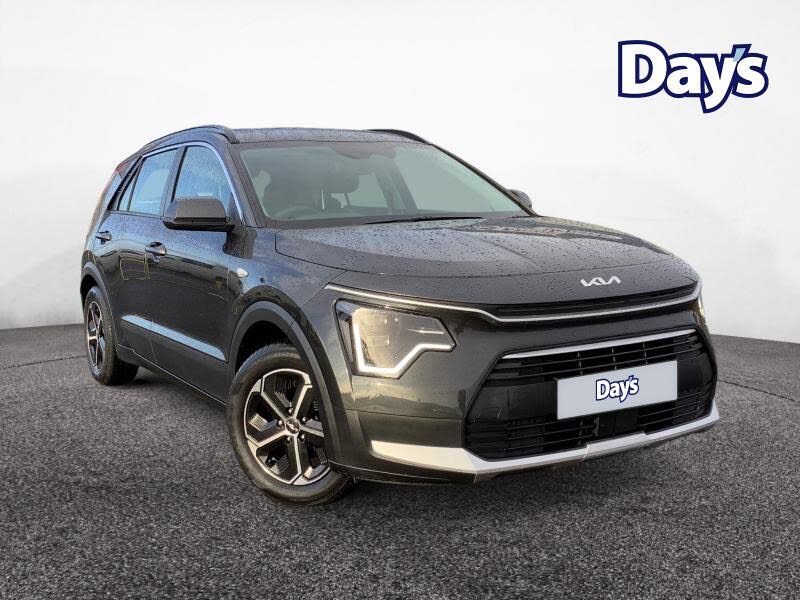
- Kia Niro
- Toyota Yaris Cross
- Renault Clio
- Dacia Jogger
- Lexus LBX
- MG3 Hybrid
CarGurus expert rating: 4 out of 5
CarGurus user rating: 4.6 out of 5
Percentage of good/great deals available on CarGurus: 31.2%
Overall CarGurus rating: 4.4 out of 5
| Pros |
Cons |
| Space and clever seating make the Jazz very practical |
Rivals from Renault and Toyota have longer warranties |
| Slick infotainment system |
Not as much fun to drive as a Ford Fiesta |
| Expect very good reliability |
Noisy petrol engine and CVT combo |
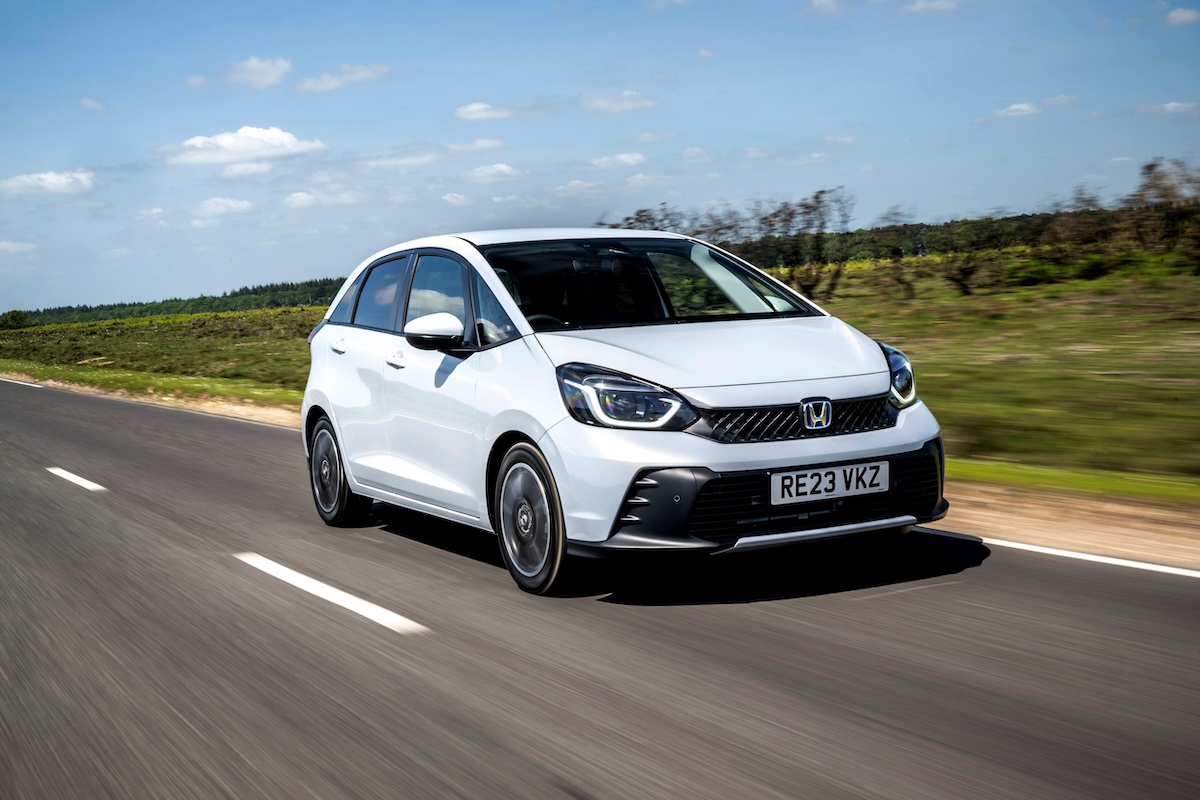
The Honda Jazz is a bit of a legend when it comes to practicality, and this latest hybrid-only version is the cleverest one yet. Its party piece is its incredible interior space. Despite being a small supermini, it has more room inside than many cars from the class above. The real genius lies in Honda’s ‘magic seats’ in the back. The seat bases can flip up like cinema seats, leaving a huge, tall space perfect for carrying things like a bicycle or a tall plant pot home from the garden centre. It’s this kind of MPV-like thinking that makes the Jazz a uniquely versatile small car.
That practicality is now paired with a super-efficient self-charging hybrid system. It’s designed to run on silent electric power as much as possible in town, which makes it incredibly smooth and relaxing to drive. It’s also spectacularly frugal, with Honda claiming up to 62.8mpg, and a real-world fuel economy of 55mpg being easy to achieve. The engine can get a bit loud if you accelerate hard, but for everyday driving, it’s a quiet and comfortable companion. If you want maximum practicality and minimum running costs in a compact package, nothing comes close to the Honda Jazz.
The CarGurus Verdict: "The Honda Jazz makes no bones about the fact it puts practicality first. Granted, it isn’t all that exciting to drive, but it doesn’t really need to be." - Alex Robbins, senior car reviewer
Read our full Honda Jazz review
CarGurus expert rating: 4 out of 5
CarGurus user rating: 4.7 out of 5
Percentage of good/great deals available on CarGurus: 34.1%
Overall CarGurus rating: 4.4 out of 5
| Pros |
Cons |
| Very economical, especially around town |
The ride is on the firm side |
| Fantastic GR Yaris hot hatch |
Not as practical as a Honda Jazz |
| Plenty of safety kit as standard |
No satnav on pre-facelift models |
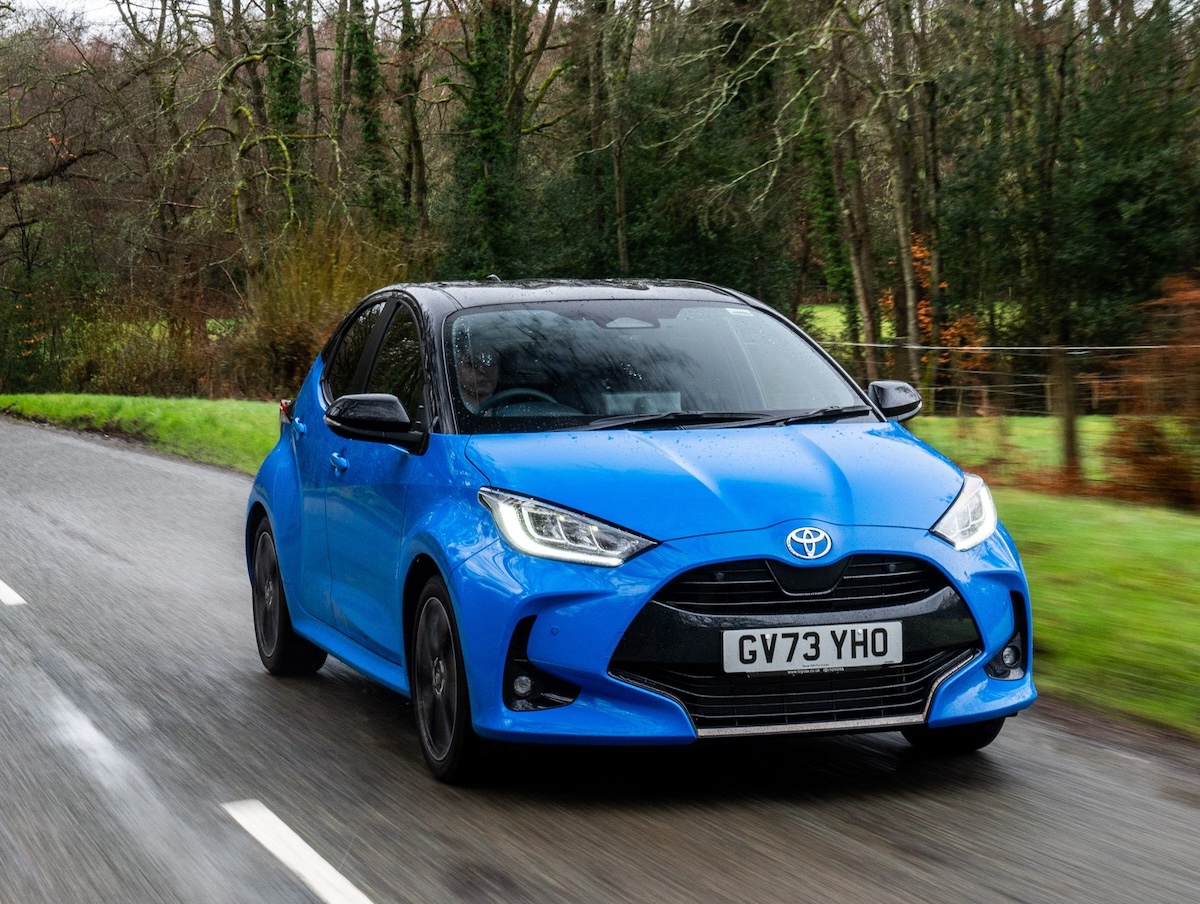
If saving money on fuel is your number one priority, the Toyota Yaris should be right at the top of your shopping list. This little supermini is a master of efficiency. Its self-charging hybrid system is tuned to run on electric power as often as possible, especially in stop-start city traffic. The result is astonishing fuel economy – it’s not unusual for owners to see 60-65mpg in everyday driving. It’s nippy and responsive away from the lights, and the standard automatic gearbox makes it a doddle to drive.
The Yaris isn’t just a sensible choice; it’s a stylish one, too, with sharp, modern looks that help it stand out from the crowd. It feels agile and secure to drive, though the trade-off is a ride that can feel a bit firm over potholes. Inside, the cabin is smart and well put together, and a 2024 update brought some welcome improvements to the infotainment screens. Practicality is decent for a car this size, but rivals like the Honda Jazz offer more space. However, for sheer, unbeatable running costs in a stylish and reliable package, the Yaris is the undisputed king.
The CarGurus Verdict: "Beneath its eye-catching lines, the Yaris is a car of real talent. It’s also easy to drive, well equipped and decent value." - Chris Knapman, editorial director
Read our full Toyota Yaris review
CarGurus expert rating: 4 out of 5
CarGurus user rating: 4.7 out of 5
Percentage of good/great deals available on CarGurus: 29.9%
Overall CarGurus rating: 4.4 out of 5
| Pros |
Cons |
| Smooth and efficient hybrid system |
Rear headroom and boot space tighter than on previous Civic |
| Comfortable and refined to drive |
Performance only so-so |
| Pleasant interior and lots of standard equipment |
Purchase prices are rather high |
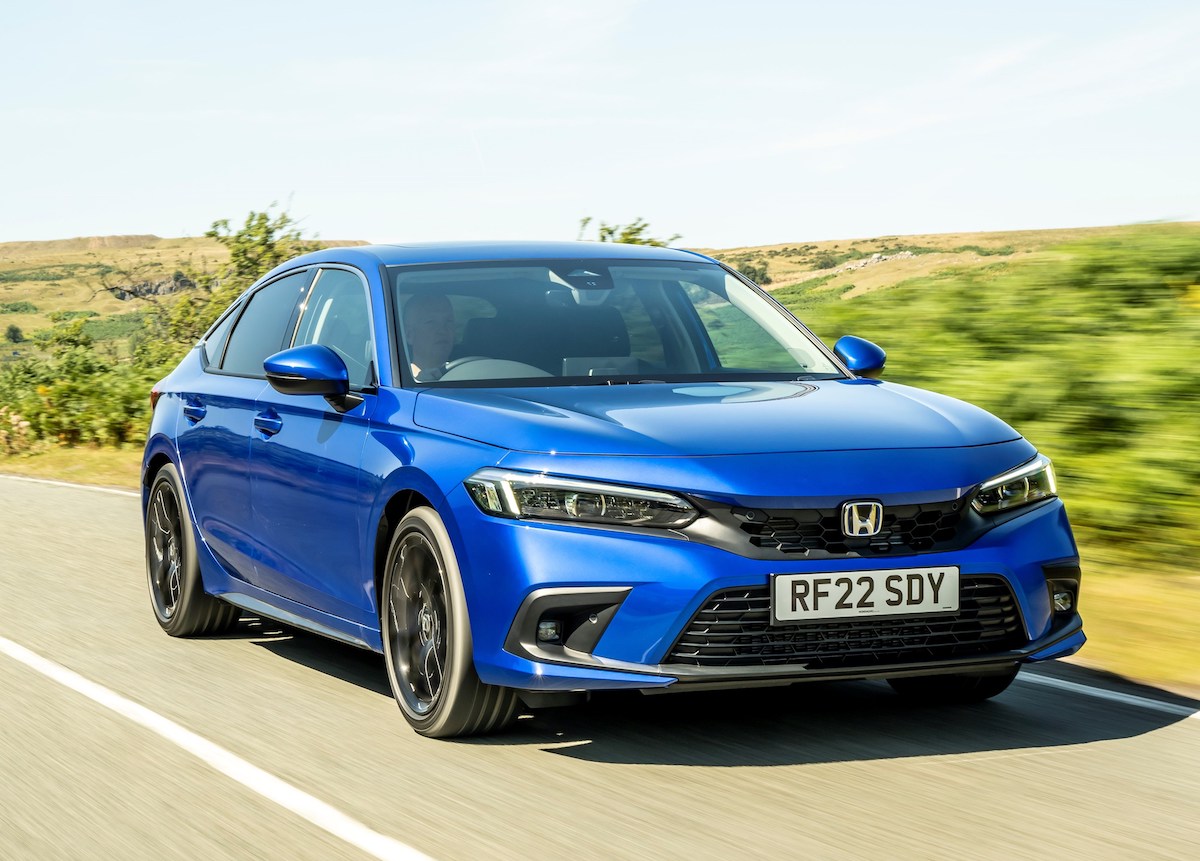
Now available only as a self-charging hybrid, the Honda Civic has transformed into one of the most sophisticated and refined family hatchbacks you can buy. Its clever e:HEV system uses a 2.0-litre petrol engine and two electric motors to deliver 181bhp, but it’s the way it drives that really impresses. Most of the time, the engine acts as a generator for the electric motors, which gives it the smooth, instant response of an electric car. It’s quiet, polished, and brilliantly avoids the high-revving drone that can afflict some other hybrids. It’s also very efficient, with an official 60.1mpg and real-world figures of 45-50mpg being easily achievable.
This newfound refinement extends to the way the Civic handles. It’s a genuinely comfortable and enjoyable car to drive, with a smooth ride and agile responses that make it feel more expensive than it is. The interior is a highlight, too, with a smart, minimalist design and high-quality materials. While the hybrid gubbins mean the boot has shrunk slightly to 410 litres, it’s still bigger than you’ll find in a VW Golf. If you’re looking for a hybrid that feels genuinely premium and is a pleasure to drive, the Civic should be at the top of your list.
The CarGurus Verdict: "It’s a pleasant car to drive, with impressive comfort, decent agility and a good hybrid system. More than that, in fact: it's actually one of the very best cars of its type in our book." - Ivan Aistrop, senior editor
Read our full Honda Civic review
CarGurus expert rating: 4 out of 5
CarGurus user rating: 3.7 out of 5
Percentage of good/great deals available on CarGurus: 34.0%
Overall CarGurus rating: 4.3 out of 5
| Pros |
Cons |
| Very well equipped |
The 2.0-litre is much pricier than the 1.8 |
| The Touring Sport estate is roomy |
Surprisingly cramped rear seats and boot in the hatchback |
| Efficient and economical hybrid powertrains |
|
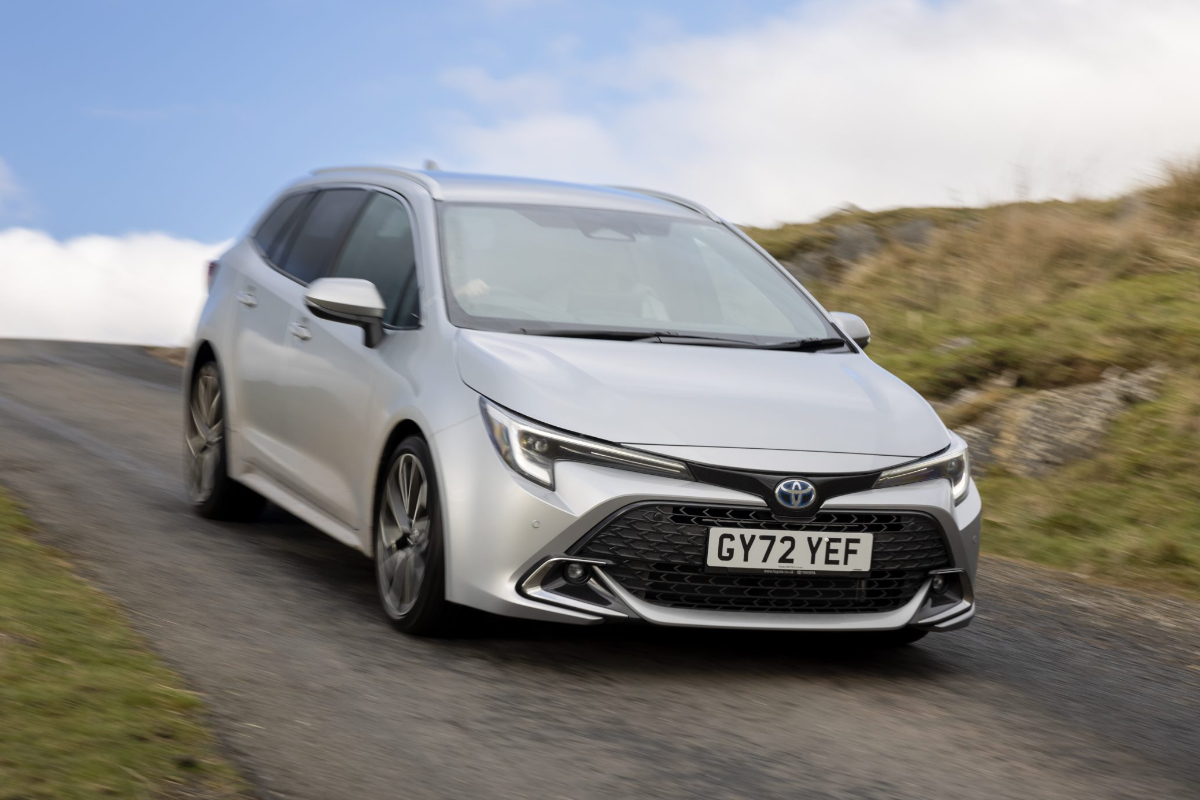
The Toyota Corolla is a byword for reliability, and in its latest hybrid guise, it’s also a champion of fuel efficiency. Buyers get a choice of two self-charging hybrid setups: a 138bhp 1.8-litre or a punchier 2.0-litre producing 193bhp. Both offer a smooth and quiet drive, especially around town where the car can rely on its electric motor. The system is so refined you’ll barely notice it switching between power sources, and because it charges itself as you drive, there’s no faffing with cables. Paired with a CVT automatic gearbox, it’s an effortlessly easy car to live with, boasting an official fuel economy of up to 64.2mpg, but you can expect to see well north of 45mpg without any special effort.
If you’re looking at the Corolla, we’d steer you towards the Touring Sports estate model. While the hatchback is fine, its boot and rear seats are a bit on the snug side. The estate, on the other hand, is a proper family hold-all. It has a cavernous 596-litre boot and plenty of legroom for passengers in the back. Inside, all Corollas are well-built and generously equipped, with post-2023 models getting a lovely big 10.5-inch touchscreen and a clear digital driver’s display. For a practical, efficient, and thoroughly modern family car, the Corolla Touring Sports is hard to beat.
The CarGurus Verdict: "The Toyota Corolla Hybrid is a sweet middle-ground for anybody after an efficient family car who’s keen to avoid diesel and plug-in motoring. It’s pleasant to drive, comfortable to sit in, and feels fresh and modern in a way that the Auris it replaces never did." - Chris Knapman, editorial director
Read our full Toyota Corolla review
CarGurus expert rating: 3 out of 5
CarGurus user rating: 5.0 out of 5
Percentage of good/great deals available on CarGurus: 35.8%
Overall CarGurus rating: 4.3 out of 5
| Pros |
Cons |
| Very low running costs |
PHEV loses some boot space |
| Roomy for passengers |
Not exciting to drive |
| Lots of equipment as standard |
Styling won't be to all tastes |
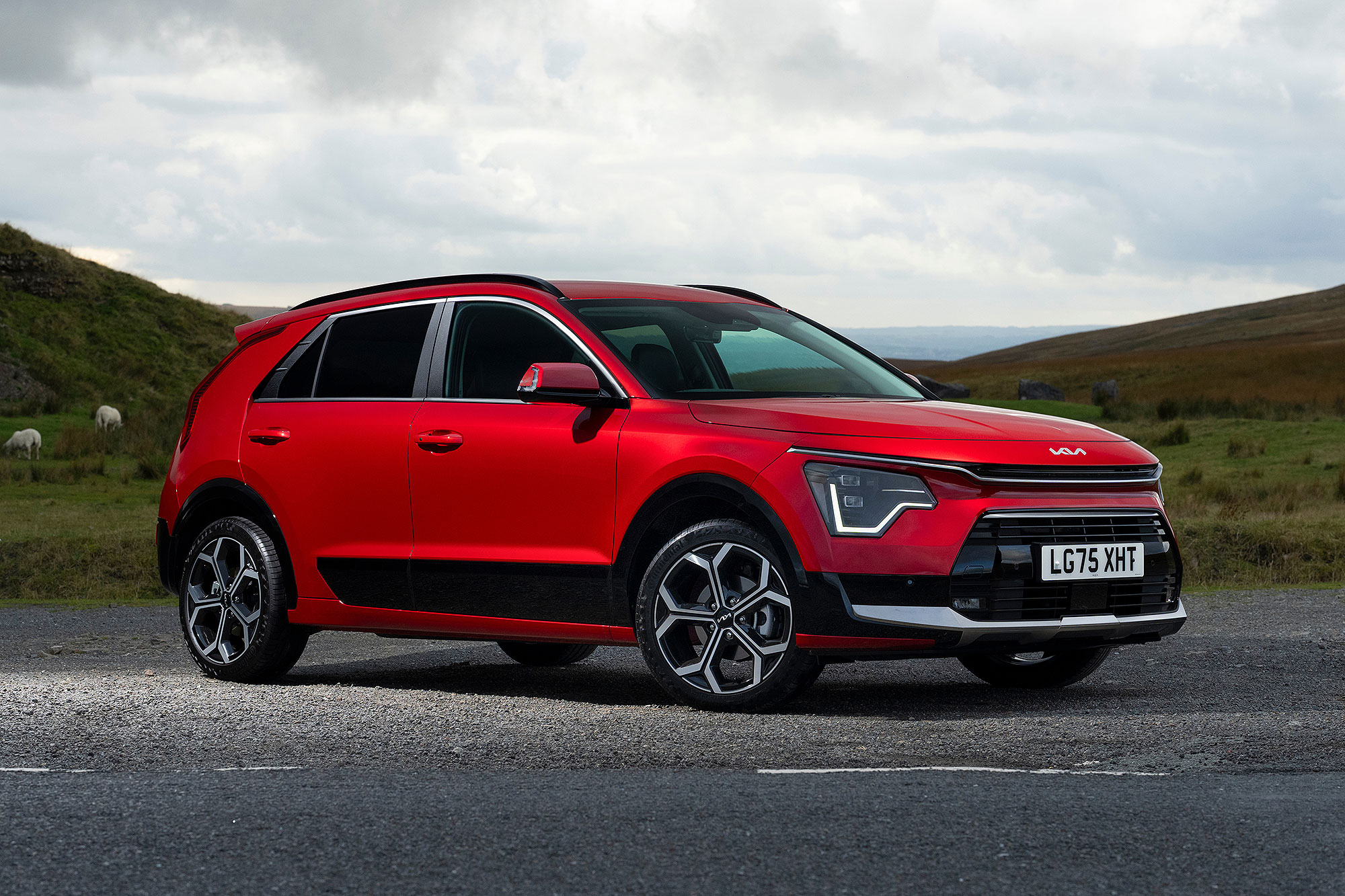
The Kia Niro is the Swiss Army knife of family crossovers, offering a choice of powertrains to suit everyone. For this list, we’re interested in the a self-charging hybrid (HEV), but note that plug-in hybrid (PHEV) and a full Niro EV are also available. The HEV is a brilliant all-rounder, returning around 60mpg and boasting a huge 451-litre boot – bigger than many of its rivals.
It’s spacious in the back, so teenagers won’t complain, and the interior is packed with modern tech and feels very well put together. It’s comfortable and easy to drive, and while it’s not the most exciting car in its class, it’s competent and composed in all situations. Add in Kia’s seven-year warranty, and you have a complete and incredibly sensible package. The Niro is a car you buy with your head, and you’ll be very glad you did.
The CarGurus Verdict: "The Kia Niro is a really good all-round family car, with a choice of hybrid powertrains. As a whole, this is a really complete and highly recommendable family car." - Vicky Parrott, contributing editor
Read our full Kia Niro review
CarGurus expert rating: 3 out of 5
CarGurus user rating: 5.0 out of 5
Percentage of good/great deals available on CarGurus: 33.6%
Overall CarGurus rating: 4.3 out of 5
| Pros |
Cons |
| The hybrid sips fuel, especially around town |
Quite cramped in the back |
| Promises the first-rate reliability you'd expect of Toyota |
The 4x4 version has less luggage room |
| Lots of boot space for a small car |
Not as much fun to drive as a Ford Puma |
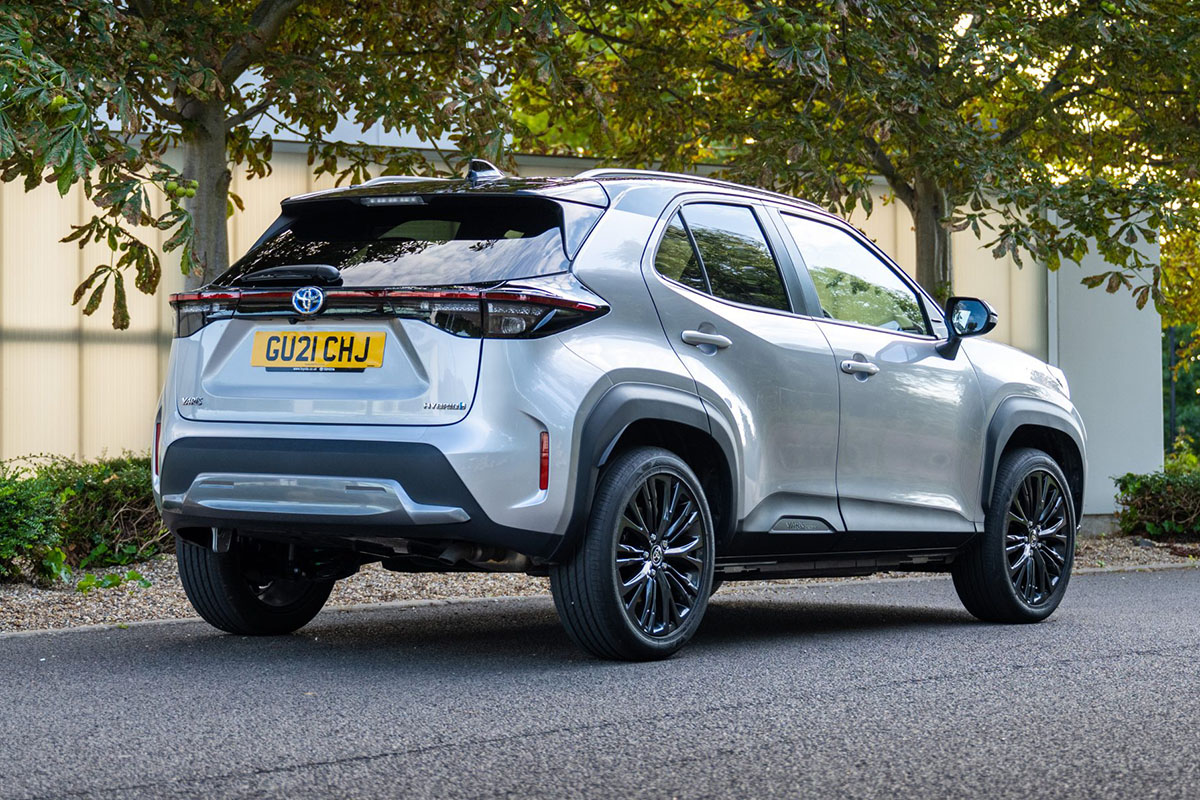
Take the super-frugal hybrid system from the Yaris hatchback, put it in a chunkier, more practical SUV body, and you get the Yaris Cross. It’s a simple recipe, but a very effective one. This small SUV is all about low running costs and ease of use. The self-charging hybrid powertrain is at its brilliant best around town, running silently on electricity and delivering fantastic fuel economy. You can realistically expect to see between 55 and 60mpg without even trying. The engine can be a bit vocal when you put your foot down, but for relaxed daily driving, it’s a calm and quiet companion.
The Yaris Cross delivers on the practicality front, too. The higher driving position gives you a great view out, and the 397-litre boot is a really useful size, bigger than what you’ll find in many rivals. It’s perfect for slinging in buggies, shopping, or luggage for a weekend away. While the back seats are a little on the tight side for adults, they’re fine for kids. The ride can feel a bit firm over sharp bumps, but it’s generally comfortable and easy to drive. If you want the rock-bottom running costs of a Yaris with a bit more space and SUV style, the Yaris Cross is a brilliant choice.
The CarGurus Verdict: "If the idea of a compact SUV appeals to you, and reliability is key, then it's hard to beat the Toyota Yaris Cross. While it isn’t the cheapest thing in the world to buy, it is very cost-effective to run, and Toyota's long warranty provides a welcome dose of peace of mind." - Ivan Aistrop, senior editor
Read our full Toyota Yaris Cross review
Search for Toyota Yaris Cross
See all
CarGurus expert rating: 3 out of 5
CarGurus user rating: 4.7 out of 5
Percentage of good/great deals available on CarGurus: 36.6%
Overall CarGurus rating: 4.3 out of 5
| Pros |
Cons |
| Stylish looks and chic image |
Rear seat space rather tight |
| Comfortable and easy to drive |
Infotainment could be better |
| Plenty of tech available |
Entry-level trim misses some kit |
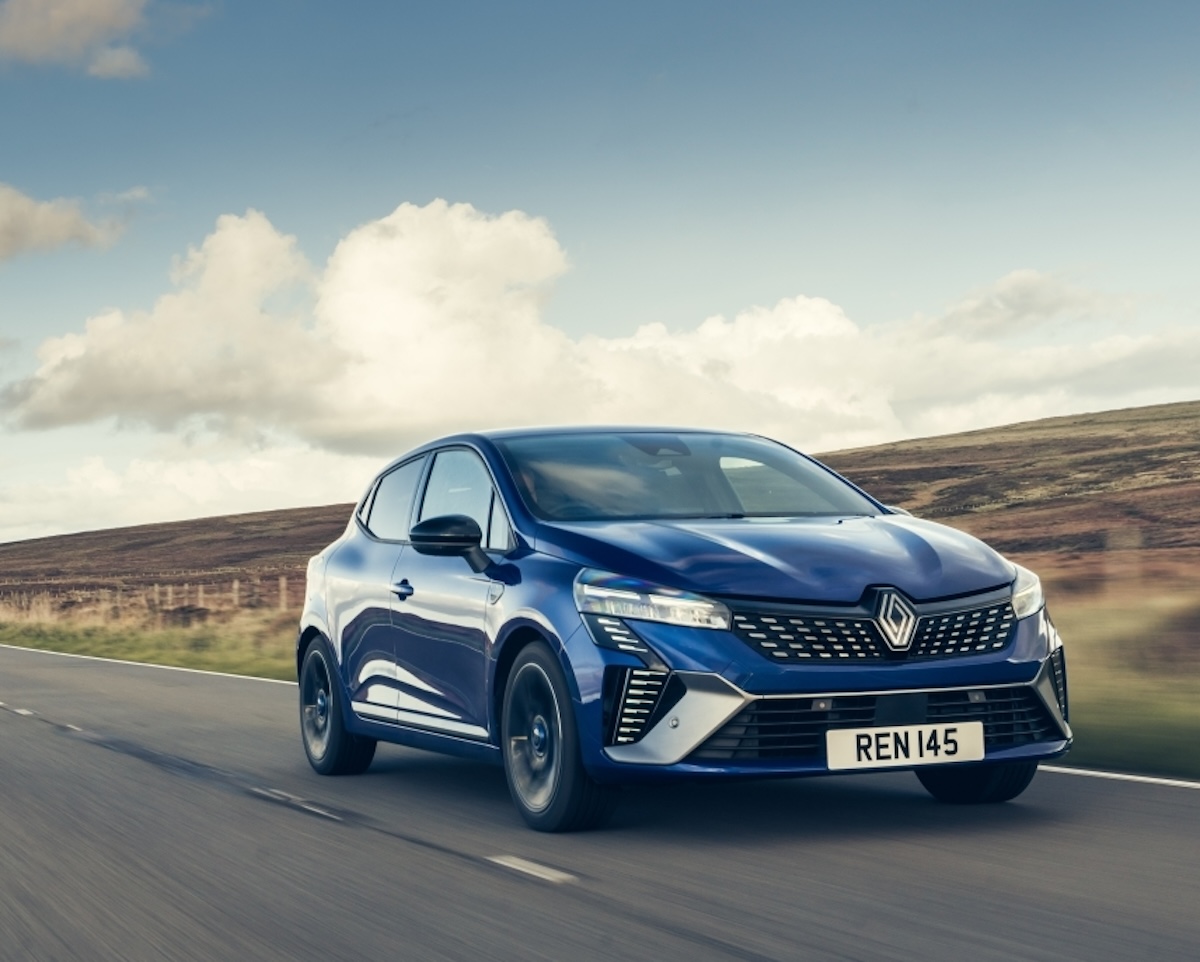
The Renault Clio E-Tech is a self-charging hybrid that offers a grown-up and refined driving experience. It combines a 1.6-litre petrol engine with an electric motor, and it blends these power sources smoothly for civilised progress around town and on the motorway. While its 0-62mph time of 9.3 seconds means performance feels adequate rather than sprightly, the Clio is an easy and comfortable car to drive. The ride is pliant, the controls are light, and refinement is generally very good, although the petrol engine can make itself heard when you ask for a sudden burst of acceleration.
Where the Clio hybrid really shines is its low running costs. Official figures claim an impressive 67mpg, making it a very economical choice for a supermini. It’s also competitively priced against key rivals like the Toyota Yaris and Honda Jazz. However, buyers should be aware of the impact the hybrid system's battery has on practicality. Boot space is reduced from a useful 391 litres in the standard petrol model to a more modest, but still usable, 301 litres in the E-Tech hybrid.
The CarGurus Verdict: "It isn’t the most practical car of its type, and nor is it the cheapest or the most exciting, but it does well enough in all those areas to convince, and the hybrid powertrain will no doubt prove compelling to some buyers, too." - Chris Knapman, editorial director
Read our full Renault Clio review
CarGurus expert rating: 3 out of 5
CarGurus user rating: 5.0 out of 5
Percentage of good/great deals available on CarGurus: 33.9%
Overall CarGurus rating: 4.2 out of 5
| Pros |
Cons |
| Outstanding value |
Seats lack support |
| Willing engine |
Lots of engine and tyre noise |
| Seven seats as standard |
Poor safety rating |
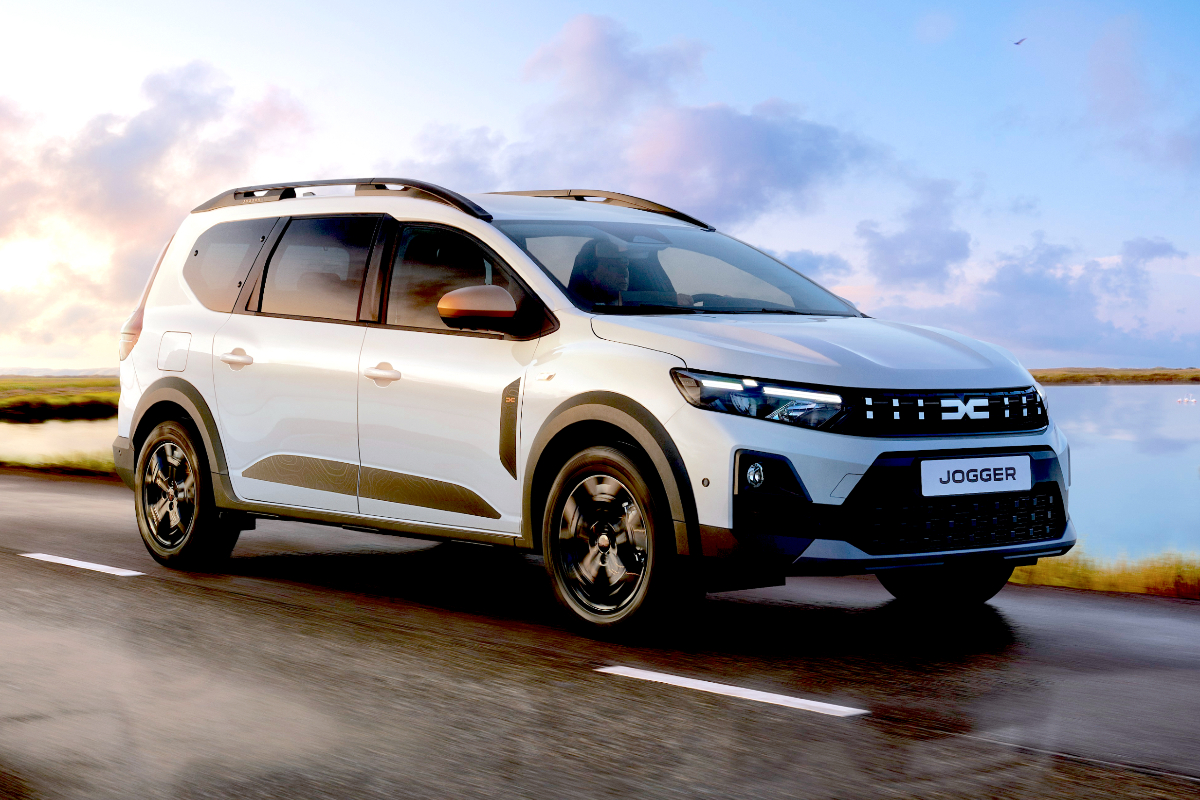
Need seven seats and hybrid efficiency but don’t have a huge budget? The Dacia Jogger is the car for you. In fact, it’s pretty much the only car for you. It’s in a class of one, offering genuine seven-seat practicality for the price of a supermini. The Hybrid 155 model gets a clever powertrain that combines a 1.8-litre petrol engine with an electric motor and 1.4kWh battery. This allows it to run on electric power around town, boosting fuel economy to a claimed 61.4mpg. For a car this big, that’s fantastic.
The Jogger’s main attraction is its incredible versatility. With all seven seats in use, there’s still a usable 212-litre boot. But the real magic happens when you remove the two rearmost seats – they’re super light and easy to lift out – which opens up a truly van-like 820-litre load bay. It’s perfect for big families, trips to the tip, or anyone who needs to carry lots of stuff. The driving experience is simple and straightforward, and while the cabin is built to a price, it feels durable. For unbeatable space-per-pound and impressively low running costs, nothing comes close to the Dacia Jogger.
The CarGurus Verdict: "Given its low price, the Dacia Jogger would find an audience even if it wasn’t very good. The fact it actually performs well in terms of practicality, engine performance, equipment and running costs could make it a surprise hit with families who previously thought a used seven-seater was the only option." - Ivan Aistrop, senior editor
Read our full Dacia Jogger review

CarGurus expert rating: 4 out of 5
CarGurus user rating: Insufficient user reviews
Percentage of good/great deals available on CarGurus: 37.3%
Overall CarGurus rating: 3.9 out of 5
| Pros |
Cons |
| Plush-feeling interior gives a premium image |
Rear seats are quite cramped |
| Low running costs |
Ride can be fidgety |
| Quite agile and entertaining to drive |
Looks rather expensive for its size |
Ever wanted the posh feel and low running costs of a Lexus, but in a smaller, city-friendly package? Well, say hello to the LBX. It’s the smallest Lexus yet, and it pinches the excellent self-charging hybrid system from the Toyota Yaris Cross. That means a 1.5-litre petrol engine works with an electric motor to produce 134bhp and let you glide around town silently on battery power, with the engine seamlessly kicking in when needed. Best of all, you never have to plug it in. The result is seriously impressive fuel economy – Lexus claims up to 62.7mpg, and we found it’s easy to get over 55mpg without even trying.
Step inside, and the LBX feels every bit the premium product. The materials are plush, the design is smart, and the standard 9.8-inch touchscreen is slick and easy to use. It feels a world away from its mainstream rivals. Sure, the back seats are a bit of a squeeze for adults, but for a small crossover, it’s practical enough. The 402-litre boot in the front-wheel-drive model will swallow a weekly shop or a pushchair with ease. Just be aware that the all-wheel-drive version has a much smaller boot (317 litres), so think carefully if you really need the extra grip.
The CarGurus Verdict: "The Lexus LBX makes a lot of sense in today’s market. As a plush compact SUV that benefits from big-car luxuries and desirability, it’s easy to see why the LBX will be a hit." - Vicky Parrott, contributing editor
Read our full Lexus LBX review
CarGurus expert rating: 4 out of 5
CarGurus user rating: Insufficient user reviews
Percentage of good/great deals available on CarGurus: 0.0%
Overall CarGurus rating: 3.7 out of 5
| Pros |
Cons |
| Hybrid powertrain impresses for both performance and economy |
Small boot and limited versatility |
| Affordable to buy and well equipped |
Some brittle interior plastics |
| Pleasant to drive |
Safety systems can get irritating |
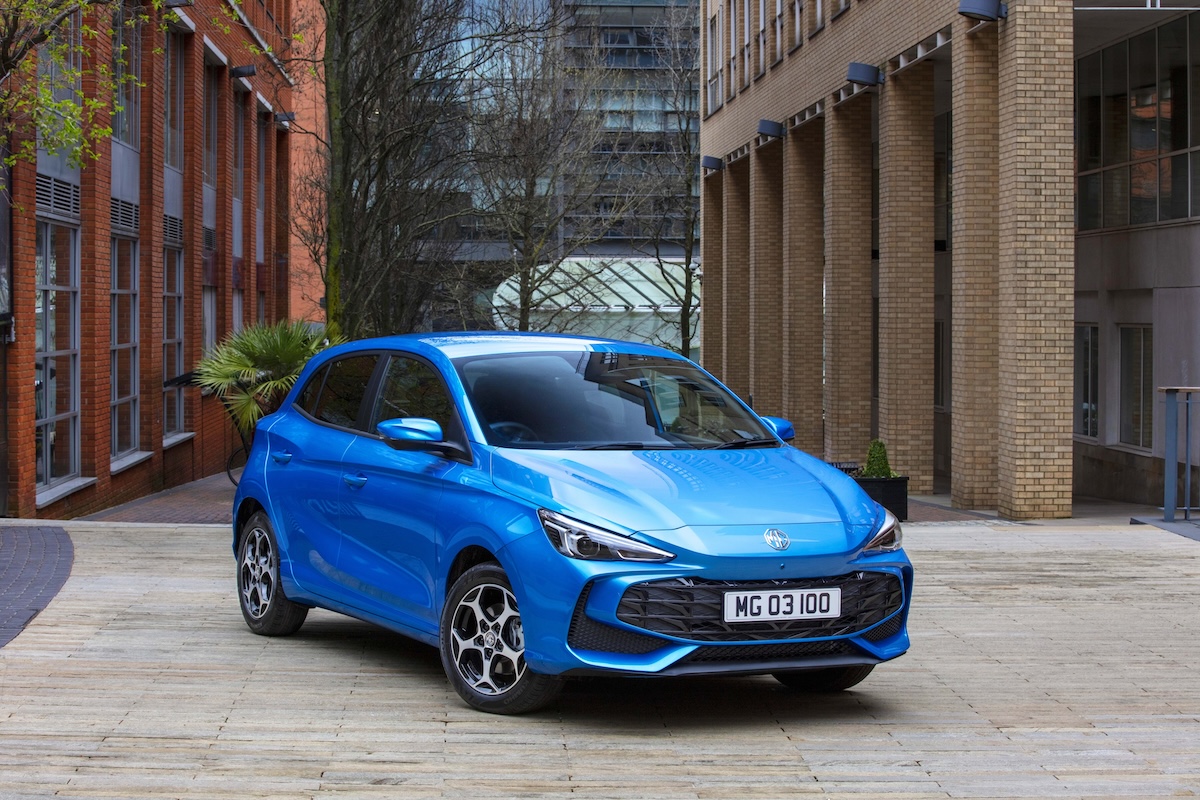
MG is on a roll, and the MG3 Hybrid+ is an example of why that is, because it offers an impressive hybrid system at a seriously tempting price. It undercuts rivals like the Toyota Yaris and Renault Clio by thousands, yet it packs a powerful punch. The combination of a 1.5-litre petrol engine and an electric motor delivers a punchy 192bhp, making it feel surprisingly quick for a small car. It’s not just about performance, though; this is a proper hybrid that can cruise silently on electric power at town speeds.
The real headline here is the running costs. MG claims an official 64.2mpg, and in our experience, getting over 60mpg in the real world is entirely possible. That’s fantastic for any car, let alone one with this much get-up-and-go. The rest of the package is strong, too. It’s pleasant to drive, and even the entry-level model comes loaded with kit that you’d pay extra for elsewhere. The only real compromises are a boot that, at 293 litres, is a bit smaller than some rivals and the use of a few scratchy plastics in the cabin. But for this price, the MG3 offers a tempting blend of performance, economy, and value.
The CarGurus Verdict: "The MG3 Hybrid+ is a very decent little car that’s affordable to buy, well-equipped, and pleasant to drive. Its hybrid powertrain does well for both performance and economy, making it a compelling new choice in the supermini class." - Ivan Aistrop, senior editor
Read our full MG3 Hybrid review
Frequently Asked Questions
What's the difference between a self-charging and a plug-in hybrid?
Both use a petrol engine and an electric motor. But in a self-charging hybrid the smaller battery is charged by the engine and by capturing energy when you brake. You just fill it with petrol and drive it like a normal car. A plug-in hybrid (PHEV) has a much larger battery that you can charge from an external power source, allowing you to drive for a significant distance (usually 25-40 miles) on electric power alone. It also has a petrol engine for longer journeys.
Are hybrid cars reliable?
Yes, generally they are reliable. Brands like Toyota and Lexus have been building hybrids for over 20 years and have a stellar reputation for dependability. The electrical components are designed to last the life of the car, and the way the system works can often reduce wear and tear on the petrol engine and brakes.
Is it worth buying a hybrid car in 2025?
Absolutely. For many people, a hybrid is the perfect stepping stone between a conventional petrol car and a full electric vehicle. They offer significantly lower running costs and emissions than a standard petrol car, without any of the range anxiety or charging hassles associated with pure EVs. With a wide variety of models available, from small superminis to seven-seat SUVs, there’s a hybrid to suit almost every need.
Do I need a home charger for a hybrid car?
For a self-charging hybrid (HEV), you don't need a charger at all – the car manages its own battery. For a plug-in hybrid (PHEV), a home charger is highly recommended to get the most benefit. While you can use a regular three-pin socket, a dedicated wallbox charger is much faster and more convenient for daily use, allowing you to start every day with a full electric range.
Are hybrids cheaper to run than petrol cars?
Yes, in most cases. The electric motor assists the petrol engine, which drastically improves fuel economy, especially in town driving. This means you’ll spend less money at the petrol station. Plug-in hybrids can be even cheaper if you do most of your driving within their electric range and charge up at home on a cheap overnight electricity tariff. Hybrids also often fall into lower VED (road tax) bands.
What is the best hybrid for a family?
This depends on your family's size and needs. For ultimate space and value, the seven-seat Dacia Jogger is unbeatable. If you want a stylish and practical five-seat crossover with a choice of hybrid systems and a long warranty, the Kia Niro is a fantastic all-rounder. For those needing a large boot in a more traditional estate car body, the Toyota Corolla Touring Sports is a superb and highly efficient choice.
What Makes CarGurus Best Cars Guides Different?
Most car buying websites publish lists of the best cars across a variety of categories, with recommendations generally driven by editorial expertise. Here's what makes our best cars guides different: we combine the insights and verdicts of our team of car-testing experts with other factors that we know matter to buyers - real owner experiences and current market value.
To that end, our expert reviewers come from some of the UK's most trusted automotive publications including What Car?, The Telegraph, Auto Trader, Electrifying.com, and Carbuyer. They put each car through real-world testing, and create detailed reviews noting performance in a range of categories, from practicality and driving manners, to running costs and reliability.
But we don't stop there when it comes to creating our best cars guides; we also analyse hundreds of thousands of used car listings on CarGurus UK to track which models consistently offer the highest percentage of best deals relative to how many are listed for sale. Then we factor in user reviews and ratings gathered on CarGurus to get feedback from people who actually live with these cars every day. Our best cars algorithm then creates a final Overall CarGurus rating that combines expert ratings, user reviews, and the percentage of listings on CarGurus UK rated as good or great deals. This three-way approach reveals not just which cars excel on paper, but which ones deliver satisfaction and value when you're ready to buy.
The CarGurus UK market data in this guide was last updated in June 2026. Values were accurate at time of publication and should be used as a guide only.
Related Topics: