BYD Shark 2026 review | Sharply styled Chinese pickup truck

Pros and cons
What we like
Really good to drive
Looks striking inside and out
Cheap BIK tax for company car drivers
What to consider
Low payload and towing capacity figures
Overly complex touchscreen
Some annoyingly overbearing driver-assistance systems
The CarGurus verdict
The BYD Shark really does have a lot going for it. It has the brash styling and rugged image that pickup buyers love, and a classy, tech-filled interior that many of them won’t be used to. It's one of the best vehicles of its type to drive, with a powerful and potentially economical powertrain and polished ride-and-handling characteristics, and it provides you with a lot of metal and tech for a competitive price.
On the subject of finances, the fiscal case for the Shark will very much depend on how you come by it: it’ll be very appealing for private buyers, and even more appealing for company car drivers, but business owners might be less convinced due to the fact that they’ll probably have to pay VAT on the Shark. The Shark also has some other annoyances that’ll affect everybody, such as the overly complex touchscreen system, some irritating driver-assistance systems, and disappointing figures for both payload and towing capacity. It’s a pickup that won’t suit everyone, then, but we reckon that those it does suit will absolutely love it.
out of 5 expert review
What is the BYD Shark?
Just a few short years ago, the UK’s pickup truck market was down to its bare bones. The pressures of profit margins and European emissions laws saw many manufacturers withdraw their offerings from sale, leaving just a handful - the Ford Ranger, Toyota Hilux, Isuzu D-Max and Ssangyong/KGM Musso - to carve up the remaining business between them.
More recently, though, the pickup sector has been enjoying something of a renaissance. Volkswagen has released a new version of the Amarok, developed alongside the latest version of the best-selling Ford Ranger, and Mitsubishi has made its triumphant return to the UK market after a five-year hiatus with the latest L200. Toyota has released a new and improved version of the Hilux, and there are also a handful of more random entrants to the sector, including the Ineos Grenadier Quartermaster, the Poer 300 and the Maxus T90.
Chinese brand BYD has now also joined the party with this, the Shark. It’s offered exclusively in a double-cab bodystyle, and with a plug-in hybrid powertrain, putting it toe-to-toe with the only other plug-in-hybrid offering in the pickup truck class, the Ford Ranger PHEV. And that might leave the Shark with a bit of a problem, because the Ranger is by far and away the most popular vehicle of its type: it currently accounts for around half of all the UK’s pickup sales on its own. So, in the face of such strong competition, does the Shark have the teeth (sorry!) to compete?
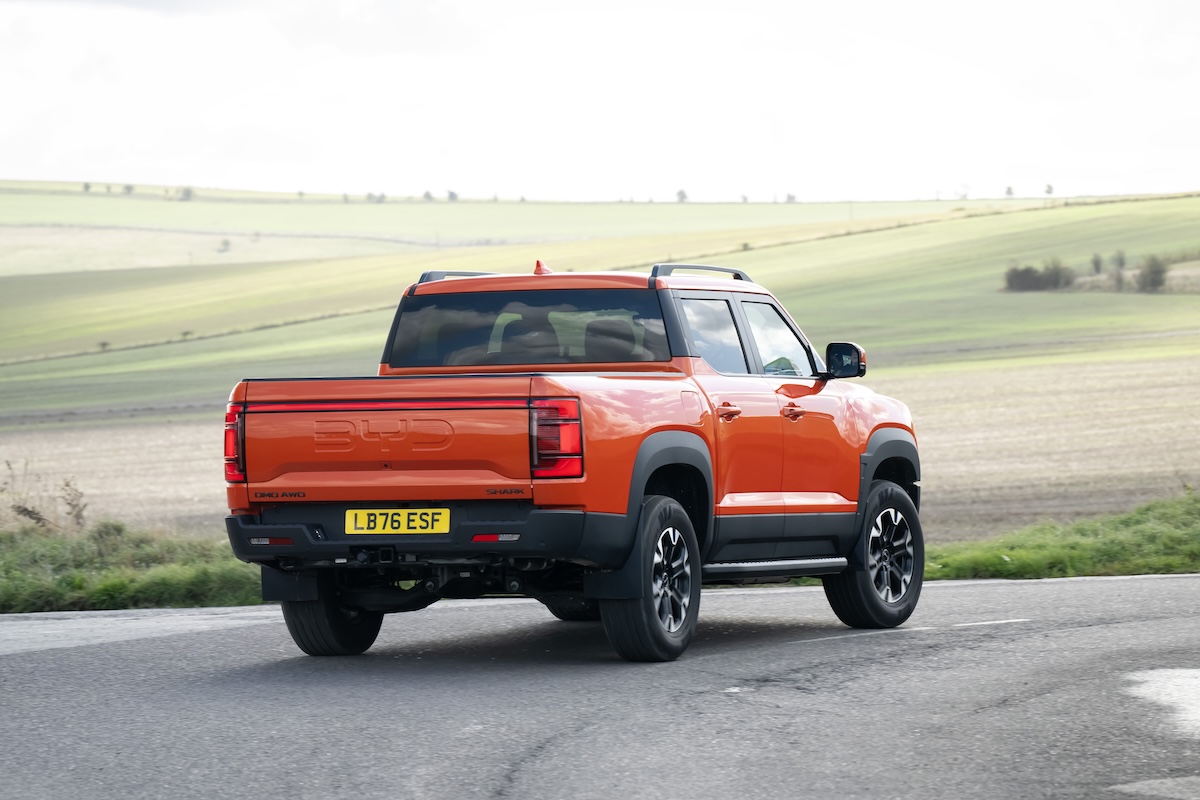
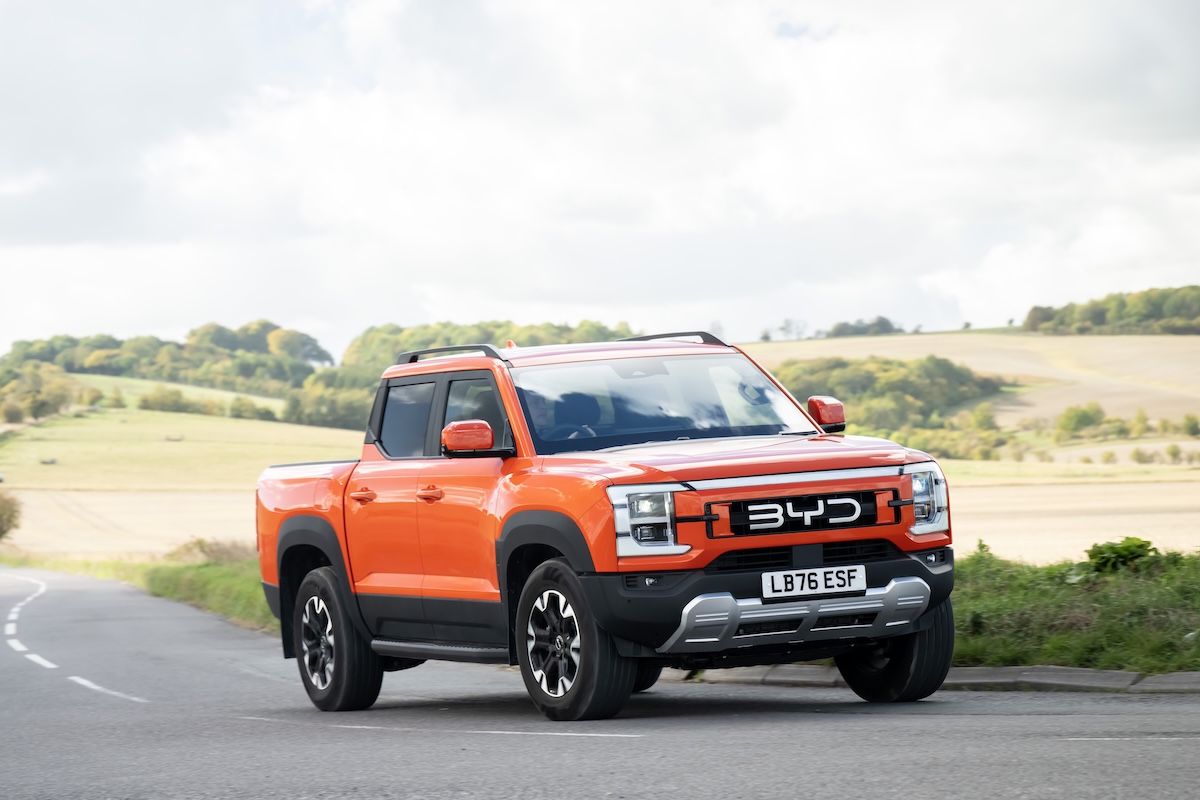
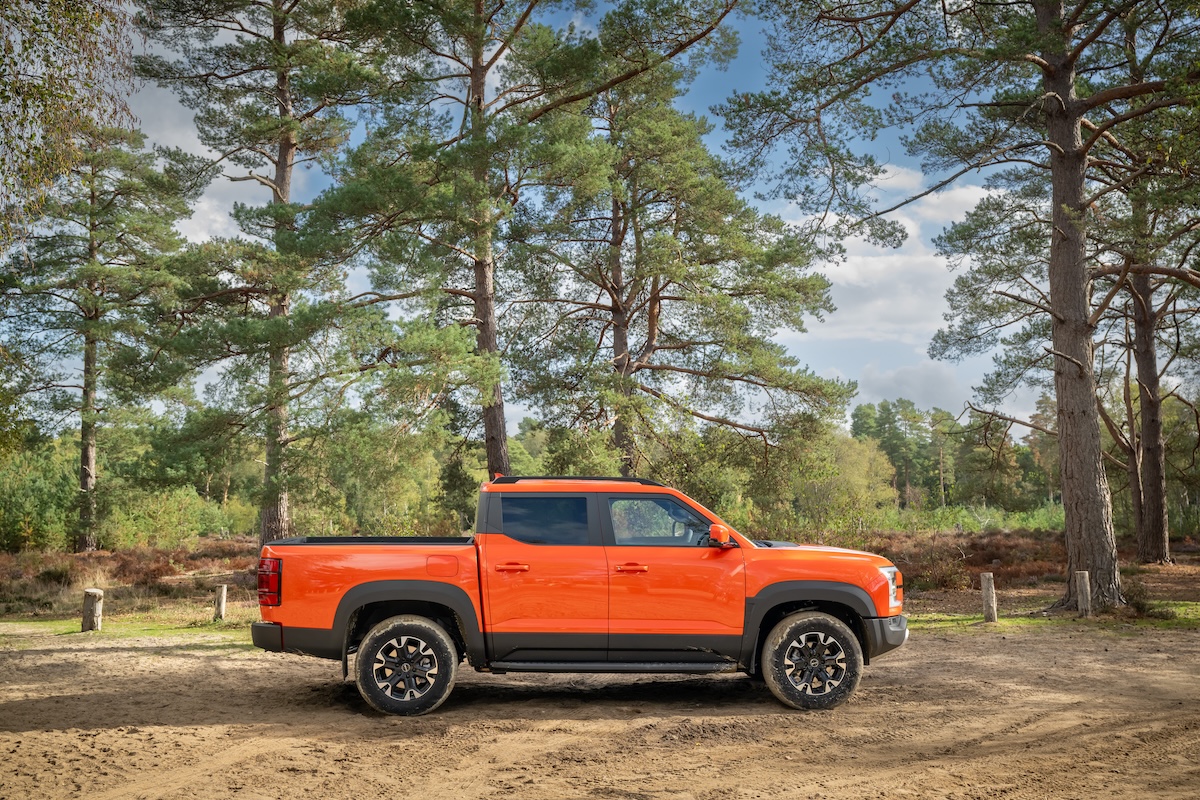
Well, it certainly has the visual presence, with larger-than-average dimensions and brash styling that’s not unlike that of the established class best-seller. It also has a classier-than-average cabin, with posh materials, swathes of stitched leather, and stacks of high-tech features (not all of which are entirely successful, as we’ll find out).
The plug-in-hybrid powertrain delivers some very impressive on-paper figures for power, performance and economy, while a suspension setup that’s unconventionally sophisticated for a pickup truck promises polished driving manners. And, as you’d expect from BYD, pricing is keen and the warranty is generous. Read on to find out whether that’s going to be enough to disrupt the established order in the pickup market.
Practicality
How practical is it?
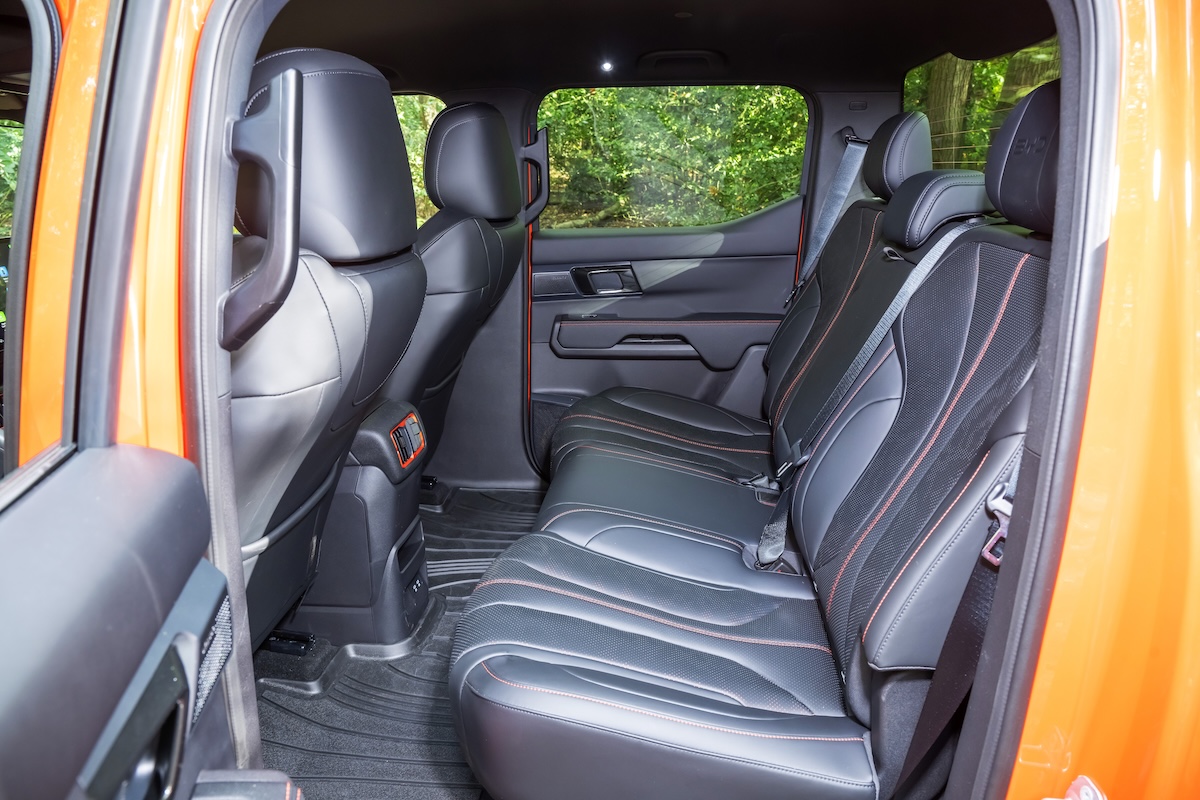
The BYD Shark is offered exclusively in double-cab format, meaning that it has a row of rear seats, giving you five in total. Those up front are very supportive and come with powered adjustment. The steering column is also adjustable for both reach and rake, so finding a comfortable driving position is quick and easy.
Whatever you do with your adjusters, the driving position you get is a fairly lofty one due to the sheer height of the Shark: this is one of those vehicles that you climb up into, rather than plop down into. This gives you an excellent view of the road ahead, and the bonnet’s crisp edges at the front corners give you a clear view of where the Sharks extremities are. You have less idea about where the rear end finishes due to the sheer length of the Shark, but you’re helped by standard parking sensors at both ends of the car, plus 360-degree cameras.
The rear seats have plentiful headroom and legroom, easily enough for tall adults to be comfortable. Given the generous width of the Shark, there isn’t as much shoulder room as you’d think, so carrying three across the back seat is a bit of a squeeze, but they can cram in if need be, and things are made slightly more comfortable by a completely flat floor in the back.
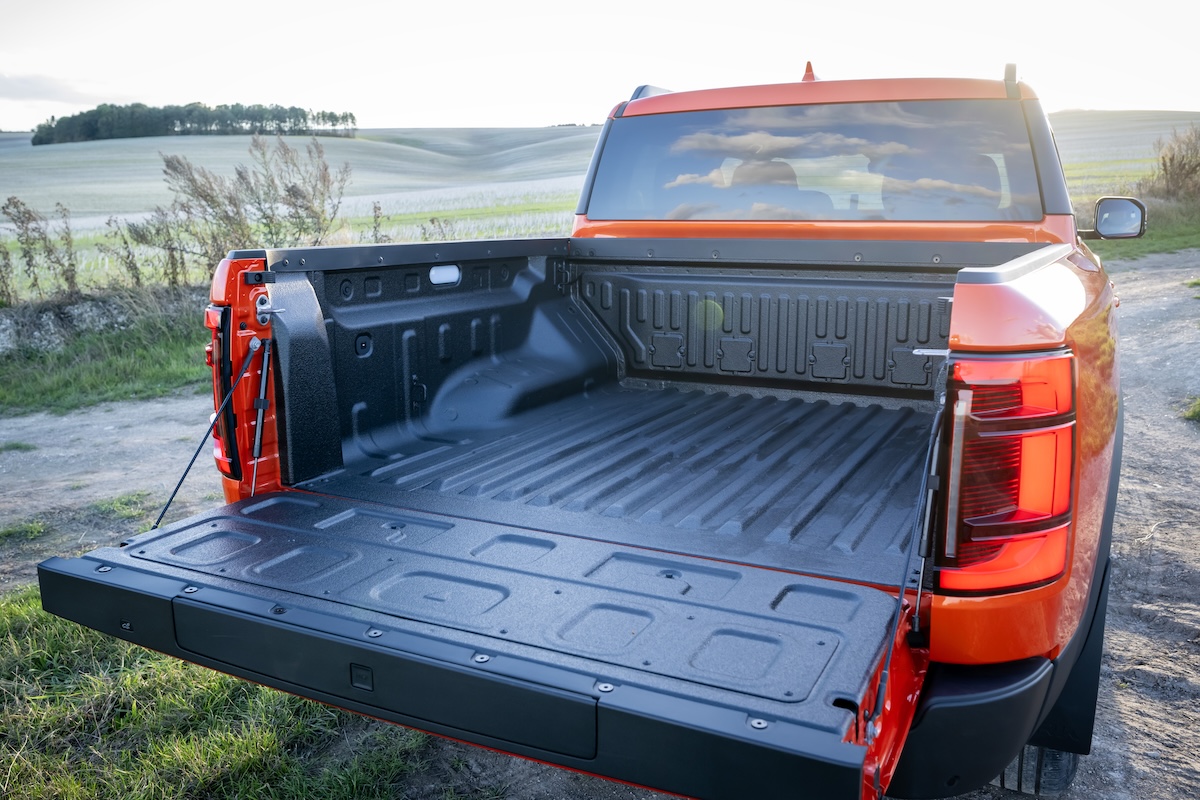
The Shark’s loadbed has a capacity of 1,200 litres, while the tailgate has damped electric opening plus an integrated pop-out step to help you climb in. Obviously, being a pickup, this space is open to the elements, but if you need your luggage to be covered, BYD has partnered with British pickup accessories firm Truckman, allowing you to order a range of hardtops and covers - alongside a whole bunch of other stuff - direct from your BYD dealer.
When it comes to payload, the Shark misses out on the benchmark one-tonne figure that many pickup drivers deem essential in their truck, with a figure of just 790kg. For most of those drivers, though, that threshold is deemed essential for its financial benefits (more on those in the Running Costs section in a wee while) rather than for its effect on the vehicle’s practicality, so the Shark’s failure to meet it shouldn’t be a huge limiting factor for many. For those who genuinely do need maximum weight-bearing ability, though, this will rule the Shark out immediately. In a similar vein, bear in mind also that the Shark’s maximum towing capacity of 2,500kg is around 1,000kg less than most pickup trucks give you.
Driving
What’s it like to drive?
The technical makeup of the BYD Shark is fairly unconventional for a pickup truck, partly because it’s a plug-in hybrid, and partly not. As such, let’s kick things off by talking about that powertrain.
It has two electric motors, one on the front axle delivering 228bhp and one on the rear axle delivering 201bhp. Those are accompanied by a turbocharged 1.5-litre petrol engine, which develops a total of 150PS, and a large 32.2kWh battery pack integrated into the chassis.
This arrangement operates in a variety of ways. Under most circumstances, it operates in EV mode where battery charge allows, meaning the Shark is powered exclusively by the electric motors. When operating in HEV mode, either because the driver has selected it or because the battery level has dropped below a certain threshold, the petrol engine kicks in to either recharge the battery or feed electricity directly to the motors. When more acceleration is requested, or when you’re cruising at high speed, the motors and combustion engine can work together to drive the wheels.
The total power output of the system is given at an impressive 430bhp, while the 0-62mph sprint time is given by BYD at a just-as-impressive 5.7 seconds. We’ll be honest, the Shark doesn’t feel quite as fast as that number suggests when you nail the accelerator away from a standstill, perhaps due to the rather lazy throttle responses (these never really go away) and perhaps because the complicated drive system needs a second or so to get its ducks in a row before responding to your command. But although the precise sprint time figure sounds optimistic, it’s also true that the Shark does feel very quick indeed. In fact, in a top-heavy vehicle like this, we can’t think that anyone would want to go any faster.
When you treat the Shark in such a manner, the petrol engine - as promised - chips in to help, but it’s not noisy. You can hear it, but it’s little more than a distant moo somewhere in the background. In fact, the petrol engine stays quiet and smooth whenever it's called into action, with very little discernable vibration to be felt. It cuts in and out really smoothly, too.
Driven more gently, the Shark delivers that kind of effortless and seamless progress you associate with an EV, so life stays relaxed and easy. That laid-back feel, and the impressive refinement of the powertrain, is complemented by impressive suppression of wind- and road noise, making this one of the most civilised pickup trucks you’ll encounter.
The comparatively comfortable ride also helps on that score. That comes courtesy of the Shark’s unusually sophisticated double-wishbone independent suspension. Most pickup trucks use far more basic leaf-spring suspension, because while it’s not as good for ride comfort or handling, it’s better at dealing with the vast amounts of weight that pickups should be able to carry. In the case of the Shark, though, the combination of its inflated dimensions and its enormous battery pack means it’s unusually heavy at around 2.7 tonnes. And in order to creep below the 3.5-tonne Gross Vehicle Weight (GVW) needed for a pickup to be driven on a regular driving licence, its permissible payload was always going to be lower than average, and nowhere near that magic one-tonne threshold we’ve mentioned elsewhere in this review. That meant that the Shark simply didn’t need such weight-bearing ability, and so more sophisticated suspension could be fitted in order to maximise dynamic ability.
Granted, the ride isn’t perfect: like most pickups, the Shark is built on a ladder frame chassis, so there’s still that underlying tremor typical of a pickup that gives a slightly nuggety feel at low-to-moderate speeds. However, the more sophisticated suspension means that the Shark deals with bumps and potholes better than most rivals, and the ride flattens out more when you’re going faster, too.
What’s more, the Shark’s handling also has the edge over most rivals. You never forget that you’re in a vehicle that’s both enormous and massively heavy, and you do inevitably feel very pronounced weight transfer as you change direction, but body lean is better controlled than it is with most rivals. And although the steering has the rather slow quality that’s common to all pickup trucks, there’s enough in the way of response, weight and feel to make it feel more confidence-inspiring than most. You won’t be champing at the bit to chuck your Shark down a twisty backroad, but if you need to use one to get somewhere in a hurry, it’ll be a less hair-raising experience in the Shark than it will with most pickups.
And if you need to get across country where backroads don’t exist, it’s good to know that the Shark is pretty capable off-road. That’s largely thanks to its huge-torque, four-wheel-drive, electric-motor-focused powertrain, and there’s also a range of off-roading modes to help optimise torque delivery for various different types of terrain. Lofty ground clearance gives decent ability in ruts and over rocks, and the Shark can wade through rivers at depths of up to 700mm.
Tech and equipment
Technology, equipment and infotainment
BYD offers the Shark in a single high-spec trim level that has a whole bunch of standard equipment included. This includes alloy wheels, front- and rear parking sensors, 360-degree cameras, keyless entry and start, automatic climate control, vegan leather upholstery, heated- and ventilated front seats.
Standard driver assistance tech includes adaptive cruise control, lane departure assistant with emergency lane keeping assist, blind spot detection, front- and rear cross traffic alert and automatic braking, child presence detection, driver monitoring. If that little lot isn’t enough to prevent you from having a crash, then you and your passengers are protected by seven airbags and a pair of Isofix child seats mountings on the outer rear seats.
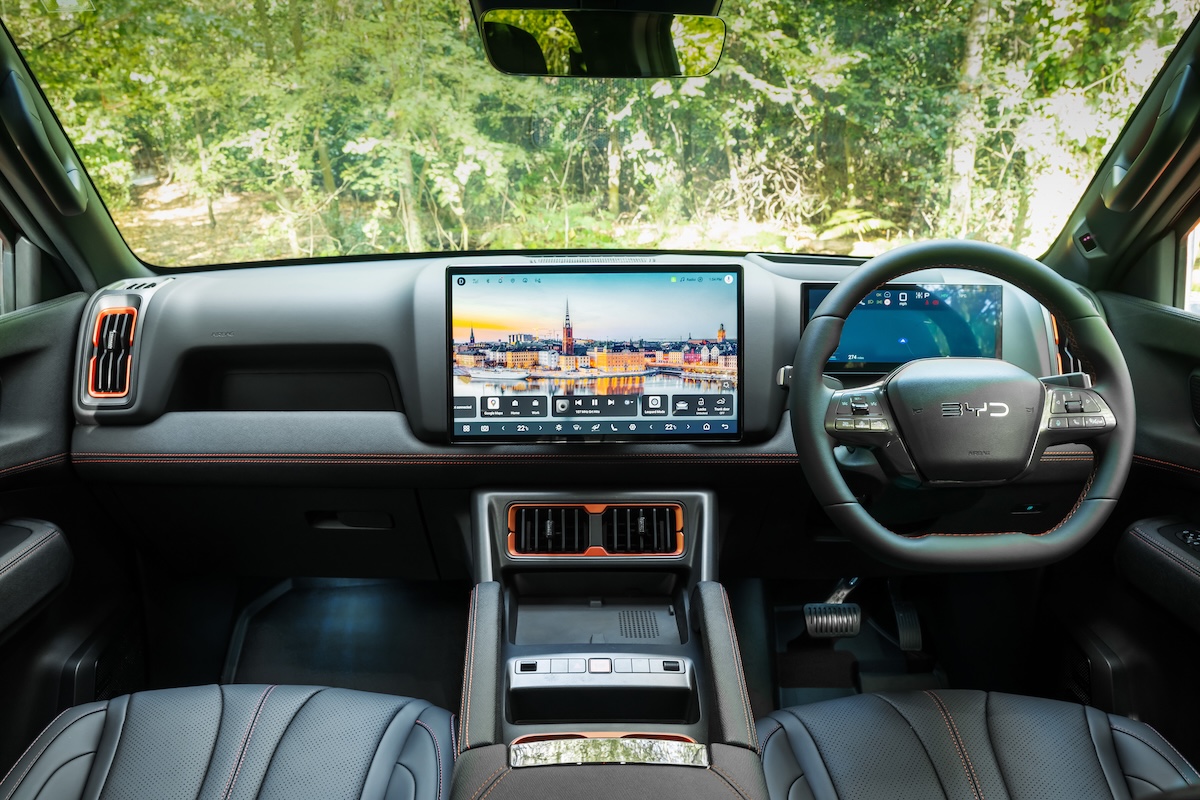
The infotainment roster is also comprehensive. There’s a large 15.6-inch touchscreen in the middle of the dashboard, with navigation, voice control, DAB radio, Bluetooth and wireless operation of both Apple CarPlay and Android Auto. You also have a 12-speaker Dynaudio sound system as standard, plus 50W wireless smartphone charging.
As is often the case with Chinese cars, the infotainment system controls almost all of the functions on the vehicle (there are very few physical buttons and dials on the dashboard, and although there are more on the steering wheel, it’s still not immediately obvious what many of these do).
That means there are lots of menus and submenus, and finding your way through them can be confusing and time-consuming. Doing so can also divert your attention away from the road for extended periods of time, ably demonstrated by the fact that you’ll often be told off by the car’s driver monitoring system when trying to operate what should be a simple function. What’s more, some of the on-screen icons on the home menus are fairly ambiguously designed, so again, it’s not immediately clear what they do.
And yes, the air-con is operated via on-screen controls, and depending on what menus or function you’re looking at at the time, these sometimes disappear from their place at the bottom of the screen, which is annoying.
Alongside the central screen is a 10.25-inch digital instrument display behind the steering wheel, accompanied by a head-up display that projects some bits of driving information onto the windscreen in front of you. The latter is fine, but the former isn’t ideal. Some of the various screen layouts on offer look quite cluttered despite the generous size of the screen, and many of the nuggets of information are displayed in small text that’s hard to read. And even when you can make them out, you’ll realise that many of these information points are utterly pointless anyway.
Running costs
BYD Shark running costs
Some buyers will look at the Shark’s sub-one-tonne payload and rule it out immediately. That’s because if a truck doesn’t meet that threshold, then business owners can’t claim back the VAT on it (or more accurately, they probably can’t, because of course, the tax rules are rather more complicated than that).
BYD is at pains to point something out, however. Compare the price of the Shark including VAT (a little over £47,000) to the price of the Ford Ranger plug-in hybrid Wildtrak (this mid-range trim is by far the most popular version) excluding VAT, and they’re actually pretty similar (there’s less than £1,000 in it). And, not only does that largely eliminate the Ford’s VAT advantage, you also get more kit for your money with the BYD as well.
If for you, the overriding appeal of dodging the VAT is to keep overall costs down, then that argument should appease you. There will be some owners, however, for whom the appeal of dodging the VAT will be to simply keep their cash out of the hands of the Exchequer, and to feel like they’ve got one over on the Government, and for those folk, BYD’s argument will likely be less convincing.
If you’re planning to run the Shark as a company vehicle, then you’ll need to consider Benefit-in-Kind tax. Not so long ago, pickups with a payload of over a tonne were treated as commercial vehicles for such purposes, and as such, enjoyed considerably lower flat-rate BIK tax burdens than passenger cars. In April 2025, however, the law was changed so that all double-cab pickups, regardless of payload, would be treated as passenger cars for tax purposes, meaning that their tax liability would be calculated according to their CO2 emissions. And because the vast majority of pickups are big, thirsty, CO2-heavy things, most fall into the most expensive 37% bracket, massively increasing tax liability overnight.
And that little change to the law really plays into the Shark’s hands. Of course, the fact that its payload is less than one tonne no longer matters, and because it’s a plug-in hybrid, its official CO2 emissions are considerably lower than those of most other trucks, meaning massively reduced costs. What’s more, the fact that it’s also considerably cleaner than the only other plug-in-hybrid offering in the pickup market, the Ford Ranger PHEV, means that it also has a sizable advantage over its most direct rival.
Let’s quantify that. As we’ve said, the vast majority of diesel-powered pickups fall into the top BIK tax band of 37%. The Ranger PHEV’s powertrain means it does better, but its official CO2 emissions of 144g/km and limited all-electric range of just 26 miles means that its BIK tax liability only drops to 34%.
The Shark, meanwhile, has official CO2 emissions of just 23g/km, and an all-electric range of 55 miles, both thanks to its much larger battery, and that combination of numbers drops its BIK classification to just 10%. Even for a lower-rate 20% taxpayer, that’s going to account for an annual tax saving of more than £2,500 per year compared to the Ranger PHEV.
Of course, opting for an all-electric pickup like the latest Toyota Hilux will result in even lower BIK bills (these are taxed at just 4%), but not everyone can live with the limited range of an EV (around 150 miles in the case of the Hilux EV).
The upshot of all this is that the Shark is by far the most affordable combustion-engined double-cab pickup to run as a company vehicle. If you’re a former pickup user-chooser who’s been forced out of your pickup and into an unsuitable passenger car due to the punitive BIK costs brought about by the 2025 tax changes, then the Shark might just provide you with an affordable way back into a pickup.
We’re fully aware that the weighted WLTP fuel economy figures for plug-in hybrids are complete and utter fantasy that bear virtually no resemblance to the real world, but for the sake of comparison, the Ranger PHEV’s figure is 44.8mpg while the Shark’s is 80.7mpg. BYD says the Shark returns 29.4mpg when the battery reaches its lowest state of charge, but we don’t have an equivalent figure for the Ford.
Obviously, for the best fuel returns, you’ll want to complete as many journeys as you can on electricity alone, and the Shark’s greater range will give you more chance of doing that.
Charging the Shark’s 32.2kWh battery pack will take around 4.5 hours from a regular 7kW home wallbox charger, and cost around £9 if your domestic electricity is billed at the UK’s national average rate. The Shark can also take on DC rapid charge at a maximum rate of 55kW, delivering a 30% to 80% top-up in 21 minutes, but charging this way will be much more expensive.
BYD Shark reliability
BYD provides a longer-than-average warranty on its cars at six years or 93,750 miles (that’s roughly 150,000km), whichever happens first.
The results of some reliability surveys we’ve seen suggest you might well be claiming on that warranty, though. BYD isn’t currently included in the What Car? Reliability Survey, but the Chinese firm featured as the sixth-worst manufacturer for reliability (out of 30 considered) in Auto Express’ Driver Power Survey.

What owners say
Three things to know
- The interiors of pickup trucks are usually built for durability rather than tactility, but the Shark looks to be rather different. With a single high-spec trim level offered, you’re faced with glossy-looking screens, jazzy trim finishes, and lashings of orange-stitched artificial leather on the seats, dashboard, centre console and doors. It certainly feels plusher than most other pickup trucks. This may not be what you’re after if you’re considering the Shark as a working vehicle, but if you’re more of a lifestyle-led customer, it might be just the ticket.
- The Shark comes with two vehicle-to-load charging sockets, for powering external devices. So, if you use your Shark as a working vehicle, you can run power tools directly from the vehicle’s battery, or if you're a more lifestyle-led owner, you can run kettles and fridges while camping in the mountains.
- Whatever sort of owner you are, you’ll welcome the Shark’s five-star rating from Euro NCAP. You might not welcome the intervention of the numerous driver-assistance systems that helped achieve that rating, though. A few of them, particularly the driver attention monitor - are rather overbearing in the frequency and volume at which they operate. Some of them can be switched off quickly by swiping downwards from the top of the touchscreen and hitting a few icons, but others are buried further within touchscreen menus, so disabling them is more of a faff.
Which one to buy
- If you want a sharp-driving pickup for a very competitive cost: That’s kind of the Shark’s USP. It’s one of the most dynamically polished pickups on the market thanks to its sophisticated suspension, and as you’ll find out in the Running Costs section, it makes a lot of sense financially if you’re the right sort of buyer.
- If you want the most popular pickup option: The best-selling pickup in the UK, by some distance, is the Ford Ranger. The Ranger accounts for roughly half of the pickup trucks currently sold in the UK, making it the proper kneejerk option.
- If you want a longer warranty: Toyota’s warranty can last for up to ten years or 100,000 miles if you have your vehicle serviced according to schedule at a franchised Toyota dealer. An initial three-year, 60,000-mile policy applies, which is then topped up by a year or 10,000 miles following each service. This arrangement applies to Toyota's light commercial vehicles as well as its passenger cars.
- If you want the rough-and-ready working vehicle: The Isuzu D-Max is one of the more workmanlike offerings in the pickup class, concentrating on providing no-frills working transport at a competitive cost.

