Fiat Tipo Review (2016-2023)
Fiat Tipo cars for sale
2.0
Expert review
Pros
Reasonably practical cabin
Decent boot space
Very cheap to buy
Cons
Disappointing to drive
Hard plastics in the low-rent cabin
Poor safety rating, unless fitted with the optional Safety Pack
The CarGurus verdict
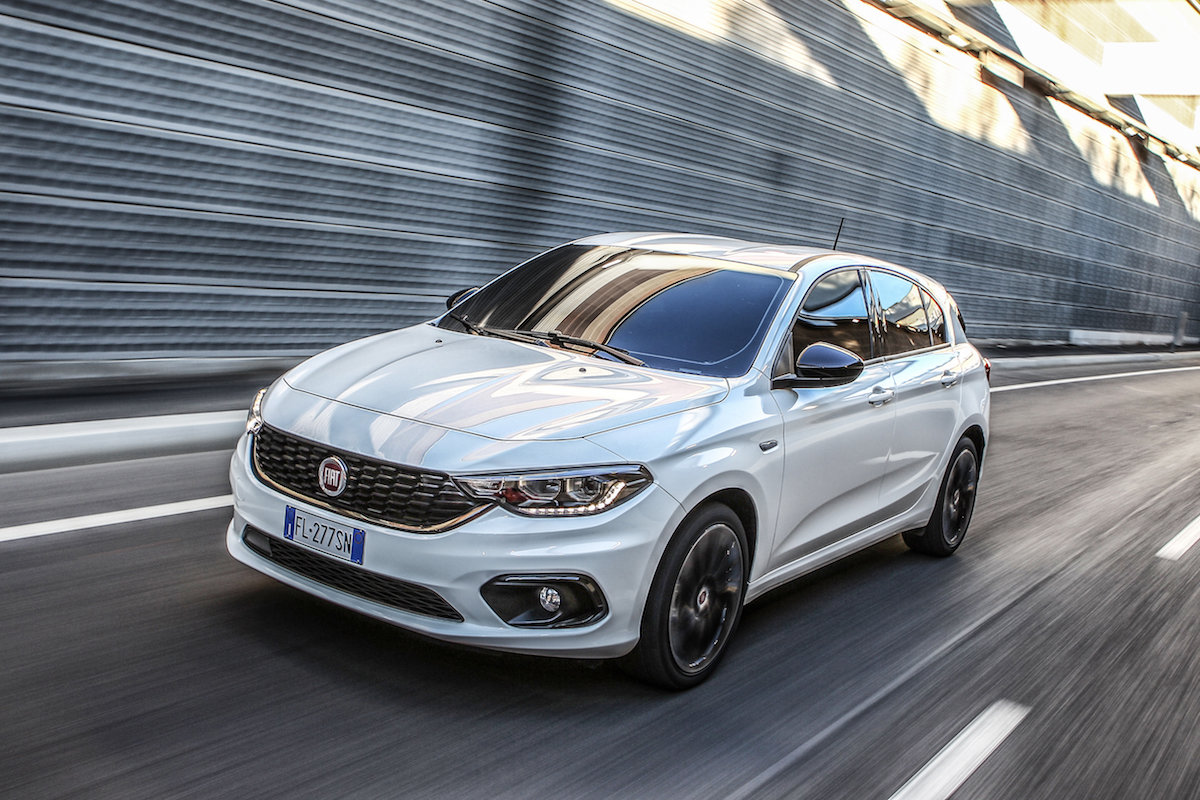
Considered in isolation, the Fiat Tipo isn’t a dreadful car. It’s practical and has some usefully efficient engines. When you take it out of isolation, however, it’s not a class-leader in either of these areas. What's more, it lags further behind the competition when it comes to its road manners, design, build quality, technology, and pretty much everything else.
All in all, it’s safe to say that in a crowded part of the used car market, which is packed with accomplished and desirable cars of the same vintage, there are a number of better alternatives to the Tipo. Having said that, the Tipo does have one more thing going for it. It was very cheap as a new car, and now it's only available as a used car, it has an even bigger price advantage over its rivals. So, if you only want basic transport for as little cash as possible, you could do worse.
What is the Fiat Tipo?
The Fiat Tipo came along at a time when Italian brand Fiat was trying to makes advances in the market by leveraging its heritage, and was busy dusting down some old model names and repurposing them for the modern era. The 500 is a classic case in point, with the reborn car becoming hugely popular all over again.
The Tipo was another attempt, a name from the 80s that returned in 2016, and Fiat hoped would inject some cheerful nostalgia into its otherwise rather humdrum hatchback offering. It certainly needed something, as the new car was taking on hugely successful family cars such as the Ford Focus, Vauxhall Astra, Volkswagen Golf, Hyundai i30, Kia Ceed, Renault Megane, Seat Leon, Peugeot 308 and Skoda Octavia. As that list shows, the Tipo has some strong competition.
As well as trading on nostalgia, the Fiat met the challenge by offering the Tipo as a low-cost alternative to those rivals. The purchase price when new was substantially lower than those of most of competitor models. What's more, that gap has widened even further now that the Tipo has gone off sale as a new car and is only available as a used car: it had catastrophically poor residual values when new, making it even cheaper on the used market. Running costs are also relatively low, making the Tipo a tempting used-car proposition for buyers for whom financial considerations are paramount.
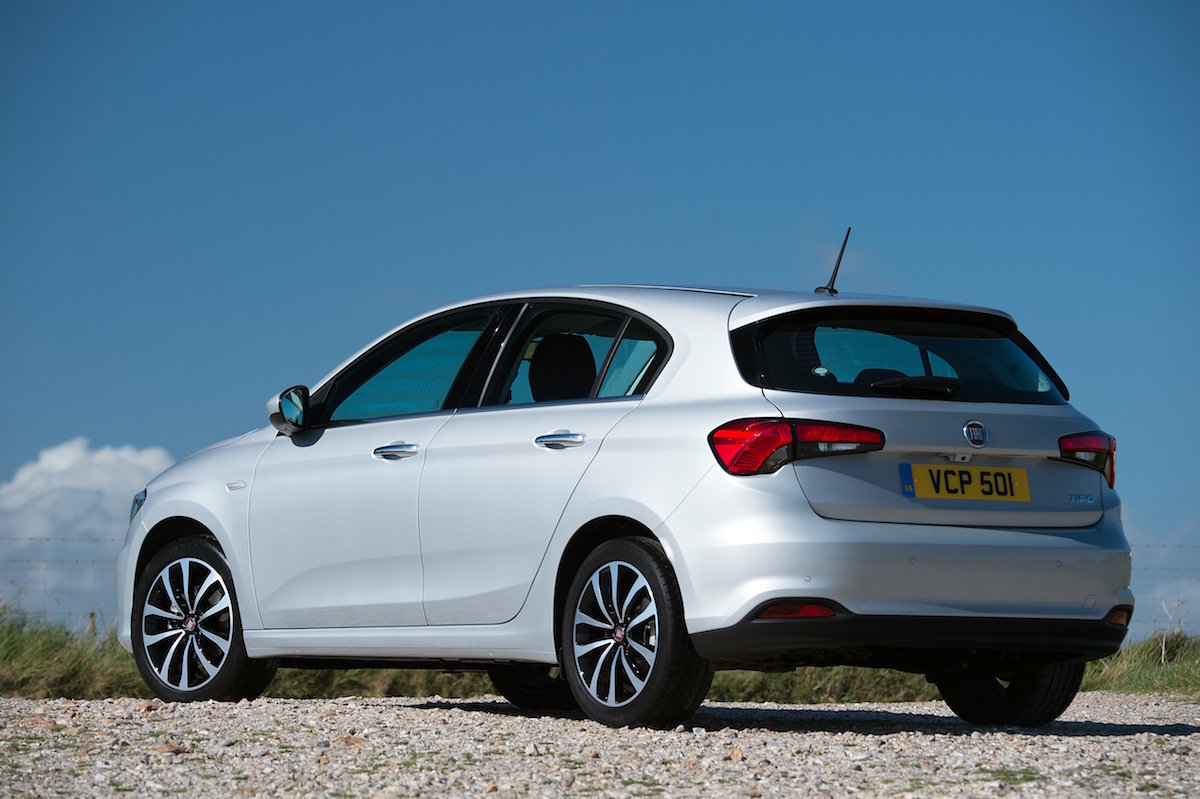
The design of the Tipo is one area where it looks as if costs have been trimmed. That’s not to say that the model looks cheap – it doesn’t – but there’s a distinct lack of innovation or, dare we say, creativity in a car from a company that has a good track record in this department. There’s no sense of flair about the Tipo, and the overall effect is of a slightly bland, rather anonymous car.
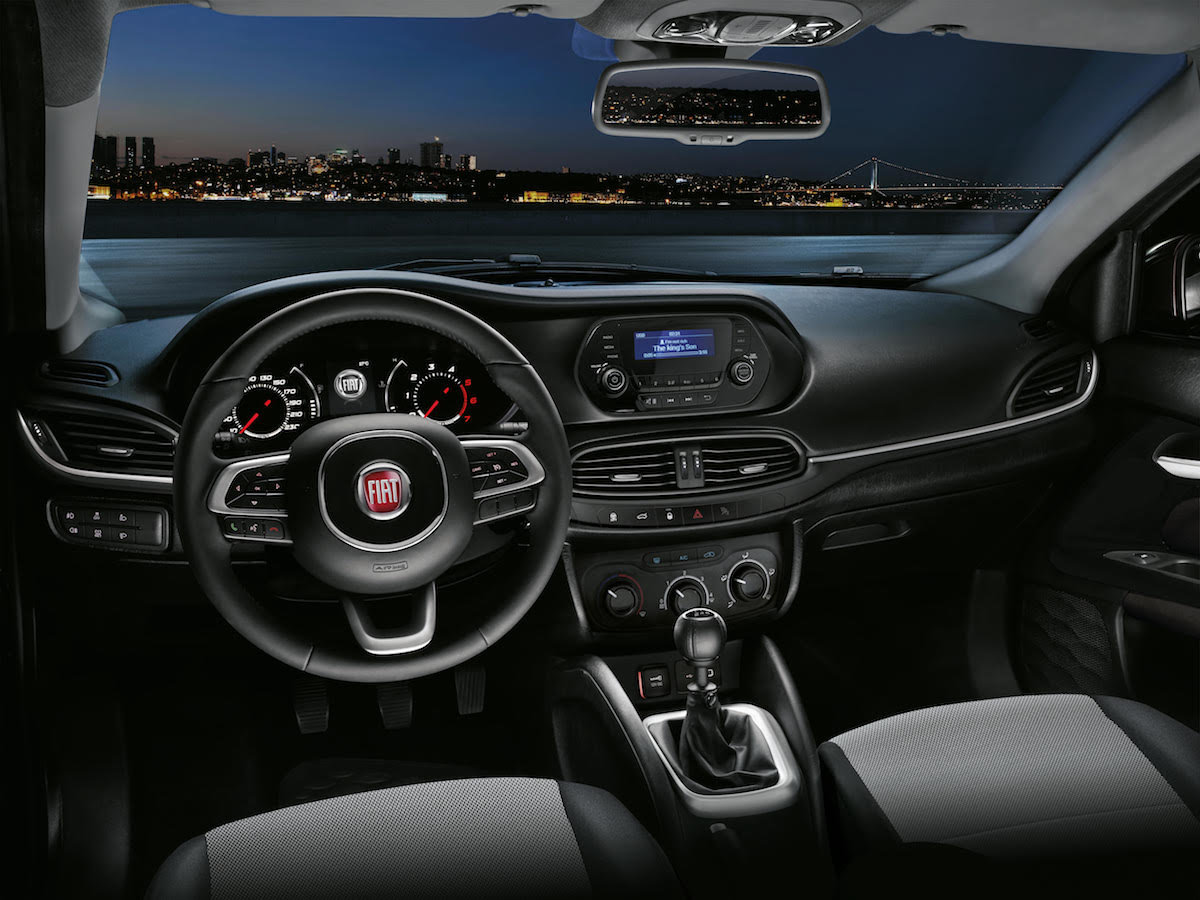
The interior is similarly unremarkable, and most of the materials are unimpressive. The plastics are hard and, while this might be a boon for their durability, every single one of the rivals we’ve mentioned above has a cabin trimmed with higher-quality materials.
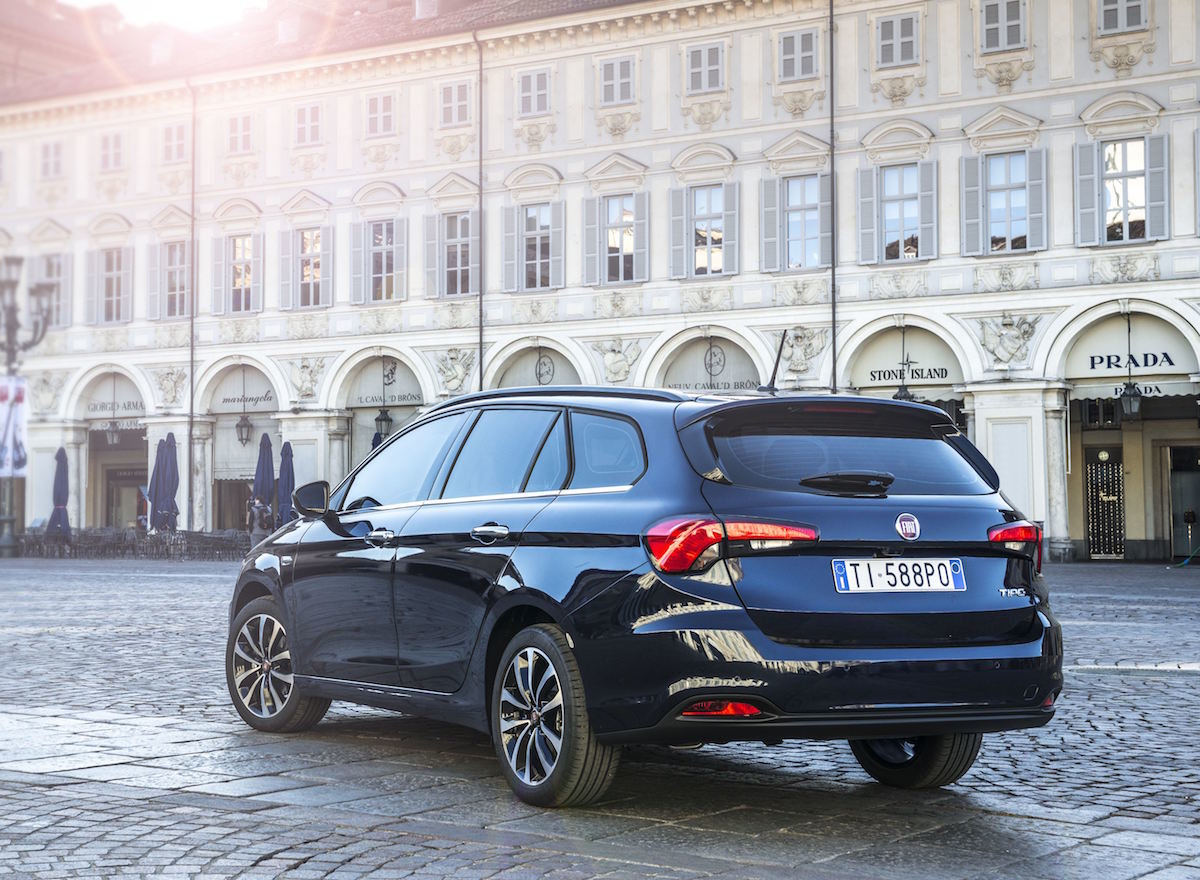
One of the Tipo’s biggest plus points is its practicality, with lots of passenger- and boot space in the hatchback, and there's also an even more family-friendly estate version, known as the Tipo Station Wagon.

How practical is it?
The Tipo is not a bad car as such, but it’s one that’s fundamentally underwhelming in many areas. One exception to that is its interior space. Okay, so it’s not as cavernous as the likes of the Skoda Octavia, but rear-seat passengers get quite a bit more legroom than they do in a lot of rival family hatchbacks. Headroom is less generous, but it’s still very competitive in the class.
Where the Tipo really scores is its boot space, with the hatchback offering an impressive 440 litres, comfortably more than a Ford Focus and Volkswagen Golf of the day, although again, not as massive as that in a Skoda Octavia. For those buying second hand, the Tipo Station Wagon’s boot is not as impressive compared to those of its peers, but at 550 litres, it still provides a useful step up in space, and arguably plays to the main strength of the Tipo.
What's it like to drive?
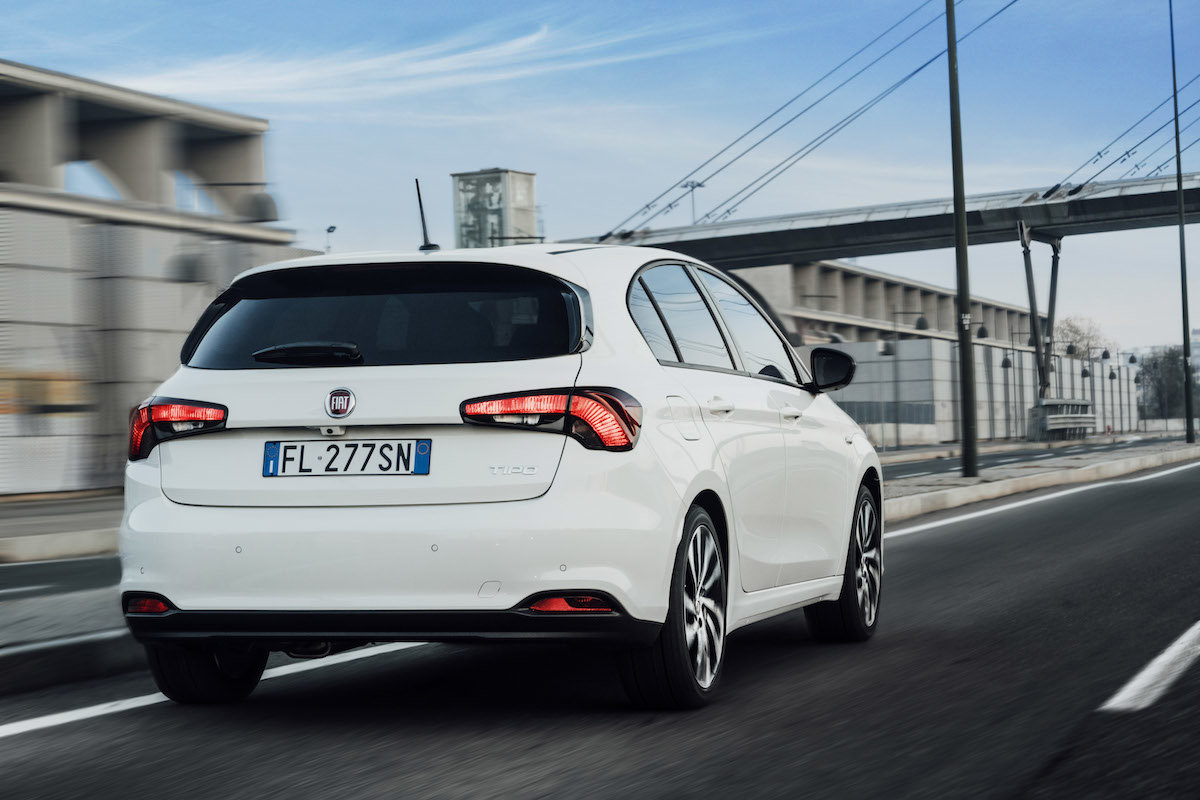
Driving the Tipo returns us to the realm of disappointment. Again, it’s not terrible, but it is markedly less able than the Focus, Golf or Leon, to name just three. While there’s plenty of grip, the handling is something of a mixed bag, with more body roll than one would expect and a feeling that the car could be considerably more polished all round. The ride quality is similarly compromised. On smooth surfaces, it's perfectly fine, but British roads tend to be far from smooth, so the Tipo frequently feels unsettled.
The latest examples came with only two engine choices, a 99bhp 1.0-litre petrol with a five-speed manual gearbox or a 1.5-litre 128bhp mild hybrid petrol with a seven-speed DCT automatic. Neither are exactly firecrackers, although the mild hybrid version does feel noticeably perkier: it improves the Tipo’s 0-62mph time from a leisurely 11.8 seconds to a borderline-sprightly 9.0 seconds. Despite its extra performance, the fuel economy actually improves marginally with this engine, too, so we’d say it’s the one to go for if you’re buying considering a late-run example.
For those buying an older used car, there’s a wider selection of petrol and diesel engines, but it’s a similarly mixed bag. The old 1.6 diesel, for instance, pulls well and offers impressive fuel economy (a figure of 76.3mpg was claimed when it was launched) but it sounds distinctly gruff when you’re accelerating, and even at a cruise it’s not as quiet as some rivals. The 94bhp 1.4 petrol is a bit gutless, meanwhile, but the 118bhp turbocharged T-Jet version is a good bit perkier.
Corners appear to have been cut in other aspects of the Tipo’s development, too, with notably more wind- and road noise than you’d find elsewhere. Are any of these issues a deal-breaker? Not if you’re simply looking for basic transport, but they’re something to bear in mind.
Technology, equipment and infotainment
The Tipo was only initially offered with a tiny 5.0-inch display for the infotainment system, which doesn’t exactly make you feel all warm and fuzzy inside, and the relative sophistication of its rivals’ displays and systems rather put it to shame. Things improved in 2018 when a 7.0-inch touchscreen was added, but all these years down the line, it once again feels rather small and dated by modern-day standards, and also lags behind the best contemporary systems. The displays offered by other manufacturers not only tend to be larger, but also crisper and more responsive.
Second hand equipment levels are broadly similar. The Tipo originally went on sale with three trim levels – Easy, Easy Plus and Lounge – and offered air conditioning, front electric windows, remote central locking, six airbags, DAB radio, split rear seats, USB and Bluetooth connectivity with steering wheel remote controls as standard on all versions (the Station Wagon also had rear electric windows and roof bars). Easy Plus had extra equipment such as rear parking sensors and cruise control, while the Lounge trim gets satnav, larger wheels, rear camera, and automatic lights and wipers.
During the course of its long life, Fiat - as it so often does - played around with the trim levels offered on a regular basis, and also offered a variety of special editions. All told, we're aware of 16 separate trim levels and editions, with wired and wonderful (not to mention often-nonsensical) names including Mirror, S-Design, Street, Sport and City Sport.

Fiat Tipo running costs
Looking back over its lifetime, the Tipo had no less than seven different engine options, five petrol units and a pair of diesels.
If you're choosing between the two engine options offered right at the end of the Tipo's lifespan, then there isn't really that much to separate them in terms of fuel economy. Exact figures will depend on the trim level, but if you take the Tipo Cross as an example, the 1.0-litre unit returns 50.4mpg, while the 1.5-litre mild hybrid ekes that out to 54.3mpg, according to the official figures (low 40s are more realistic in real-world driving).
Things get more complicated if you’re buying an older Tipo, where there are a number other engines to consider. The entry-level 1.4-litre 95bhp petrol was rated at 49.6mpg, under the old NEDC testing system, so real-world returns may well dip into the late-30s. The more powerful and more flexible 1.4-litre T-Jet turbocharged petrol engine develops 118bhp and has a fuel economy figure of 47.1mpg, which again will return a lower figure when used for daily driving. Mated to an automatic gearbox, the 1.6-litre E-torQ petrol engine has lower performance than the 1.4 T-Jet (0-62mph takes 11.5 seconds) and returns 44.8mpg, so you’d really have to want an auto' to choose this variant.
The lower-powered of the two diesel engines is 1.3-litre MultiJet II 95bhp unit, which is fitted with a Start & Stop system to make it even more efficient, so it returns an impressive 76.3mpg (on paper, anyway).
The more powerful diesel is the 1.6 MultiJet II 118bhp unit, which could be had with a six-speed manual gearbox or a DDCT six-speed dual-clutch automatic transmission. Despite generating more power and performance than the 1.3 engine, the official combined cycle fuel consumption figure was the same 76.3mpg.
The CO2 emissions that help determine how much Vehicle Excise Duty (car tax) is due, range from 98g/km and 99g/km for the diesels, which makes cars registered before April 2017 free from tax, but newer cars will cost £190. For the petrols, emissions of 132-147g/km means costs of up to £180 for older cars.
Insurance is cheap for some of the more basic Tipos that fall into group 6, but some of the better-equipped cars are in group 16, so it’s worth checking out which group the car you’re interested is in.
Fiat Tipo reliability
All new Fiats in the UK are covered by a two-year manufacturer warranty, followed by a third-year of retailer-supplied cover. That's not unusually stingy, but some manufacturers, however, provide a lot more warranty cover. The Hyundai i30, for instance, has a five-year package, while the Kia Ceed has a seven-year/100,000-mile warranty. Regardless, Fiat rather short-term cover will mean that it will have expired on all but the very youngest examples of the Tipo.
It's also fair to say that Fiat doesn't exactly have a stellar reputation when it comes to reliability, and although things in the past few years haven't been as dire as they once were, the Italian brand still doesn't exactly ride high in the various reliability surveys doing the rounds. For example, in the 2024 What Car? Reliability Survey placed Fiat 25th in the manufacturer standings, out of 31 carmakers included. The Tipo wasn't involved in that result, mind.
There are a few reported issues with the Tipo. Diesel particulate filters (DPF) in diesel cars can clog, although this is a common experience of most contemporary diesels that are primarily used for urban driving. However, another reported DPF issue is that it can shut off part-way through regeneration. This can contaminate the oil system with fuel, leading to the oil level rising gradually over time and damaging the engine. Have any used car you’re thinking of buying inspected, if you have concerns.
There have been two recalls for the Tipo, both relating to airbag issues. The first, in 2017, relates to cars built between October 2015 and July 2016 and tackles cables of the driver’s airbag rubbing against the steering wheel cable clamp, which can cause wear that could result in a short circuit and unintentional deployment of the driver’s airbag. Another recall, in May 2017, addresses concerns about an incorrect mixture ratio of the airbag ignition chemicals, which, in the event of an accident, could prevent deployment of the airbags.
- Alongside the standard Tipo hatchback, there’s a model called the Tipo Cross. This gets pseudo-SUV styling, with roof bars and chunky black mouldings around the wheel arches. However, there’s no four-wheel drive option and no real benefits to practicality. It also cost several thousand pounds more when new.
- The Tipo didn’t do well when it was first crash tested by Euro NCAP, only achieving a three-star score. This isn’t good: most cars of that era achieved four- or five stars, so three is very much a below-par result. It was tested a second time and awarded four stars, thanks to the optional Safety Pack, which includes the kind of active safety technology often fitted as standard to rivals, if only on higher trim levels, such as autonomous emergency braking. If safety is a priority, and you’re buying used, check to see if the car had this optional pack added by the original purchaser.
- The Station Wagon (estate) variant cost £1,000 more than the equivalent hatchback version from new, later increasing to £1,500, but the price difference in used vehicles will be less than that. In addition to its greater boot capacity, the Station Wagon also has extra practicality in other ways, with the ability to carry loads of up to 1.8m in length, after folding the 60/40 split rear seats. The Station Wagon’s boot is also easier to load than the hatchback, as it doesn’t have the latter’s awkward lip. It’s arguably the better model to go for.
- If you want to spend as little money as possible: There's plenty to recommend the Tipo. It was very cheap as a new car, and the dreadful residual values it suffered when new mean it's even cheaper as a used car. Compared with rivals of a similar age, mileage and spec, you'll likely pay a good bit less for the Tipo.
- If you want ultimate practicality: This is probably the Tipo's strongest area, but it still can't match the excellent Skoda Octavia on that score, thanks to the Czech offering's huge passenger space and enormous boot. It's also better to drive than the Fiat, and will still be affordable on the used car market.
- If you want the most enjoyable car to drive: If you're looking at a used car of a similar vintage to the Tipo, and you want something that's enjoyable to drive, then you want the Ford Focus. The handling is fabulous, but yet the ride is still comfortable.
- If you want the best all-rounder: Family hatchbacks of this era don't come any better than the Volkswagen Golf. It's comfortable, refined and engaging to drive, practical enough for a small family, and it has cabin quality that feels like a cut-above in the class.


