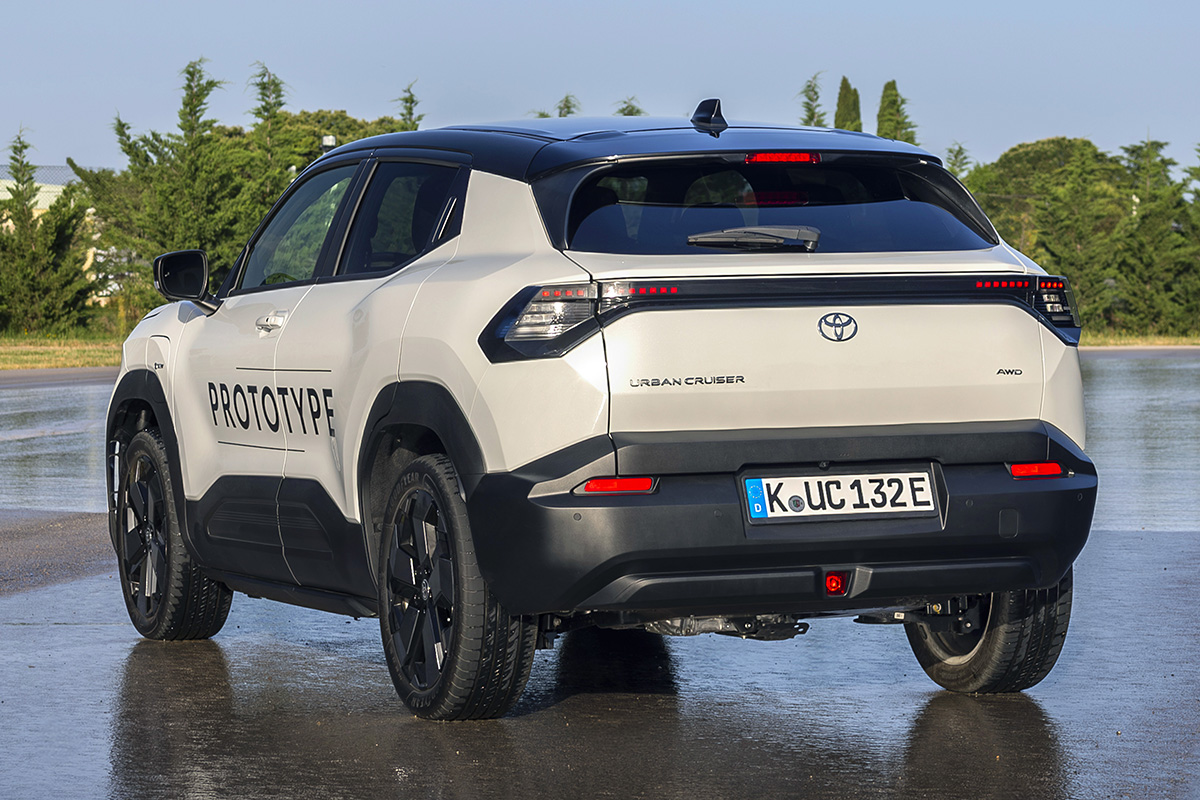
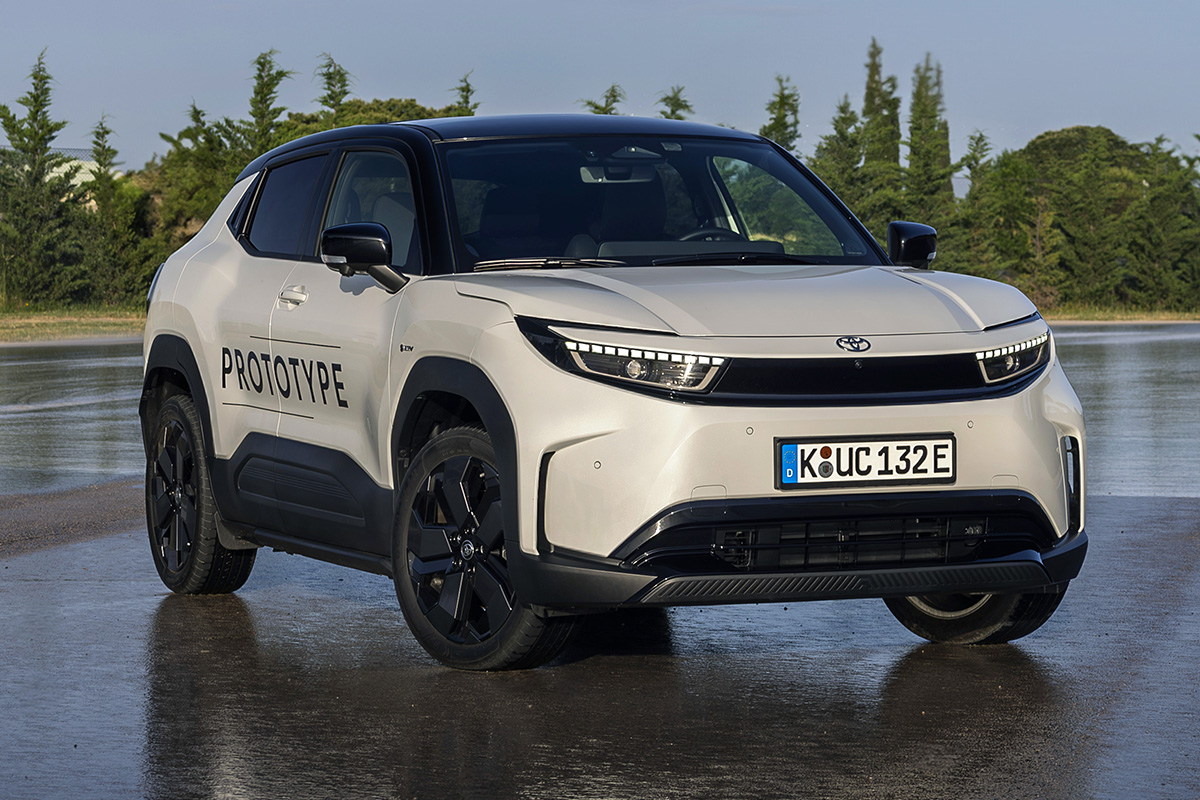
The new Toyota Urban Cruiser is a compact electric SUV that aims to offer family-friendly levels of space and versatility, along with the famously cast-iron reliability and lengthy warranty package you’ll get with other Toyota models like the Corolla and RAV4. All this in a package whose dimensions make it much more at home in town than the larger Toyota bZ4X, the company’s other electric offering.
Pros:
- Comfortable ride
- Long warranty
- Clever sliding rear seats
Cons:
- Slow charging speeds
- Very small boot
- Disappointing range
2025 Toyota Urban Cruiser Review:
- What is the Toyota Urban Cruiser?
- How practical is it?
- What’s it like to drive?
- Technology, equipment & infotainment
- Three Things to Know
- Which One to Buy
- Toyota Urban Cruiser running costs
- Toyota Urban Cruiser reliability
- CarGurus Verdict

What is the Toyota Urban Cruiser?
Toyota’s first foray into electric cars, the bZ4X, was perhaps not quite as successful as the Japanese marque would have liked. Now it’s back with a second try: the 2025 Toyota Urban Cruiser. It’s still a crossover, although as its name suggests, its dimensions are much more town-friendly, and it’s been developed jointly with small car specialist Suzuki. And Toyota will be hoping that that will make the Urban Cruiser a bigger hit.
The idea is that this is a compact SUV, a bit like the Toyota C-HR, but an all-electric one that can take on models that are slightly larger – like the Kia EV3 – as well as those that are slightly smaller, including the Citroen e-C3 Aircross. Other models it has in mind include the Ford Puma Gen-E, the Peugeot 2008, the Renault 4, the Vauxhall Frontera, and the forthcoming trio of baby SUVs from Skoda, Cupra and Volkswagen.
Toyota hopes that a range of features that add flexibility – such as the sliding rear seats – will help the Urban Cruiser to appeal to family buyers in need of a compact, but still practical, SUV.
How practical is it?
Practicality rating: 3 out of 5
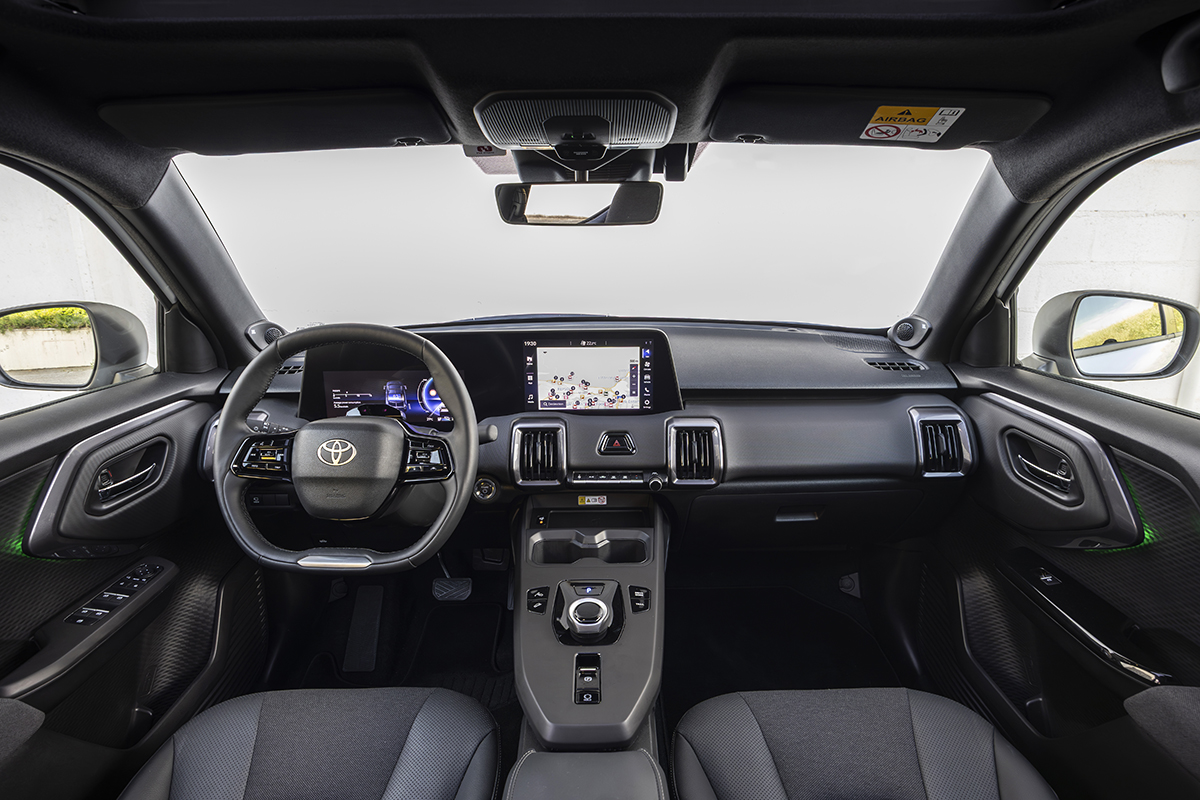
Climb aboard the all-new Urban Cruiser, and it feels relatively roomy for what is, in fact, a rather small car. There’s lots of glass, which makes the interior feel airy; there’s plenty of space in the front, an easily adjustable driving position, and lots of cubbies for your odds and ends.
Also impressive is the way Toyota has clearly angled the A-pillars – the slivers of metal between the windscreen and the front windows – into a more upright position. This means they’re less likely to block your view at roundabouts.
The dashboard features an array of different materials; a few feel a bit low-rent, but in the main, quality is acceptable, and there are some interesting textures to take your eye away from the cheaper plastics.
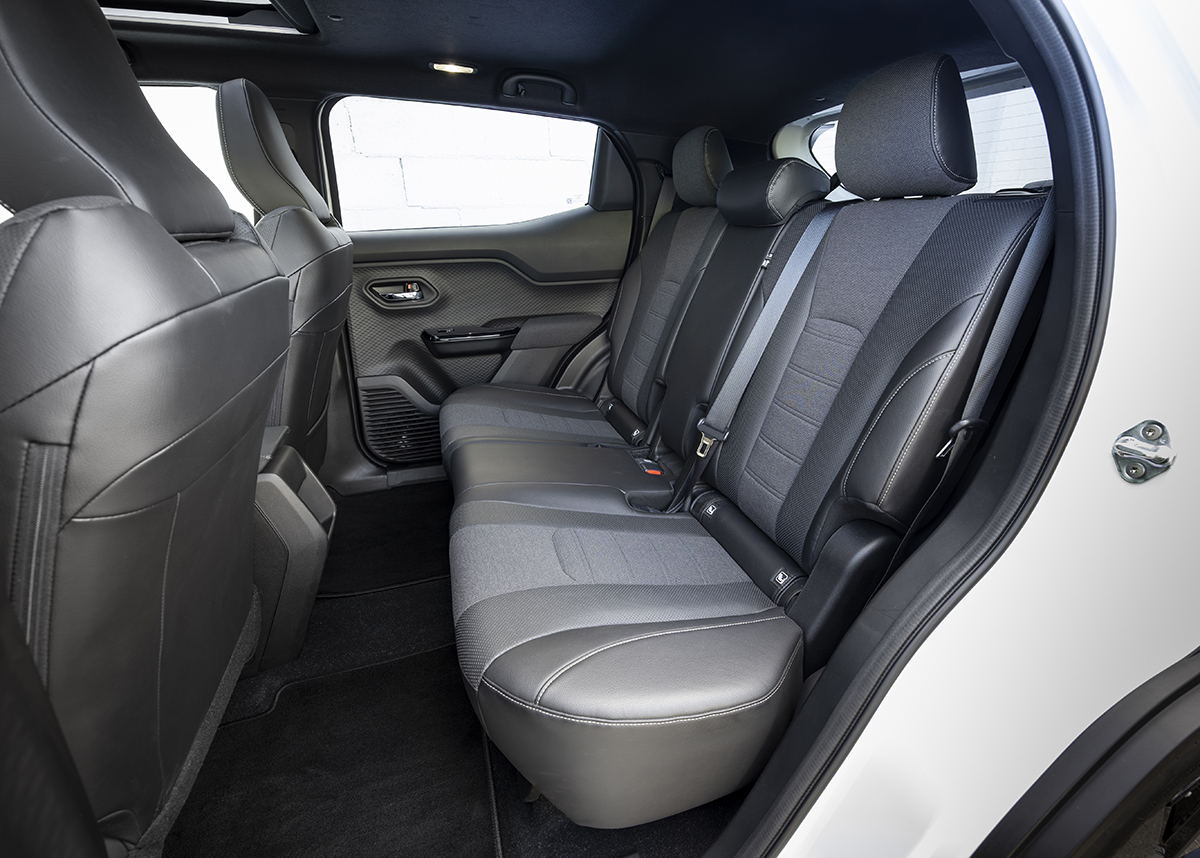
But the story gets less compelling the further back you go. The back seats, for one thing, offer plenty of leg room, but feel quite tight laterally. Sit in either of the outer two positions, and you feel as though your head is quite close to the cant rail (the section of roof that runs along the tops of the doors).
Your arm also feels slightly hemmed in by the door, though helpfully, Toyota’s engineers have carved out a space for your elbow so that it doesn’t bash into the door panel.
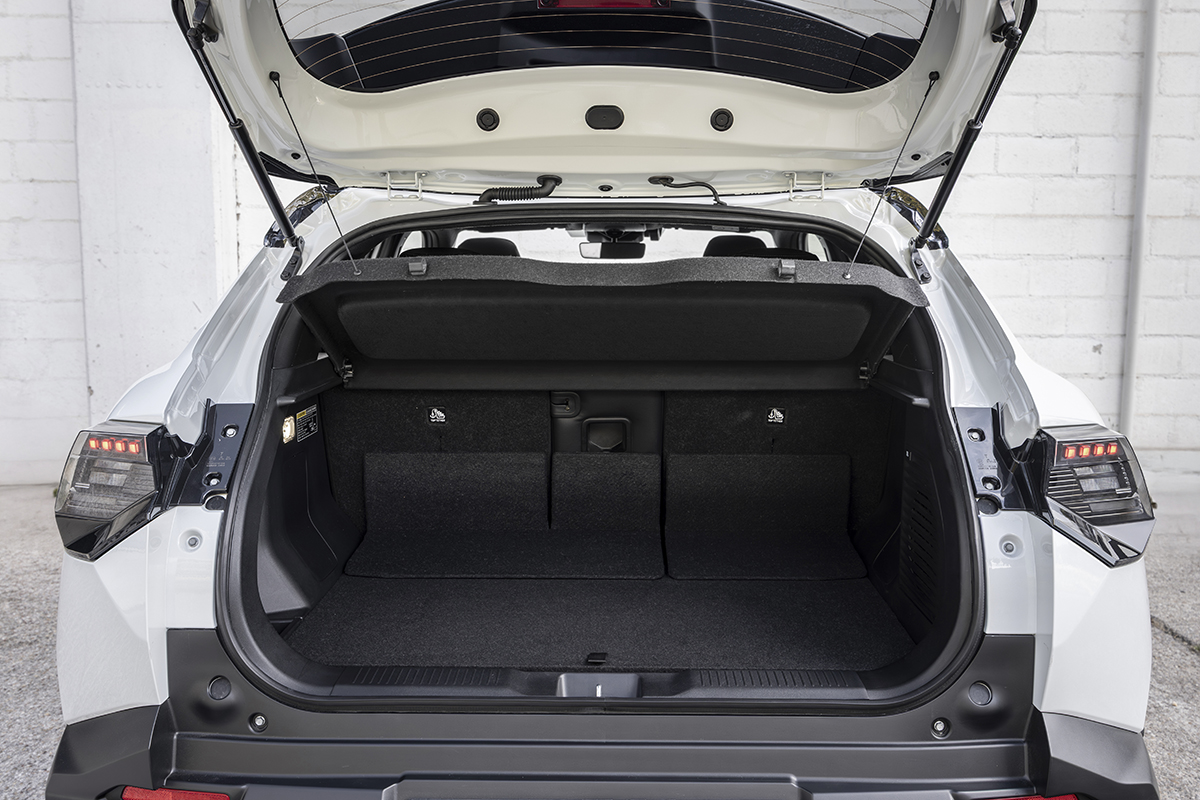
It’s the boot that gives the greatest cause for concern, though. On the face of it, the sliding rear seats are a great feature, especially given that Toyota’s incorporated clever sliding panels that extend the boot floor when they’re moved forward.
The trouble is, even in the forward-most position, where rear legroom is compromised, the boot still only offers 306 litres of space. With the seats further back, to allow room for passengers, a measly 238 litres of boot space is all that’s on offer. That’s actually less than you’ll get in the smaller Toyota Yaris Cross. In fact, it’s less than you’ll find in a Kia Picanto, a car that’s at least two sizes smaller.
What’s it like to drive?
Driving rating: 3 out of 5
There are two battery options on offer in the Urban Cruiser, and the smaller of the two is clearly targeted at more affordable battery electric cars like the Citroen e-C3 Aircross. A 49kWh gross capacity results in an official range of 213 miles, which will equate to around 160 miles in the real world.
If you want to travel further afield, then, you’re best off choosing the 61kWh battery pack instead; this manages a 265-mile official driving range (enough for a real-world range of around 200 miles). Trouble is, this is still a little way off the sort of specs you’d be getting in a Kia EV3, which in Standard Range form can achieve a 270-mile official range, despite having just 58kWh in capacity.
These slightly disappointing battery sizes might not pose so much of a problem if the Urban Cruiser could charge up quickly. Trouble is, that’s not the case: far from it, in fact. At just 67kW, the Urban Cruiser’s charging speeds are barely any quicker than those of a Renault Zoe you’d have bought 10 years ago. Even the much cheaper Citroen e-C3 Aircross can charge up much faster.
The result is that a 10 to 80 per cent top-up in the larger-battery car takes a yawn-inducing 45 minutes, and in that time, you’ll gain around 160 miles of range. By contrast, an EV3 will take around 30 minutes to add the same amount of charge, allowing you to be away up the road and arriving at your destination 15 minutes earlier.
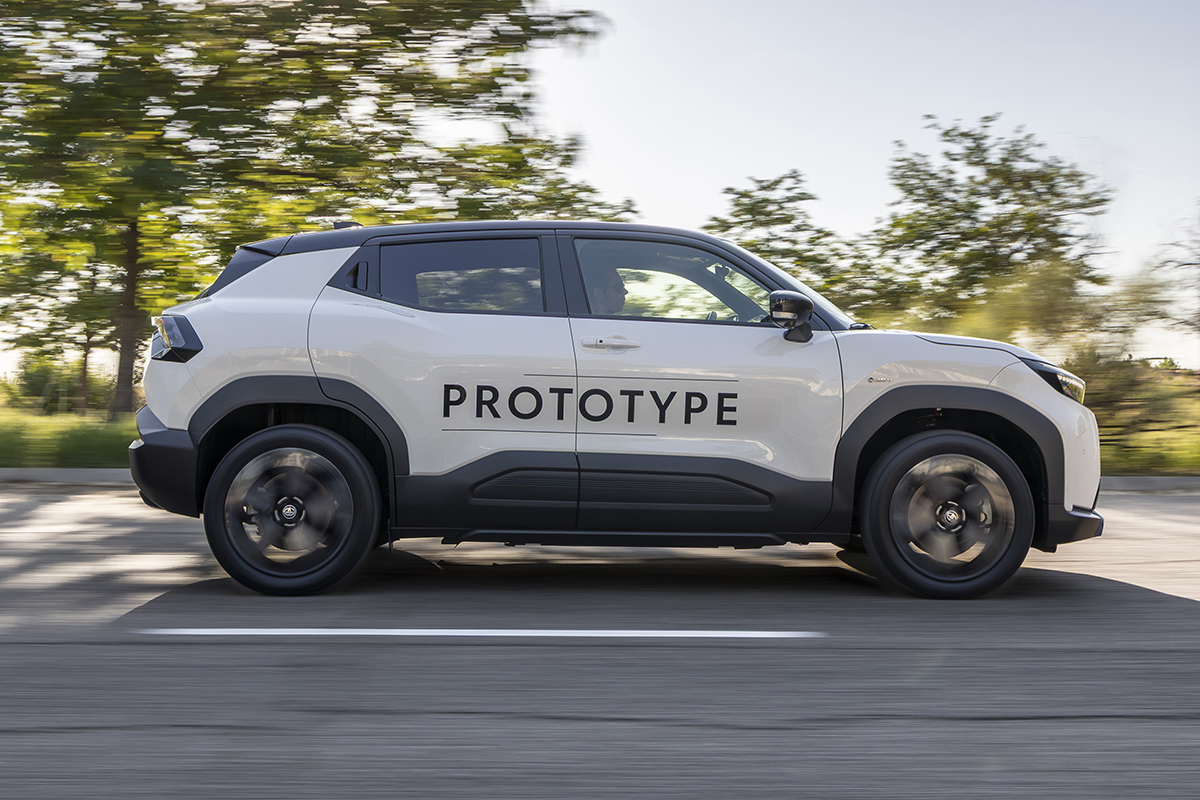
At least when you do finally get on your way, the Urban Cruiser will be a fairly pleasant thing to be in. It isn’t the last word in driver involvement – the steering is too light and remote for that – so if you’re after a small family EV that can also excite you, well, look away now.
But then again, most people buying cars like this don’t really care about that sort of thing. What they do care about, by contrast, is comfort, and that’s where the Urban Cruiser does well.
The ride is smooth over all but the worst bumps around town, which is more than can be said for many a small SUV of this size. On the motorway, too, the Urban Cruiser belies its size, with a sense of stability and sure-footedness that’s up there with the best.
Where it’s so impressive is that it manages to be smooth, without being soft and wallowy; body control is great, and that means you can enjoy a relaxing drive without the sort of bouncy, spongy feel that has your passengers in the back feeling queasy. Pedal calibration is good, too, with intuitive brake and accelerator pedals that don’t feel too sharp or too sudden.
The smaller battery model comes with a 142bhp motor, but if you upgrade to the bigger battery, you get 30bhp more; as a result, it feels a good deal more sprightly, which is reflected in the acceleration figures. The 49kWh car hits 62mph from a standstill in 9.6 seconds, while the 61kWh model can do it in 8.7. Not particularly fast, then, but probably fast enough.
Technology, equipment & infotainment
Technology, equipment and infotainment rating: 3 out of 5
You get a choice of three models in the Urban Cruiser line-up. The entry-level Icon gets wireless Apple Carplay and Android Auto, ambient lighting, a heat pump and a rear-view camera, but otherwise feels a little sparsely equipped. You have to upgrade to the Design to get heated door mirrors (which also fold) and heated front seats; you also get a heated steering wheel.
The range-topping Excel model adds a fair chunk of extra kit, however; larger alloy wheels, a JBL sound system, a panoramic sunroof, 360-degree cameras, two-tone paintwork, adaptive LED headlights and a wireless phone charger all come as standard here.
The touchscreen display measures 10.1 inches, which is smaller than some rivals’ but still plenty big enough. Where it comes unstuck is in the software that it uses, which can occasionally feel rather unrefined and slow to respond. Certain menu options aren’t immediately self-explanatory, and sometimes you find yourself wading into menu after menu to try and find something you want to switch off.
That can certainly be said of the driver aids, which require an excursion into a menu to deactivate if you find them too overbearing, which you probably will. It’s also true of the climate control; while Toyota has kept a few physical shortcuts in a row of switches between the air vents, some of the functions – for example, the heated seats – can only be activated by finding your way into the climate control menu. Which can be irksome.
Three Things to Know
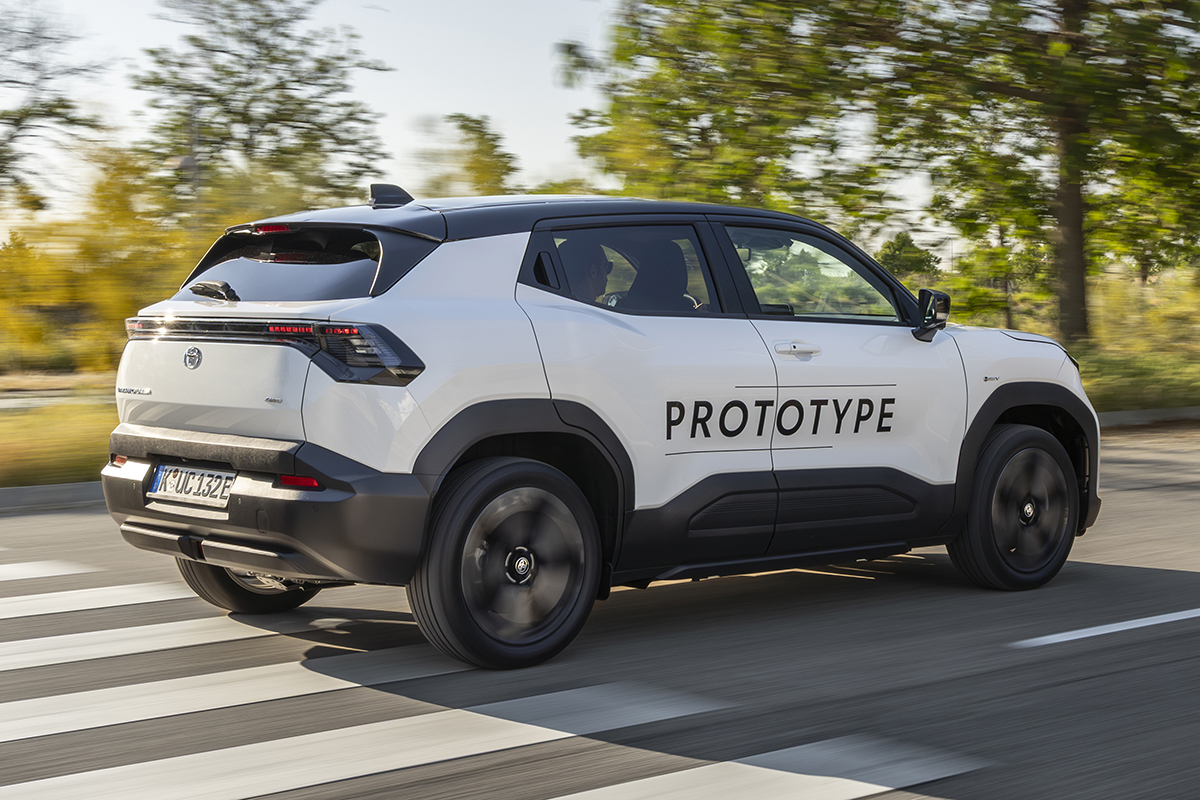
- We mentioned earlier that Toyota developed the Urban Cruiser in conjunction with Suzuki, and indeed, there’s a Suzuki-badged version of the Urban Cruiser called the e-Vitara. Which to choose will depend on pricing, when it’s released. Both come with an impressive 10-year warranty, provided the car is serviced within the respective main dealer network.
- If all-wheel-drive (AWD) is a must, you might want to have a look at the e-Vitara. That’s because it’ll be offered with AWD as an option in the UK. While the front-wheel-drive (FWD) Toyota Urban Cruiser is also available with AWD abroad, that won’t be the case here, leaving the e-Vitara as one of the only small EVs to come with the option of having all four wheels driven.
- The Urban Cruiser uses lithium iron phosphate (LFP) batteries as opposed to nickel-manganese-cobalt (NMC). The advantage of LFP batteries is that they’re cheaper, more robust, and less likely to combust in a crash; the downside is that they’re less energy dense, which means you get less range for the same amount of capacity. Which might be one reason why the Urban Cruiser falls short of its rivals on range.
Which One to Buy
- For an affordable all-electric urban runaround: keep it simple, and keep the price as low as possible with the Icon model and the 49kWh powertrain. This’ll get you a car that’s quite at home on short- and medium-range trips, yet still with the impressive reliability you’d expect from a Toyota.
- If you want the one with all the toys: go for the Excel model. You get the big, 61kWh battery as standard, and of course it comes replete with all the trimmings.
- If you want the best all-rounder: choose the 61kWh battery, a must-have for longer journeys, but stick with the Design model. It gets most of what you need, including the heated seats and steering wheel that are key to helping maximise your range in cold weather.
- If you want four-wheel-drive traction in winter: forget the Urban Cruiser, and choose the Suzuki e-Vitara instead. It’s the same car, but it’ll be available with four-wheel drive here in the UK, which the Toyota won’t be.
Toyota Urban Cruiser running costs
Running costs rating: 3 out of 5
Prices for the Urban Cruiser haven’t yet been announced, but we’re expecting it to start at just under £30,000 for the small-battery model. That’s quite a lot when you consider you can get a Citroen e-C3 Aircross – which charges faster and has a much bigger boot – for around £7,000 less.
This is a reasonably efficient little car, though, and should get around four miles per kilowatt hour (mi/kWh) on average in big-battery form. That’s still not as efficient as the Kia EV3, but it’s decent enough. The smaller-battery model will better this slightly as a result of its lower weight.
Having a 7kW home wallbox charger installed will give you the best balance between charging costs and charging time. With the 49kWh battery, a full charge on such a connection will take around seven hours and cost around £14, while with the 61kWh item, you're looking at more like nine hours and £17. That's assuming that your domestic electricity is billed at the UK's national average rate, though. Do the smart thing and get yourself on a variable tariff that allows you to charge your car overnight on heavily discounted off-peak electricity, and you can trim about two thirds off those costs, making your motoring even cheaper.
Doing your charging at public DC rapid chargers will be much quicker, but will also be much more expensive. Remember those original cost figures we quoted? Treble them, and you'll probably be about right. That means such chargers should only be used in emergencies, The car's poor charging speeds mean that such charges won't even be that quick compared with most other EVs.
While no details of the Urban Cruiser’s service schedule have yet been released, it might be worth bearing in mind that the bigger bZ4X requires servicing every year or 10,000 miles, and you’ll want to stick to this in later years, because each service grants you an additional year’s extended warranty.
This means you'll probably need to service the Urban Cruiser twice as frequently as most EVs, which usually only need to be seen by a dealer every other year.
Toyota Urban Cruiser reliability
The Urban Cruiser is too new for us to have any hard-and-fast reliability data just yet. However, this is a Toyota, the brand with pretty much the best reliability record in the world, so the chances are it’s going to be one of the most dependable electric cars on the market.
Even if it turns out not to be, you’ll have the backing of a warranty that can be extended for a year at a time, up to a maximum of 10 years or 100,000 miles, each time you get the car serviced at your main dealer.
CarGurus Verdict
Overall rating: 3 out of 5
If dependability is all that matters in your next electric vehicle, then the Urban Cruiser is worth a look. Its big selling point is the fact it comes with that warranty, not to mention Toyota’s cast-iron reliability record, behind it. That’s not all it’s got going for it, though. This is a smooth and sophisticated car to drive, which isn’t always the case in its class, and it packs in a decent amount of space for passengers.
However, there are some significant downsides with the Urban Cruiser, too, namely its achingly slow charging speeds and its so-so range, which make it look like a lot of money for what it is. Worst of all, though, is its tiny boot, which makes it hard to recommend for its primary role: that of a family-friendly EV.


