Hard to imagine in this world of SUV ubiquity, but when the BMW X5 debuted at the Detroit Motor Show in 1999, it was something of a game-changer. Here was a large 4x4 that focused not only on luxury and comfort, but also on performance and handling. Dubbed by BMW as a Sports Activity Vehicle (rather than a Sports Utility Vehicle), the X5 used a modern monocoque chassis instead of the more traditional body on-frame construction of rivals such as the Mercedes-Benz M-Class and Range Rover.
The X5 delivered truly impressive road-holding, paired with athletic styling, strong performance and the kind of premium interior quality that BMW was renowned for, creating an offering that would quickly establish itself as one of the marque’s biggest-selling model lines. It would also help shape one of the most hotly contested and lucrative niches in the automotive landscape.
The X5 was developed shortly after BMW had acquired the Land Rover brand in the mid 1990s and the first generation featured some of the British brand’s off-road tech and design cues, but this was emphatically a vehicle designed to excel on highways rather than byways. And that is what made it so appealing to business users and families alike: the combination of a commanding driving position, with space for children, luggage and pets, but with little or no compromise in the driving experience.
With the US being such a key market for 4x4s and SUVs, it is no surprise that BMW’s Spartanburg production plant became the home of the X5. It has gone on to become the largest production plant worldwide by volume, producing the X3, X4, X5, X6 and X7 models in the years to follow.
There have been four generations of BMW X5 so far. The E53, which was produced from 1999-2006, the E70, from 2006-2013, the F15 from 2013-2018 and the most recent G05 from 2018 to 2026. There's another version around the corner, too, the G65, which was unveiled to the public in June 2026 and hit the configurator later the same year.
Little wonder, then, that there is plenty of choice on the market for prospective buyers, whatever your focus or budget, from hard-working used hauler to tech-laden new car.
BMW X5 Models Over the Years
Frequently Asked Questions
Which BMW X5 years are the best?
Later models of the third-generation F15 are dependable and look like solid value on the used market. But if you can stretch to it, the later G05 is a superb machine. It secured a five-star rating in our expert review, is great to drive and has top-notch tech and features. Reliability seems to be strong, too.
Which BMW X5 years are the worst?
The E53 is getting pretty long in the tooth nowadays, with early models being a quarter of a century old, although there is a definite whiff of ‘future classic’ about this genre-changing machine. The early years of the second model generation, the E70, had a number of recalls and a few reliability niggles, especially early in the model cycle.
Is a used BMW X5 a good deal?
In short: yes. But with plenty of the usual caveats. These are big, heavy and high-end machines so ensuring a good maintenance history is essential, whichever generation you consider, and running costs will always be a consideration. Few other rivals provide such a compelling blend of style, practicality and driving pleasure, however, and there are plenty of examples out there to suit all budgets, from frugal diesels with excellent fuel economy to high-performance monsters.
BMW X5 Pros and Cons
Pros:
- Genuinely good to drive
- High-quality and durable interiors
- User-friendly and intuitive tech
Cons:
- Not cheap to run and maintain
- Some rivals are better suited to towing and off-road use
- Slightly harsh ride on UK back roads
BMW X5 5th generation - G65 (2026-)
Bodystyles:
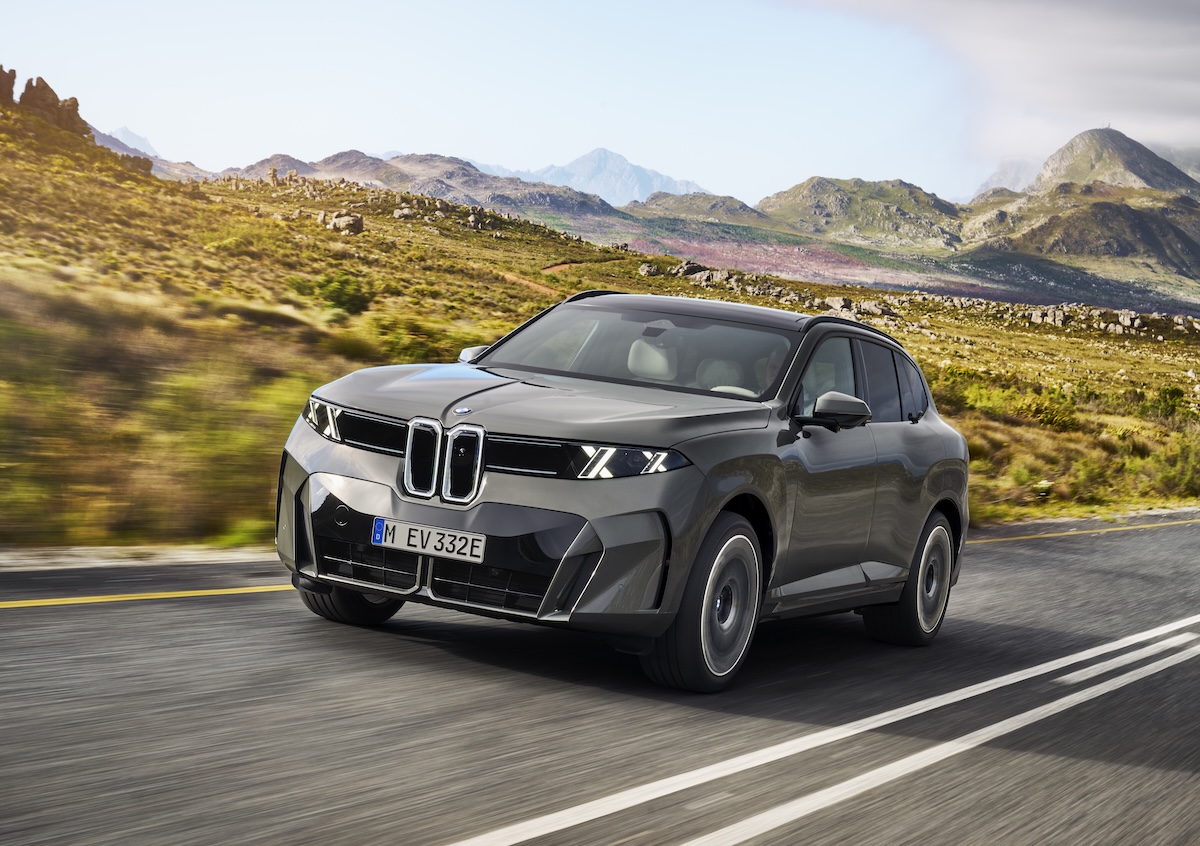
The latest iteration of the BMW X5 hasn't actually arrived yet, and as such, we haven't had the opportunity to drive it, hence we have no review to bring you just yet, although we'll remedy that situation as soon as we get the chance. But although the next X5 - known internally as the G65 - is so fresh-out-the-box that it's not technically out of any box just yet, you can still order one right now by visiting the configurator on BMW's website.
As you can see from our image, the latest X5 has the same 'Neue Klasse' design laguage as other recent BMW models including the iX3 and i3, with the 'double-X' daytime running lights being a particularly striking feature.
It's the first BMW model to be engineered to use five different sorts of powertrain globally - petrol, diesel, electic, plug-in hybrid, and hydrogen - although it's not clear which of these will end up being available in the UK. The initial offering includes a diesel, and couple of plug-in hybrids and an all-electric iX5, although additional powertrains are likely to follow afterwards.
The entry-level diesel, the X5 40d xDrive, has a 3.0-litre engine with 48-volt mild-hybrid tech and 308bhp.
The PHEVs both combine a 3.0-litre, six-cylinder petrol engine with an electric motor, and both have an electric-only range of around 60-odd miles according to WLTP figures. The power outputs are fairly potty: the X5 50e xDrive has 483bhp, while the X5 60e xDrive 603bhp
The all-electric iX5 60 xDrive has 'just' 570bhp, but the bigger news is the colossal size of its battery - 141kWh no less - for a range of up to 528 miles.
BMW X5 4th generation - G05 (2018-2026)
Bodystyles:
The BMW G05 X5 was revealed online in June 2018, although it officially debuted in November 2018. Based on BMW’s Cluster Architecture (CLAR) chassis, also found on the latest 7 Series and 5 Series, the new X5 was an inch longer than its predecessor, three inches wider and an inch lower in height. The G05 featured five-link rear suspension, adjustable air suspension and optional four-wheel steering.
In the UK, all X5s of this generation featured BMW’s xDrive all-wheel-drive system, although the US market did get rear-wheel drive versions (the sDrive40i was added in 2020). All models also came with automatic transmissions.
The engine line-up consisted of a range of petrol and diesel units. The latter included a 2.0-litre four-cylinder (codename B47) in the xDrive25d, and a 3.0-litre (B57) straight-six, with outputs ranging from 261hp in the BMW X5 xDrive30d, to 335hp in the xDrive40d, to 394hp in the M50d.
Petrol power units include a 2.0-litre in-line four, a selection of 3.0-litre straight-sixes and an array of 4.4-litre V8s. These V8s range from the potent (450bhp) to the positively mighty S63 unit in the X5 M Competition, which delivers 609bhp and 553lb ft of torque.
The eco-conscious and company car users benefited from the PHEV model - the xDrive45e - which paired a 111bhp electric motor to the B58 in-line petrol engine. It offered around 50 miles of running on battery power alone, as well as a low level of BIK tax. A number of 48v mild hybrid models were also available.
Standard equipment for the G05 included LED headlights, electronically controlled dampers, electric- and heated sports seats, and a brace of 12.3-inch BMW curved displays that house the instrument displays and the iDrive infotainment system.
As you’d expect, the options list was lavish and featured such niceties as heated- and cooled cupholders, and laser headlights. Trim level upgrades included xLine and M Sport, which increased wheel sizes to 19- and 20 inches, respectively, and offered aluminium or high-gloss exterior trim.
The fourth-generation BMW X5 featured upgraded iDrive infotainment with Apple CarPlay and Android Auto as standard, as well as BMW Assistant with voice activation.
The Life Cycle Impulse - or midlife facelift to the rest of us - version debuted in March 2023 for the 2024 model year. This featured redesigned front- and rear lights, a new-look kidney grille and bumper design, as well as new wheel designs. The PHEV BMW X5 xDrive50e drivetrain saw performance improvements and an increase in electric range. The X5 also introduced the Highway Assistant driving aid from the G70 7 Series.
BMW X5 G05 Review
Search for a BMW X5 G05 on CarGurus
BMW X5 3rd Generation - F15 (2013-2018)
Bodystyles:
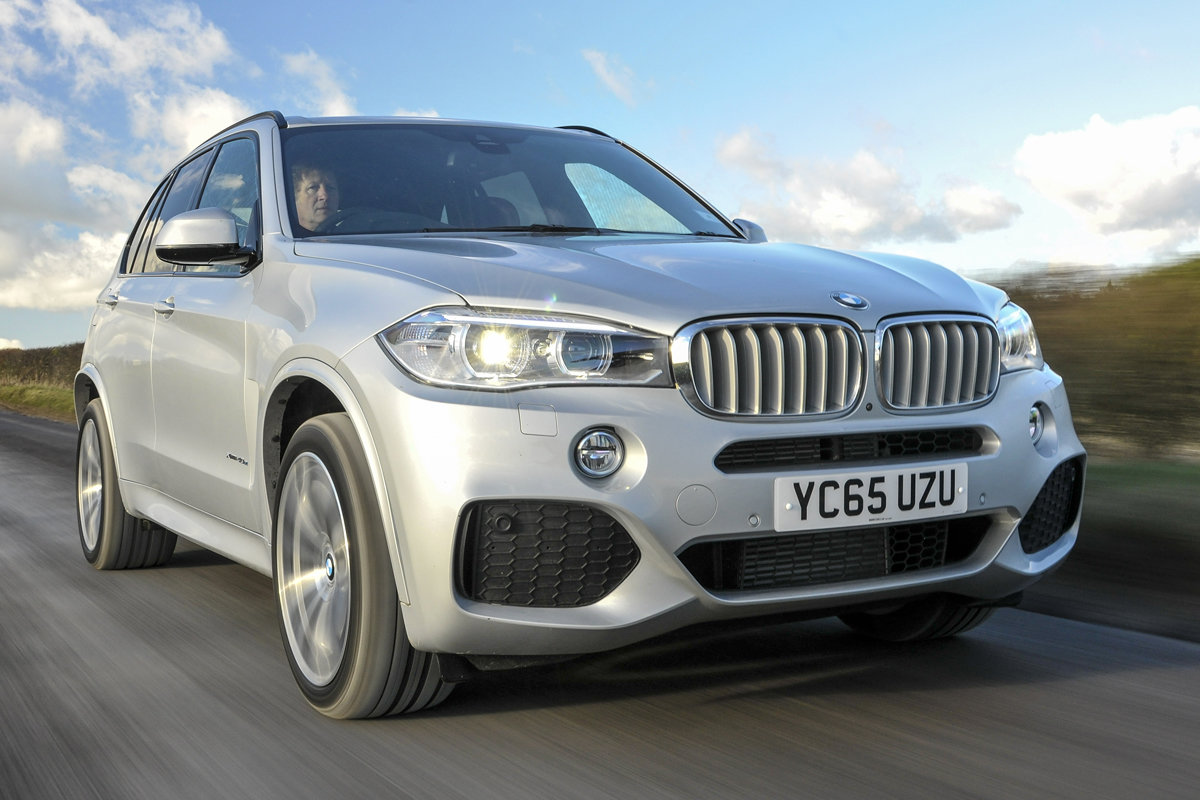
Unveiled at the Frankfurt Motor Show in 2013 and going on sale later that same year, the third generation F15 X5 shared the same chassis and wheelbase as its E70 predecessor. Overall dimensions were hardly changed with the new model being just 5mm wider, 26mm longer and 14mm lower than before.
The initial model line-up consisted of a 444bhp V8 petrol-powered xDrive50i, straight-six petrol 35i and a raft of diesel engines that ranged from a 212bhp four cylinder 2.0-litre in the xDrive25d to a 371bhp tweaking of the N57 3.0-litre straight-six in the mighty M50d. Top of the heap was the F85 designated X5 M with its 559bhp TwinPower Turbo V8 making it the most powerful all-wheel-drive BMW ever at the time. It delivered serious performance: 0-62mph in just 4.2 seconds. All models benefitted from eight-speed automatic Steptronic transmissions, with the option of a ‘Sport Steptronic’ that delivered faster shift times and added paddle shifters to the steering wheel.
The xDrive40e was launched in 2015 and was the first plug-in hybrid released under the core BMW brand. It mated a 2.0-litre turbocharged petrol engine to an electric motor with an additional 109bhp and a 9.0kWh battery. Another first for the X5 range was the introduction of rear-wheel-drive models. The sDrive35i was promised to offer greater agility for those that liked the stature and command driving position of an SUV without the need to venture off-road. An sDrive25d was also offered.
The interior of the F15 is roomy, high-quality and well-appointed. Cruise control, leather trim, parking sensors, xenon lights and DAB radio were all featured in the standard specs. M Sport models added more muscular exterior styling, bigger alloy wheels and sporty interior touches. And as for optional extras, top-end upgrades could include adaptive LED lights, a head-up display, and even night vision! Later models gained Apple CarPlay integration via the iDrive 6.0 touchscreen infotainment system.
Late-model F15s can make excellent used buys. Their hardware is well-proven and the xDrive 30d models offer a great balance of performance and economy for a car of this size. The adaptive suspension option is worth keeping an eye out for to get the best ride and handling compromise.
BMW X5 F15 Review
Search for a BMW X5 F15 on CarGurus
BMW X5 2nd Generation - E70 (2006-2013)
Bodystyles:
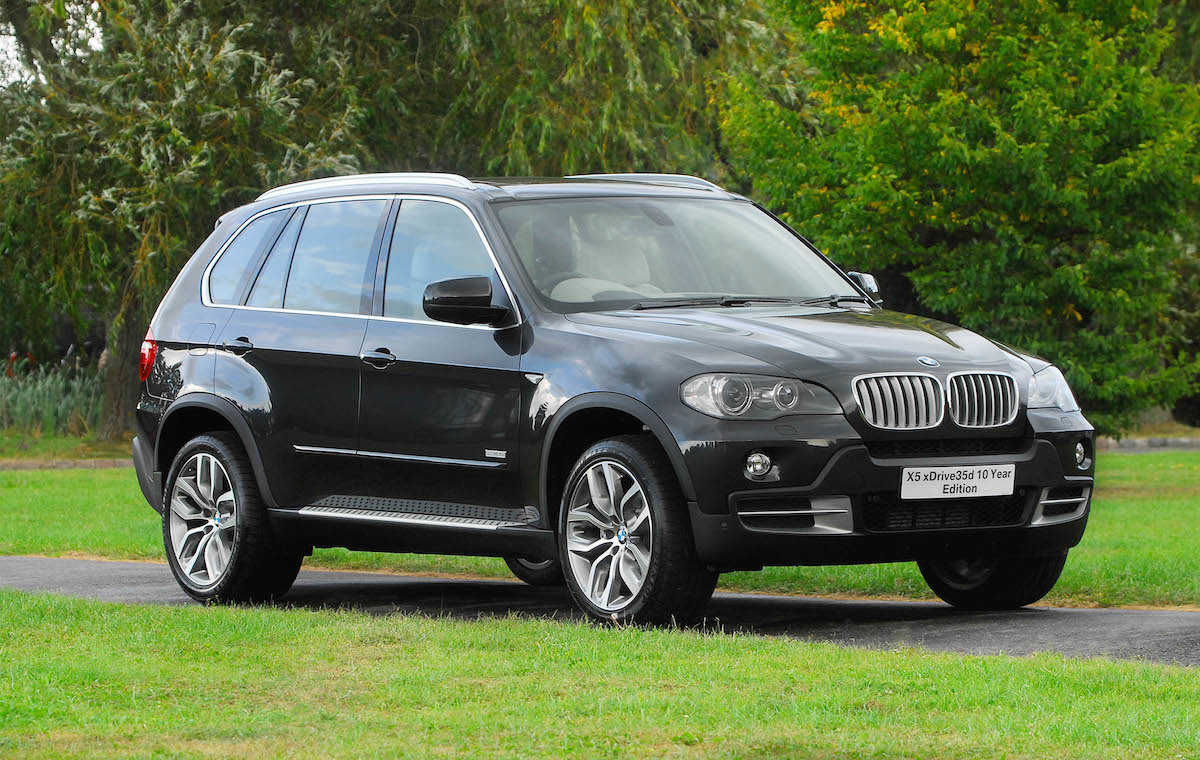
As an established leader in a burgeoning sector, there was significant pressure on the second-generation X5, dubbed the E70. It debuted in July 2006 for the 2007 model year, with evolutionary styling but significant changes under the skin. This was a significantly bigger machine, adding 60mm in width, 165mm in length and 110mm to the wheelbase of its predecessor, although it retained the overall height of the E53.
The technology in the E70 took serious strides forward. Options included cutting-edge tech to enhance ride and handling such as active damping and steering, as well as the new Dynamic Drive system that deployed active roll-bars via a hydraulic servo to counteract body roll. Other luxury upgrades included a head-up display, panoramic glass roof and Park Distance Control parking assistant integrated with a rear-view camera.
The interior was also completely new and showcased the new central display that was controlled by the latest iDrive control interface. However, perhaps the most important upgrade was in the simple area of passenger space. Addressing criticism that the E53 was too small inside, the E70 maximised its bigger exterior dimensions to create much more room for rear-seat occupants and the option for a third row of seating allowing up to seven occupants.
Manual transmissions were dropped from this generation of X5, with six- and eight-speed ZF autos available depending on model and year. Power came from a familiar selection of petrol and diesel engines in V8 and in-line six-cylinder configurations. From the 2011 mid-life refresh, a new range of engines was introduced, all turbocharged with direct injection and offering better performance with lower emissions and improved mpg.
Performance options were ramped up still further with the introduction of the first ever all-wheel-drive model from BMW’s M division. Designed to battle the Porsche Cayenne Turbo and the Mercedes-Benz ML63, the BMW X5 M (and coupe sibling BMW X6 M) features a twin turbo charged 4.4-litre V8 engine delivering 540bhp and 501lb ft. Car and Driver magazine achieved a 0-60mph sprint of 4.0 seconds when they tested the X5 M and a quarter mile time of 12.5 seconds.
To show how important the X5 had already become for BMW from a sales perspective, by 2011 the E70 was the marque’s third best-seller after the 3 Series and 5 Series models.
BMW X5 E70 Review
Search for a BMW X5 E70 on CarGurus
BMW X5 1st Generation - E53 (1999-2006)
Bodystyles:
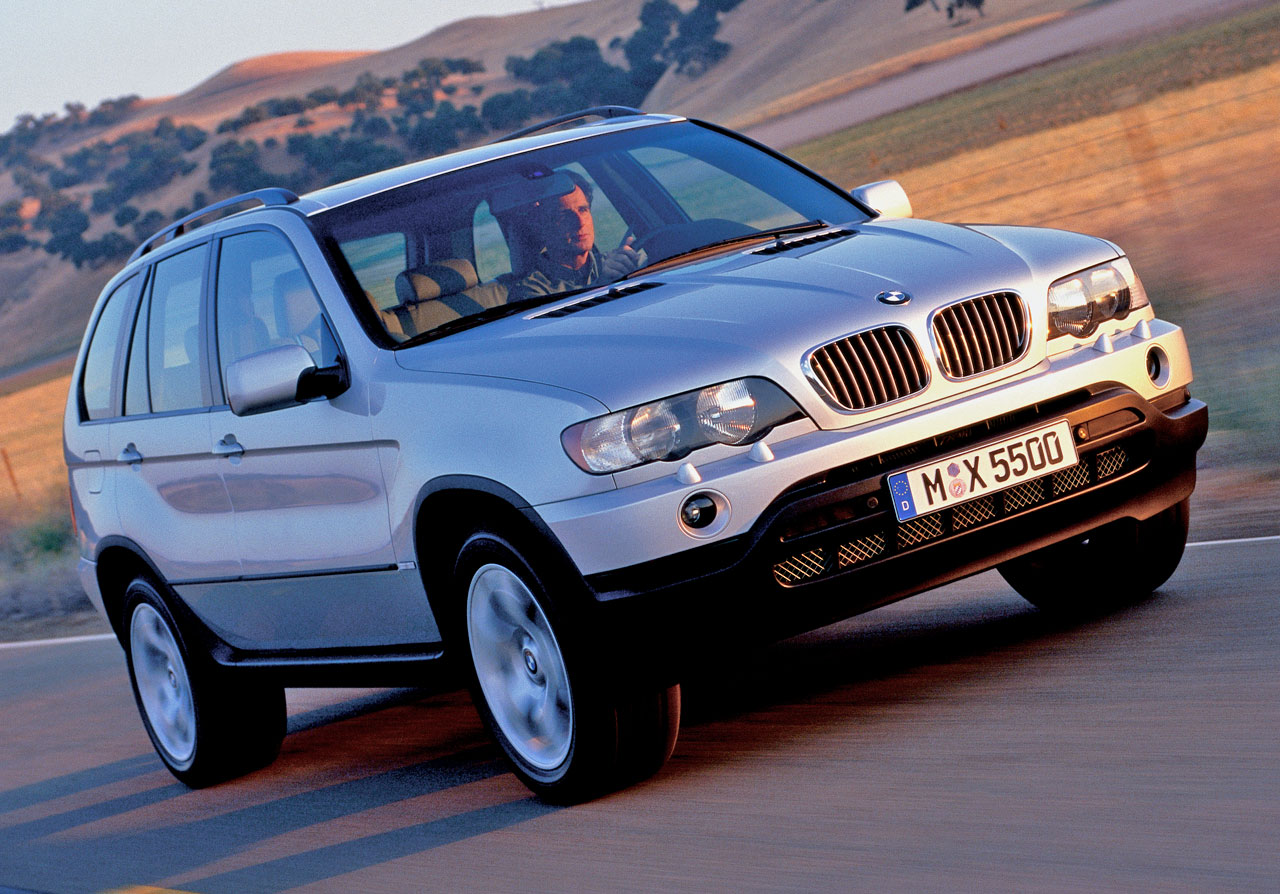
The X5, model designation E53, was BMW’s first ever SUV. However, BMW was strident in its marketing claims that this was a Sports Activity Vehicle, not a Sports Utility vehicle. Was that important? Actually, yes: because as befits the purveyor of The Ultimate Driving Machine tagline, this was a car that might have looked like rivals such as the Range Rover or the Mercedes M-Class, but it was in fact a new breed altogether.
Eschewing the more traditional body-on-frame construction of other 4x4s, the X5 utilised a monocoque chassis and targeted keen drivers with a blend of performance and handling that hadn’t been seen in the sector before.
The E53 X5, although four-wheel drive, had a deliberate rear-bias with over 60% of the vehicle’s torque being directed aft in an attempt to mimic the handling feel of the rest of the BMW range. Post-2004, this setup was replaced with the xDrive all-wheel-drive system that could transfer up to 100% of engine power to either front or rear wheels in milliseconds.
The E53 X5 had potent engines from launch: 4.4-litre V8 and 3.0-litre straight-six petrols that were joined shortly afterwards by a torquey 3.0-litre diesel. But BMW showed that it was happy to push the performance envelope of the model still further with the addition of the 337bhp 4.6iS in 2001 with a 0-62mph time of 6.5 seconds. Serious heat for a 4x4 of that era. Gearbox options were a choice of five- and six-speed manuals or automatics, all built by ZF
That’s not to say there was no interest at all in off-road antics. As owner of Land Rover at the time, BMW adopted the Range Rover’s Hill Descent Control electronics for the X5 and the two-piece tailgate felt like something of a design nod to the godfather of 4x4s.
Exterior styling for the X5 came from Chris Bangle’s team but avoided the more controversial elements of the era’s ‘flame surfacing’ philosophy, even during the 2003 model refresh. The interior design borrowed heavily from the highly-regarded E39 5 Series in terms of layout and materials. Leather upholstery and a CD player were part of the standard offering, as was a premium hi-fi sound system. Satnav was optional along with BMW Assist that featured an SOS button on the overhead console. Post-facelift options included adaptive Xenon headlights and a soft-close tailgate.
There were a couple of interesting spin-off models from the X5 range, too. An armoured ‘Security’ version with bulletproof steel, polycarbonate glass and run-flat tyres was launched in 2003 and remains a fixture in the X5 model line-up to this day. BMW also made a one-off X5 LM in 2000 featuring a 690bhp V12 from the Le Mans winning racer. This was used to set a Nurburgring lap record in the hands of driver Hans Stuck.
Related Topics:


