BMW i3 2026 review | The best premium EV you can buy


Pros and cons
What we like
Standard-setting range
Authentically BMW drive
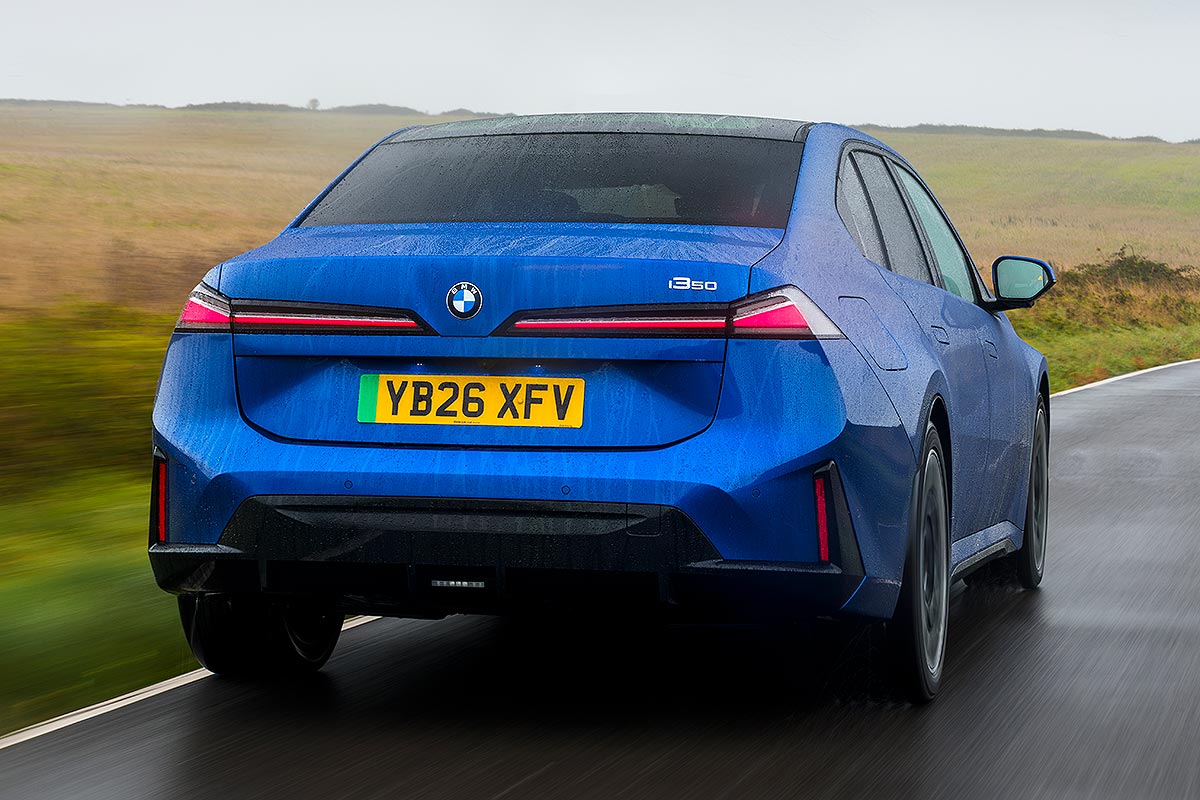
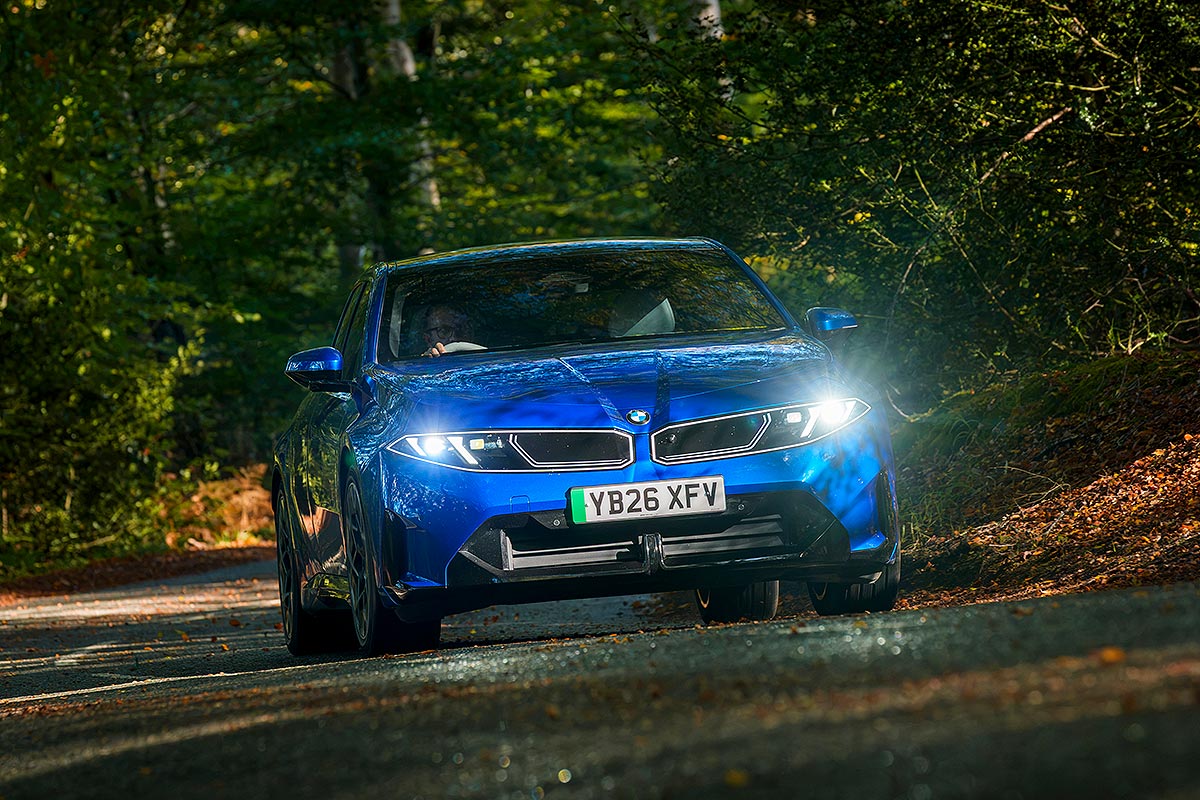
Bold design and clever interior
What to consider
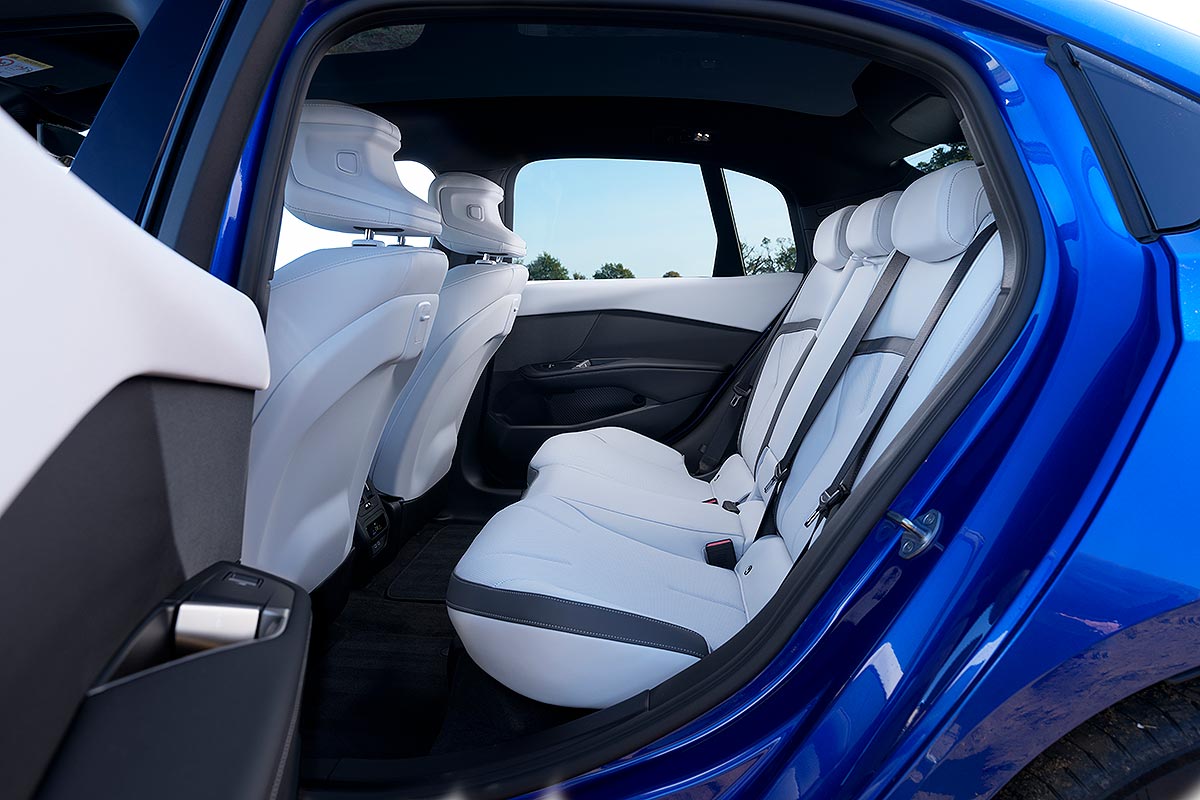
Rear seat comfort could be better
EV weight occasionally shows through on challenging roads
Onboard tech takes some getting used to
The CarGurus verdict
The BMW i3 is a seriously impressive all-rounder. It’s an electric car you don’t have to worry about, with standard-setting range, plenty of performance and the sort of rapid-charge speeds that make pitstops almost as speedy as filling up a petrol car.
The design is exciting, the interior is futuristic and, most importantly, it drives in that satisfying, dynamic way all the best BMW 3 Series do. Rear passengers may wish for a bit more comfort – that’s a 3 Series complaint that’s gone back through the ages – and the Panoramic iDrive will take some getting used to, but overall, it’s hard to find fault with one of the most impressive new BMWs in years.
out of 5 expert review
What is the BMW i3?
The latest BMW i3, an electric BMW 3 Series alternative, is not to be confused with the original BMW i3. That was a pioneering but quirky electric small car made from carbon fibre – a machine arguably ahead of its time. Today’s BMW i3 aims to make the premium electric car a more everyday proposition – and become the obvious alternative to a petrol-powered 3 Series.
The BMW i3 is the firm’s second ‘Neue Klasse’ car, after the BMW iX3. It has distinctive styling, a radical interior and, underneath the surface, a new way of engineering the architecture that’s both more efficient and makes it more responsive. Unlike the larger BMW i5 and 5 Series, there won’t be a petrol-powered version of this architecture; BMW’s optimised it as an EV (and updated the existing 3 Series so car buyers still have an alternative).
For many, the key draw of the BMW i3 will be its standard-setting range. There are two battery sizes, and even the 82.8kWh in the entry-level BMW i3 40 xDrive has a 441-mile range. The larger 108.7kWh battery in the BMW i3 50 xDrive has an astonishing range of up to 566 miles – the equivalent of driving from Greater London to Inverness in Scotland.
The BMW i3 joins a steadily-growing range of rivals. The Mercedes-Benz C-Class Electric is an obvious rival – although its range is shaded by the BMW i3 – as are the Polestar 4 and Polestar 4 SUV. The Tesla Model 3 is still a competitive challenger, while the Hyundai Ioniq 6 is an interesting alternative too. It’s surprising that Audi doesn’t yet have an alternative to the BMW i3, though.
BMW i3 prices start from £47,925. This is less than £3000 more than the cheapest BMW 3 Series petrol (the i3 has 155bhp more power, too, and is a full two seconds faster in the 0-62mph dash), making the electric i3 a genuine rival to its petrol counterpart that may already be the preferred choice on merit. Time to find out how it stacks up on the road.
Practicality
How practical is it?
Refreshingly for an electric car, the BMW i3 has quite a low-slung feel behind the wheel. This makes it feel sporty, very much in keeping with the BMW brand ethos (you will notice the floor feels rather close, though). The seats are supportive and beautifully upholstered, with M Sport Pro versions adding an adjustable thigh cushion. Visibility is good, with a clear view across the low dashboard, although taller drivers might find the windscreen header is a touch low. We love the soft, plush headrests in the front, too.
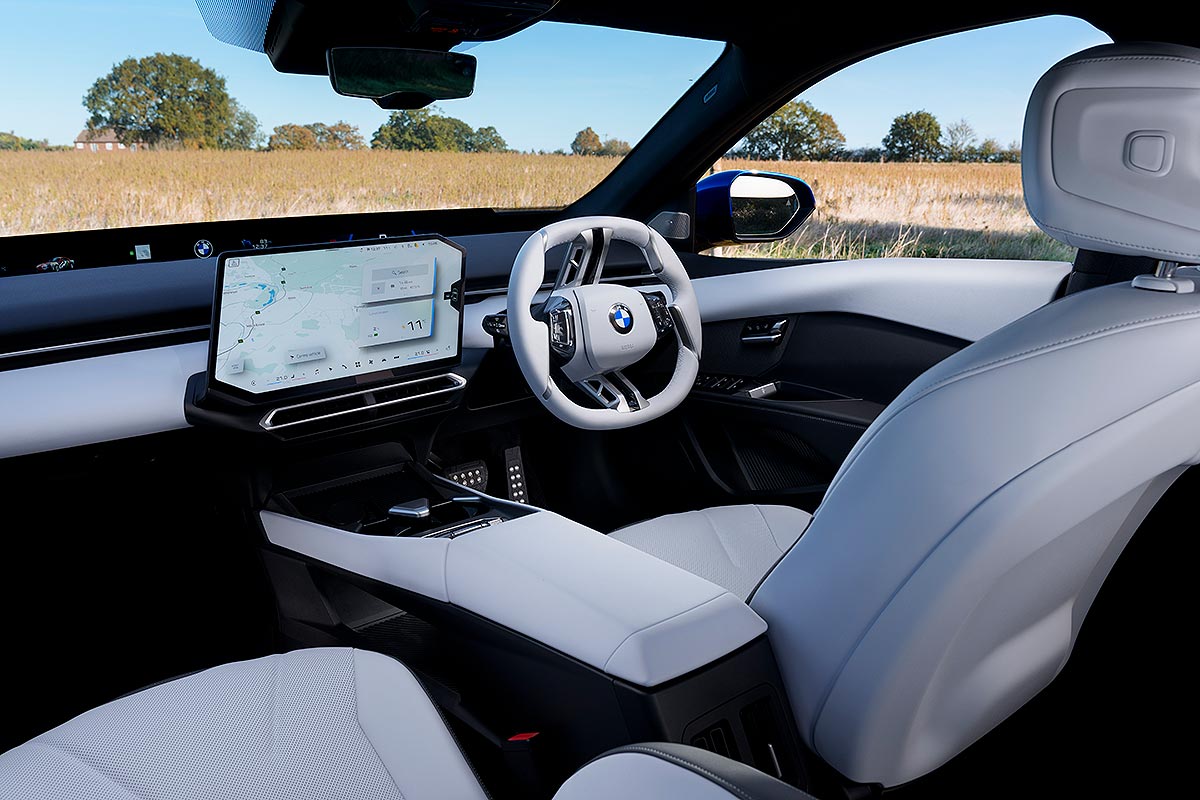
The BMW i3 has a unique interior architecture. The centre touchscreen is shaped like a parallelogram, which BMW says makes it easier to reach the far corners. It also has the BMW Panoramic iDrive system, which uses a trio of screens displayed below the windscreen. They use special tech that makes it seem as if they’re located deep within the bonnet, which makes them easier to read at a glance. The displays are fully configurable, as we’ll explore in the infotainment section.
The BMW i3 is packed with appealing details. There’s a section of the dashboard trimmed in a knitted textile material, behind which are illuminated sections. This too is configurable. In the centre console, the BMW i3 has a MagSafe wireless charging device, storing your smartphone securely even during eager cornering. The column stalks have a nice positive action and BMW has stuck with proper buttons for the door mirrors and electric windows. It uses a new type of space-saving flip-up interior door handle – and the exterior door handles are retractable.
The BMW i3’s steering wheel will take some getting used to, though. The shape is decidedly odd, with spokes at the top and bottom, along with ‘floating’ spokes where your hands naturally rest. It’s the most over-styled part of the car and we’re still not sure about it. The touch-sensitive buttons are fairly intuitive to use, though, with the cruise control section on the left-hand spoke able to change colour from white to green when it’s engaged.
Interior stowage space is good. The cupholders are well-located, with spring-loaded grippers to keep smaller items in place. Behind this is the gear toggle, which could be more intuitive, and in front of it is a rubber-lined stowage area including that ingenious MagSafe holder. There’s a useful stowage area beneath the centre console, too. BMW has, however, retained its hands-free air vent setup, which you have to adjust through the touchscreen. In fairness, the system on ‘auto’ does a good job of working in a fuss-free manner, but some may still prefer a bit more manual control.
Rear seat space in the BMW i3 is a little less accommodating than the front. The floor itself is high, which leads to a slightly perched feel for adults, with their knees in the air and only just enough space under the front seats. The rear door opening could be bigger too, and the sill is a bit high. The floor itself is flat, though, and headroom is decent. Top tip: be careful you don’t painfully bash your knees on the hard seat backs when you get in…
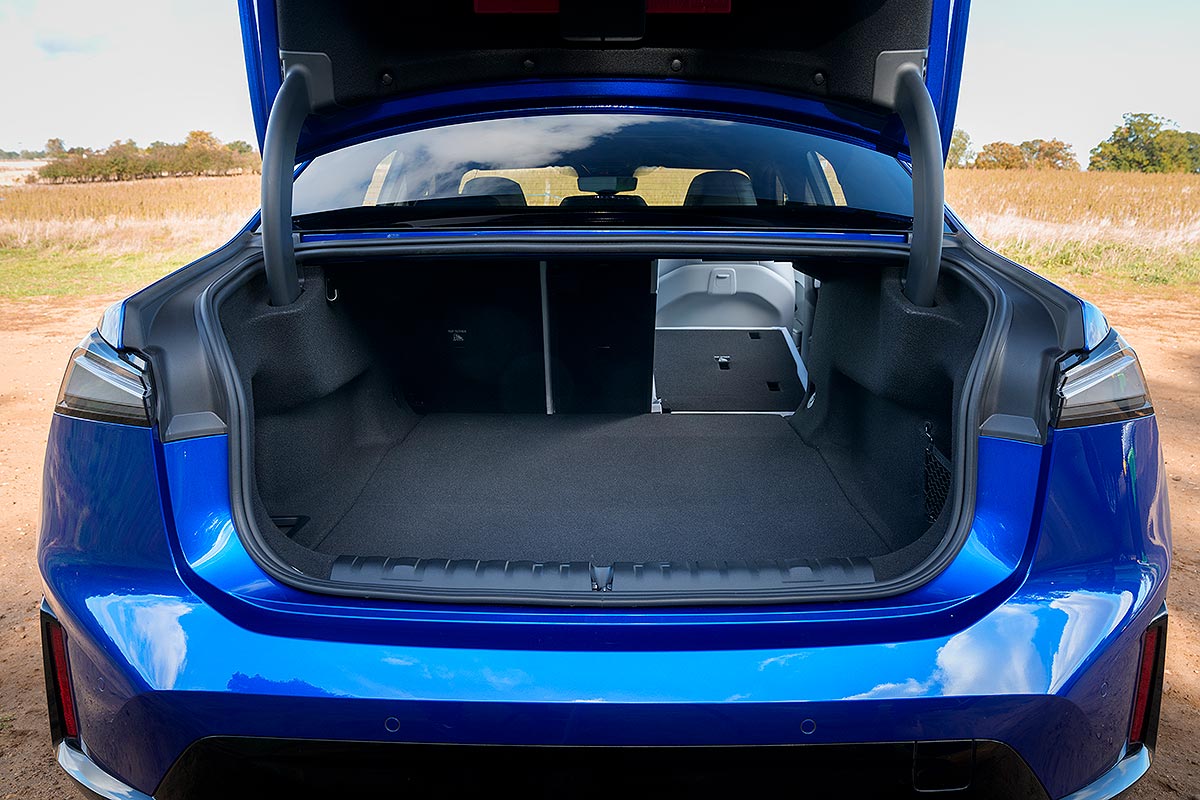
The BMW i3 has a roomy 460-litre boot. The aperture is a bit high, and the floor could be deeper, but it’s still practically-shaped and generously wide. There’s a limited amount of space under the boot floor to store charging cables, but BMW adds there’s a 31-litre front boot, or ‘frunk’, with a dedicated cable stowage compartment (it’s opened by pulling twice on a lever beneath the steering column).
Driving
What's it like to drive?
The BMW i3 is a superb car to drive. It is one of the most sophisticated electric cars on sale, with a sense of balance and fluidity that really marks it out as something special. In a back-to-back test with a BMW 320 petrol, it’s almost certain that most people will prefer driving the BMW i3, which is high praise indeed.
First impressions are of impressive comfort. The low-speed ride is plush, with a cushioned, well-oiled feel that makes it feel pleasant at city speeds. It’s able to deal with speed humps confidently, and takes the edge off nasty potholes better than previous BMWs. The ride can get a bit busier as speeds rise, and you’ll notice tyre noise as road surfaces change, but it rarely becomes harsh or crashy. BMW adds that optional adaptive dampers should help extend the i3’s low-speed plushness to faster-road driving when they become available next year.
The BMW i3 handles with confidence and cohesiveness. It has a well-balanced, natural feel through corners, with the small, thick-rimmed steering wheel offering precise, linear and confident turn-in. It’s a car you’ll really enjoy driving on twisting roads, as there’s no need to second-guess as you steer it through tight corners.
There’s minimal roll, helped by the BMW i3’s low centre of gravity. However, on more undulating roads, you will sense a degree of float and bobble, while hard acceleration will see the front end rise up more than you may expect. This, again, is where the adaptive suspension will help.
Performance is strong, as you’d hope of the 462bhp BMW i3 50 xDrive cars we drove at the car’s launch. 0-62mph in 4.7 seconds isn’t as explosive as some other EVs, but it’s perfectly fast enough. What’s more, the BMW’s centralised drive controller ensures power can be precisely distributed between front and rear wheels in a flash, for maximum traction and minimal hesitation. It feels really assured when, say, accelerating hard out of tight junctions. However, the BMW i3 doesn’t have steering wheel paddles to vary the amount of brake energy regeneration – you have to go into the touchscreen to alter this.
The brakes feel excellent too, with a reassuringly progressive and consistent pedal weight. Extra marks also for the BMW i3’s ‘chauffeur stop’, that automatically blends out the brakes just before you come to a halt, which makes for an almost imperceptible stop with no jolting.
Refinement is very good, particularly at motorway speeds, where the BMW i3 has minimal wind noise, low levels of road noise and excellent straight-line stability at 70mph. It’s a car you feel you could drive at high speed all day long – perfect for maximising its class-leading range.
Tech and equipment
Technology, equipment & infotainment
The BMW i3 is dominated by its screens, both the 17.9-inch touchscreen in the centre and the three sections of BMW Panoramic iDrive below the windscreen. There’s also an optional 3D head-up display, adding yet further screen area to the BMW i3. This means you can, for example, have sat nav mapping shown in three different sections of the dashboard – meaning you have no excuse for missing a turning.
Panoramic iDrive will take a bit of getting used to. It can be ‘themed’ using the ‘hamburger’ button on the right-hand steering wheel spoke, and there’s also an individual setting that lets you choose between literally pages full of settings. One to spend half an hour sat outside your house configuring (with the touchscreen itself offering further customisability). Once you become accustomed to the logic, though, it all starts to make sense, and the ultra-crisp displays themselves are very good-looking. It’s certainly something different, and a novel new way of displaying information.
The BMW i3 loses minor marks for not having any physical climate control buttons, though. Instead, this is adjusted through the bottom of the touchscreen, with the icons being just that bit too small to consistently hit without missing. There are shortcuts to disable the lane-keep assist and speed limit warning – but again, these are hidden by your left hand on the right of the screen.
The BMW i3 comes with the BMW Intelligent Personal Assistant, which uses large language model (LLM) tech and Amazon Alexa+. The promise is of voice interaction that’s more natural than ever. It also has the BMW Digital Key Plus, which can become the preferred vehicle key on a smartphone or smartwatch, we’re told.
The BMW i3 is offered in three specs – base, M Sport and M Sport Pro. This is part of BMW GB’s desire to keep things straightforward for customers. All are well-equipped, with BMW expecting mid-spec M Sport to be most popular; its adds bespoke M Sport alloy wheels, sportier styling and perforated Veganza upholstery inside. M Sport Pro has dark styling elements, the BMW Iconic Glow grille and LED matrix headlights, M Sport seatbelts, a different steering wheel design and M bucket seats.
There are various option packs, and the Technology Pack Plus is likely to prove popular. For £1700, it adds a 3D head-up display, three-zone climate control (extending to the rear seats) and a premium Harman Kardon sound system.
The BMW i3 is available with the firm’s Motorway Assistant, a form of self-driving tech. This supports hands-free Level 2 driving assistance up to the motorway speed limit; it steers automatically, and keeps a set distance from the car in front. Impressively, it can also carry out automated lane changes, simply by the driver looking in the rear-view and relevant door mirror. We tried it and found it felt uncannily natural, which not all such systems do. We look forward to trying it some more to see whether it’s an option worth choosing.
The BMW i3 uses the firm’s latest Gen6 battery tech. This is key to it delivering both range and charging speed 30% faster than before (the system used on models such as the BMW i4). The BMW i3 40 xDrive has a DC rapid charge speed of 300kW, with the 50 xDrive raising this to 400kW. It means that both can go from 10-80% charge, at a suitably powerful rapid charger, in just 21 minutes. BMW adds it allows up to 263 miles of range to be added in as little as 10 minutes.
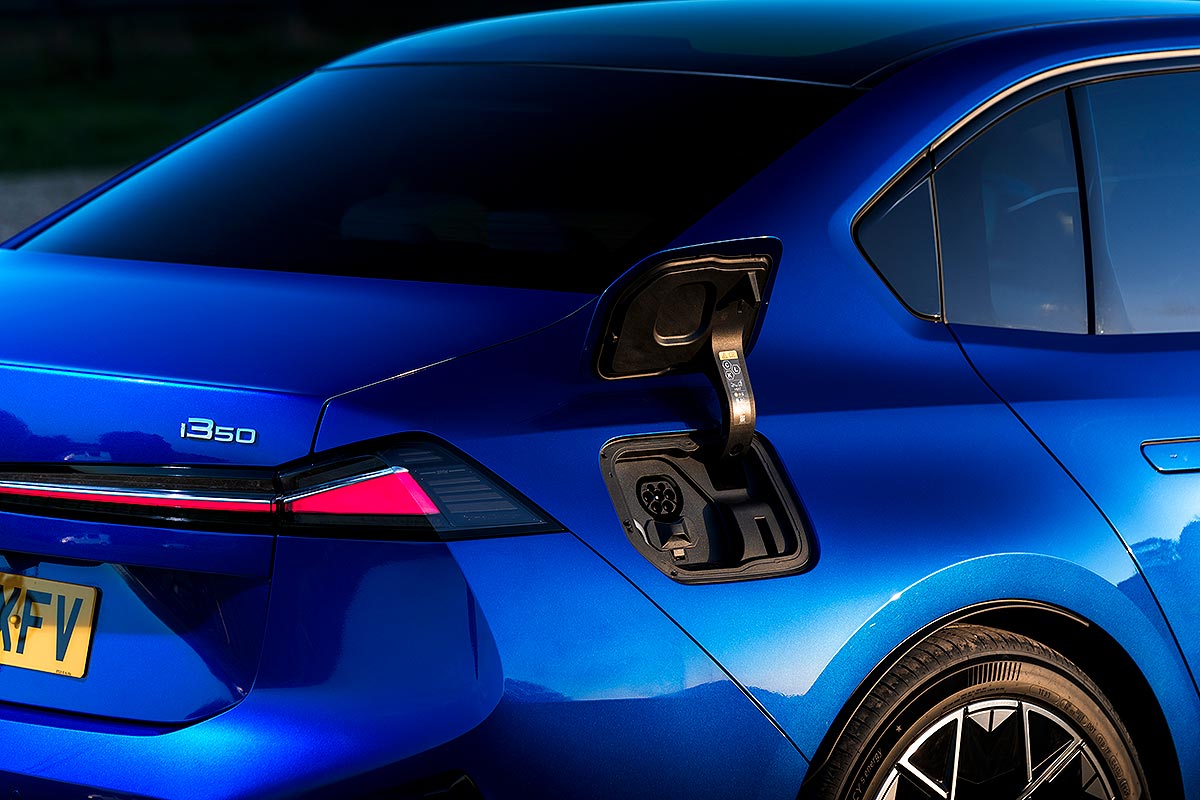
BMW says the i3 also has an ‘intelligent charging flap’, located on the right rear side of the car. Using AI, it detects triggers for opening, including the driver walking towards a known charger – after, say, reversing into a charge bay. If you don’t connect a charge cable, it closes automatically, and also shuts by itself once charging is completed.
Running costs
BMW i3 running costs
The BMW i3 is a model company car drivers will automatically err towards, thanks to the beneficial Benefit-in-Kind tax rates electric cars enjoy. Compared to even the entry-level petrol-powered BMW 320, the savings are vast, aided further by the i3’s competitive list prices that help minimise the amount BiK tax is calculated from.
The very impressive range of the BMW i3 will help cut running costs by reducing the reliance of even high-mileage drivers on the expensive public charging network. Even the most affordable version has a range of more than 450 miles, stretching to well over 560 miles for the most efficient large battery version. Even if you do have to charge on the move, you probably won’t need to spend as much on electricity as you would in a car with less range than this.
The BMW i3 has been designed with sustainability and decarbonisation in mind, too. BMW reckons that it will have an overall carbon footprint similar to a petrol-powered version after just one to two years’ use. It is built in a fully-overhauled factory at Plant Munich, Germany.
Insurance groups start at group 37 for the BMW i3 40 xDrive, and group 40 for the 50 xDrive. M Sport models move up slightly, to group 41. This compares to group 28 for the entry-level BMW 320 petrol car, although models with similar performance are more in line with the i3.
The new BMW i3 uses condition-based servicing rather than fixed mileage or time intervals. It naturally also won’t require engine oil, spark plugs or belt changes, while heavy use of regenerative braking means brake pads and discs will last longer.
With this in mind, it’s well worth considering the £650 BMW Service Inclusive option when buying a new i3. This includes servicing up to the car’s fifth birthday – and there’s no mileage restriction either.
BMW i3 reliability
BMW has a strong reputation for reliability. Indeed, the previous BMW i3 is the most reliable electric car of all, according to the 2026 What Car? Reliability Survey. It has also been the top-ranked manufacturer for reliability in the influential FN50 survey – and the 3 Series is the most reliable car in the fleet sector.
Looking at electric cars, the previous BMW i3 is ranked the most reliable EV of all in the 2026 What Car? Reliability Survey, beating models such as the Nissan Leaf and MG 5. However, BMW as a brand performed less well, scoring 18th overall with a reliability rating of 89.5%. The firm’s score was pegged back here due to the unreliability of its petrol-powered SUVs.
The latest BMW i3’s new control layout, with fewer ECUs and less wiring to connect them all together, should also bode well for reliability.
What owners say
"The BMW i3 stands out for its innovative design and quality engineering, earning high praise from drivers who enjoy its unique style and ease of handling. Many appreciate its low running costs and fun driving experience, particularly for daily trips. However, some drivers feel it is pricier than comparable electric vehicles and have expressed concerns over the car's reliance on charging infrastructure, particularly with older battery options that can limit range. Overall, while the i3 delivers a futuristic driving experience, potential buyers should be mindful of its charging needs and cost."
Excellent car for in town driving only negative is the total range which is a big limit, but the features and car condition are amazing
9 January 2026The i3 is certainly not a Run of The Mill EV. Lots of old school BMW signature style with BMW quality engineering set it aside from the rest. Looks fantastic especially some of the more Avant-garde interiors.
27 November 2024I like the security of the rang extender can’t understand why more manufactures don’t do this
9 May 2025What owners say
Excellent car for in town driving only negative is the total range which is a big limit, but the features and car condition are amazing
9 January 2026The i3 is certainly not a Run of The Mill EV. Lots of old school BMW signature style with BMW quality engineering set it aside from the rest. Looks fantastic especially some of the more Avant-garde interiors.
27 November 2024I like the security of the rang extender can’t understand why more manufactures don’t do this
9 May 2025Brilliant car. We have had a nicely spec-ed 2014 i3 for 4 years and this 2019 i3s is everything that was (tardis-like interior, fun to drive) but more (quicker, more range, better handling at speed). We love it already!
10 April 2023The car itself is fine, the problem for me was it had the older battery I think 60ah which is no use for any distance other than just going around your own area. I decided not to buy it because I need at least the 94ah battery which came out later
25 May 2021Super easy to drive, super cheap to run, terrific fun, no tax, what’s not to like?
24 May 2021The back doors cannot be opened until the front doors are opened
10 August 2024BMW i3 is an amazing futuristic car. Take care when buying an eight year old model as the manufacturers battery guarantee is upto Eight years or 100k miles
18 July 2022I love this ev. I mostly charge at home and the range extender has removed anxiety on the move. So far several of the chargers i have tried to use on the road have been out of action and the rex has got me home so I have low confidence in the charging network. Its fine planning stops on the many apps for charger locations, but that is not much good if they are broken when you get there. Shame they stopped making this get out of jail option, and more so that BMW are discontinuing this amazing high tech carbon fibre snd aluminium vehicle instead of developing it further.
26 October 2021An outstanding achievement on the part of BMW. This car pushed the design envelope to provide innovative transport in an era when petrol/diesel cars are becoming extinct. Quite why BMW chose to drop production rather than develop the car will remain a mystery to me!
18 January 2023Three things to know
- From launch, the BMW i3 is available in a choice of 11 colours – including the stylish M Le Castellet Blue pictured here, that’s exclusive to the i3. Metallic colours cost £875 – and there’s a matt-finish Frozen Space Silver hue for £2575. The ‘free’ colour is Alpine White.
- BMW has replaced multiple ECUs with four ‘superbrain’ controllers. By centralising the onboard tech, the systems respond with less lag time – and the firm also saves a staggering 600 metres of cabling.
- BMW i3 M Sport Pro models feature a different steering wheel design to base and M Sport versions – it’s a more conventional setup, without the vertical spokes at six and 12 o’clock. Some may prefer it for this reason alone…
Which one to buy
- If you want the most affordable: The BMW i3 40 xDrive ‘base’ costs from £47,925. However, BMW expects most will go for an M Sport version as a minimum, which is priced from £50,255, the £2330 premium is small enough to make this perfectly understandable.
- If you want the longest range: The BMW i3 50 xDrive has a mammoth 566-mile range, which is the best you can currently buy. This is a longer range than a petrol-powered equivalent; what range anxiety?
- If you still prefer petrol: The BMW 320 is a heavily-updated version of the previous petrol-powered 3 Series. Its i3-esque design is combined with a latest-generation interior, and a price tag starting from £44,975.