MG ZS SUV Review (2024-present)
MG ZS SUV cars for sale
3.0
Expert review
Pros
Generous kit and affordable prices
Good interior quality given the price
Looks pretty stylish
Cons
A bit so-so to drive
No reach adjustment on the steering column
Lots of road noise

The CarGurus verdict
The second-generation MG ZS is a thoroughly convincing evolution of the formula established by the previous ZS. It still provides more space, practicality and standard equipment than most rivals, and for a lower cost. Now, however, it also adds smart styling, impressive interior quality and low hybrid running costs into the mix. It also comes with a very generous seven-year warranty.
It’s by no means perfect. The powertrain can sound a bit raucous occasionally, road noise is an issue at higher speeds, rivals ride more comfortably and there are a few ergonomic quirks. However, these are acceptable given the keen value-for-money you’re getting, meaning the ZS is certainly worth considering.
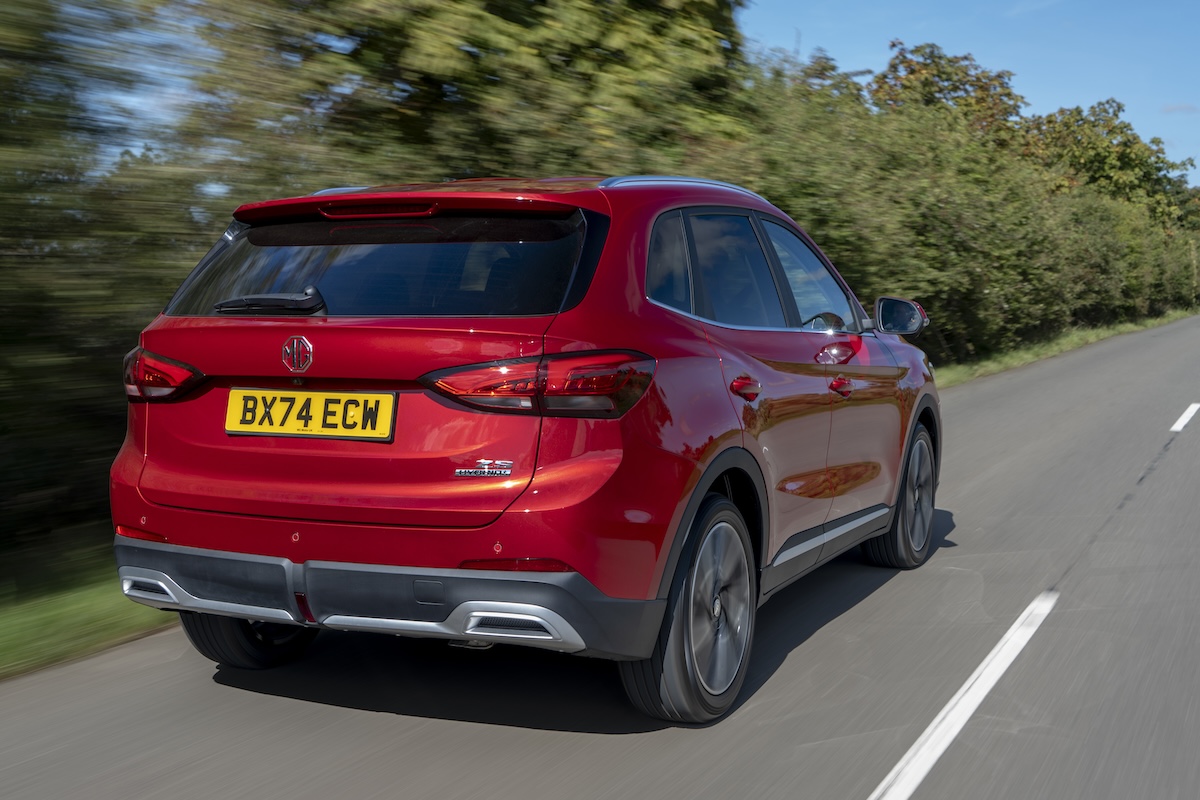
What is the MG ZS?
Following a few, ahem, ‘tricky’ years, MG has been on an absolute roll lately. After the Phoenix Venture Holdings debacle nearly saw to the demise of the British brand in 2005, MG Motor - under the Chinese ownership that saved the firm - has fought its way back to be competing for a top-10 spot on the list of the UK’s bestselling car companies. And the original MG ZS SUV was a big part of the reason why.
This small SUV - available in both petrol and fully electric forms - was one of the firm’s most popular offerings (behind the bestselling MG HS) thanks to its mixture of low pricing and generous space and equipment. And now, the time has come to replace it with this, the new second-generation model. Much smarter styling is the most obvious difference, as is interior quality that’s a big step up from what went before. The important value-for-money aspect is still present and correct, too, with aggressive pricing compared to rivals and a heaving list of standard equipment.
It’s initially available with the same Hybrid+ system - a self-charging hybrid system rather than a plug-in hybrid one - found in the MG3 supermini, and a pure petrol version will follow in the fullness of time. In terms of the models it competes with, rivals include the seemingly dozens of compact SUV and crossover contenders on the market - hybrid or otherwise - including the Nissan Juke, Mazda CX30, Peugeot 2008, Renault Captur and Toyota Yaris Cross. However, in truth, the ZS is a bit bigger than those rivals, so may also tread on the toes of larger SUVs such as the Dacia Duster, Nissan Qashqai and Kia Niro.
How practical is it?
MG refers to the ZS as a B-segment SUV, which in motoring speak, means it’s roughly the same size as a supermini like the Vauxhall Corsa. In truth, however, it’s considerably bigger than that, with a footprint more akin to a Vauxhall Astra hatchback. Happily, that also means it’s pretty roomy inside. There’s loads of space up front, as you’d expect, and all versions get six-way adjustment of the driver’s seat (it’s electric in the range-topping Trophy version). Irritatingly, however, all versions merely have tilt adjustment for the steering wheel, and no reach adjustment. This will make finding a comfy driving position awkward for some drivers. MG promises to remedy this later on down the line, but for now, it’s a fundamental oversight.
The rear seats have enough in the way of headroom and legroom to comfortably satisfy a pair of tall adults. Things will be a lot more cramped if you squeeze in a third, and the middle seat of the rear bench is also rather narrow, but at least the low transmission tunnel in the floor means there’s room for feet. All in all, it’s roomy enough to be a family car, provided your family isn’t too huge.
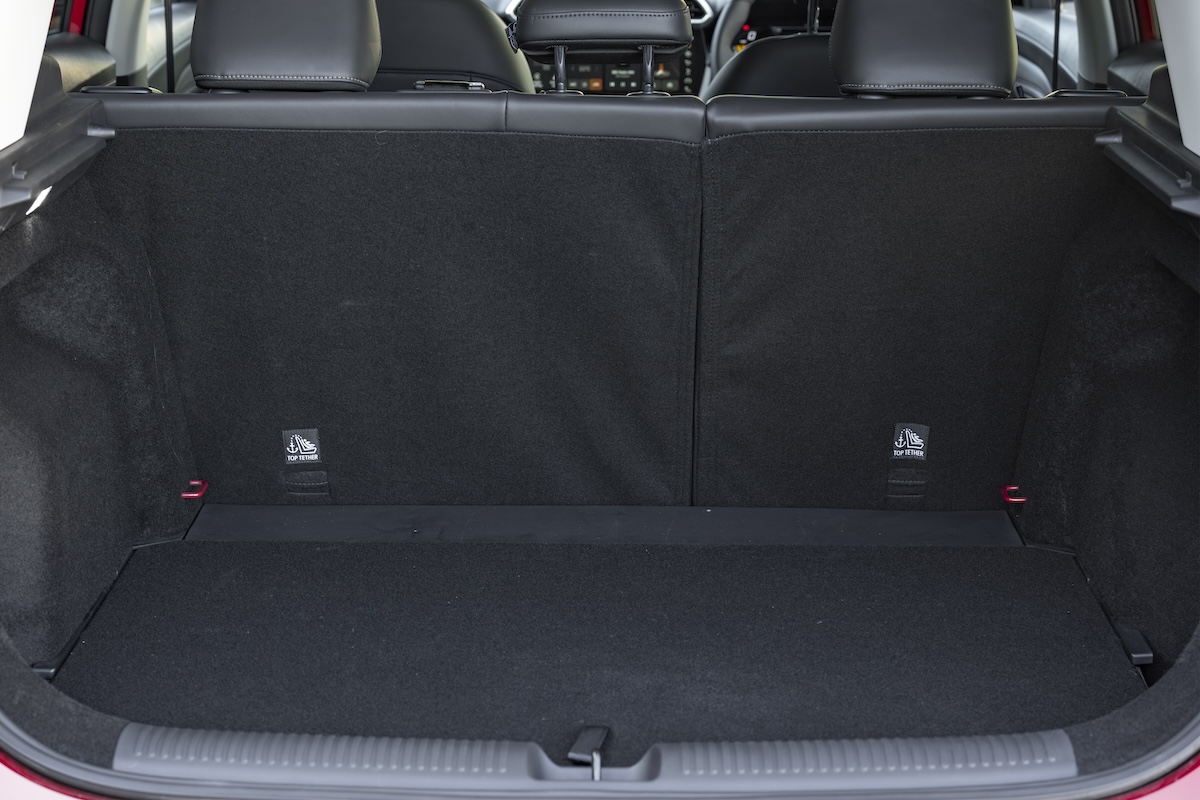
At 443 litres, the boot space is actually five litres smaller than in the previous MG ZS, but that’s largely because of how the hybrid tech fits into the car’s structure, and it’s still pretty normal by class standards. Fold the rear seats down - which happens in a 60/40 split - and you get 1,457 litres of cargo space, which is 82 litres more than in the old ZS. There’s a movable boot floor that helps level off both the load lip and the step to the folded seatbacks, but neither is levelled off completely, and what’s more, those seatbacks lie at a pretty steep angle, leaving you with a sloped load area.
In terms of interior quality, the ZS is better than you might expect. There are a few rather functional plastics on display, but they’re pretty well concealed and most of the surfaces you’re faced with have an appealing look and feel. The stitched faux-leather finish on top of the dashboard and the doors is a particularly nice touch.
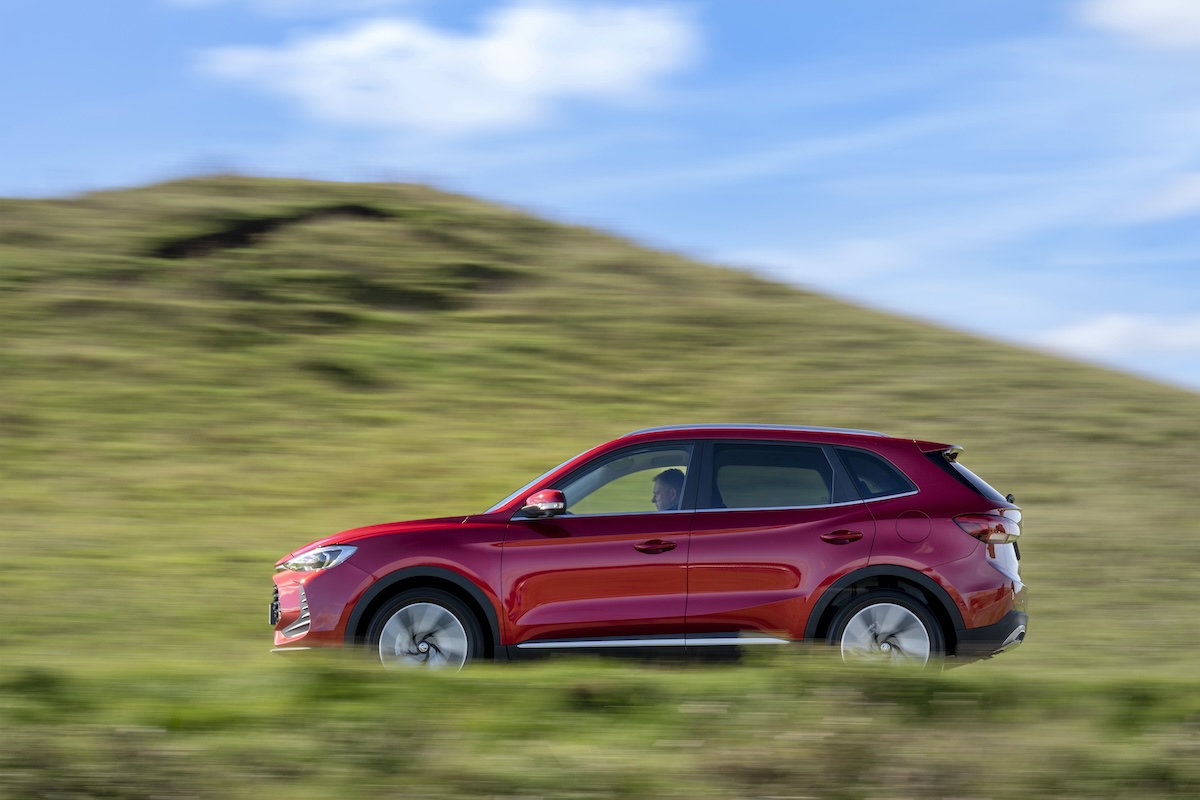
What’s it like to drive?
Initially, the second-generation MG ZS will only be offered as a hybrid, but later on, a petrol-engined version will become available. Perhaps the biggest news is that the popular MG ZS EV will not be replaced directly. A new small all-electric SUV model will follow, but it’ll sit on an entirely different platform (that used by the MG4) and will have an entirely different model name.
The hybrid system is the same one used in the MG3 Hybrid+ supermini, and so it uses a naturally aspirated 1.5-litre petrol engine and a couple of electric motor/generators to channel a combined 193bhp to the front wheels through a three-speed automatic gearbox. Predictably, it operates in a similar way to how it does in the smaller MG3, albeit with a few key differences.
At low-to-moderate speeds, the pickup has that eager and unbroken quality you get from an electric car, giving a moderately peppy feel. Push the accelerator pedal harder, provoking the petrol engine into life, and the pickup becomes appreciably stronger, but not as strong as it does in the smaller MG3 under the same circumstances (with a 0-62mph time of 8.7 seconds, it’s 0.7 seconds slower), presumably because of the extra metal that the car is carrying. That may well be the same reason that the petrol engine is more audible in such circumstances: it makes a rather thrashy noise, but it still stays fairly distant and not too loud. The powertrain isn’t too loud at a motorway cruise, either.
That said, the car still isn’t exactly peaceful when cruising. Wind noise isn’t too bad, but road noise is very pronounced, even at moderate speeds, and it only gets louder the faster you go.
It’s fair to say that things aren’t massively relaxed in terms of ride comfort, either. There’s a distinctly firm edge to the way that the ZS moves along the road: not disastrously so, but you do expect a little more pliancy from an SUV than the ZS provides, and rivals will make your life a bit more peaceful on that score.
The payoff for that is keen body control, though, keeping the car feeling flat and level when changing direction. Grip levels aren’t huge, but they’re decent enough, although you might find it rather easy to spin up the front tyres when pulling away at junctions.
The steering, meanwhile, is a little odd. At very low manoeuvring speeds, it’s really light, but once you’re above 5mph or so, then a bunch of weight is added to the wheel all of a sudden, which feels rather strange. From then on, though, the steering is actually very pleasant, with a nice meaty weight, fast reactions and some genuine feedback to excite you.
Technology, equipment & infotainment
SE is the MG ZS’s entry-level trim, and it comes generously stocked, with 17-inch alloy wheels, LED exterior lights, automatic lights and wipers, climate control air-conditioning, keyless entry, cloth upholstery, heated and electrically adjusting door mirrors, four powered windows, rear parking sensors and a reversing camera.
Most buyers, however, will make the upgrade to the Trophy trim level, and this adds even more kit such as 18-inch alloys, exclusive leather-style upholstery, heated front seats and steering wheel, an electrically adjusting driver’s seat, lumbar adjustment, 360-degree cameras, and power folding door mirrors.
Both versions get exactly the same infotainment system, which comes with all the functionality you expect, such as Bluetooth, DAB, satnav, Apple CarPlay and Android Auto. The stereo has six speakers, and there are four USB ports, three in the front (one of which is located in the rearview mirror for powering dashcams) and one in the rear seats.
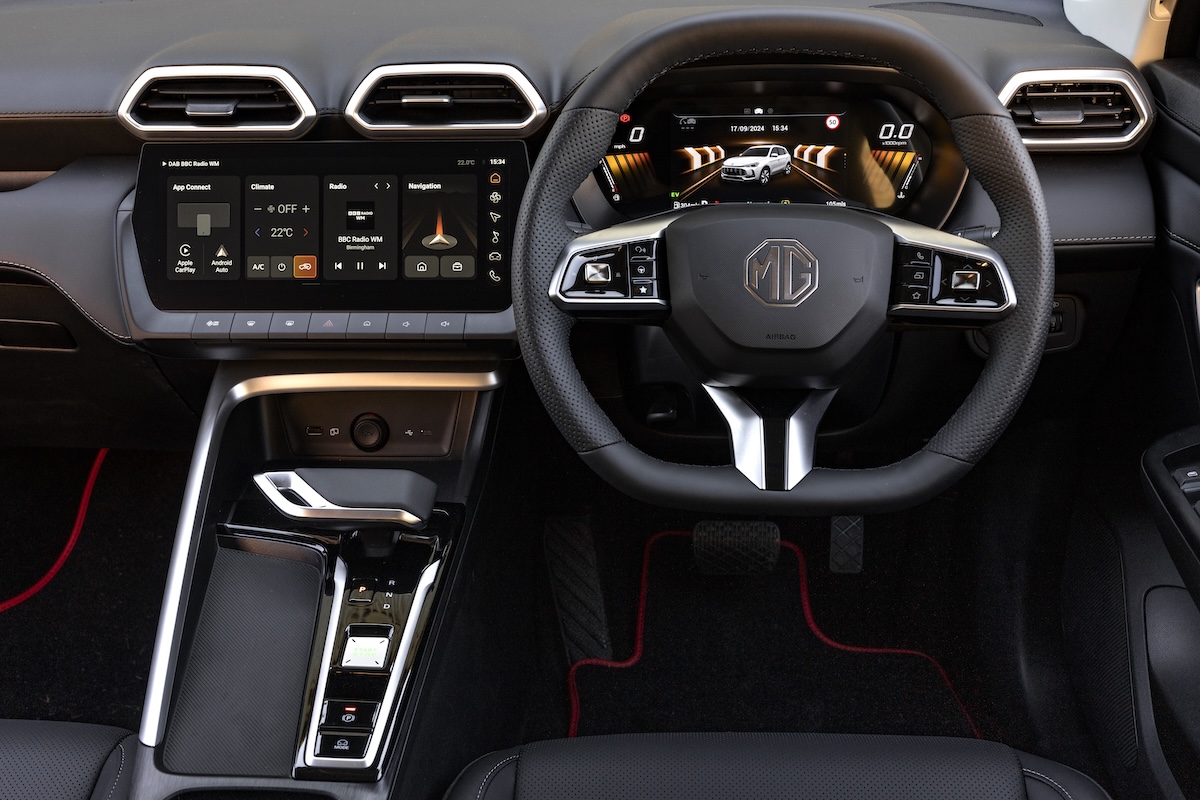
The system centres around a 12.3-inch touchscreen in the middle of the dashboard, and it’s a vast improvement on MG’s infotainment efforts of old. There’s a range of shortcut icons and a handy Home button, while the Home screen also has tiles for various functions that allow you to make basic changes to that function without delving into the corresponding submenu. It’s not perfect, though: some key functions are still buried a bit too deeply within the menu structure, and the screen doesn’t always register the prod of a finger at the first time of asking.
You also get a 7.0-inch digital instrument cluster behind the steering wheel, which can be configured in a number of different layouts. In all of them, however, all the important information seems to be displayed around the outside of the screen in rather small script, while the information that’s displayed much bigger and more clearly in the centre of the screen isn’t actually all that useful.
MG ZS running costs
Thanks to its hybrid powertrain that can run on electric-only power for a good slice of the time at low speeds, the MG ZS is impressively parsimonious on fuel. The official WLTP fuel economy figure is 55.4 mpg, while CO2 emissions stand at 115g/km. This means that real-world running costs should be impressively low compared with those of non-hybrid rivals.
Purchase prices perhaps look a little higher than you might expect initially given the MG’s high-value appeal, but compare them with those of key rivals, and they start to look significantly better. Equivalent versions of the Renault Captur, Toyota Yaris Cross or Hyundai Kona will cost you significantly more.

MG ZS reliability
Take a glance at the latest What Car? Reliability Survey, and you might get rather worried about how reliable your MG will be. The brand finished a lowly 25th out of 32 carmakers considered in the survey, while the petrol-powered version of the ZS came second-to-last out of 22 models considered in the Small SUV category. Neither result is one that MG will be bragging about.
More positively, though, the new MG ZS is a very different car mechanically from the one it replaces, so you’d hope that those mechanical maladies wouldn’t be inherited, and that dependability would improve generally.
You can also take comfort from the fact that you’re protected from unforeseen repair costs by MG’s generous seven-year, 80,000-mile warranty. Service intervals on the new car stand at 12 months or 15,000 miles, whichever occurs first.
- Both versions of the ZS get a suite of electronic driver aids known as MG Pilot, and this includes safety measures such as forward collision warning with active emergency braking, intelligent speed limit assist, rear cross traffic alert, blind spot detection, lane keep assist, lane departure warning, lane change assist, and a (rather over-sensitive) driver attention alert. You also have the convenience of adaptive cruise control.
- If these preventative measures aren’t sufficient to keep you out of trouble and you do find yourself in an accident, there are six airbags on hand to help keep you from harm.
- You get the choice of six exterior paint colours for your ZS. Arctic White is the solid colour that comes at no further charge, while metallic choices cost you a few hundred quid extra and include Battersea Blue, Hampstead Grey, Monument Silver and Black Pearl. The Dynamic Red finish in our pictures is a Tri-Coat offering that costs a bit more still.
- If you want the best value for money: Then it’s very difficult to argue with the package provided by the MG ZS. It costs thousands less than most competitors, yet comes with more standard equipment. The base-level SE trim is so well stocked that you probably don’t need to upgrade to the Trophy, but most people will.
- If you want reliability: If mechanical dependability is a must from your small SUV, then buy one from Toyota. The Japanese firm has an unparalleled reputation in this area, and it's backed up by a warranty that’s even more generous than MG’s: get your Toyota serviced according to schedule at an approved dealer, and it could last up to 10 years or 100,000 miles.
- If you want to look like you’ve just arrived from another planet: Then the Hyundai Kona is the small SUV for you. With styling that manages to look both modern and retro at the same time, it looks like nothing else on the road.
- If you want some Gallic style. Then why not consider the Renault Captur. It’s a great all-rounder in the small SUV market, with generous space and a comfortable ride, plus it’s a stylish, high-quality offering.

