Peugeot 5008 2026 review | A mixed bag
Peugeot 5008 SUV cars for sale
4.0
Expert review
Pros
Stunning interior
Spacious and practical
Good standard equipment
Cons
Entry-level petrol engine isn’t great
Neither is the ride-and-handling balance
Rubbish warranty offering

The CarGurus verdict
There’s a great deal working in the Peugeot 5008’s favour. Importantly for a seven-seater SUV, practicality is excellent, with generous room for passengers and luggage, and a clever and versatile seating system. The interior is gorgeous in terms of its design and quality, the cabin is generously equipped with standard equipment, and even the infotainment system is pretty easy to use by modern standards.
There are a few things working against it as well, mind. The entry-level powertrain we’ve tried disappoints for both responsiveness and refinement, and while not desperately uncomfortable, the car’s ride-and-handling balance has taken a backward step in comparison to its predecessor. It’s not massively cheap, either. However, if you’ve fallen for the smart looks and swanky interior, and you care much less about dynamic polish, then it’ll be a very pleasant do-it-all family car.
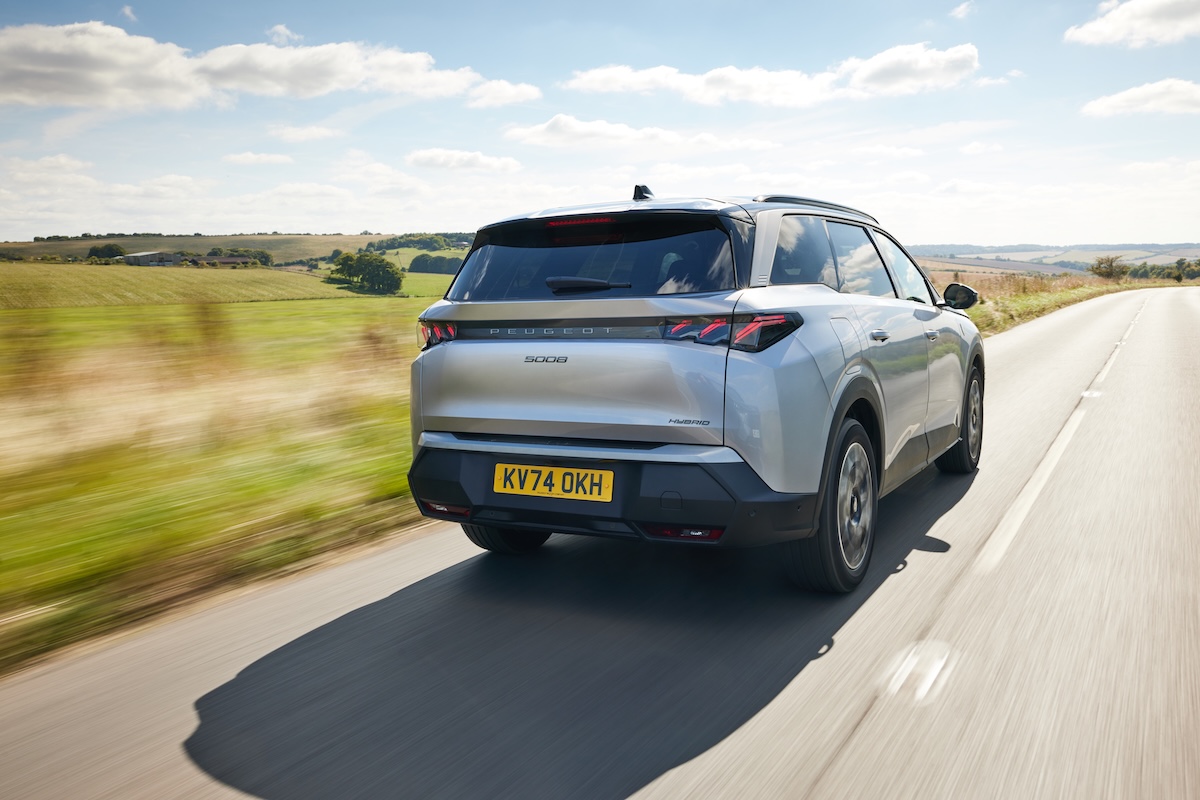
What is the Peugeot 5008?
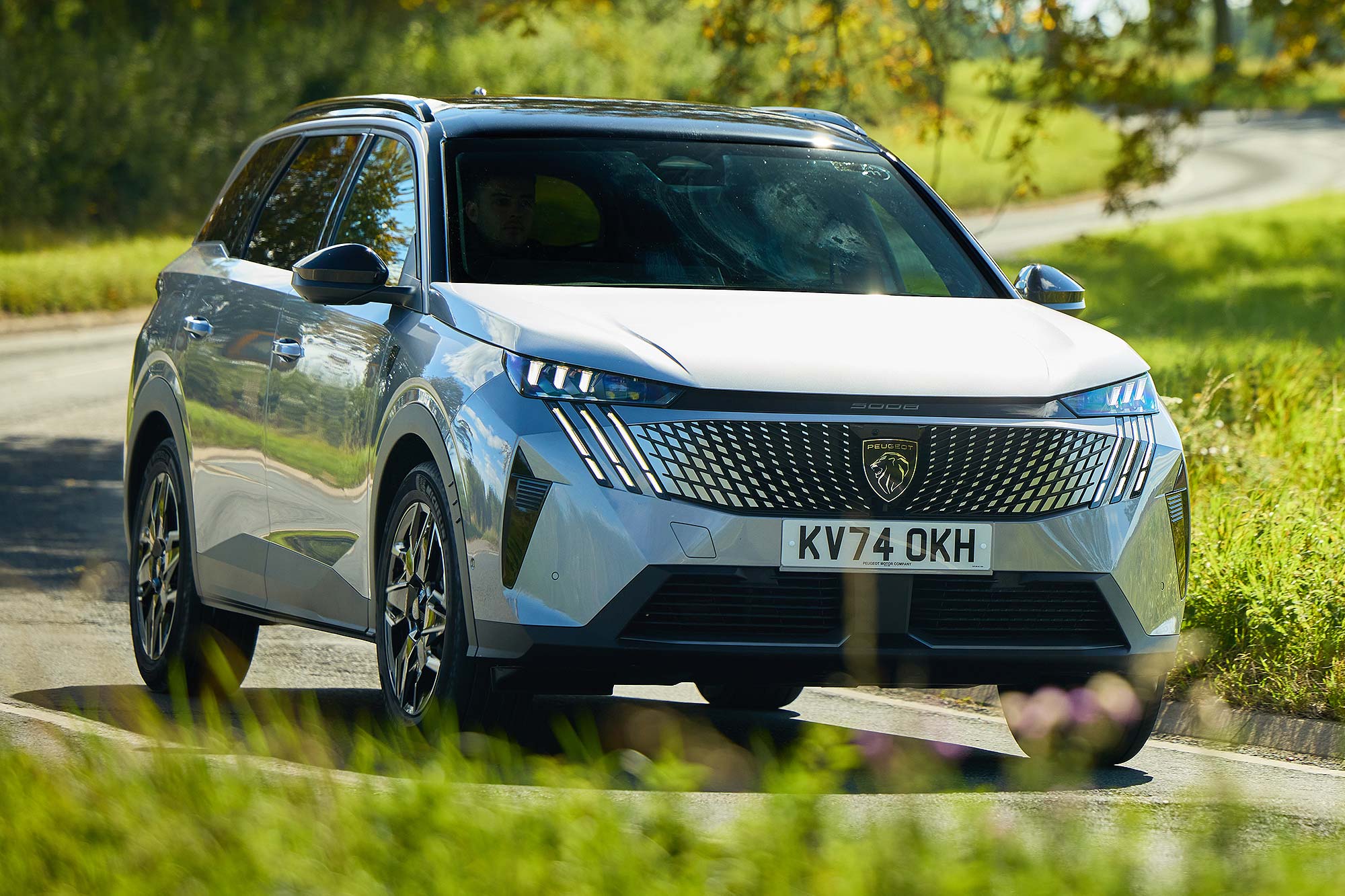
The Peugeot 5008 is a large seven-seater that has for many years found favour with the UK’s family car buyers. The first-generation car was a bit of an oddball in the way it looked (it couldn’t decide whether it wanted to be a hatchback, an MPV or an off-roader), but you couldn’t deny its impressive practicality and versatility, and when the second-generation of the 5008 came along, with its smart SUV looks and its sophisticated-feeling interior, the car’s appeal became well and truly cemented.
We’re now onto the third generation of the 5008, and with the latest version, Peugeot has tried to deliver more of the same, but with even more visual appeal, and with all the latest technology incorporated, just like it did with the latest version of the smaller Peugeot 3008. And it looks like the French firm has hit the mark, too. The new car has flamboyant Gallic styling and a drop-dead-gorgeous interior, while all the latest luxury and safety gear is offered. Also on offer is a variety of powertrain solutions, from petrol mild hybrid, to plug-in hybrid, to full electric.
Once upon a time, there weren’t many manufacturers that didn’t offer a seven-seater SUV of some sort, but these days, competition is a bit more limited. What’s more, those competitors will become even more fragmented depending on which of the various powertrain options you’re considering. The hugely popular Skoda Kodiaq will be a close rival, as will the Volkswagen Tayron, Nissan X-Trail, Land Rover Discovery Sport, and Mazda CX-80. The Dacia Jogger will be a smaller and (much) more affordable seven-seater alternative, while slightly larger options include the Hyundai Santa Fe, Kia Sorento and Kia EV9.
Even though the new Peugeot 5008 has a very stylish and very posh-feeling interior, it probably couldn’t be considered as a rival for prestige seven-seat SUVs such as the Audi Q7, and BMW X5/X7 or Volvo EX90.
How practical is it?
This area is the very reason you buy a seven-seater, so it’s arguably the most critical area of the lot. Happily, the 5008 does rather well here. There’s lots of space up front for tall adults to get comfortable, and there’s also decent storage, with a reasonable glovebox, fairly deep door bins, a large lidded cubby beneath the central armrest, and two cupholders just ahead of that.
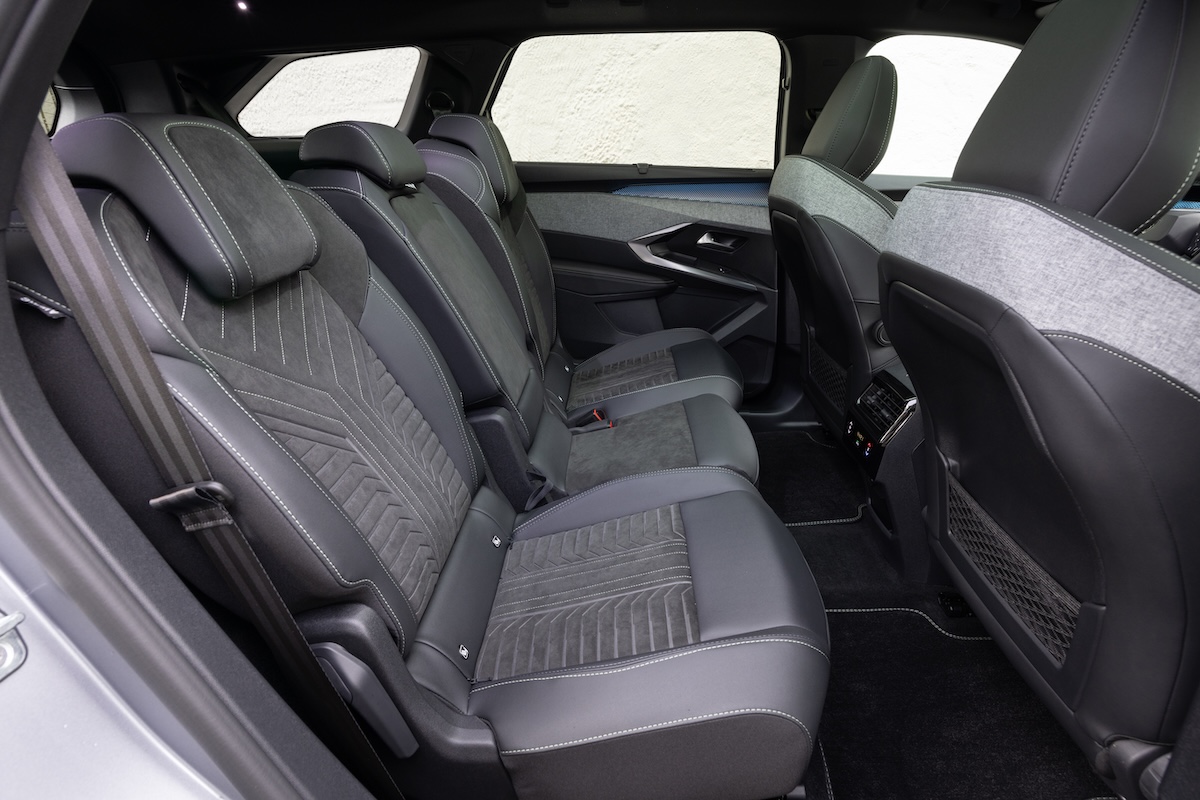
If you set the driver’s seat up for a six-foot driver, then there’s space behind for an adult of the same size. Precisely how much space that adult gets will depend on how you set up the sliding middle row of seats (these slide in two portions split 60/40). Send them all the way to the back of their runners, and your passenger will enjoy huge amounts of legroom: slide them all the way to the front of their travel, and your passenger will still fit but space obviously becomes a lot tighter, and they might well find their knees pressing into the backs of the front seats. Headroom is plentiful regardless.
You won’t often attempt to squeeze a six-footer into the third row of seats, which fold up quickly and easily from the boot floor. If you do, however, the middle row will need to be set all the way forward, otherwise there’ll be no room for the legs of those behind. Do so, and that six-footer will find it pretty snug on both headroom and legroom, but they will fit, and it’s tolerable for short journeys, handy when you’ve been nominated as the post-pub designated driver by your mates.
However, it’s more likely that those seats will be occupied by smaller children rather than fully fledged adults, who will find things rather more spacious, and you’ll find that those in the second row and rearmost row will simply negotiate on the position of the middle row seats on their runners so that everyone gets a fair share of the space available. If everyone plays nice, then they should all fit comfortably.
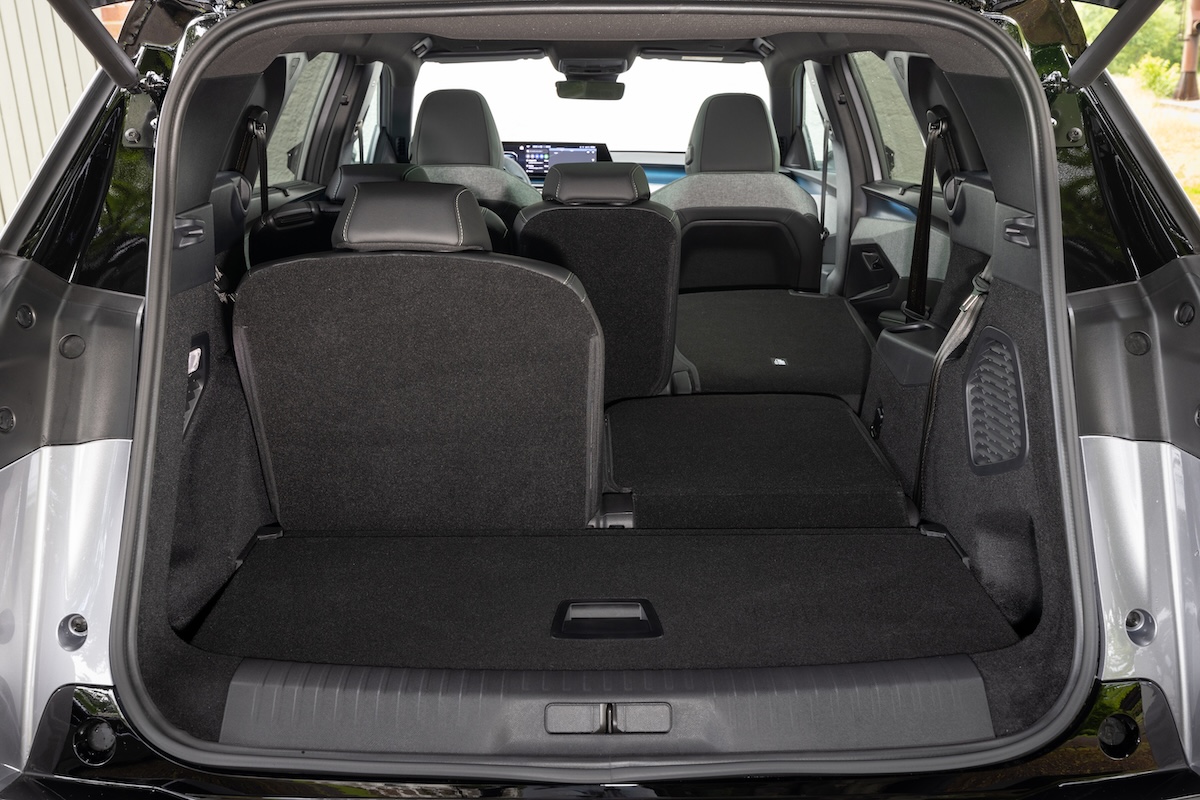
When travelling seven-up, the boot space initially looks very small, with only enough room for a couple of small rucksacks. Lift the false boot floor, however, and you’ll find a bunch more space underneath, and that brings the total up to 348 litres, which isn’t far off what you get in a family hatchback. Fold the rearmost seats away to switch to five-seat mode, and you get a very generous 916 litres of space, but that does include that underfloor compartment, so you’ll get a bit less with the false floor back in place, but you’ll hardly be struggling for space. There’s also a handy spot under there for your retractable load cover should you need to stash it.
You can also fold down the middle row for maximum load-carrying capacity of 2,232 litres. And, while the bases of those seats are split 60/40 like we mentioned earlier, the backrests are split 40/20/40, which gives more versatility when finding the ideal arrangement to carry the necessary combination of passengers and payload. In two-seat mode, all the folded chairs lie pretty much flat and level with each other, meaning that there aren't many obstructions to impede you when loading heavy items.
What’s it like to drive?
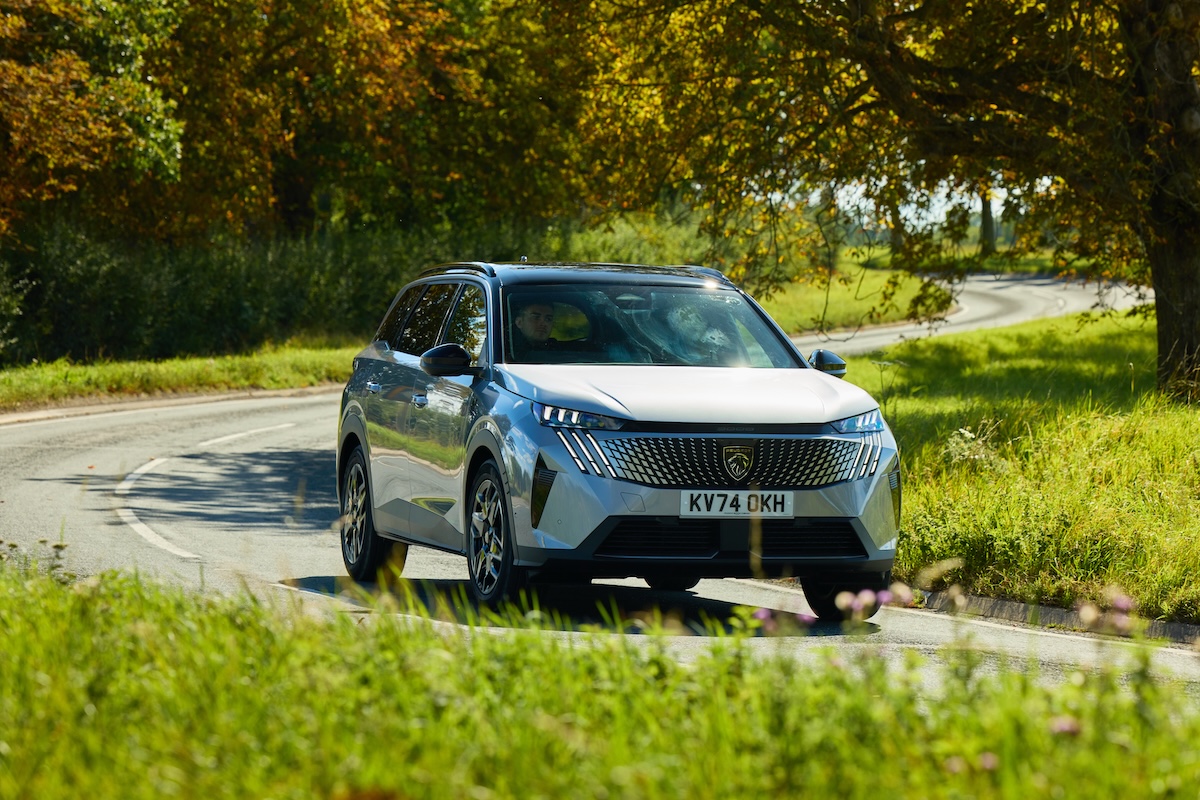
The previous version of the Peugeot 5008 was a really nice car to drive, combining a firm-but-fair ride with surprisingly sharp handling. Unfortunately, it feels like a little bit of that car’s sparkle has been lost with this latest version.
Where previously the suspension fell on the right side of firmness, the latest version feels firmer still and oversteps the mark. At all speeds, rough surfaces cause a wee bit too much fidgetiness to make its way through to the cabin, while sharper-edged potholes and sunken drain covers can give you a proper jolt. To dismiss the car as being uncomfortable would be over-egging the pudding somewhat, but it’s disappointing that things have taken a backward step, and there are certainly a variety of competing family SUVs that'll give you a smoother life.
This might be easier to forgive if the 5008’s handling improved by a corresponding amount, although in a car designed to carry families, we’d always favour comfort over sharpness. But even so, the handling has also taken a backward step. The body doesn’t lollop around an excessive amount in corners and the tyres never feel short of grip, but nevertheless, the car feels heavy and a little clumsy when changing direction.
On the powertrain front, you can have the 5008 with either a 48-volt mild hybrid petrol powertrain, a plug-in hybrid powertrain or a pair of all-electric choices. The entry-level mild hybrid has a 134bhp 1.2-litre petrol engine, which is given a small amount of assistance when pulling away and speeding up by an electric motor integrated into the car’s six-speed dual-clutch automatic gearbox. And when we say it delivers a small amount of assistance, we mean very small indeed. Technically, the car is able to propel itself under electric-only power, but only at super-low parking speeds, and only for metres at a time, rather than miles.
Regardless of the level of electrical assistance provided, this powertrain feels overwhelmed by the bulk of the 5008’s body, and the power delivery also feels rather clumsy. Whether you apply gentle pressure to the accelerator pedal or absolutely bury it, and whether you’re pulling away from the mark or picking up speed on the move, the result is pretty much the same: you have to wait a second for the throttle to respond, then you have to wait another second or two for the gearbox to decide on which ratio is best for the job at hand, and the cumulative effect is that it takes far too long for anything to happen when you press the pedal. And, when the drive finally does arrive, the revs shoot towards the redline, yet despite the racket the engine is making, you don’t ultimately go very much faster. The official 0-62mph time is given at 11.3 seconds, but to us, it feels far more lethargic than that.
We haven’t tried the plug-in hybrid, but you’d hope it does rather better, and an official 0-62mph time of 8.3 seconds would suggest that it probably does. It combines a bigger 1.6-litre petrol engine with a more powerful electric motor and a 21kWh battery, sending a combined 193bhp to the front wheels through a seven-speed dual-clutch gearbox. It can also run for 55 miles on all-electric power.
The two electric versions both crack the 0-62mph dash in a shade under ten seconds, with just a tenth of a second separating them. The bigger difference between them is range. The entry-level powertrain has a 207bhp motor and a 73kWh battery for an overall WLTP range of up to 310 miles, while the other one packs a 227bhp motor and a larger 97kWh battery, giving a very impressive range of up to 414 miles.
Technology, equipment and infotainment
The 5008 lineup comprises two trim levels, Allure and GT. When it comes to general luxury equipment, Allure versions come with part-leather-effect upholstery, ambient lighting, a leather steering wheel, tri-zone climate control, keyless entry and go, automatic light and wipers, cruise control, rear parking sensors, a self-washing reversing camera, four electric windows, power folding door mirrors, and an electric parking brake. In terms of styling, the Allure comes with 19-inch alloy wheels, metallic paint, all-round LED exterior lights, and rear privacy glass.
GT-trimmed cars look a fraction smarter with 20-inch alloys, pixel LED rear lights and a black roof. It’s not just about the looks, either, because GT trim also provides adaptive cruise control with stop and go, LED headlights with adaptive high beam function, heated front seats, a heated steering wheel, driver’s lumbar adjustment, extended ambient lighting, front parking sensors, and a handsfree powered tailgate.
In the all-important area of infotainment, both versions of the 5008 get exactly the same setup. The functionality it delivers includes Bluetooth, DAB, wireless Apple CarPlay and Android Auto, native satnav, a wireless smartphone charger, and ‘OK Peugeot’ voice commands.
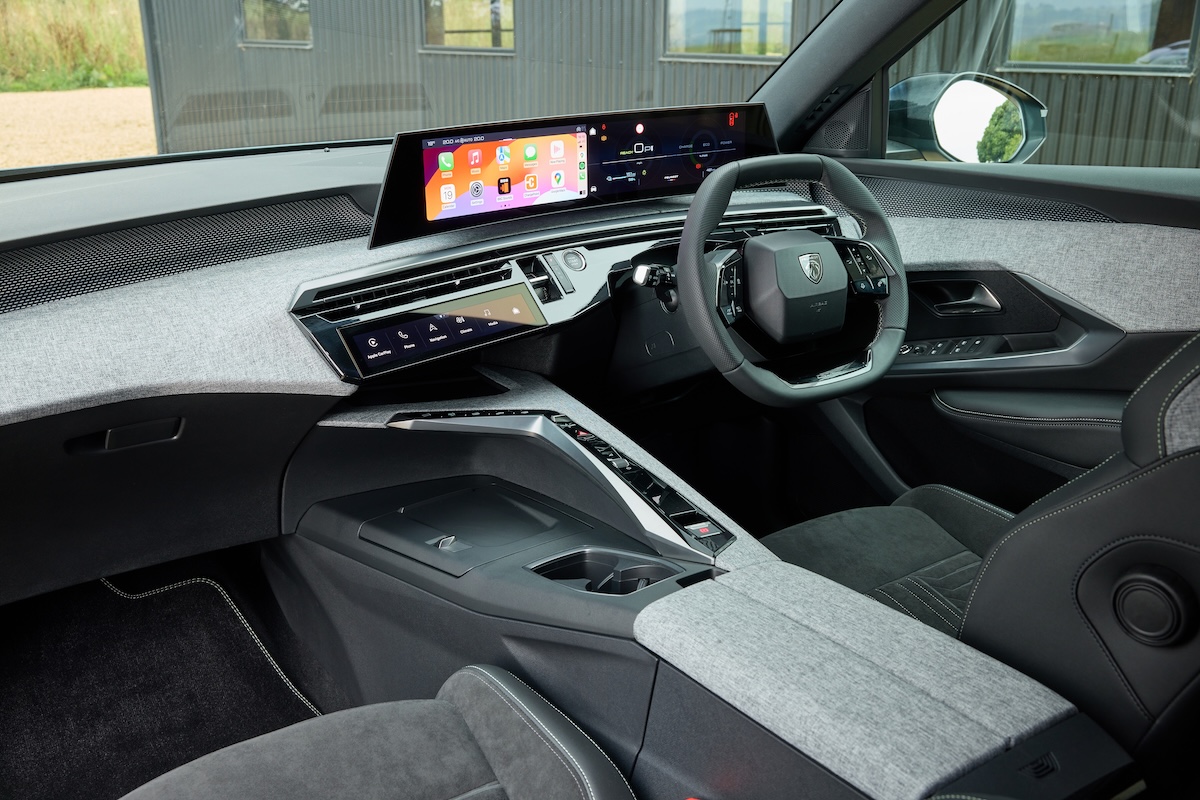
It looks great as well. You’re faced with a huge 21.0-inch display panel, the right-hand side of which sits behind the steering wheel and shows the driver all the essential driving information, while the left-hand side extends into the middle of the dashboard, and serves as the central touchscreen. What’s more, the whole thing is cleverly designed to look like it’s hovering over the top of the dashboard.
Many such systems these days are too clever for their own good, because they’re full of long and convoluted menus that are too difficult to navigate, especially on the move. The Peugeot’s system, however, is better than most on that score, because the menus are fragmented into more easily digestible chunks, so it’s not as easy to get lost. You also get what Peugeot calls the ‘i-Toggle’ controller, which is essentially another small touchscreen panel positioned below the main one, and this displays a variety of configurable infotainment shortcuts. The ‘Home’ shortcut is always on show, but in addition, there are up to ten other slots - housed in two blocks that you swipe between horizontally - that you can customise to give quick and easy access to your most-used functions. It’s really effective, the shortcuts are simple to configure, and the graphics also look really slick and stylish.
Regardless, the system isn’t without its irritations. Some of the screen transitions feature massively over-elaborate animations, meaning that they take a needlessly long time. Screen sensitivity isn’t that brilliant, either, so you’ll often have to jab at an on-screen icon with your finger several times before your command registers.
You might not like the fact that your temperature controls aren’t always a permanent fixture on the central screen, but in fairness, you can always dedicate one of your i-Toggle shortcuts to the ventilation system.
Standard safety equipment across the board includes automatic emergency braking, lane keep assist, and driver attention alert, but it’s a little odd that there are only two sets of Isofix points, and you also have to upgrade to GT trim for adaptive cruise control. The 5008 has earned a four-star (out of five) safety rating from Euro NCAP.
Peugeot 5008 running costs
Prices for the Peugeot 5008 start at around £40,000 at the bottom of the range (for the self-charging hybrid in entry-level Allure trim) and rise to around £55,000 (for the long-range electric version in GT spec). That puts it roughly on a par with the equivalent Skoda Kodiaq in terms of starting price, although it’s worth noting that the plug-in hybrid version of the Skoda can’t be had with seven seats like the Peugeot can, and the Skoda can’t be had as a zero-emissions electric car at all.
The two hybrids on offer are two very different types of hybrids (indeed, it’s debatable whether one of them is a hybrid at all), and so are very different financial propositions. The mild hybrid has an official WLTP fuel economy figure of up to 52.5 mpg, but we reckon that matching that in the real world will be very difficult purely because of how hard the engine needs to be worked to make even moderate progress.
The plug-in hybrid, meanwhile, has an official figure of up to 356.2 mpg, but that will be even harder to match in reality. That’s because these figures are always unrealistically flattering for plug-in hybrids due to the way the tests work. In reality, the economy you get will depend entirely on how you use it. Keep the battery topped up and only ever do short journeys that can be conducted wholly on electric-only power (the range is up to 55 miles according to WLTP figures), and you won’t use a drop of petrol. However, as soon as the batteries run dry and the petrol engine has to do the heavy lifting, then the car will immediately become very thirsty because the engine not only has to haul about the weight of the car, but the weight of the batteries and motor as well.
The same WLTP figures indicate that the standard-range electric e-5008 will do up to 310 miles on a charge, while the long range version extends that to 414 miles. Assuming that your domestic power is billed at the UK’s national average rate, the former will cost you around £20 to charge fully, while the latter will cost around £27. However, those charges will cost you a lot less - easily half as much - if you get yourself on a domestic power tariff that allows you to charge your car overnight on heavily discounted off-peak electricity.
If you need a top-up in a hurry, the Peugeot e-5008 can accept rapid charging at a rate of up to 160kW, delivering a 20% to 80% charge in around half an hour on both versions at an appropriately powerful public DC charger. This sort of charge will be considerably more expensive than a home charge, though.
Peugeot 5008 reliability
Peugeot has a fairly middling reputation for reliability. Look at the 2024 edition of the What Car? Reliability Survey, which assesses the mechanical dependability of cars up to five years old, and Peugeot placed 19th out of 31 carmakers in the manufacturer standings, so a little way behind the industry average. The year after, it had risen to joint-11th out of 30, so just ahead of the average.
It's kind of the opposite story with the 5008 as an individual model. In the seven-seater category of the first study, it placed a more impressive third place out of 12 models, while the year after, it had fallen back to joint-eighth of 14. It should be noted, though, that both results were for the previous second-generation version of the 5008, not the third-generation car we’re talking about here.
What you’re likely to be fairly unimpressed by is the warranty cover you get on your 5008. Peugeot provides unlimited-mileage cover for the first two years of ownership, but the third year of cover you get is retailer-supplied, and has a 60,000-mile limit. That’s about the least offered by any manufacturer, and looks especially mean when more and more carmakers are now offering five-, seven-, and even ten years of cover, provided certain conditions are met.
The warranty on the traction battery of electric and PHEV 5008s runs for eight years or 100,000 miles, which again, is pretty much the bare minimum you can expect for this type of component.
- Like most Peugeots, the 5008 has the firm’s trademark i-Cockpit driving position. This means you have a small steering wheel and look at your driving instruments over the top of it, rather than through it like normal. While early cars that used this approach had a distinctly awkward-feeling driving position, it seems that Peugeot has now persisted with it long enough to finally get it right, so finding a comfortable driving position shouldn't be too much of an issue.
- What you might well like most about your 5008 is its interior design, which is wonderfully modern and elegant. Everywhere you look, there's an interesting and tasteful texture, fabric, colour or shape, and they all fit together with effortless cohesion. The fact that the infotainment screens look like they're hovering above the dashboard is a nice touch, too. Allure models have coloured ambient lighting that emanates from behind the screens and the centre console, while in the GT version, the lighting is extended into the textured horizontal recess that runs across the top of the dash and into the doors. This latter arrangement looks really cool, especially after dark.
- It’s no good having lavish interior design if it's let down by the materials used, but happily, that’s not the case in the 5008. All the surfaces directly in your eyeline look fab, and are just as much of a treat for the fingertips as they are for the eyes. You will find a few less appealing surfaces in the lower reaches of the cabin, but you really have to look for them, and so they don’t get close to spoiling the feeling of poshness.
- If you want the cheapest 5008: Go for the mild hybrid in Allure trim. Most of the kit you want is standard, so you shouldn’t be left wanting for luxury. And as for performance? Well, just resign yourself to the fact that you won’t be going anywhere particularly quickly, and getting there could well be a noisy business.
- If you have a short commute but busy weekends: The PHEV might be just the ticket. Keeping the battery topped up at home might allow you to get to the office and back under purely electric power, while the petrol engine is in reserve to deal with occasional longer jaunts.
- If you’re a company car driver: The PHEV will save you a bunch of money in monthly Benefit-In-Kind tax bills over the mild hybrid, but the all-electric models will save you a lot more, because tax rates are still extremely low on EVs. This is one of the few significant tax breaks left for EVs, and is one that’s well worth taking advantage of.


