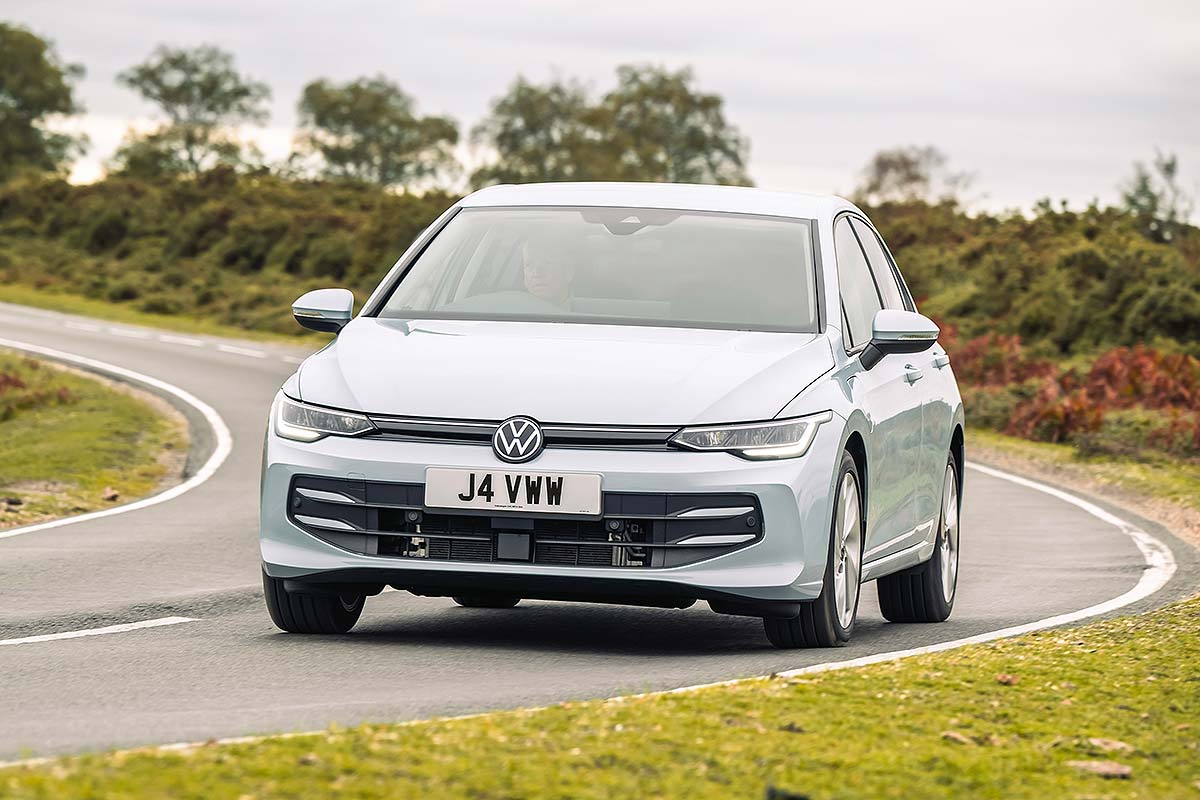
The Volkswagen Golf is the nation's favourite used car of the past decade, according to a recent survey by CarGurus.
The survey was commissioned by the online car-shopping marketplace to mark its 10th year of operating in Britain, and asked 1,000 UK drivers above the age of 27 about their preferences and opinions on cars over the last decade.
Some might see the Golf as an unsurprising winner. The perennial German hatchback has, for many decades, provided car buyers with a true sweet spot between practicality, build quality, affordability and desirability. That makes it a car that appeals to a wide variety of people, from first-time buyers to growing families and long-distance commuters.
Joining it in the top five are the BMW X3, Audi Q3, Audi A3 and Vauxhall Astra, with the remainder of the top 10 made up of the Kia Sportage, Nissan Qashqai, Toyota C-HR, Audi Q5 and Honda Civic.
The SUV boom is real
But is the triumph of such a familiar family hatchback hiding real change in our buying habits? The Golf may have taken top honours, but SUVs dominate much of the list of buyers' favourites.
The survey revealed that hatchbacks remain Britain's preferred choice of body style overall, taking 28% of the vote, but medium SUVs accounted for 21% of respondents' favoured choice, while small SUVs attracted a further 15%.
That shift is reflected throughout the rankings, where six of the top 10 are SUVs (the BMW X3, Audi Q3, Kia Sportage, Nissan Qashqai, Toyota C-HR and Audi Q5) with the other four being hatchbacks (VW Golf, Audi A3, Vauxhall Astra and Honda Civic).
Meanwhile, one segment has disappeared almost entirely from drivers' affections: people-carriers (MPVs). Once the default motoring choice for large families, MPVs attracted fewer than 1% of votes in the survey. Models such as the Seat Alhambra, Renault Scenic and Vauxhall Zafira Tourer have clearly fallen out of fashion as buyers increasingly favour SUVs, which offer similar practicality with more desirable styling.
The basics still matter
The survey identified that reliability remains the single most important quality, cited by 62% of drivers when describing what makes a favourite car. Design and styling followed on 55%, while value for money was important to 52%.
In terms of the features and technology favoured by drivers, there was a clear preference for tech that makes driving safer, simpler and less stressful, rather than anything gimmicky.
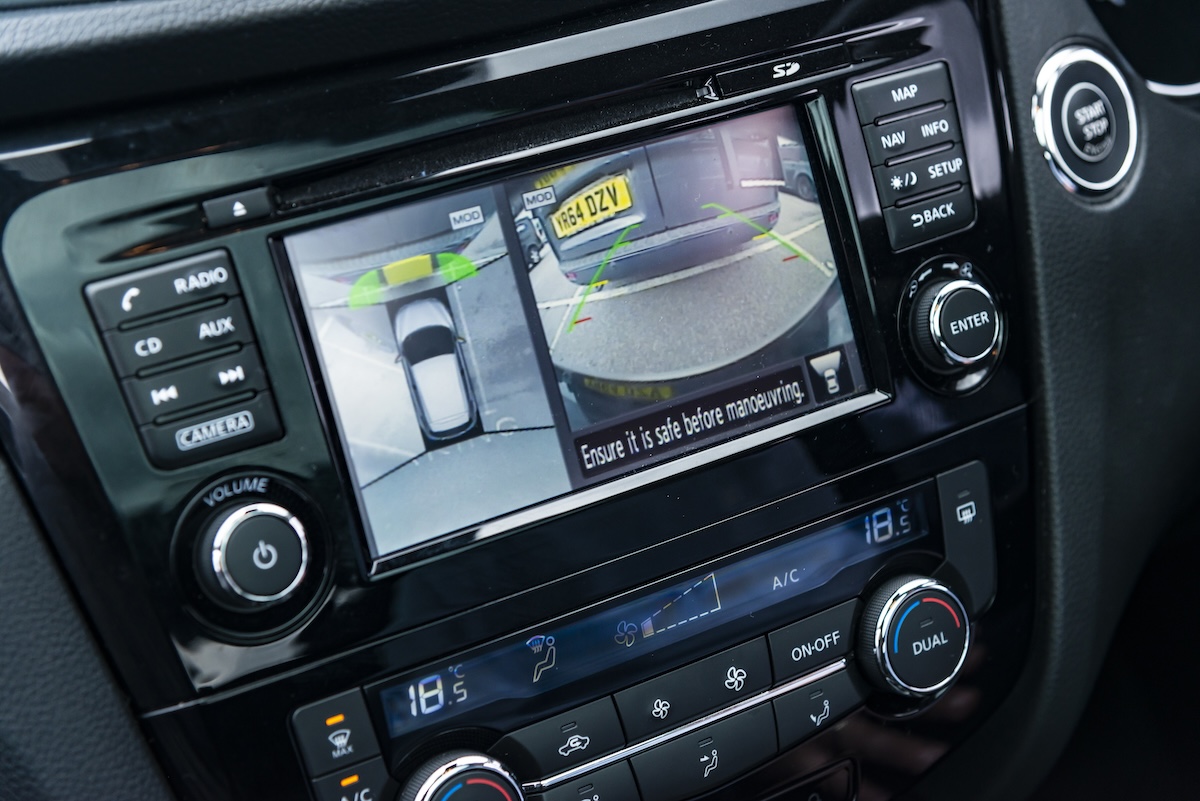
Topping the list of favoured features were 360-degree camera systems, selected by 30% of drivers, while self-parking systems came a close second, getting the thumbs-up from 28%. Keyless entry and push-button start also proved popular, being selected by 25% of respondents.
Not every innovation has been embraced quite so enthusiastically, however. Gesture control was chosen by just 7% of respondents, while over-the-air software updates appealed to only 8%. Button-free dashboards, cooling seats and head-up displays each attracted only 9%.
Safety has climbed the agenda
Perhaps the biggest shift over the past decade isn't what drivers want from a car, but how much importance they now place on safety. Safety features are a higher priority than they were in 2016 for 70% of respondents. Two thirds now actively seek modern in-car technology, while 61% place greater importance on cleaner engines and environmental impact than they did a decade ago.
Interestingly, though, more than 83% said they're still looking for the same core qualities they valued 10 years ago, but with more appreciation of modern tech and safety systems.
Buying cars has also changed
It's not just the cars that have evolved. The way we buy them has changed significantly as well.
Traditional dealerships remain the most popular place to purchase a used car, with 37% of respondents still preferring to buy in person. Around a third (34%) also like visiting dealerships while researching their next purchase.

But digital research has become firmly embedded in the buying journey. More than a quarter of respondents (28%) now rely exclusively on online sources when researching their next car, while almost a quarter (24%) have already used AI tools such as ChatGPT to help inform their decision.
The purchasing process itself is increasingly moving online, too. More than one in five respondents (22%) have bought a used car through a dealer's online portal, while 14% have completed an entire purchase through an online marketplace.
The nation’s favourite used cars: a mini-buying guide
Even when buying one of the most popular used cars on sale, you still need to be a bit careful. Here's a rundown of our top three models, as identified by the survey, and which versions of those models you want to target, which ones you want to avoid, and any potential problems you might want to look out for.
Volkswagen Golf Mk8
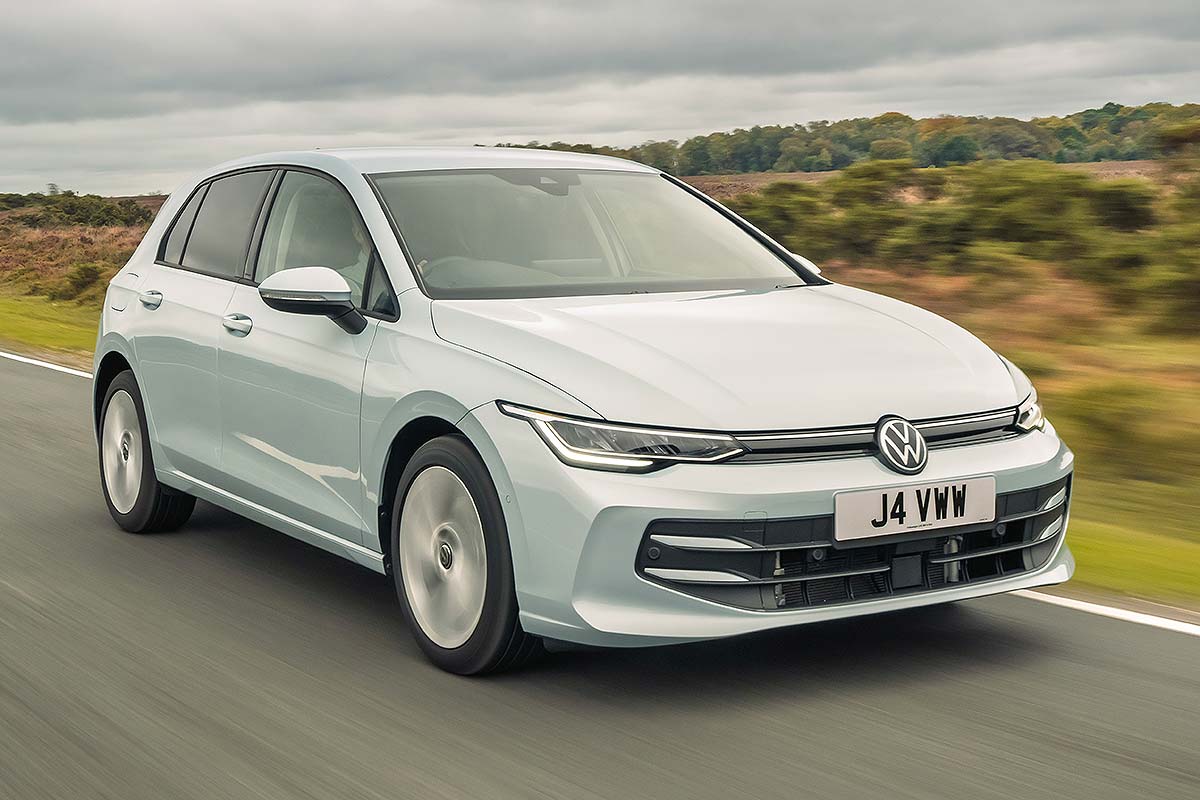
The Mk8 Golf has been with us since 2020, so early models might now have high mileages, and there may be some less-than-pristine examples around. However, this is still a modern car, with all the cutting-edge technology and safety systems you expect.
What to go for...
There is a choice of regular petrol, mild hybrid and plug-in hybrid petrol models, and the VW Golf Mk8 has also been available with a diesel, but these are rare, and discontinued as of summer 2026. The plug-in hybrids are excellent if you have somewhere to plug in, and diesels are good for serious mile-munching. But the sweet spot is the 1.5 eTSI mild hybrid, which delivers near-diesel economy at a lower price point (for both fuel and purchase).
What to avoid...
1.0-litre TSI petrol models are a bit sluggish, as is the lowest-powered diesel model. If your budget stretches to it, the post-2024 facelift models offer a much more intuitive infotainment system.
What to look out for...
Software-related issues are the biggest problem, with keyless go issues, phone pairing problems and phantom safety system warnings. The infotainment system on early cars was also prone to glitching.
Read our full Volkswagen Golf Mk8 review
BMW X3
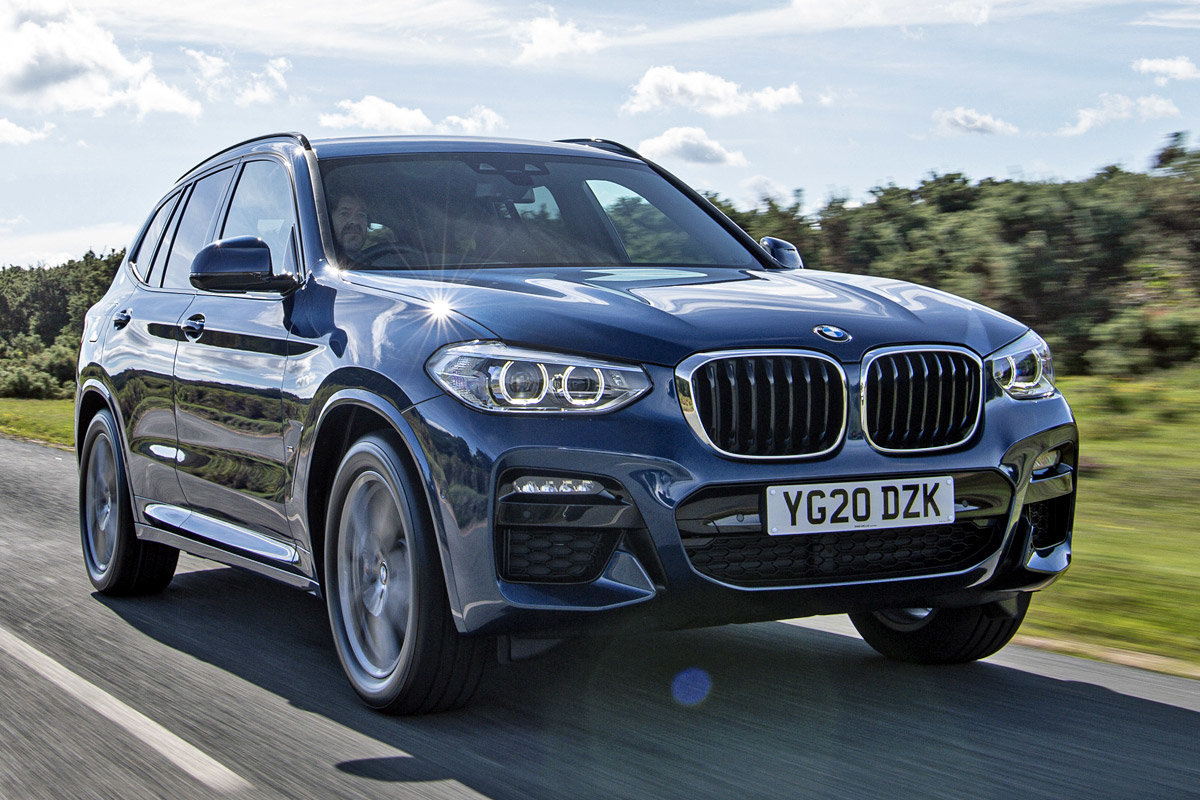
The BMW X3 is your second-favourite used car, and it’s easy to see why: it combines everyday practicality with an upmarket feel and good build quality. There’s also the added bonus that, as with most BMWs, it’s great fun to drive. It’s not cheap to buy, however.
What to go for...
The BMW X3 that’s been on sale for the longest time since CarGurus UK launched in 2016 is the third-generation model, which was built from 2017-2024. Late Mk2 models are now quite old, and the newer Mk4 cars are still pricey, so the Mk3 is really the one to go for if you’re after a used-car bargain.
What to avoid...
All Mk3 BMW X3s come with four-wheel drive and an eight-speed automatic gearbox as standard, and all but the smallest engines feel gutsy and muscular, so most models have their merits. If you do opt for a plug-in hybrid version, though, you’ll need to make sure you’ve somewhere to plug it in to get the best from the hybrid powertrain.
What to look out for...
Even though most will be outside factory warranty, there’s not that much in the way of major issues to be wary of. Some engines can suffer timing chain sensor issues, and the plastic coolant filter housing can become brittle over time, however.
Read our full BMW X3 Mk3 review
Audi Q3
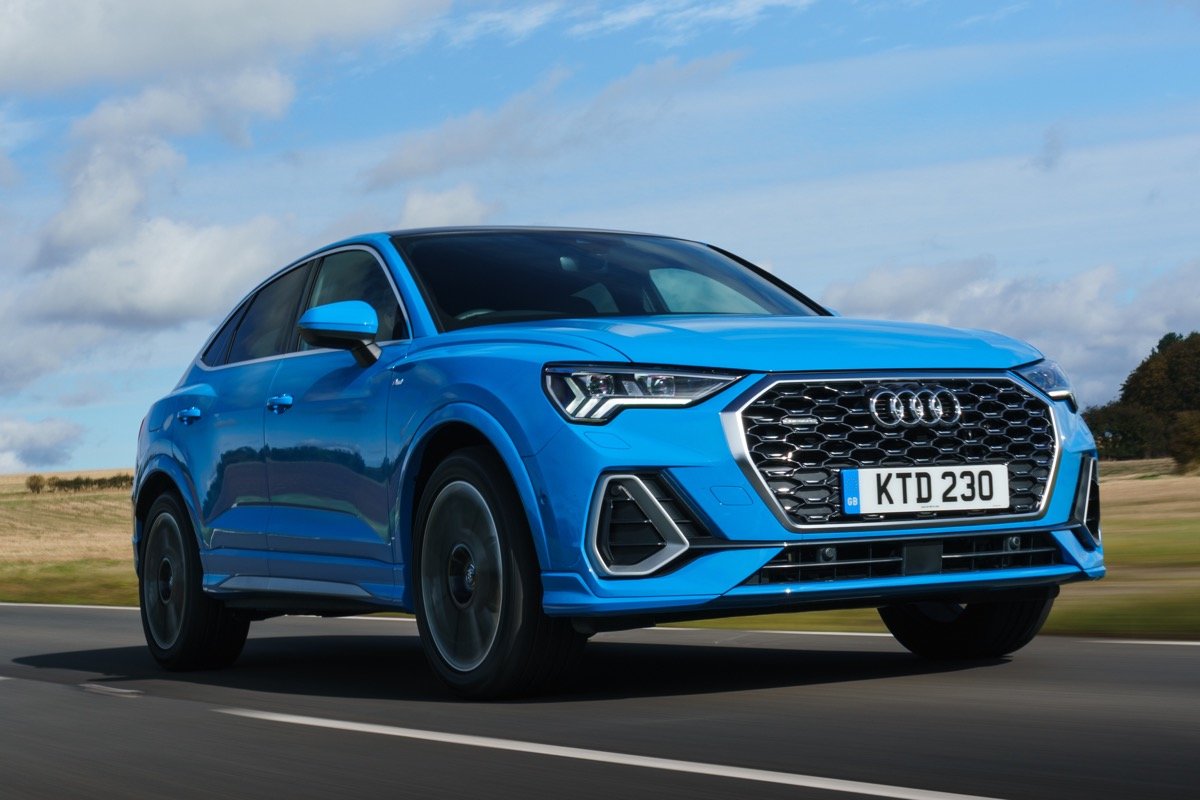
The Audi Q3 hits a real sweet spot for buyers looking for a premium family SUV. It offers much of the quality and technology of larger Audis in a more manageable package, while a raised driving position and smart, well-built cabin make it an easy car to live with. For our money, the Mk2 version, sold between 2018 and 2025, is the one used buyers should go for.
What to go for...
Most buyers will find the 35 TFSI petrol engine offers the best balance of performance and running costs. S line trim is particularly popular on the used market, adding sporty styling and plenty of desirable equipment without pushing prices into top-spec Vorsprung territory.
What to avoid...
The entry-level Technik model is still well equipped, but many buyers prefer the sharper looks and extra kit of Sport or S line versions. Unless you regularly tow or live somewhere that really benefits from four-wheel drive, there's little need to pay extra for the more powerful quattro-equipped models, which are generally more expensive to buy and run. Likewise, the high-performance RS Q3 is entertaining, but it's a very different proposition to the rest of the range, with significantly higher purchase and running costs.
What to look out for...
Overall, the Mk2 Q3 has built a solid reputation for reliability, but it's worth checking that the infotainment system and Audi Virtual Cockpit operate as they should, as some owners have reported occasional software glitches. On S tronic automatic models, make sure the gearbox changes smoothly and without hesitation, and listen out for any knocks from the suspension, particularly on S line cars fitted with larger alloy wheels.
Read our full Audi Q3 Mk2 review
The changing face of the UK motor industry since CarGurus' UK introduction in 2016...
Brands that have come and gone since 2016
Infiniti – left in 2020
Nissan’s version of Lexus, Infiniti only launched in the UK in 2009 and shuttered its UK operations just 11 years later, having failed to convince British buyers that it was a viable alternative to BMW, Audi and Mercedes.
Chrysler – left in 2017
Once popular for its big 300C saloon and Voyager MPV, Chrysler was struggling in the UK by the 2010s. So in 2015, then-parent company Fiat Chrysler Automobiles (FCA) decided to withdraw from the UK, with its presence gone entirely by 2017. Instead, FCA would concentrate on its Fiat and Jeep brands in the UK.
Mitsubishi – Left in 2021, returned in 2026
Despite the legendary status of its Evo performance models, a loyal following for its rugged Shogun 4x4, and the sales success of its innovative Outlander plug-in hybrid, Mitsubishi left the UK market in 2021. It returned in 2026, however, with a refreshed version of the L200 pick-up and an all-new iteration of the Outlander PHEV.
Ford’s big clearout
The past 10 years has seen a big shift in Ford’s fortunes, as market trends moved away from three of its staple cars: the Fiesta, the Focus and the Mondeo. The Mondeo was first to make way in 2022, followed by the Fiesta in 2023 and the Focus in 2025, while Ford shifted its focus towards SUVs and electrification.
But while the Blue Oval’s decision to drop the slow-selling Mondeo was easy to understand, the axe-swinging on the Fiesta and Focus was a bit more baffling: especially since the Fiesta’s arch-rival, the Vauxhall Corsa, remains the fourth best-selling model in the UK, and the Focus’s key competitor (the Volkswagen Golf) comes in at number six.
The Chinese revolution
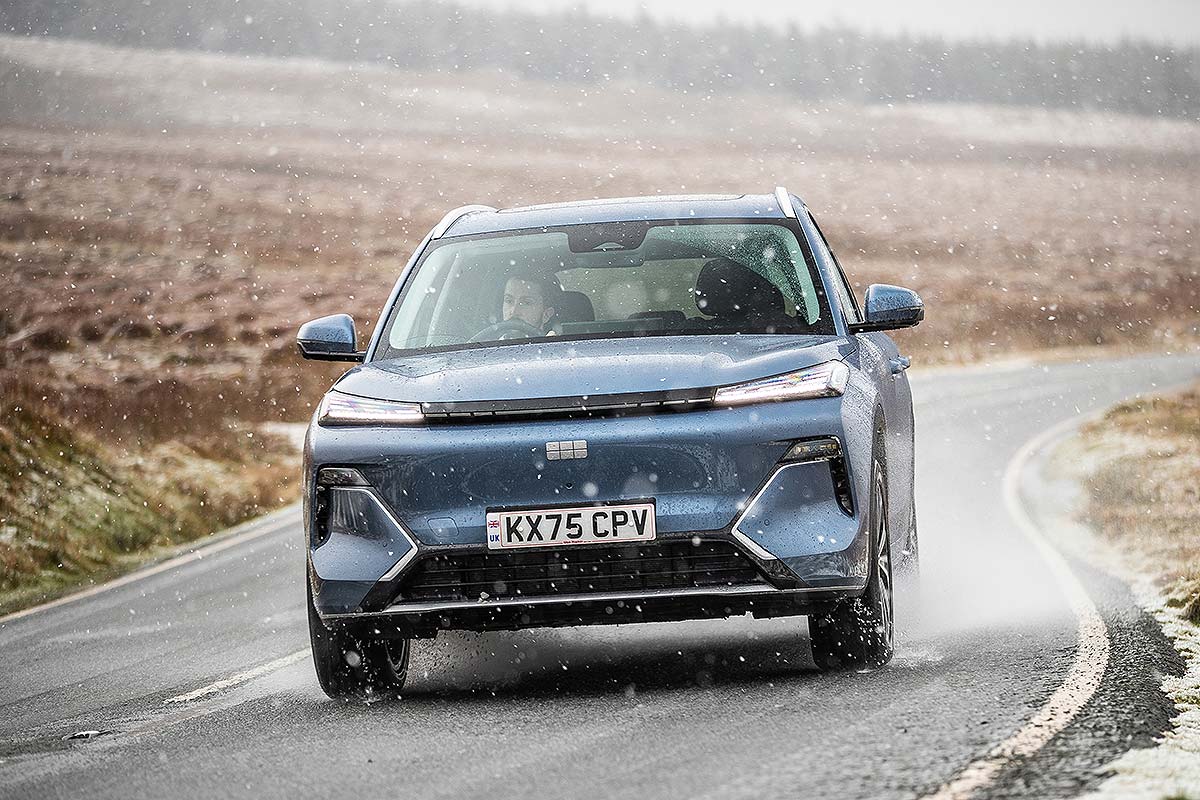
Geely, BYD, Chery, Omoda, Leapmotor and Jaecoo have all been massively successful since their respective launches into the UK market… and all have arrived since 2023. Jaecoo, in particular, has experienced stellar sales in the UK. It racked up almost 29,000 sales in its first full year – 2025 – and in March 2026, the competitively priced Jaecoo 7 SUV took the number one sales spot in the UK, with more than 10,000 sales in that month alone.
But not all Chinese brands have been quite so successful. GWM, whose 03 model made headlines when it first arrived on these shores in 2022 badged as the ‘Funky Cat’, only sold 542 cars in 2025. Skywell, meanwhile, sold only 31 examples of its BE11 SUV in the same time period.
The effect of COVID 19
The coronavirus pandemic almost seems like ancient history now, the car market was by no means immune to its effects: car sales in the UK dropped by 29 per cent from 2019 to 2020, the single largest fall in the UK since 1943.
There was another significant effect of the COVID crisis, too: the chip shortage. Microchips or semiconductors are such a vital part of modern cars for all their complex electronics, that the automotive industry is a major consumer of them. And after the pandemic hit, car makers underestimated how quickly sales would bounce back. The result was that they under-ordered on microchips, but couldn’t increase their orders later, because increased demand from other electronics sectors had already gobbled up their allocation.
So great was the pinch that production was impacted, and many models were produced without some of the features the brochures promised. So, if you’re looking at a 2021 or 2022 car and its spec doesn’t quite match what you expect, it could be a product of the global chip shortage.
Electric cars hit the mainstream
When CarGurus arrived in the UK in 2016, battery electric vehicles (BEVs) made up just 0.4% of the new car market. By the end of 2026, they’re forecast to make up almost 27% of new car sales. What’s more, there were only 14 electric models available in 2016, compared with 167 today.
It’s not just the selection of models that has grown, but the driving range of those new models, too. Whereas a full charge in an electric car 10 years ago might have seen you travel between 80 and 150 miles, nowadays official range figures usually sit somewhere between 250-500 miles.
You’ll also find more than 93,000 public devices to charge them with, versus a little over 6,500 charging points a decade ago.
Related Topics:


