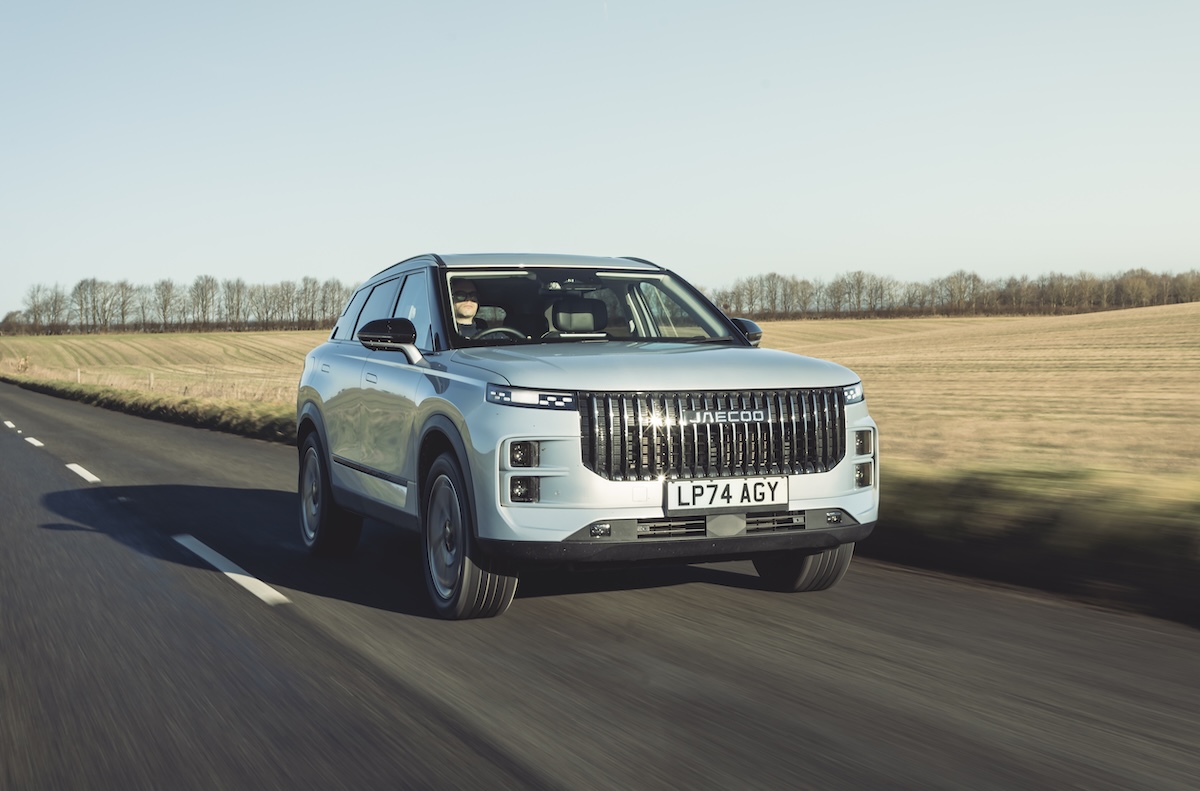
Omoda 9 2026 review | Chinese brand's flagship is still great value

Pros and cons
What we like
Fantastic interior quality
Big and spacious
Very aggressive pricing given what you get
What to consider
Some ergonomic frustrations
Not as polished to drive as the best luxury SUVs
Lazy throttle responses
The CarGurus verdict
Up to now, we’ve had some fairly fundamental reservations about the cars we’ve driven from Jaecoo and Omoda, but the Omoda 9 feels like real progress. It’s not perfect: a few foibles remain with the usability of the infotainment technology, and the driving experience isn’t quite as polished as in the best luxury SUVs, but it’s much more convincing on both points than we’ve experienced previously.
And in a variety of other ways, the car is downright impressive. The interior quality is sensational, the list of standard equipment is enormous, refinement is brilliant, and there’s no arguing with the level of practicality on offer. And you get all these abilities for the price of a car from the class below. If you can live with the perpetual daily task of explaining to people what on earth that thing on your driveway is, then you’ll get plenty in the way of reward.
out of 5 expert review
What is the Omoda 9?
Before we clue you in on what the Omoda 9 is, we might well need to catch you up on what on earth Omoda is. Don’t worry if you’ve not heard of it before, you’re not alone.
It’s a brand that’s relatively new to the UK (it arrived in late 2024), and it’s part of a Chinese company called Chery, which has been going for several years and happens to be China’s largest exporter of new cars. Chery markets its cars all over the world under various different brand names, and Omoda was the first on these shores, being the one that Chery chose to lead its assault on the European market. It was shortly followed (in early 2025) by Jaecoo, and has since been joined by Chery (a budget-focused sub-brand of the main company, but with the same name, confusingly) and Lepas (a luxury brand).
The Omoda 9 sits at the top of the brand's current range of SUVs, above the smaller Omoda 5 and Omoda 7, serving as the firm's flagship. It's offered exclusively with a plug-in hybrid powertrain, that provides huge space and a heaving kit list, all for the price of a car from the class below: think of a top-spec Range Rover Velar for entry-level Range Rover Evoque money, and you’re just about there.
That in itself means that the Omoda 9 is rather short on direct rivals, because most luxury SUV alternatives that are comparable on size and spec are not comparable on price. Nothing like. There are the Range Rovers we’ve just talked about, while the Volvo XC60 PHEV is a good bit smaller, yet also a good deal more expensive. The same goes for the Lexus NX450h+.
There are more mainstream offerings that get closer on price, but these again are generally quite a bit smaller than the Omoda 9, although they’re big enough to serve as excellent family cars. These include the Volkswagen Tiguan, Nissan X-Trail, Hyundai Tucson, Toyota RAV4, Peugeot 3008, Kia Sportage, Mazda CX-60 and five-seat versions of the Skoda Kodiaq. However, even compared to those, the Omoda looks like exceptional value for money.
Perhaps the 9’s closest rival is another offering from China in the form of the BYD Seal U DM-i. It’s about the same size, comes with a plug-in hybrid powertrain, and yet is even cheaper.

Practicality
How practical is it?
The Omoda 9 is a very large car at almost 4.8 metres long, so you’d expect it to do at least a passable job on practicality. And happily, it does. There’s bags of space up front, and the cabin is sufficiently wide that you won’t bang elbows with your front passenger.
In the back, meanwhile, there’s absolutely loads of legroom, and while headroom is a bit more limited (probably partly due to the standard panoramic sunroof), there’s still plenty for a six-foot-plus adult to travel comfortably. The width of the cabin also means that three can travel across the rear bench in reasonable comfort, and things are made better on that score by a wide middle seat and a completely flat floor.
The Omoda 9’s boot space is given at 660 litres. It doesn’t look quite that big in reality - the space is quite shallow - but there should be more than enough space to cater for the needs of most families. There isn’t much of a lip at the boot entrance, so there’s very little to get in your way when loading heavy items, but you won’t find much underfloor storage, meaning that if you carry your charging cable with you, it’ll be rattling around in the main part of the boot.
If you need maximum cargo space, the rear seats fold down in a 60/40 split, giving 1,783 litres of space. The backrests lie flush with the boot floor, so there are no awkward steps in the extended load floor, but they do lie at an angle, so there’s a slight slope to contend with. Overall, there’s more than enough space for people and luggage in the Omoda 9 to make it a very good family car.
There’s electric adjustment for pretty much everything: that includes both front seats and the steering column, so finding the right driving position is very easy and accurate. The seating position is pretty high whatever you do, but most SUV drivers like that anyway. The tiny, steeply angled rear window means your rear visibility is pretty rubbish, however. There’s also power adjustment for the angle of the rear-seat backrests for when your passengers fancy an en-route kip.
If you’re expecting the Omoda 9’s aggressive price to translate into shonky interior quality, then you’ll be very pleasantly surprised by the reality. The materials used aren’t just acceptable, they’re genuinely impressive: the dashboard has a posh-feeling soft-touch covering, and it’s finished with chrome trim, a nice dark wood trim insert and glossy black panelling. The seats, and various other parts, meanwhile, are swathed in very convincing vegan leather. All in all, it looks modern, sophisticated and thoroughly cohesive. And that remains the case if you go ferreting around in the lower reaches of the cabin, the rear seats and the boot: we didn’t find a single panel that we deemed to be below-par, and that’s very impressive.

Driving
What’s it like to drive?
There’s just one powertrain offered in the Omoda 9, a plug-in hybrid one that the firm calls SHS-P, or Super Hybrid System - Plug-in. It was previously just called SHS, but a minor rebrand was needed when Omoda started offering self-charging hybrid cars, which it dubs SHS-H.
The PHEV powertrain uses a 1.5-litre turbocharged petrol engine in combination with two electric motors - one for the front wheels and one for the rears - a three-speed gearbox and a 34.5kWh lithium-iron phosphate battery. The various power sources operate in a variety of different ways according to various driving situations, to maximise efficiency. For instance, when your speed is low enough and the battery level is high enough, your propulsion will come entirely from either one or both of the electric motors for zero-emissions running. When the battery charge is lower, or you need maximum acceleration for an overtake, or you're cruising at motorway speed, then the petrol engine fires up, either to recharge the battery, or to help drive the wheels, or both.
When combined, the maximum output of all the various power sources comes to a total of 443bhp, while the claimed 0-62mph time is given at 4.9 seconds. In the real world, the pickup feels quick enough that we can believe the number, but the way it gets there is a little odd.
When you first put your foot down, there’s quite a long pause before anything happens, as if the movement of the throttle pedal is taking its time to register with the rest of the powertrain. Once it does respond, though, you surge forwards briskly and smoothly: it’s not the all-at-once feeling of acceleration that you often associate with electric motors, it’s more a feeling of eager muscularity.
It might irritate you slightly that the lazy throttle response never quite goes away (it’s supposed to become more aggressive when you select the car’s Sport mode, but you’ll hardly feel any difference), but importantly, the throttle is easy to modulate, so it’s easy to regulate your speed. It’s fair to say that this hasn’t been the case with some other Omoda/Jaecoo products we’ve tried.
The Omoda 9 SHS comes with adaptive suspension as standard, and you can tailor its behaviour by playing around with the appropriate touchscreen menu. And yes, you’ll feel a touch more brittleness with the suspension in its firmer settings, and a touch more float in the softer ones, but if we’re honest, the differences are very, very marginal, and make very little difference to your overall levels of comfort and enjoyment.
Regardless, though, the Omoda 9 moves down the road in a thoroughly convincing way. Okay, so the ride isn’t as polished as it is in the best luxury SUVs, and sharper bumps and potholes can cause a bit of a thud, but most surfaces are mopped up reasonably well, so you waft along in comfort for the majority of the time. It’s a similar story with the handling: the best luxury SUVs corner with more eagerness and precision, but the Omoda still changes direction very ably. Yes, you feel the car’s considerable weight as you turn, but there’s lots of grip, very decent body control, and the steering, while a little hesitant to react around the straight-ahead position, reacts eagerly thereafter, and has a nice meaty weighting.
The thing that you’ll likely be most impressed with regarding the Omoda 9’s driving experience is its excellent refinement. You won’t be surprised to learn that there’s virtually zero noise to be heard from the powertrain when you’re running around in all-electric mode, but to be honest, you don’t hear much more once the petrol engine chimes in. Indeed, most of the time, you’ll struggle to detect whether it’s running at all. It does make itself heard occasionally, but with the motors doing most of the work, these occasions are pretty rare, and even when you do hear it, the noise is impressively muted and distant. And the engine is just as smooth as it is quiet, too, so very little powertrain vibration will be felt in the cabin.
And it’s not just the powertrain that impresses with its refinement. Double-glazed side windows come as standard on the Omoda 9, and these do a fabulous job of shutting out wind noise when travelling at speed, while road noise is also kept at bay very effectively. Rather oddly, we did detect a strange whistling noise - albeit a very quiet one - coming from the top of the windscreen at around 65mph and above during our test drive, but it’s entirely possible that the only reason we heard it at all was because there was so little noise from other sources.

Tech and equipment
Technology, equipment and infotainment
Part of Omoda’s schtick is that its cars take an ‘everything as standard’ approach, and with the 9 being the firm’s flagship, it’s no surprise that the single trim level available - called Noble - comes absolutely stuffed with high-end gadgetry. Okay, so technically there's a second trim level called Noble Black, but all that adds is a handful of matte-black exterior styling elemets, so we don't think it counts.
The outside of the car gets 134 LED daytime running lights at the front, and a full-width LED light bar at the back, and all these lights do a 10-second welcome dance when you unlock the car. You also get large 20-inch alloy wheels, automatic headlights with automatic high beam, a 1.3-metre panoramic sunroof, and the adaptive suspension with continuous damper control.
Inside, you get multi-coloured ambient lighting, dual-zone climate control, power-adjustment for the front seats, power reclining for the rear seats, heating and ventilation for the front- and outer-rear seats, vegan leather coverings for the seats and steering wheel, a heated steering wheel with electric adjustment, adaptive cruise control, and a 540-degree panoramic view camera system (this gives you a view all around the car, and underneath it as well).
On the infotainment front, the 9’s system supports DAB radio, Bluetooth, connected satellite navigation, wireless Apple CarPlay and Android Auto, four USB ports (two front, two rear), voice control, and wireless phone charging with cooling function. There’s also a 14-speaker Sony sound system, with surround sound, and some of the speakers are housed in the driver’s headrest for even better clarity. That’s all controlled through a 12.3-inch central touchscreen, and next to that sits another screen of the same size, positioned behind the steering wheel, to act as your driving instruments.
And while the system isn’t the most intuitive one you’ll ever use, it’s considerably better than the ones we’ve experienced in Omoda/Jaecoo products so far, because the graphics are sharp and the screen sensitivity is pretty good. However, a few fairly key functions are still buried a little too deeply within the menu structure, making it rather distracting to use them on the move. The digital instruments could do with more configurability, too.
Even more annoying is that when you’re driving along following your nav instructions, and you decide to knock the cabin temperature up or down by a degree or two, then the central screen immediately replaces the satnav screen with the system’s climate control menu, and it stays put for 23 seconds (we know, we counted) with no way of getting rid of it no matter how many times you tap or swipe. If you’re approaching a roundabout with no idea which way to go next, then that can cause you some rather fundamental problems. The system supports over-the-air updates, which allows such bugs to be fixed without visiting a dealer. We gave our feedback to Omoda’s execs on these issues, so hopefully these can be fixed quicksmart.
There is one more positive thing regarding the Omoda 9’s user interface. In other cars made by the company, we’ve observed a minimalist dashboard design that aims to purge the cabin of as much switchgear as possible, harming ease-of use in the process. In the 9, however, Omoda boasts that there are no fewer than 53 physical buttons and controls. Sure, most of these are small and fiddly, and poorly marked, and located either on the steering wheel or to the right of the steering wheel tucked away out of sight. However, the centre console has three large dials for adjusting the cabin temperature, fan speed and driving mode, all without having to muck about with the touchscreen.

Running costs
Omoda 9 running costs
The price for the Omoda 9 stands at around £45,000, which might not sound that cheap at first. However, when you consider the size of the car you’re getting, the amount of standard equipment it has, and how much more rivals will charge you for less (check out our ‘Which one to buy’ section for a more in-depth look into that last point), it starts to look like sensational value for money.
As well as being offered at a very affordable price point, it also has the potential to be very affordable to run. Its PHEV powertrain has a large 34.5kWh battery that can take you up to 93 miles on a full charge, according to WLTP figures. That’s one of the best EV range figures we’ve seen from any PHEV, meaning it’ll give you a better chance of being able to complete your commute and other routine journeys solely on electric-only power, in which case, you’ll rarely use a drop of petrol and running costs will be very low.
Charging your battery at home should cost you less than £9 if your domestic electricity is billed at the national average rate, and around half that if you charge overnight on heavily discounted off-peak power if your home's tariff allows. That charge will take around eight hours on the standard charging cable, which has a conventional three-pin domestic plug. If you’re in more of a hurry, the Omoda 9 can accept DC rapid charging at up to 70kW, so an appropriately powerful public charger can give you a 20% to 80% juice-up in around 25 minutes, although be prepared to pay around three times as much as out quoted home-charge figure for a charge of that sort.
Overall, the combined WLTP fuel economy figure we've been given by Omoda stands at 201.8 mpg, but like with all plug-in hybrids, that figure should be treated with considerable scepticism. That's because the official tests are unrealistically flattering to PHEVs, and real-world returns are likely to be nowhere near. The fact is that most plug-in hybrids are great when the battery is topped up, but once it runs down, they become very thirsty because the petrol engine not only has to lug around the weight of the car, but also the heavy battery as well. That’s why, for best effect, you should aim to complete as much of your motoring as you can on electric-only power.
Omoda claims that the 9 should be better on that score than most PHEVs, though, because when the car is left to its own devices, the battery is never allowed to fully deplete: it constantly gets topped up by the engine and regenerative braking, so there’s always enough electricity on hand to allow the car to run like a self-charging hybrid. Omoda quotes a figure of 43.6mpg for this kind of use, which given the size of the car, sounds pretty good.

Omoda 9 reliability
You might be worried that Omoda is a new and unfamiliar brand in the UK, and is as such, somewhat untested when it comes to reliability. And yes, it’s true that the brand doesn’t yet appear in the reliability and customer satisfaction surveys that we usually refer to.
However, you should take some comfort that while Omoda/Jaecoo are new to the UK, the parent company that makes them - Chery - has been around for donkey’s years, and is very successful indeed at a global level, so in terms of building cars, it’s not their first rodeo.
You can take even more comfort in the fact that your Omoda 9 comes with an excellent seven-year, 100,000-mile warranty, with no mileage limit for the first three years. The warranty wasn't always as good as the headline figures suggested, though, because a wee while ago, a lot of key components - many of them very important and costly to fix or replace - quietly slipped off the cover after three years or 40,000 miles. However, to Omoda's credit, it reacted to criticism about this - not least from us here at CarGurus - and in mid-2026, improved the terms of its warranty to cover the vast majority of the components in question for the full advertised term.


What owners say
Three things to know
- With just one highly specified trim level available (well, technically two if you're being picky), there’s just one single optional extra available, and that’s the exterior paint colour. There are four to choose from, if you don’t fancy the standard white.
- The Omoda 9 is stuffed with active safety equipment, including front collision warning with autonomous emergency braking, rear cross traffic alert and braking, lane departure prevention, lane departure warning, emergency lane keeping, lane control assist, blind spot detection, driver monitor system, and traffic jam avoidance assist.
- Unlike in other Omoda/Jaecoo products we’ve tried, most of the safety warning systems in the 9 aren’t too over-sensitive. That’s with the exception of the driver attention warning, which tells you off if you so much as think about looking at the touchscreen, which you often have to. Thankfully, a single swipe downwards from the top of the screen immediately brings up a menu that allows you to quickly and easily turn these systems off one by one, although European legislation means that you’ll have to do this every time you start the car.
Which one to buy
- If you want maximum metal for minimal money: The Omoda 9 is a great choice. You get a huge SUV for a similar price to that most car companies charge for a model from the class below, and it comes absolutely stuffed with standard kit.
- If you want a more familiar option: The Volvo XC60 is a great all-rounder in the SUV class, and is also available in plug-in hybrid form. Do bear in mind, though, that prices start at around £10,000 more than you’ll pay for the Omoda 9, and it’s also a fraction smaller.
- If you want some genuine off-roading ability: The Range Rover Evoque can do some pretty impressive stuff when faced with some countryside. It’s much smaller than the 9, though, and although the starting price for the two cars is about the same, the Evoque will cost you around £4,000 more if you spec it in PHEV form. On size, the 9 is more comparable to the bigger Range Rover Velar, but that costs around £10,000 more in base-level form, and £20,000 more in PHEV form.


Pricing trends
Starting RRP
£44,325
Current avg. market price
£34,141
Trending down by 8.8% this month
May 2026 - October 2026